Engagement and Storytelling with Wooden Blocks

Focus: Engagement and storytelling in small group play situations.

Interesting aspects of the learners’ thinking or learning that the adults noticed.

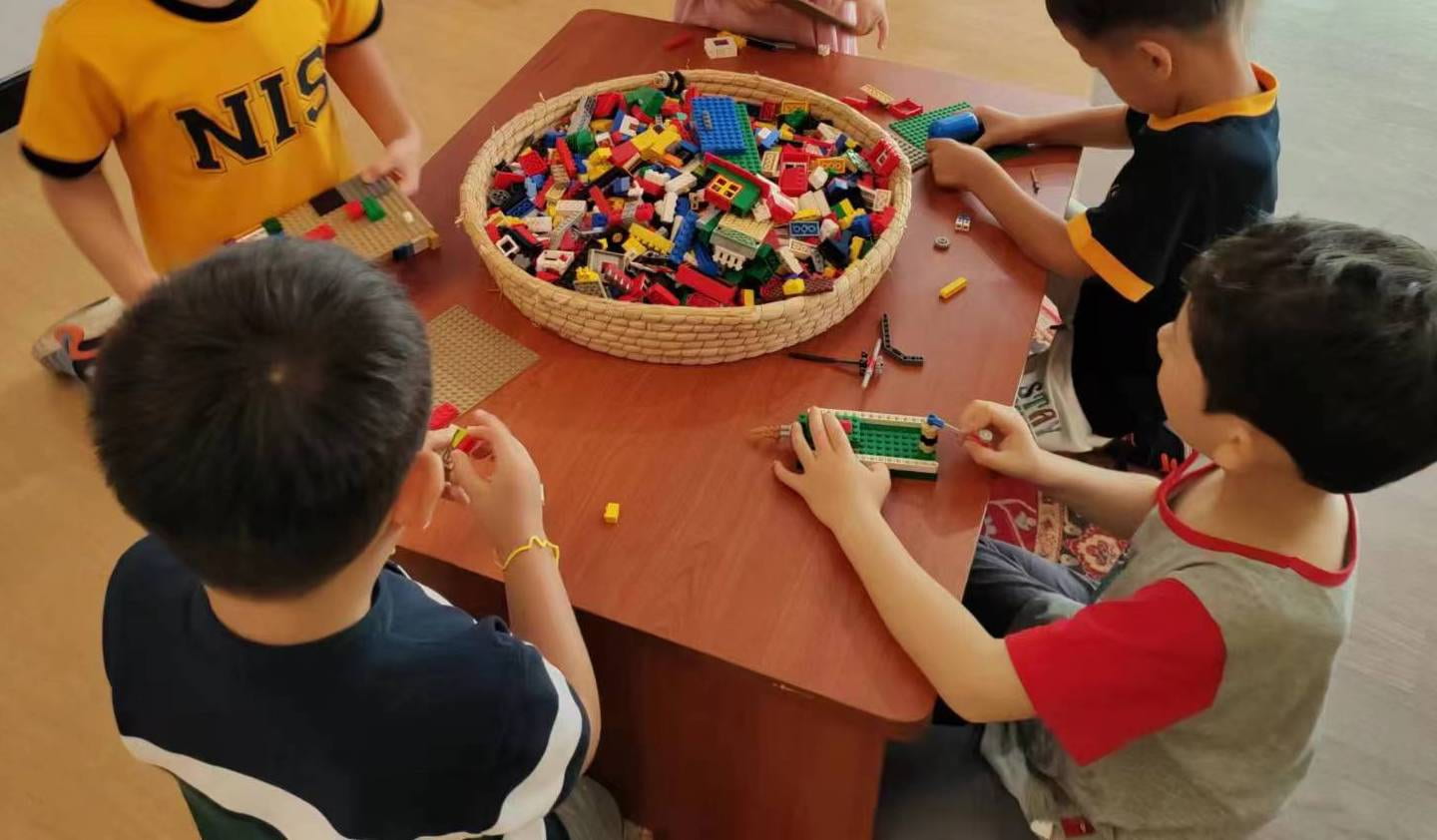
The children were presented with two tubs of blocks. Each child began to look through the tubs to pick out the blocks. They appeared to be matching pieces, looking for connections between them. They created individual structures. They spoke in Mandarin to each other.  

  • Shapes of animals captured one child’s attention.
  • Others with interested in the trees and nature blocks.
  • Some were interested in the vehicles and wooden moving blocks.
  • The children paused to let others know about their blocks. They did not speak to each other for a period of time and one child listened but did not engage in the conversation.

One child made connections with the blocks and what he knew about the world around him. When he made a connection, he enjoyed sharing this with an adult.

A second child demonstrated the ability to play and engage in collaborative play for extended periods of time, using language and storytelling to make connections with others.
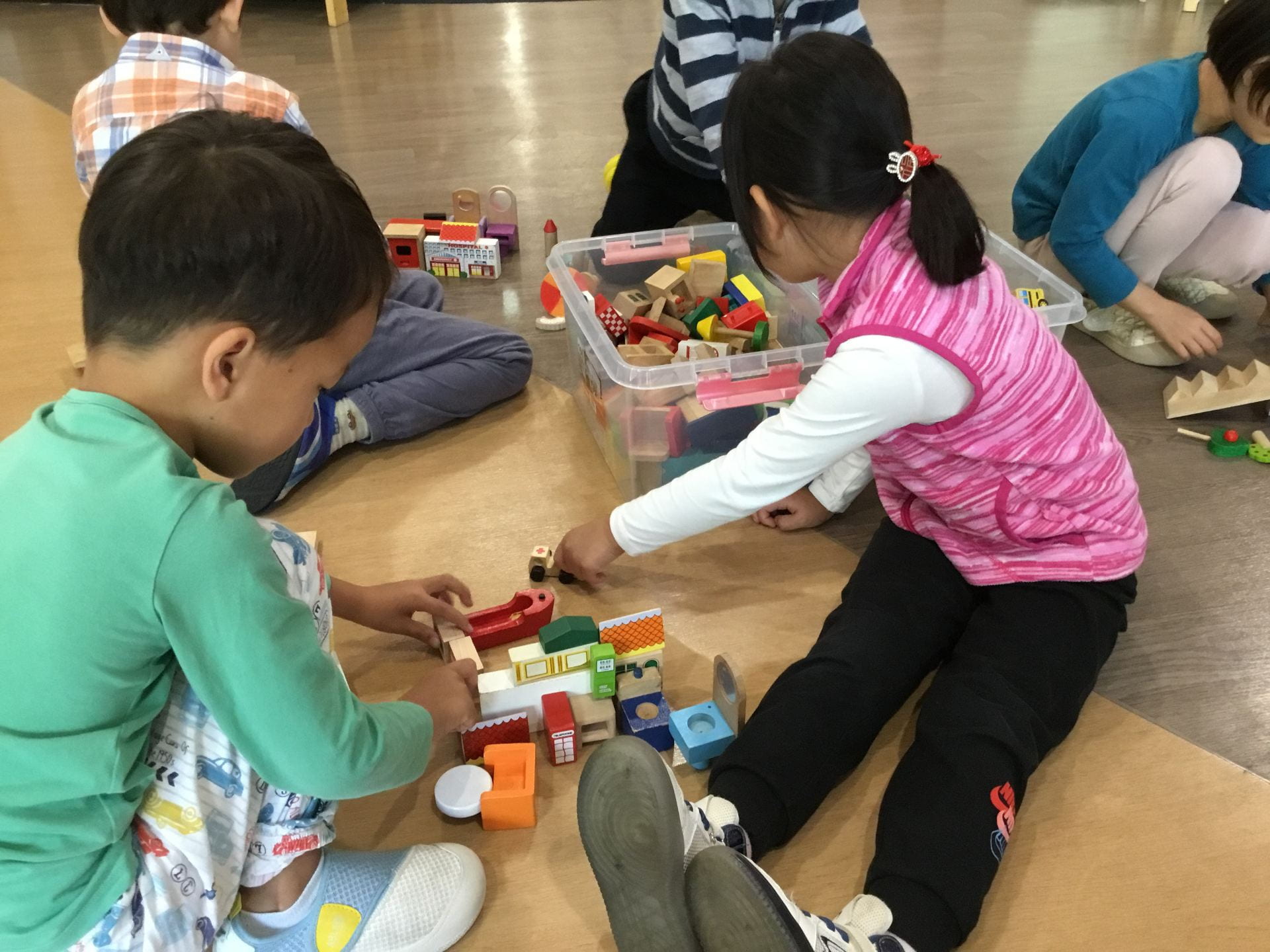
  • OL helped me. She turned my house to a hotel. She got lots of parts and turned it into a hotel. It’s because I like hotels.”
  • L “I helped O, O and me built house. Me worked together.

One child was an observer, often pausing to listen and watch others as she created her story. She intentionally placed her blocks, appearing to create her story in her mind while she moved the blocks into her creation. She was welcoming of others even though they changed the structure of her play space.

  • M1 “I was making a house for bunny. Bunny needs carrots. The horse was playing with bunny.”

  • O2 M1 looked at me building. She said yes, I can play here. Building a house because I want building house. O2 lives here. M2 said I can build there, I was happy.”   

Language was used to request entry into play stories with others. When a request was denied, the child moved on to find other play experiences. The children were able to demonstrate the ability to play and engage collaboratively with others and to acknowledge when they have done something to upset their peers.

  • E “I was playing racing cars. I was building a house and the house have a bed and for parking. I made the roof. I put a chair behind the house because when we go outside we can sit on it. I was playing, putting cars in it.
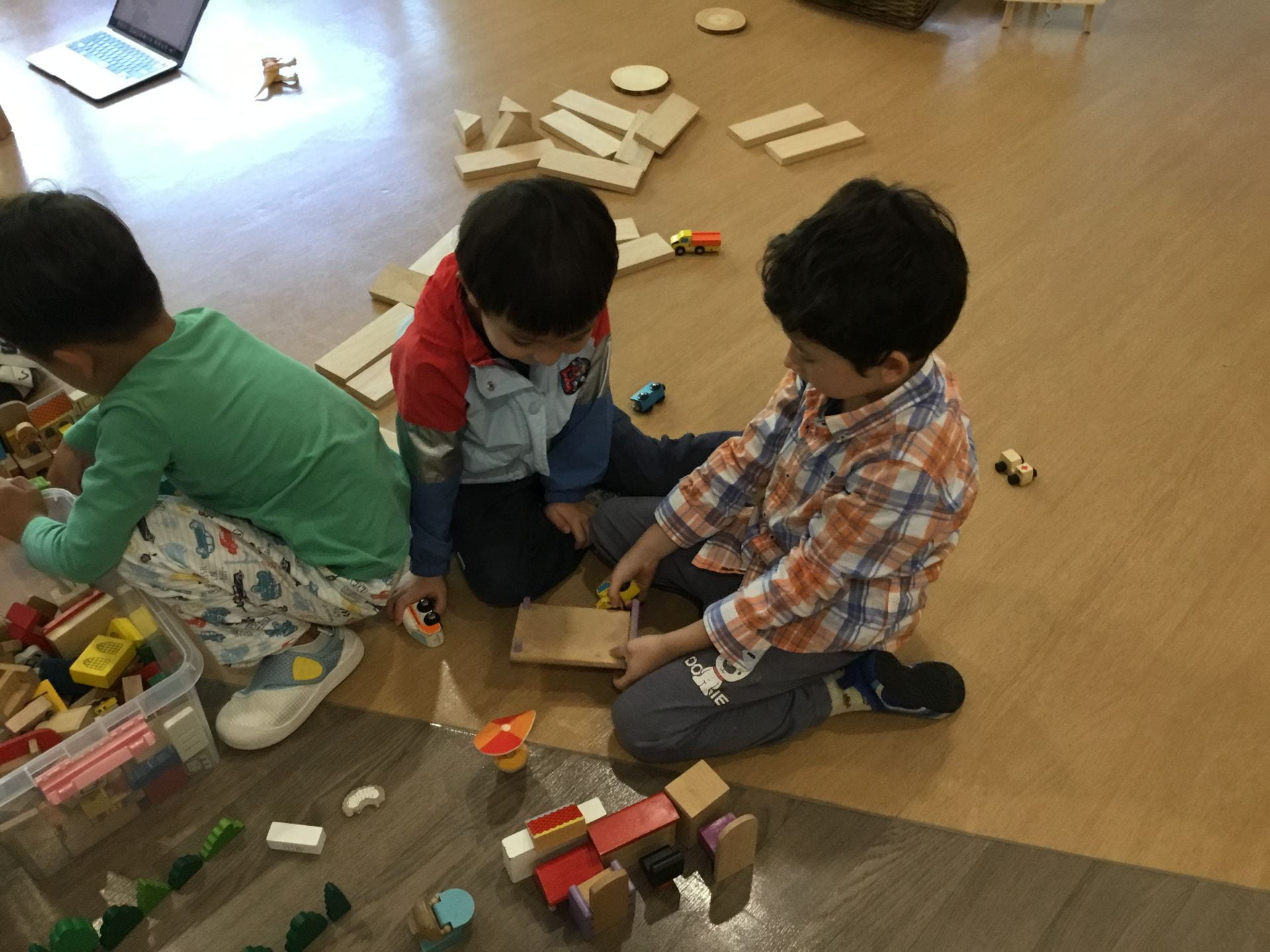
  • E “That is the cars are driving up. That is fun.”

  • E “We are planning to play together (outside). I was faster a little bit. And yesterday I was fast. And today we were the same fast.”  
  • H “Outside playing together. Running race.” 
  • L (in Mandarin) “I said No to O1 because I thought he might put too many things in the space and I won’t have enough space to build. O1 says No putting then I don’t put it in the tub.”

  • M2 “This is a road. You can go to the house. This is the park.”

One child was non-verbal during play and seemed to prefer playing alongside others, observing and listening to play around him. He was thoughtful and intentional with his creation, choosing objects carefully to meet a purpose.

A the end of play, we reflected on the block play experiences. We asked the children what they they needed to do or think about when playing with blocks.

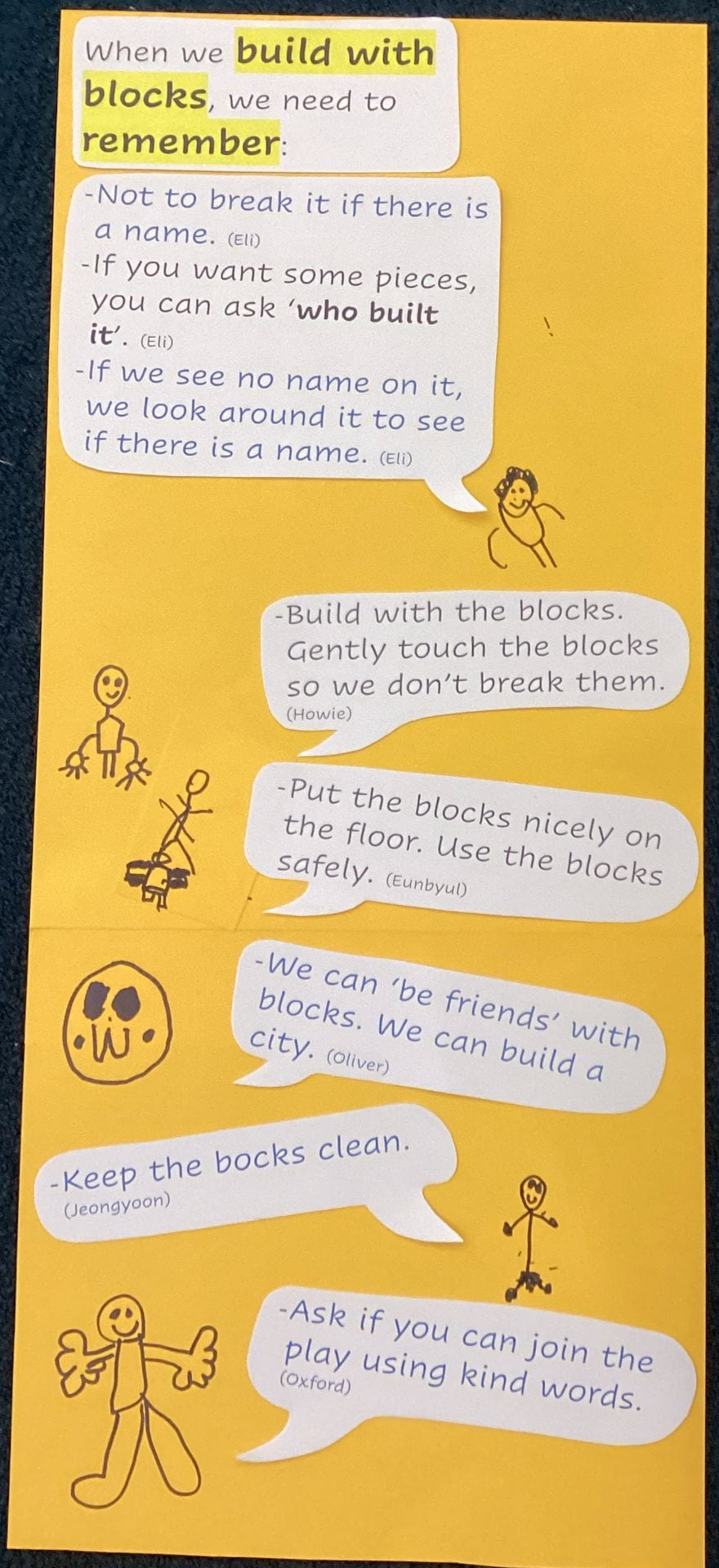
We need to remember:

  • Not to break it if there is a name. (Eli)
  • If you want some pieces, you can ask ‘who built it’. (Eli)
  • If we see no name on it, we look around it to see if there is a name. (Eli)
  • Keep the bocks clean. (Jeongyoon)
  • We can ‘be friends’ with blocks. We can build a city. (Oliver)
  • Put the blocks nicely on the floor. Use the blocks safely. (Eunbyul)
  • Build with the blocks. Gently touch the blocks so we don’t break them. (Howie)
  • Ask if you can join the play using kind words. (Oxford)
Revisiting a Project: The Bike Park Signs

Revisiting a Project

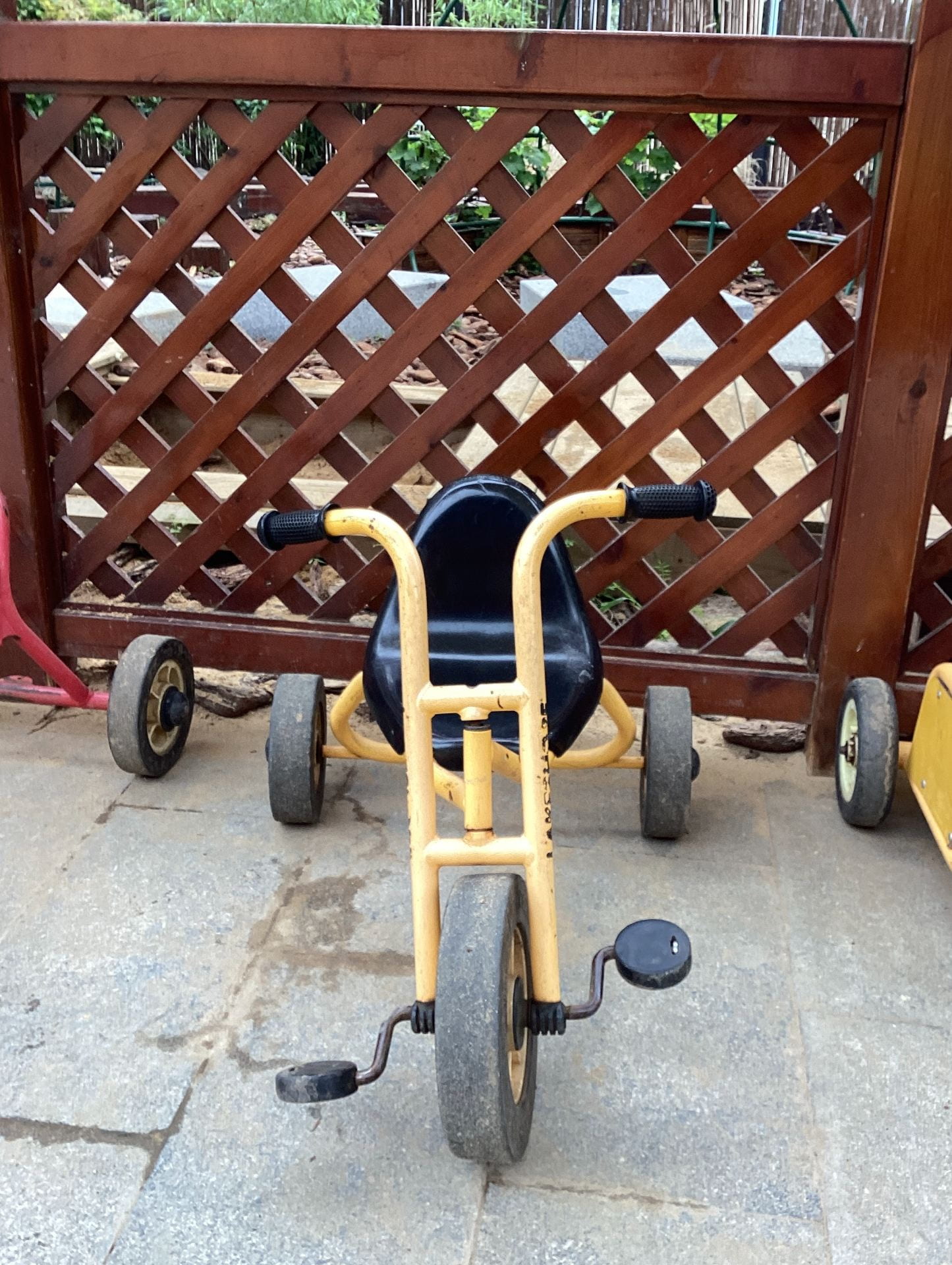
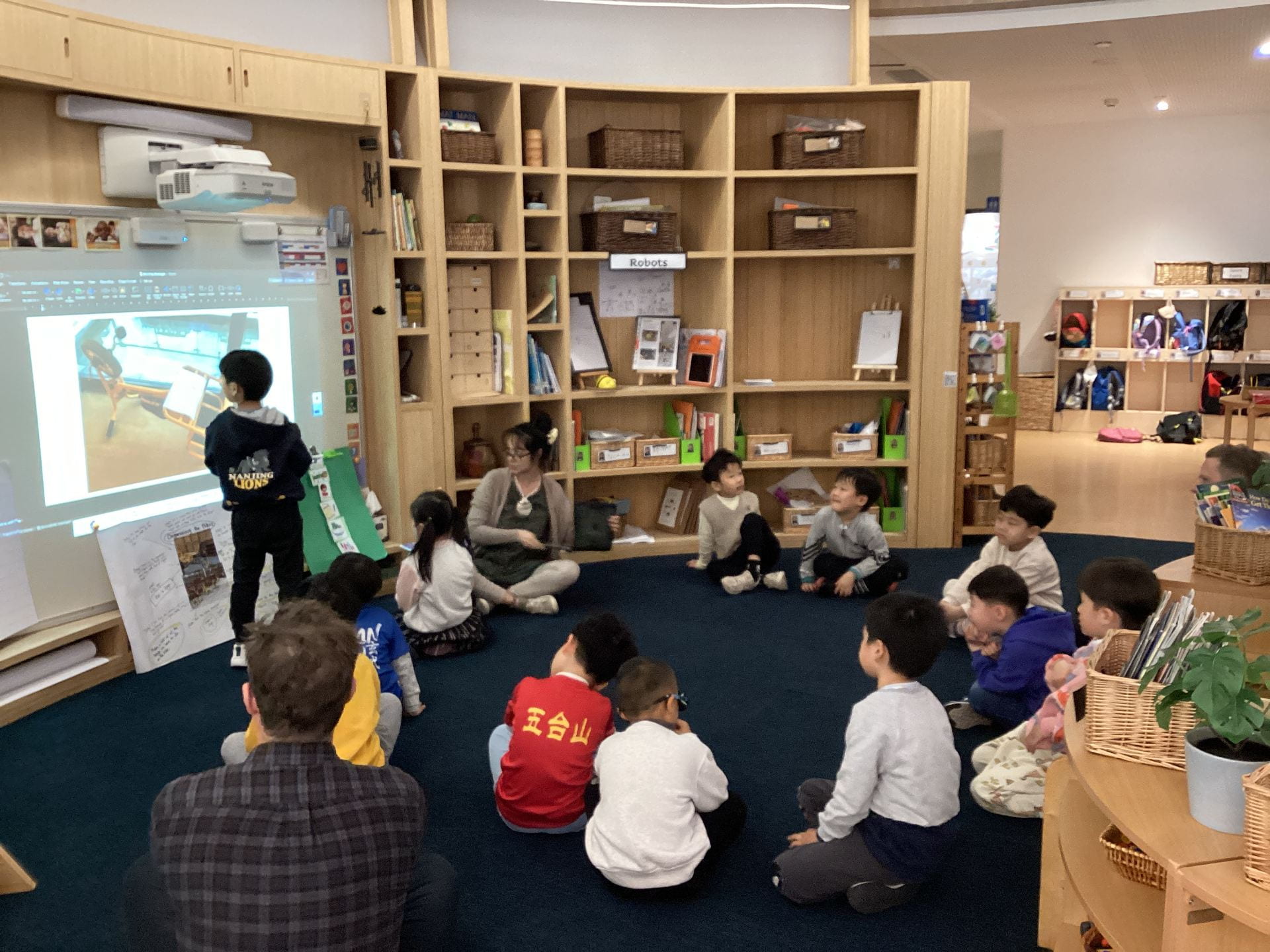
We looked at the bikes outside our playground.

  • Liz “It’s messy people will get fall down.”
  • Morning “If we run around and we didn’t know the bike is on the way we will trip over the bike.”
  • Wyatt “If you put them like this people won’t see them clearly, we won’t know if we lost one.”

Ms. Eileen “Is there another way to park the bikes?”

The children started to organise the bikes. We noticed a picture on the wall showing how the children parked the bikes the previous year.

Ms Eileen “Did they park the bikes the same way? Why did they park like this?”

  • Lydia “The bike is opposite from ours, it is easier for children to ride it away.”
  • Liz “If we put them properly when the fire comes, we can go through the door quickly and we are safe.”
  • Wyatt “If we park the bike in a wrong place when the fire comes the bike will burn.”

We went back to reorganise the bikes.

Ms Eileen “Do you think this is the best way to park the bikes?”

  • Morning “We can ride the bike out easily.”
  • Jeongyoon “Everyone played with the bike we can tell them.”
  • Lydia “We need to tell everyone.”

We looked at the parking signs the K2 made together last year.

The children decided to put the signs up to let the other children in the Early Years know how to park the bikes.

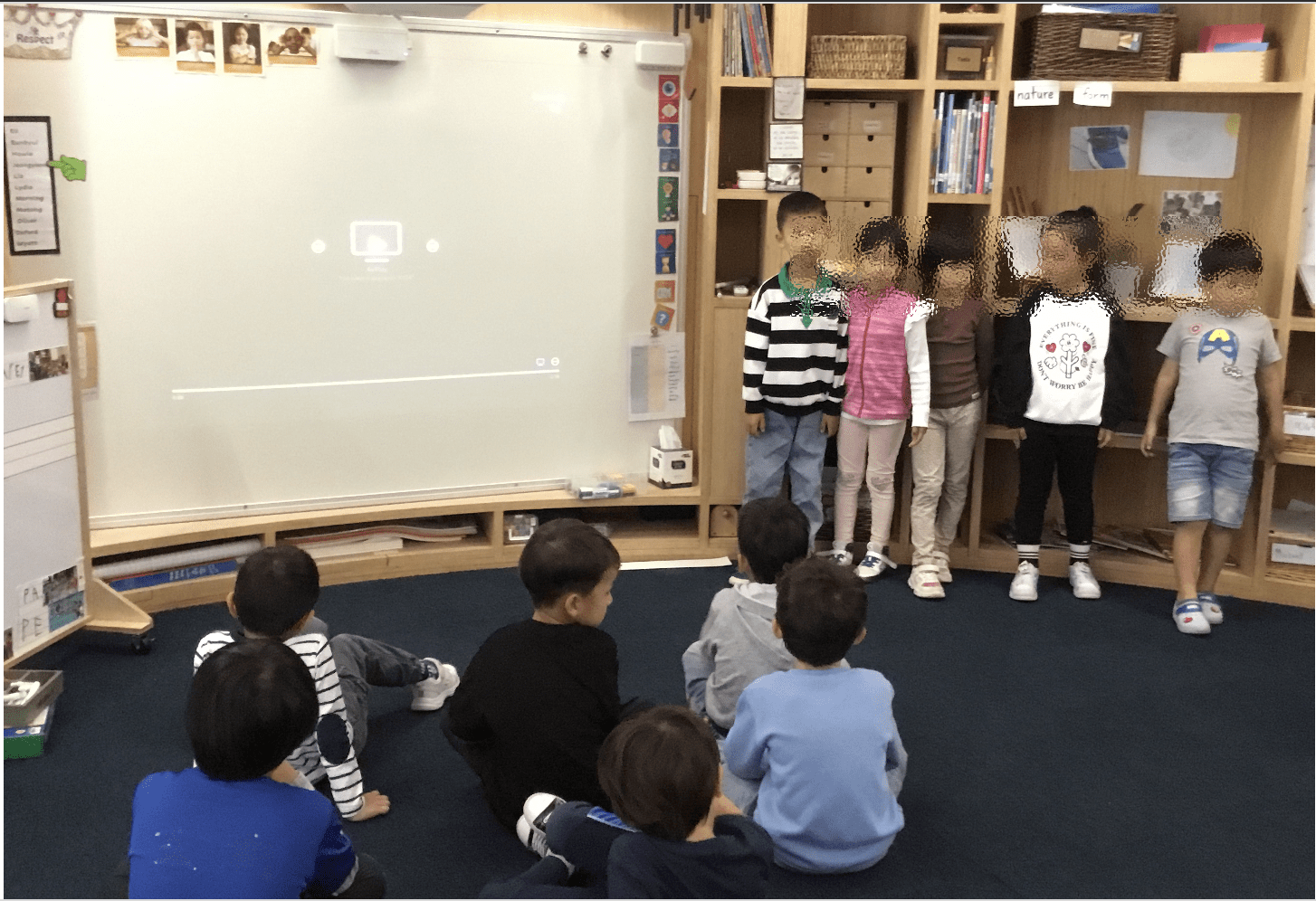
The group presented their learning to the rest of the class.

  • Jeongyoon “Outside.”
  • Liz “Bikes clean up.”
  • Lydia “Cars. Me see the bikes are in a mess. (in Mandarin) If a fire comes then we can’t get to the escape door.”
  • Morning agreed with Liz’s statement adding “Clean the bikes.”
  • Wyatt “When people park the bikes in front of each other then its easy for the children to bump into the bikes. (in Mandarin)”
  • Morning explained that the team had an important task so they needed to “park the bikes together”
  • Eli “Park the bikes nicely on the road and the other side. People will step on the wheel and fall down.”
  • Oliver “If you don’t park the bikes nicely, someone will be running where you park the bikes then someone will hurt yourself.”
  • Oxford “I will tidy up and put them back.”
  • Howie “Put them nicely because when someone comes, the people can quickly run outside.”
  • Motong “Clean up the car because the car cannot come in.”
  • Eunbyul “Everybody bikes play and everybody children play and finish then tidy up. Bikes and children and me friend together tidy up.”

The class thanked the team for their work and presentation. Next, the team will need to think about sharing this important message with the rest of the Early Years Community.

Block Play with Howie and Eli

A group of children worked on their block structures over a sustained period of time, creating plans, solving problems and making changes to the initial design to suit their story. The adults observed the interactions and documented their play over time. When the children saw the video, they reflected on their play, discussing their initial plans and process.

Howie “This is we building blocks. And Mo Mo is helping us to build. And I put my name on the house and I was playing with my house. And we is building and we use which car to drive on the tracks.”

Eli “The pictures help me of looking     how to build the hospital and the hotel and that is how I know which pieces is which pieces. I like the hospital and the hotel so I will build it the same as the picture. The building blocks and then putting racing car and then driving them around and then building the T Rex into the hospital and the T Rex mommy into the hospital and we build the all of the race cars and the race road and Mo Mo was helping.”

Howie “I was drawing because I want show us I build and someone comes and he sees my picture and then he can’t touch it. It’s the same make as my blocks because it’s hard to build but it has lots of blocks we can build.”

Eli “I have to remember to build the right pieces we have to write hospital and we have to write hotel. Writing help me learn how to write words. But they all look different (blocks). I think which block I need and then I know which blog I used.”

  • How do we make choices about the materials we use to create?
  • What skills do we need to create a story?
  • What skills do we need to work together?
  • How do we record our planning and thinking (making thinking visible)?
  • How can we share our creations and stories with others?

Creating Essential Agreements

Over the last few weeks, we have been taking photographs and videos of the children engaging in different spaces around the Early Years. These images have helped us highlight and make observations visible.

At times, the images focused on celebrating learning, community and engagement. On other occasions, the images helped us hone in on challenges and problems that require attention.

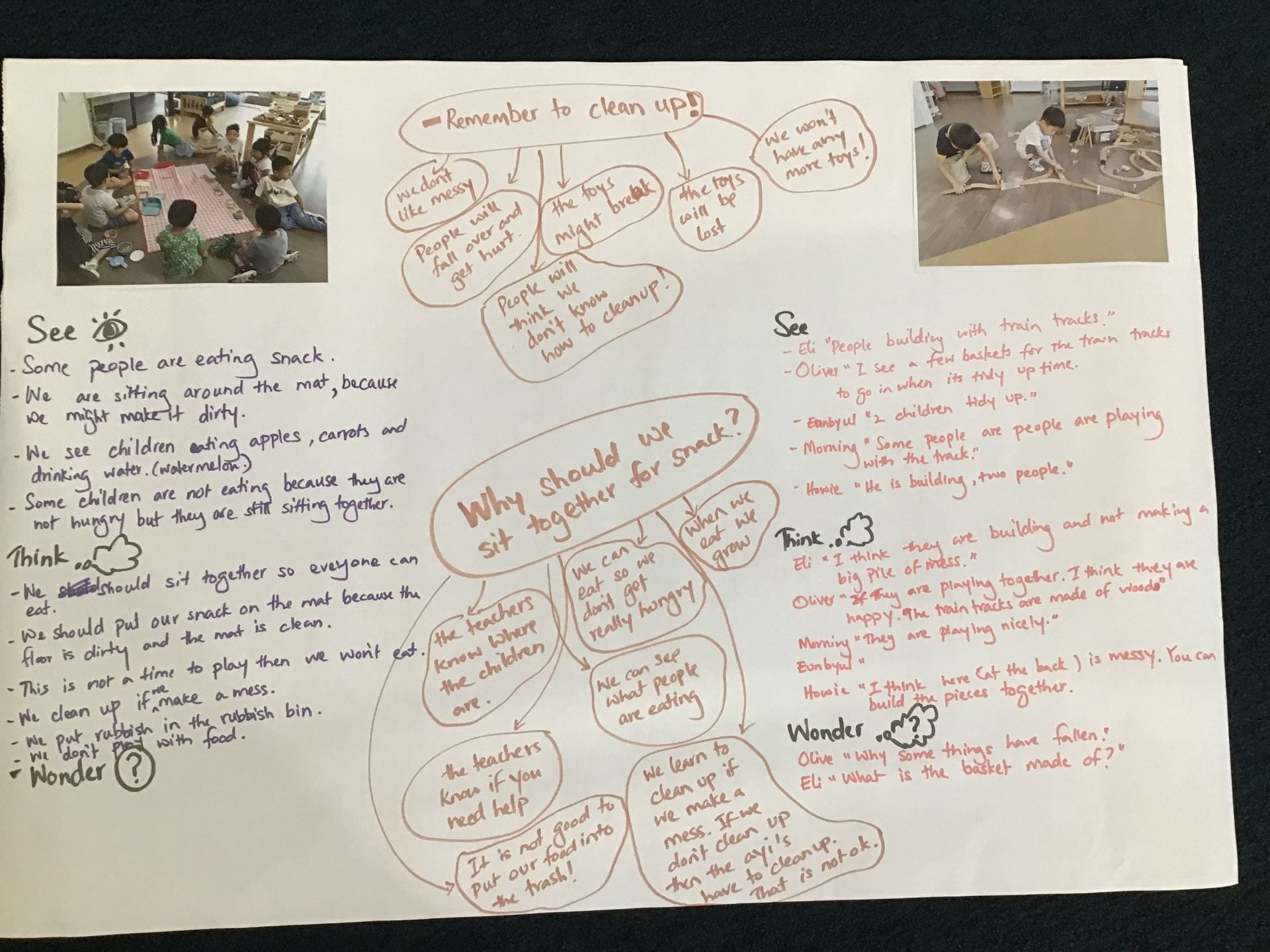
Over the last few days, we have discussed these ideas in small and whole group situations, talking about what we see, think and wonder.

See, Think, Wonder is a ‘thinking routine’ that places emphasis on the importance of observation as the basis for thinking and interpretation, through looking closely at an image, object or video.

After many discussions, we gathered to create our ‘Essential Agreements’. We noticed that the conversations often focused on the idea of feeling ‘safe’ in a ‘caring’ and ‘respectful’ environment.

Some of the key points were:

  • Expressing and communicating emotions in respectful ways and asking for an adult’s help when needed.
  • Being aware of how we touch others when speaking or playing with them.
  • Using manipulatives and resources in a safe and respectful way.
  • Moving our bodies safely in and around the different spaces.
  • Cleaning up after playtime to ensure we respect people, materials and spaces.
  • Using kind and thoughtful words to express ourselves.
  • Being inclusive by collaborating sharing and inviting others to play.

The key ideas by the children highlight the concepts of well-being, interaction, participation, belonging and inclusion.

As a learning community, we will continue to revisit our essential agreements to help us make appropriate choices that help us work and learn together as a community.

We are learning that by following agreements and sharing space we can participate safely in our community.

Math Talks

Maths Talk is a collaborative process where children’s thinking, ideas and strategies are discussed, shared and or exchanged. The routine reveals children’s understanding and misunderstandings and encourages dialogue about mathematical concepts.

Which One Doesn’t Belong?

Dots in Two Colours

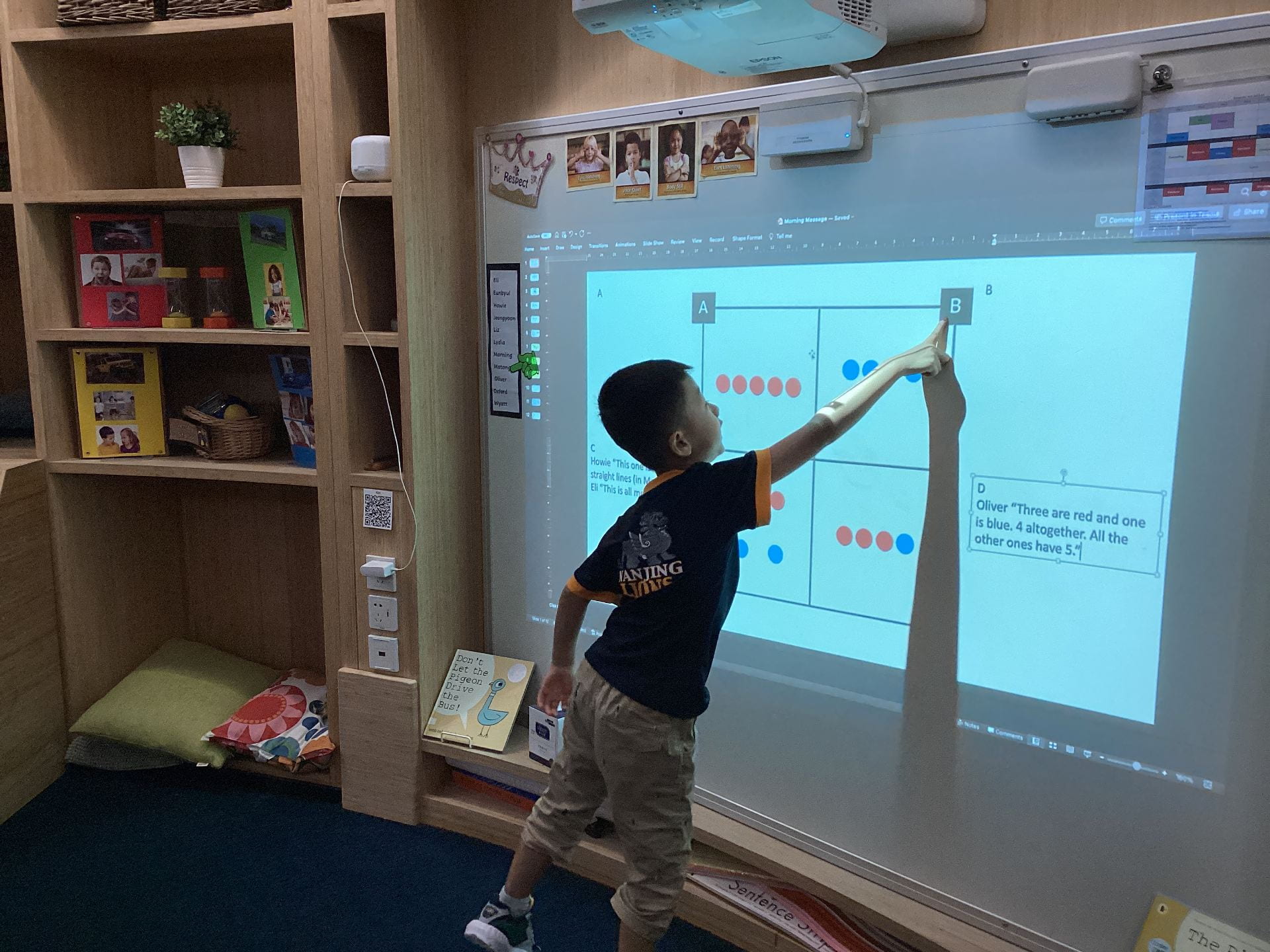
The children were invited to look at the set of four pictures and decide which one doesn’t belong with the other three.

They were encouraged to share their thinking using math words. There are many ways to think about each one!

We noticed that the children tapped into their prior knowledge about quantity and colour to explain their reasoning.


The Number 5!

What do you notice?

What do you wonder?

How many different ways can you show this number?

The children were invited to use manipulatives, numbers and words to share their thinking. We wonder how we might apply what we know about the number 5 to explore bigger numbers!

We wonder how number operations can be modelled in a variety of ways.


Approaches to Learning (ATL’s) 

  • observe carefully
  • analyse and interpret information
  • notice relationships and patterns
  • listen actively and respectfully to others’ ideas and listen to information
  • express oneself using words and sentences
  • understand symbols

The Rainbow Nest

What experiences might we have in our new space?

What are some exciting things that might happen?

The children began to share their ideas about the different types of play, and the materials they may use in the new nest.

  • Eli suggested that we put some bird seeds on the table at the center of the table to invite the birds in the EY playground to visit the space.
  • Morning suggested that we include some bird homes.
  • Oliver was excited about the possibility of birds visiting the space and imagined the birds would then bring sticks to make their nests. Would there be any eggs?
  • Liz thought hard about the new space and wondered if we could grow some grass around the nest.
  • Oliver built upon her idea, suggesting that we ask Ms. Hannah for some seeds and grow some beautiful flowers around the edge of the nest.
  • Lydia She suggested adding some flowers on the table too.
  • Jeongyoon decided that playing hide and seek in the space would be fun.
  • Motong and Wyatt asked if we could add materials in the space so we could draw and paint in the nest.
  • Oxford, Wyatt and Oliver thought it would be a great space to have a picnic snack.

Developing agreements for the space.

Next, we discussed the idea of food in the space.

  • What would we need to remember if we brought food into the nest?
  • How might we keep this space clean?

After some thought, the children discussed the need for agreements. They didn’t want food on the floor as the nest would get messy and people would not want to sit in a dirty space.

  • Oliver suggested that we only draw on paper and not on the benches. This will help us look after the nest. Oliver “We need a door window and a roof so no cat can come over.”

The children went outdoors with Ms. Eileen and Ms. Jo.

Ms. Jo “How many people do you think can fit in the nest?”

in the nest at one time. The children used their mathematical knowledge to estimate.

They wondered how many children might be able to play

  • Oliver “I think 2, because I counted.”
  • Eli “I think 22. I think this is a big, big space.”
  • Oxford “14 children.”
  • Lydia “6 children. They can sit around (in Mandarin).”
  • Jeongyoon “22”
  • Morning “10 children. Or 6 or 7.”

Over the next few weeks, we will continue to observe the space to document the play and learning experiences that take place in the Rainbow Nest.

Approaches to Learning (ATL’s)

  • use discussion and play to generate new ideas and investigations
  • seek information
  • ask or express through play questions that can be researched
  • listen actively and respectfully to others’ ideas and listen to information
  • participate in conversations

100 Hungry Ants

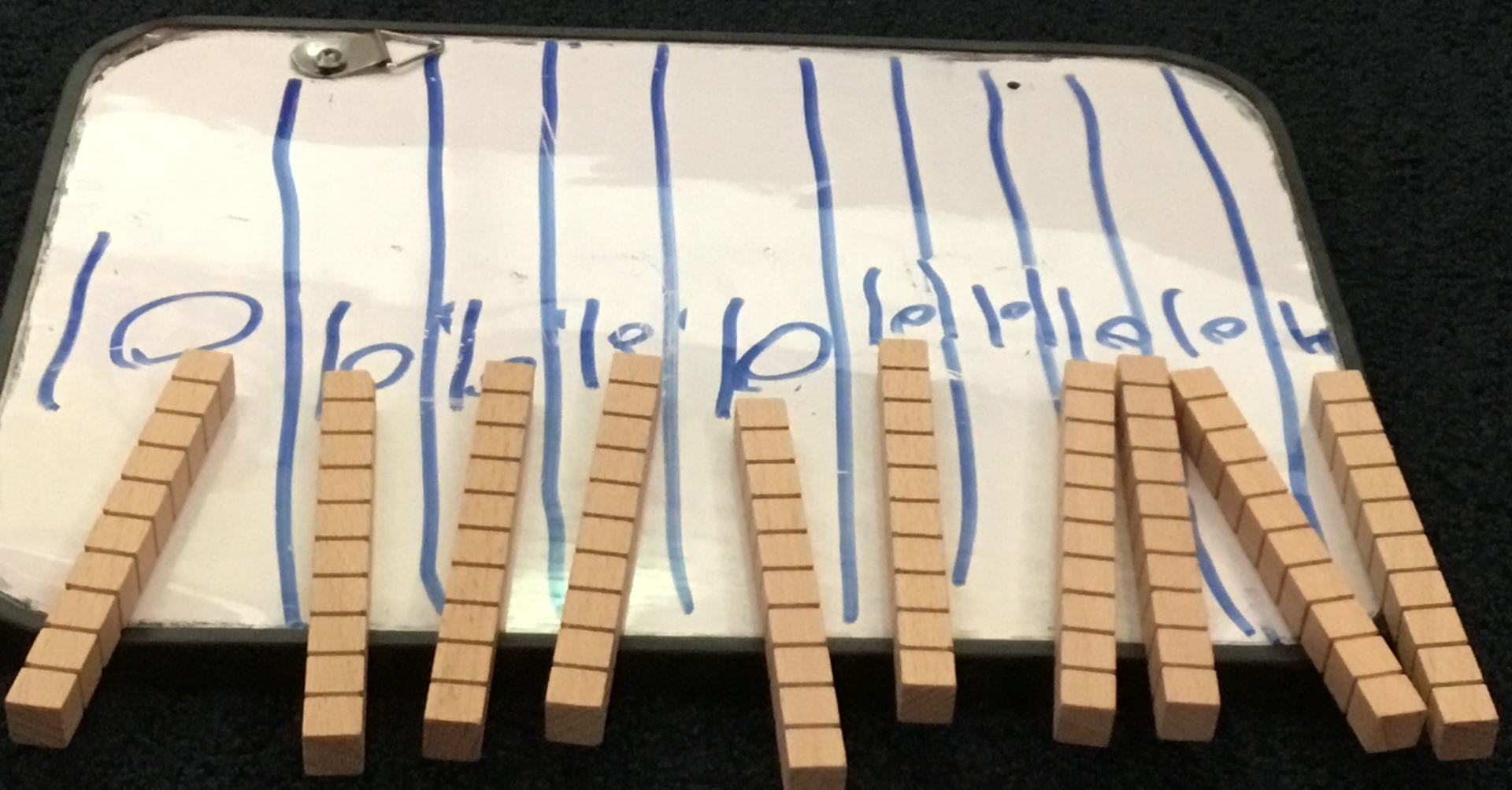
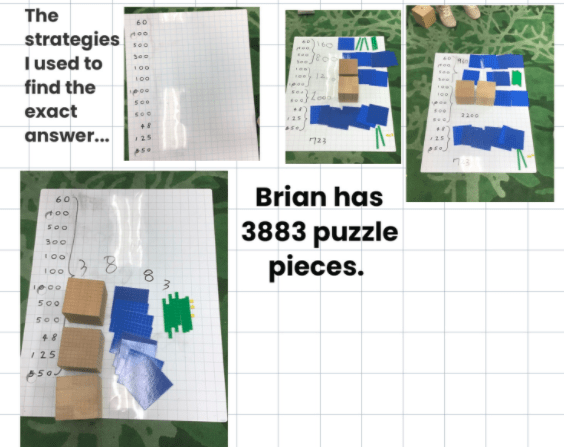
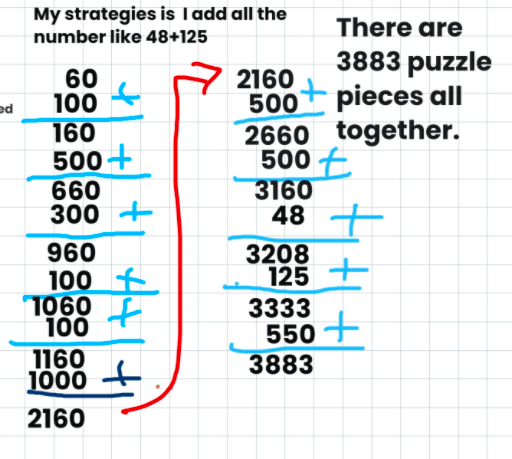
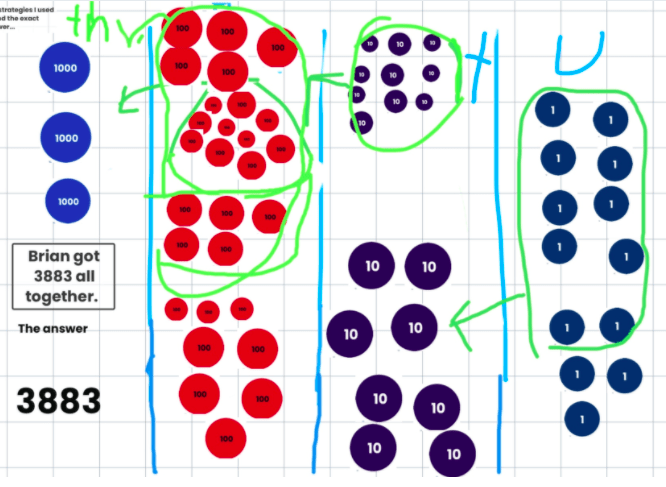
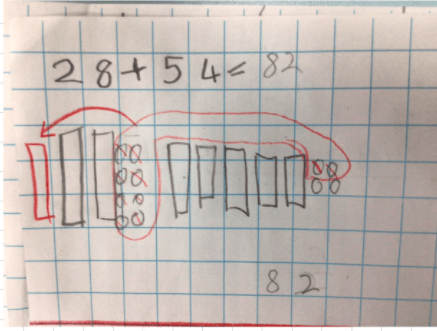
We have been using Place Value Blocks to model numbers and show our thinking.

We read the story ‘One Hundred Ants‘ by Elinor J. Pinczes, illustrated by Bonnie Mackain. 

The story begins with a group of hungry ants that decide to march off single file to a picnic. However, along the way, they realise they are moving too slow and begin to divide themselves in different ways to help them get to the picnic site quickly.

As we read the story, the children worked in pairs to document their thinking using Base 10 Blocks, pictures, words and numbers.

They first went in one line of 100.

2 lines of 50.

4 lines of 25.

5 lines of 20.

And 10 lines of 10.

Next, the students retold the story in their own words, using the images they created to document their thinking.  

Through this activity we:

  • explored how the base 10 values system is used to represent numbers and number relationships
  • used the operations of addition to solve problems

The Bike Park Signs

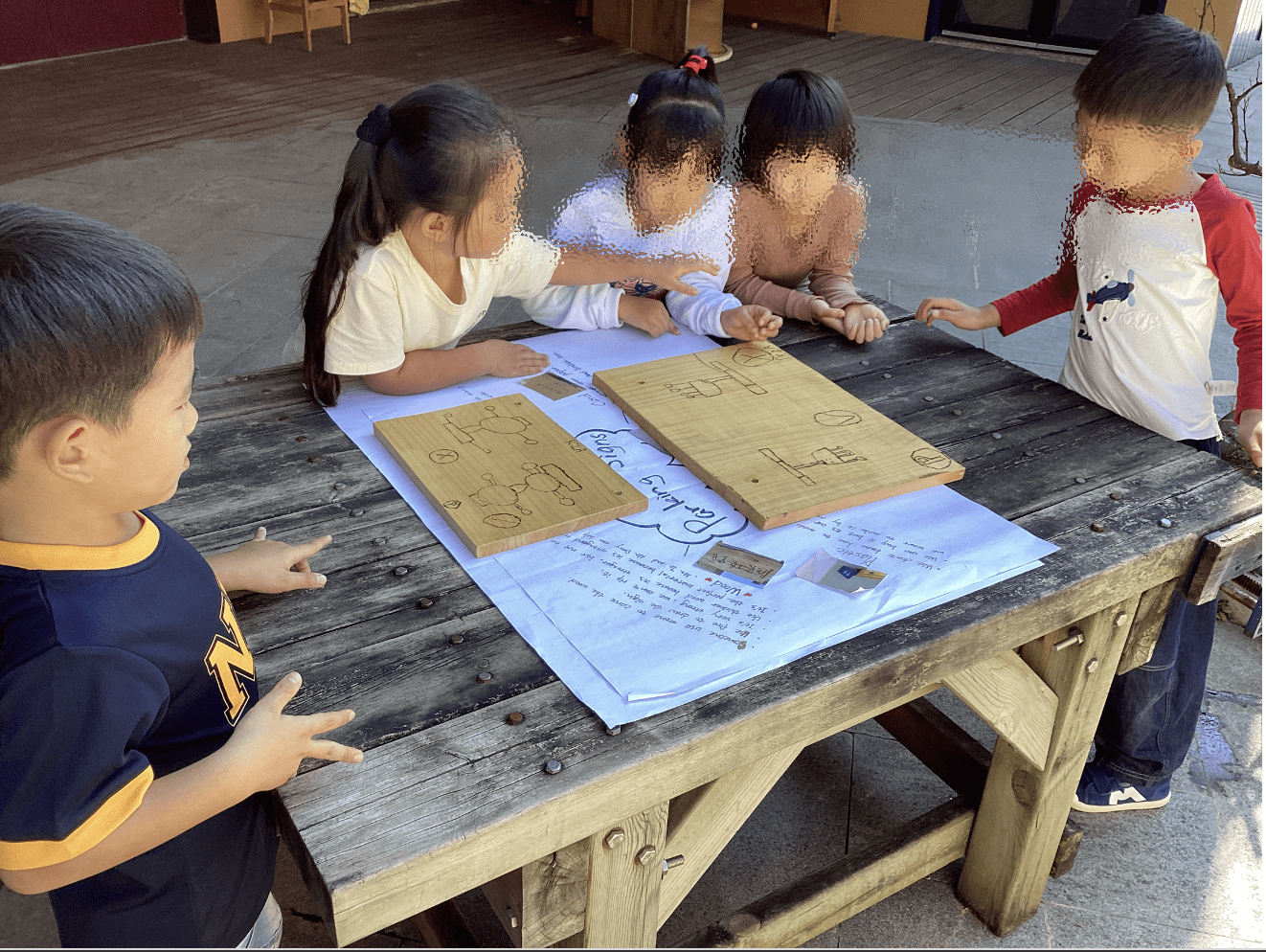
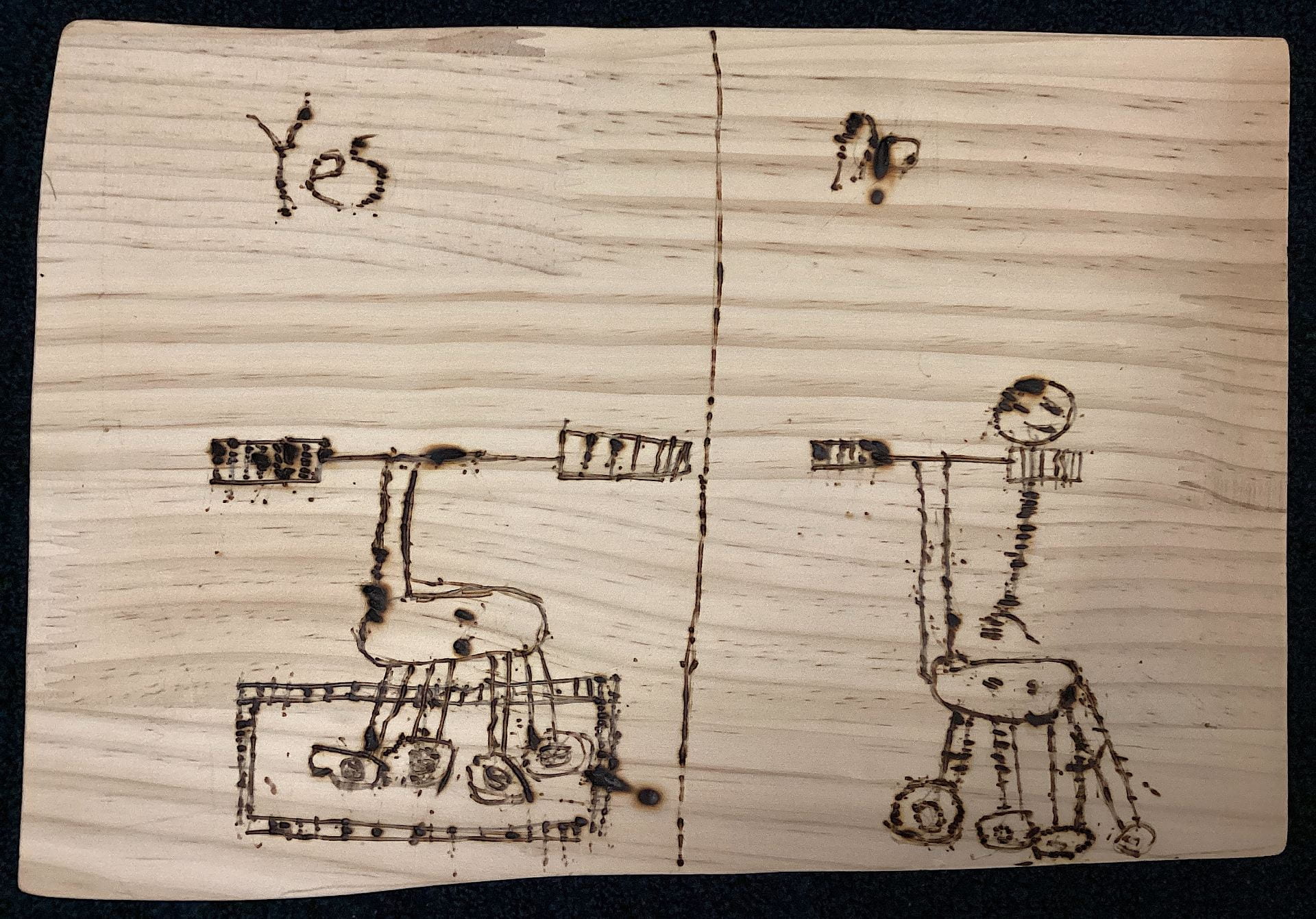
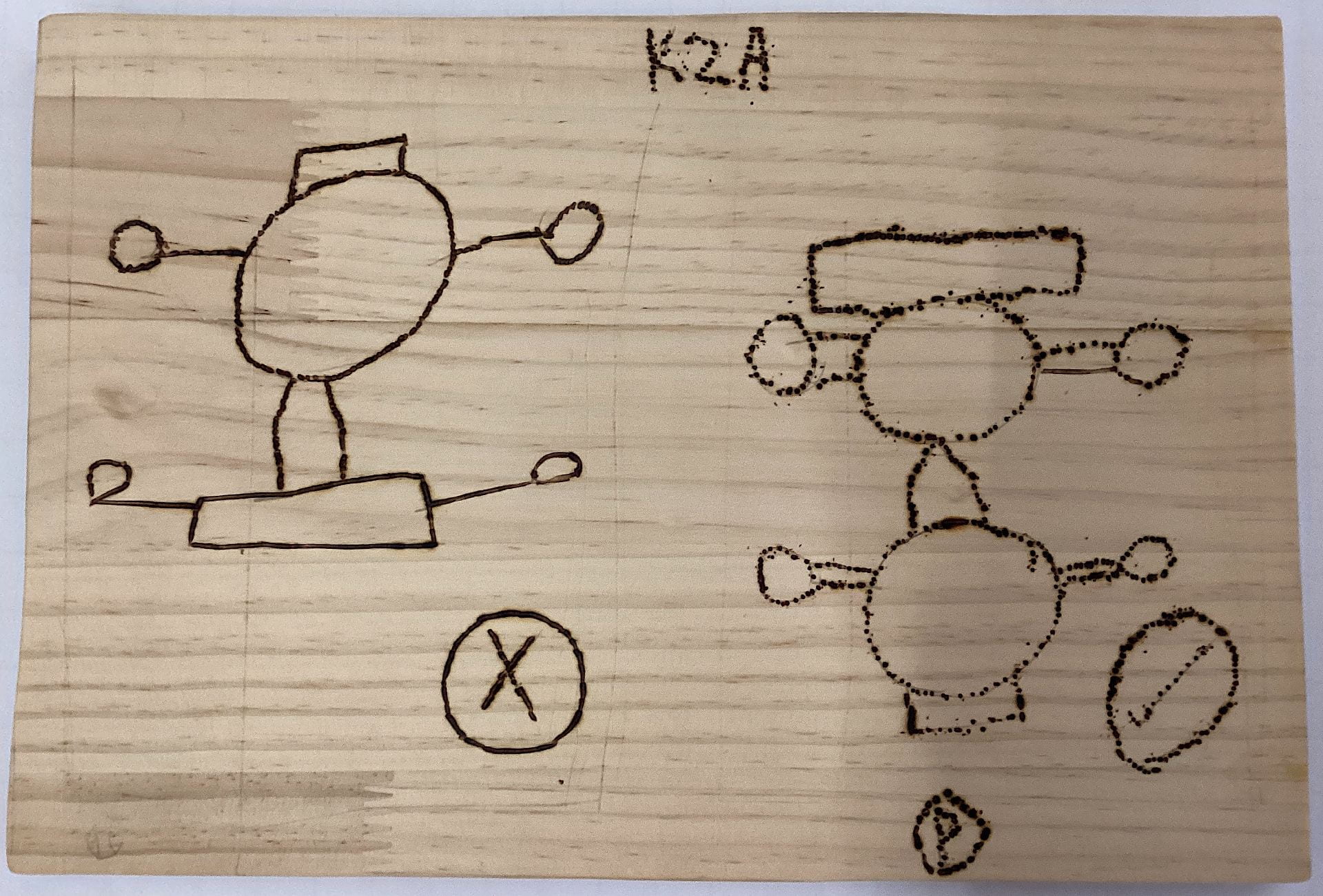
Over the last few weeks, a team of young designers worked together with Ms. Eileen and Ms. Jo, to create signs for the bike park. After conducting their research, they decided to create the signs using wood, as this was a material that could be used outdoors in all types of weather. After considering many options for the message, the team decided to use the wood-burning tool to burn the message onto the wood instead of using paint, markers or other writing tools. 

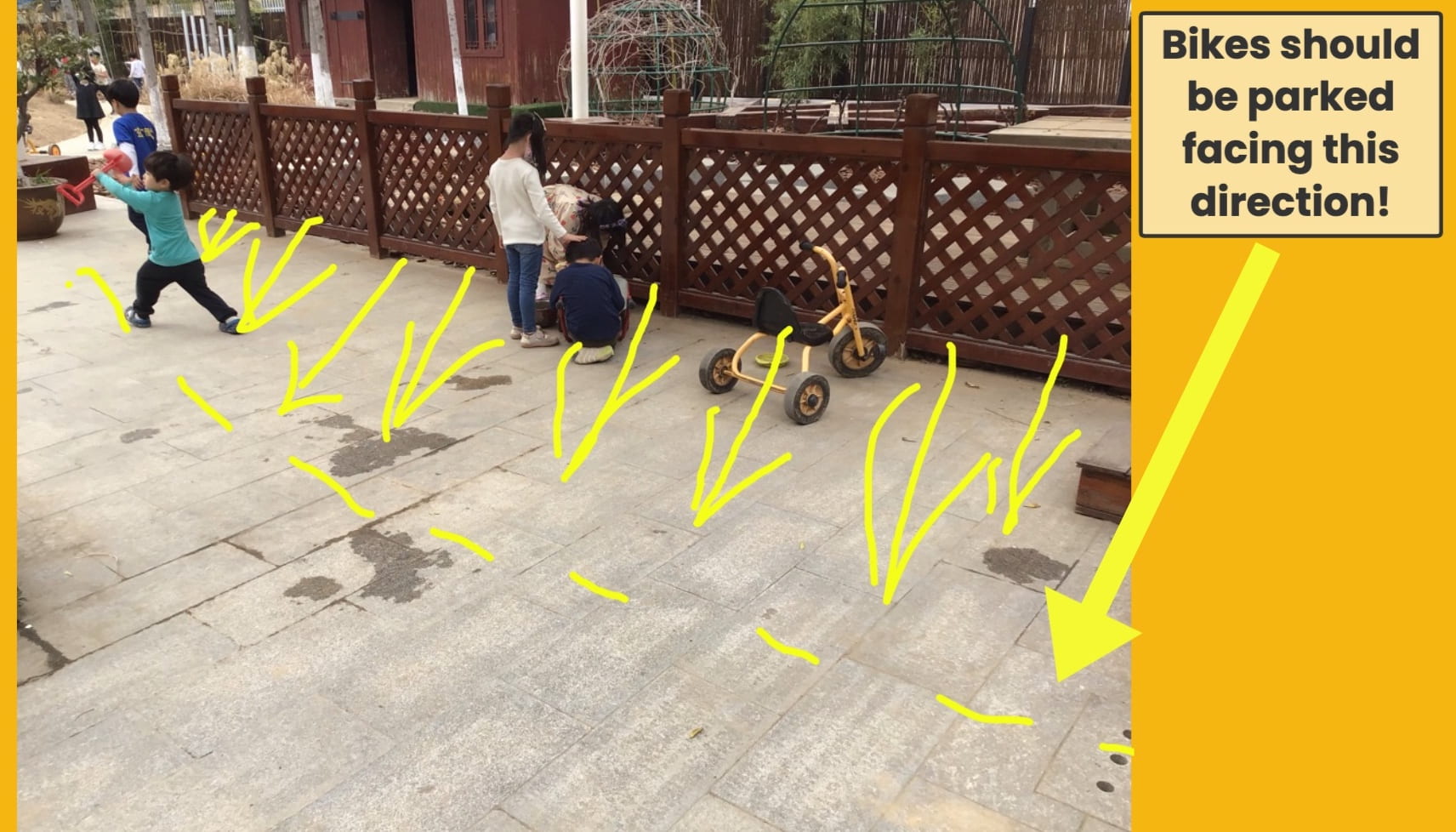
They began by planning their message out using pictures and words, to inform the early years community how to park the bikes safely in the bike park area. Their pictures served to remind the children where to park and in which direction the bikes needed to be stored at the end of playtime.

The team considered the type of wood and the size of the sign. Then, they used sandpaper to make sure the edges of the wood were smooth. 

They learned how to use the wood-burning tool to burn the messages on the pieces of wood. They had to think about staying safe and focused throughout the task.

Finally, their signs were ready to be mounted in the bike park area. They talked to each other about the best place to put up the signs and what materials they would use to attach the signs in the different spaces. Noah decided that his sign should be placed standing upright in the bike park. Mason, Sean and Eunice decided that their signs should be attached to the wooden fence dividing the play area. The team were proud of their hard work, and were excited to see that the Early Years community were now well informed about safe parking in the playground.

K2 students are aware of the impact they can have on the community. They understand how they can actively engage in various stages of learning: including thinking about, planning, modifying and creating for a purpose. Through active discussion and questioning, they were able to direct their own learning. The ‘Bike Park’ project helped them make connections to the real world. Through a range of experiences, they could consider perspectives, possibilities and outcomes that would benefit the community. They considered their own responsibility in shared spaces, and were able to use their voice and actions to bring a sense of purpose and belonging to these community spaces.

The New Nest Design

Following on from our last meeting about the nest where we gave Ms. Jacqui suggestions for the design, Mr. Arek and his team presented a first draft design of the nest to the children in the Early Years. We gathered to discuss the design and give Mr. Arek some feedback and suggestions for consideration.

What we like…

  • Doho “We can see the flowers. The colours are good and have flowers and the nest has a chair. And grass because the flowers can grow up.”
  • Tracey “The nest is beautiful because it’s clean.”
  • Kenan “The nest is good. We can have a picnic.”
  • Joon “The nest is like a rainbow.”
  • Sanghyeok “Have a desk and the flowers, this is good.”
  • Sean “The flowers are good and we can sit down and eat the snack because there are chairs. And we can draw.”

Everyone likes the flowers on the table.

Everyone likes the flowers around the bench.

Everyone likes to have the table.

Suggestions

  • Mason “I think we need to make the nest bigger. And we can have a picnic in it and have some water to drink in it.
  • Allen “I like the inside because the floor is flat. We don’t like the wood chips because its bumpy and it makes us fall down.

Wonderings

  • Eunice “Can we have a bird house?”
  • Sanghyeok “Can we have small animals in there, like birds and butterflies?
  • Mason Can we have a bed in the nest then somebody can sleep in it? Can we make a bigger nest?” Can we have a door? Can we put grass on the floor?
  • Allen Can we put the picnic mat? Can we make it bigger?”
  • Noah “How does the bench part stand up when there are no legs?”
  • Tracey “Why is it a rainbow inside?”
  • Sanghyeok “Why are there flowers on the table?”
  • Eunice “Can we have cushions on the bench?”

The Shed Project – Installing the Hooks

Over the past few months, we have been planning and organising the Shed.

After a planning meeting with Ms. Jacqui, the project team decided to order hooks for the pinboards in the shed. After their data collection, they placed an order for the hooks.

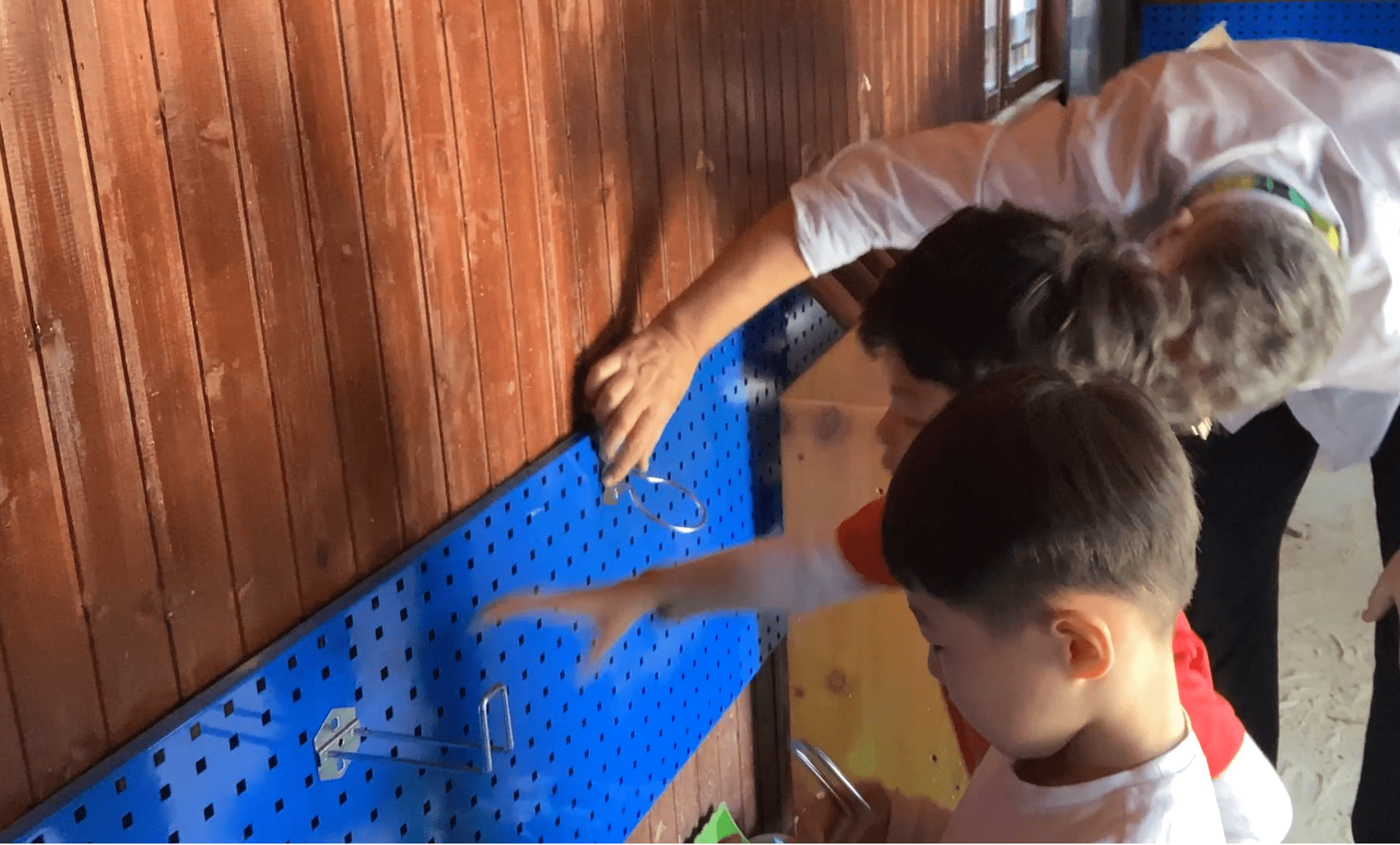
The hooks for the shed arrived through the post. The team worked to attach them to the pinboards.

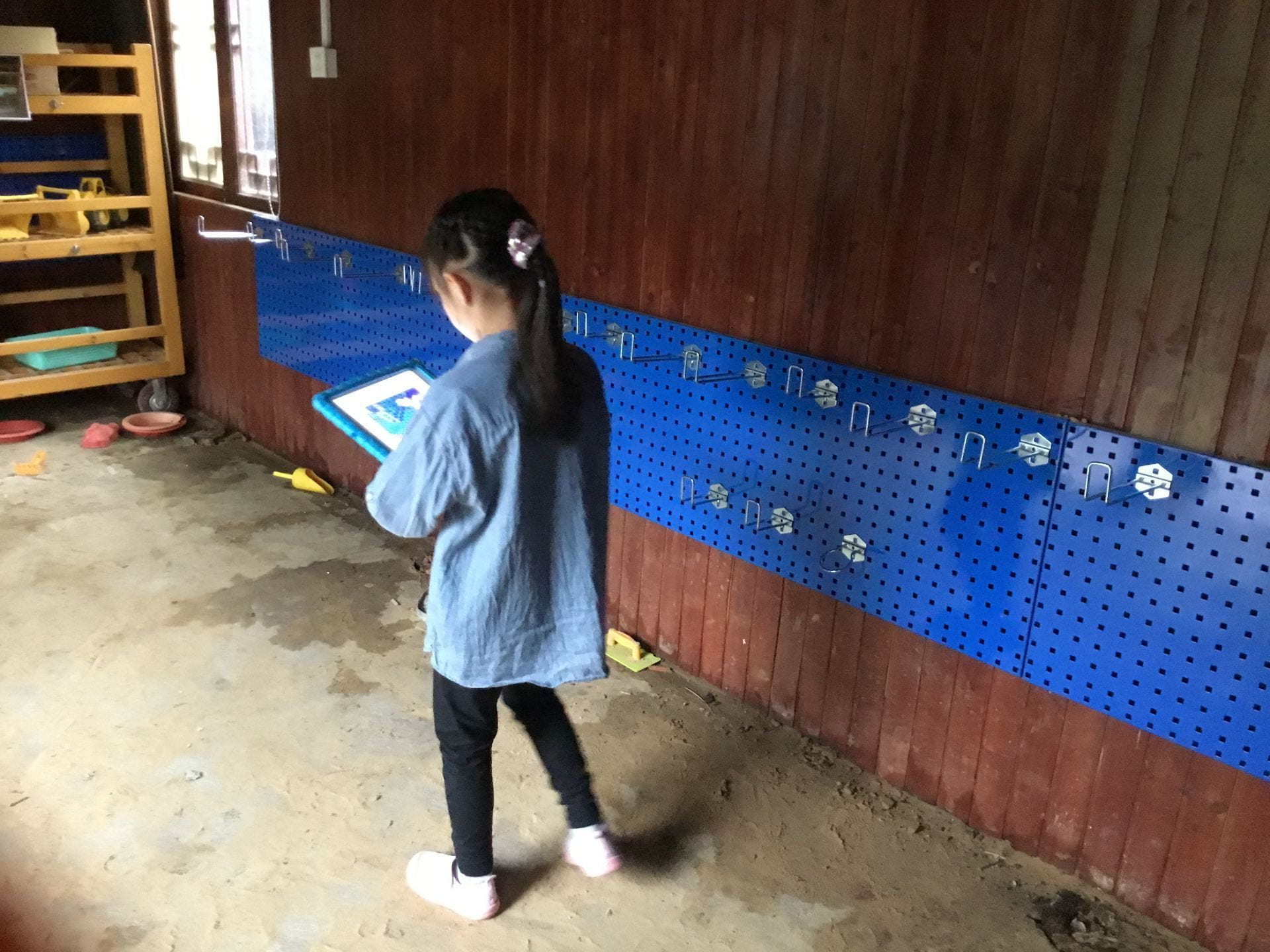
Another team went to the shed to count the number of hooks and signs we need. They recorded their information on the iPad.

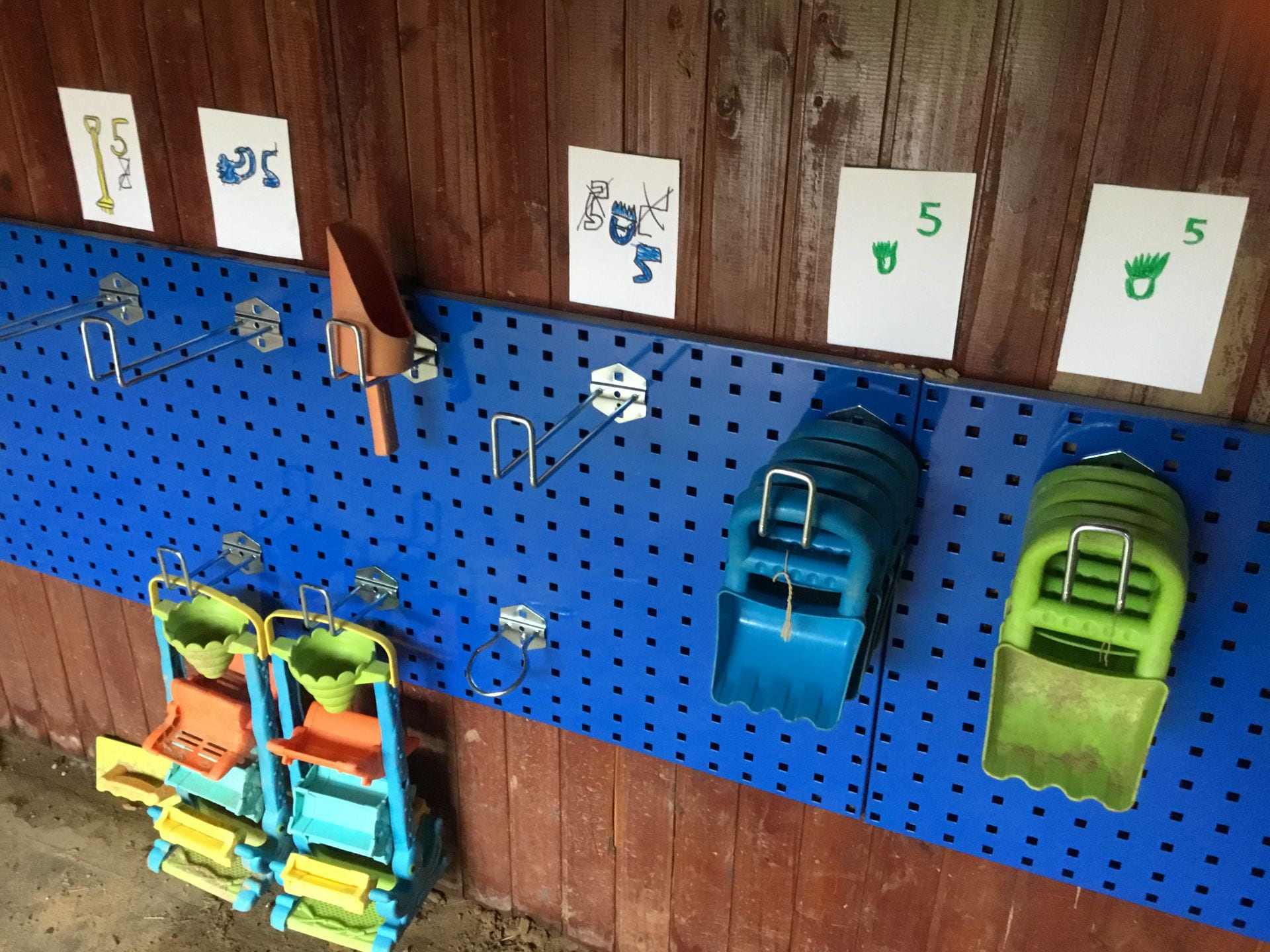
Then, created labels with images and numbers to let the children know how to sort and store the different items in the shed.

While planning and organising ‘The Shed’, the children took responsibility and ownership of their learning spaces and materials.

They worked in teams, sharing ideas, listening to different perspectives and working together for a purpose. They used their thinking skills to explore possibilities, to reimagine spaces and solve problems in creative ways.

The children used their knowledge of number and data handling when collecting and sorting information. Discussing and presenting ideas, documenting their learning and using what they know about signs and labels to inform others, developed their literacy skills.

The Cake Problem

K2B made two cakes. They asked if we can help with the frosting and cutting. We agreed.

The mathematicians thought about the problem. We had 2 cakes. We needed 16 pieces from each cake. The pieces must be the same size. First, we talked about the shape of the cake.

  • Patrick “The cake is a rectangle. Two sides are the same length, two sides shorter and two sides longer.”
  • Eunice “We draw rectangles because we have to think about how to cut it.”

  • Euijin “We draw 16 pieces.”
  • Kenan “We need to draw the 16 people. We have to make two 16’s.
  • Joon “It is 16 pieces.”

  • Patrick “We are erasing and fixing the pieces to make it right. When you don’t get it correct, you need to erase and try again.”
  • Noah “We are sharing our drawings.”

  • Doho “We draw and we show them.”
  • Sean “We can cut the cake 2 ways.”
  • Doho “We cut the cake.”

  • Eunice “We put the cream.”
  • Patrick “The cake looks like pancakes or cheesecake.”
  • Euijin “The cream cheese.”
  • Eunice “It’s almond cream.”
  • Patrick “It is sugar cream.”
  • Allen “I think this cream is white chocolate.”
  • Doho “Very YUM!”

 Student Learning Outcomes: Number Sense

– fractions are ways of representing whole-part relationships

Organising the Shed: Sorting and Data Collection  

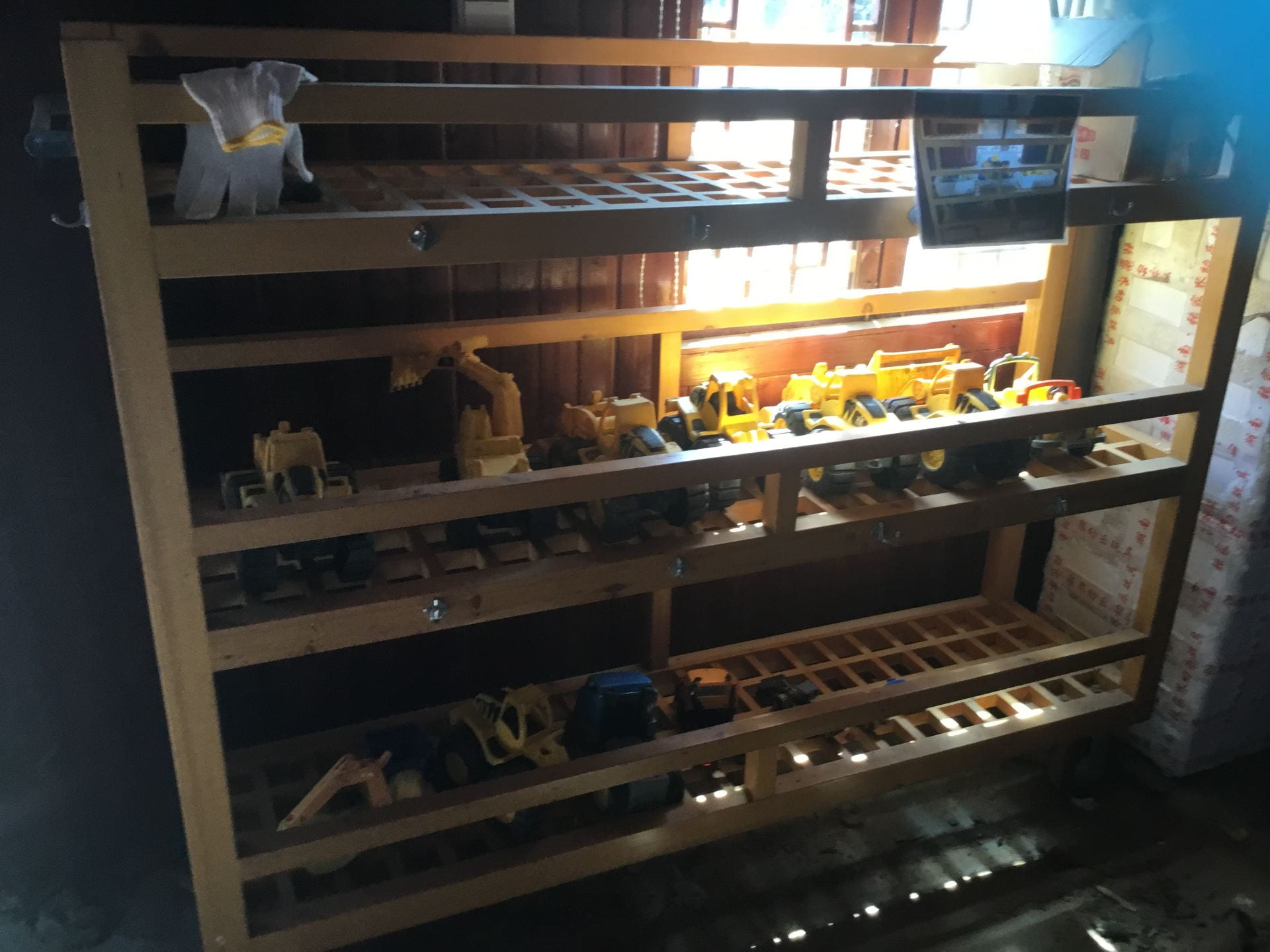
A team of children went to the shed to begin sorting the toys. They placed tubs for the sand toys, put the kitchen and cooking items on one rack and all the trucks and diggers on the shelves.

Next, Doho and Sean went to look for Mr. Jamie, to ask him if he could help the team mount the hooks on the pegboards.

Sean and Doho explained the problems they had, and then they went out to the shed with Mr. Jamie. Together, they were able to problem-solve and make a plan to mount the hooks.

A team of K2 mathematicians went to the shed to gather more information to plan the next step of the project. We needed to find out how many hooks, tubs and racks we will need to sort and organise the different toys in the shed.


The team began to think about the different ways we can record data. We decided to divide the paper into four to record the number of kitchen items wheelbarrows trucks and sand toys.

Then, the data collectors used pictures, words and numbers to record their information. 

We observed the children:

·     gathering, recording and organizing information

·     listening actively and respectfully to others’ ideas and listening to information

·     using mark-marking to convey meaning

·     taking responsibility with tasks

·     using strategies to problem-solve

Proposals to Ms. Jacqui

Different teams have been working together to make changes to the Early Years Playground. They have been conducting their research to look for ways to organise the play areas to make them safe and functional.

The ‘Shed Project’ team had received samples of the hooks for the pegboards.

They checked the height of the pegboards and tested the hooks to see which ones were most suitable.

Doho, Sean, Kenan and Eunice were ready to share what they leaned. They presented their ideas to the class and Ms. Jacqui.

Kenan liked all the hooks but decided that the circular ones were the least useful as they were too big and the tools fell through them.

Doho, Sean and Eunice also preferred the long straight hooks as you could hang more tools on them.

Ms. Jacqui was very happy to see the curved edges on the hooks as they were safer for the children.

We noticed that the children used a range of mathematical vocabulary; bigger, longer, shorter, to express their ideas about measurement.

The class gave them some feedback on the different ways the toys could be hung up.

Ms. JacquiHow many tools do we have and how many hooks will we need? We don’t want to buy too many, we just want to get what we need.

  • Tracey “We can count them!”

Tracey explained that the pegboards could not be mounted higher as the younger children have to be able to reach the tools.

Next, the team will work together to decide how many hooks we need to order for the shed. Then, they will need to put in a purchase order to buy the hooks. Ms. Jacqui suggested that they ask Mr. Jamie, the Grade 4 teacher to help them attach the hooks as he has a drill.


Next, we presented the proposal for the ‘Bike Park’. The children explained the reason for the yellow lines on the floor. We asked Ms. Jacqui if we can paint the floor. Ms. Jacqui agreed that the emergency exits, and walkway should always be clear.

Ms. Jacqui thought about the idea of painting the ground. She wondered if there were other ways to let people know that it was a ‘NO PARKING’ area.

  • Kenan “We can put a ‘NO Parking’ sign!”.
  • Mason “Put and red X on the floor!”

These were all great suggestions.

Next, the children explained the arrows in the parking area. They worked hard to convince Ms. Jacqui that their proposals will help the riders park and ride the bikes safely and quickly.

Ms. Jacqui “Instead of just painting it right away, what else can we try first?”

  • Tracey “We can put a sticker!, We can test it first!”

The children had many different ideas to communicate the message. We will begin to ‘test’ some of the suggestions to see how they work before asking for the floor to be painted.

We noticed how the children shared their thinking, providing examples to convince others of their ideas. We noticed the children listening to each other, building on each other’s ideas to find ways to solve problems and look for the best solutions. We look forward to our next steps in making the Early Years Playground more exciting, organised and safe.  

Props, Sets and Costumes

Over the last few days, the storytellers have been working on their props, costumes and set design.

Important choices needed to be made on the size of items, the choice of colours and the materials that would be used. During the process the children were:

  • actively engaged in various stages of learning, including: thinking about, planning, modifying and creating

  • involved in discussion and being self-directed in their creating (as opposed to passive receiving)

  • applying their understanding of concepts through the construction of their projects


  • solving problems and learning through trial and error or experimentation

  • reflecting on their actions and self-regulating in order to complete their tasks safely.

The Shed Project – Organising the Space

Sean, Kenan, Eunice and Doho have been leading in the ‘Shed Project’. They sat down to decide their next steps.

  • Teacher “The maintenance staff have fixed the pinboards. What do we need to do next?”
  • Kenan “We need to put a thing like a peg on the pinboard.”
  • Sean “What is a hook?”

We looked at some different types of pegboard hooks.

  • Kenan “We need to put the hooks because there are too many things.”
  • Sean “So dirty. Floor is sand. Some people play with sand and throw the sand.”
  • Eunice explained that the sand needs to be “outside in the sandbox.”
  • Doho “Some children put the sand inside. And some children mess it together.”
  • Eunice “Making the things dirty.”
  • Kenan “We need to put the sand back in the boxes. The sand needs to be in the EY Playground.”
  • Doho “Don’t put the sand inside the shed. Play in the sandbox. We need to clean the floor and put the sand back into the box.”
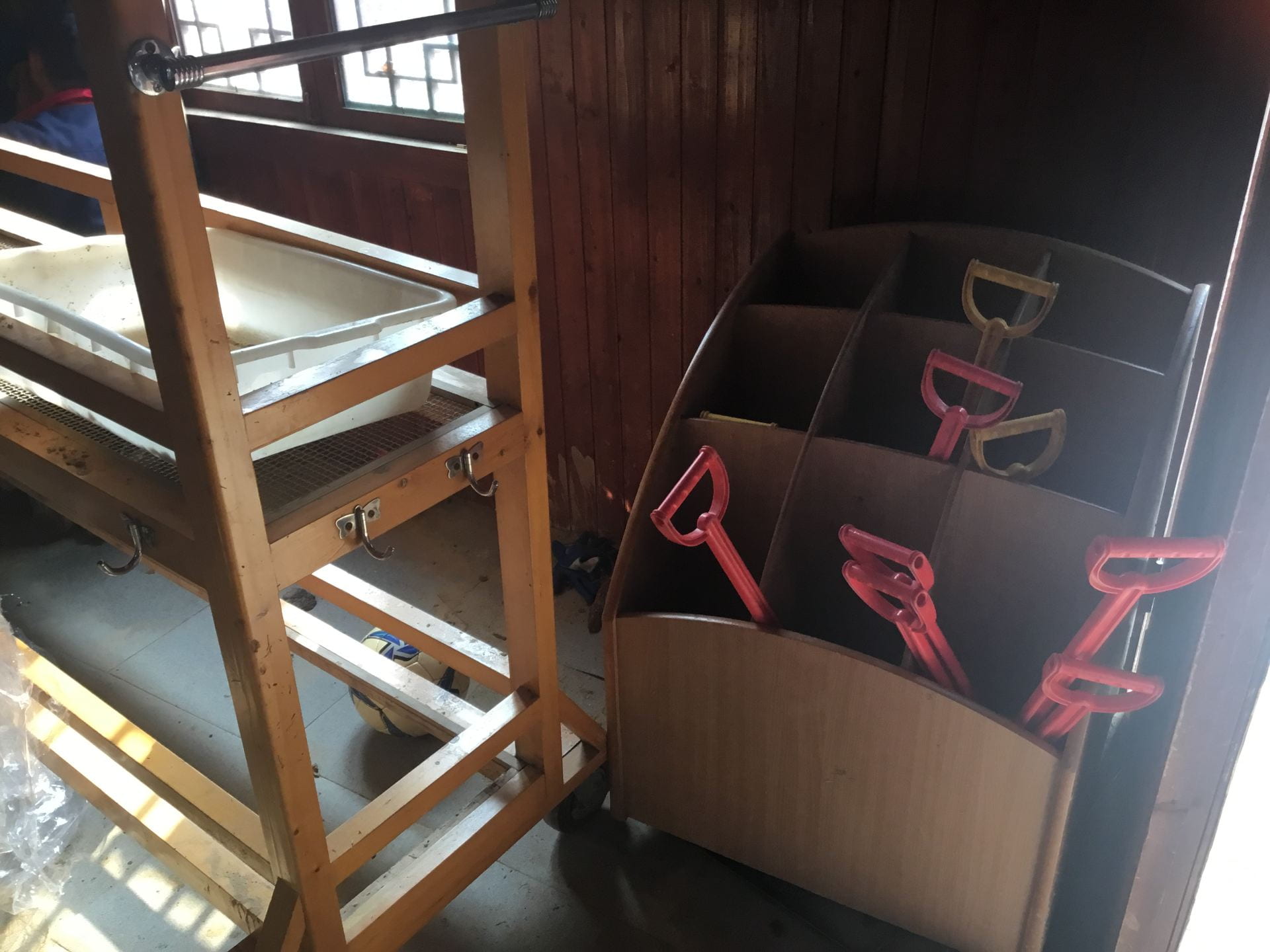
  • Kenan “We need to put the shovels on the pegboards.”
  • Sean “Pans and play cooking things, hang them up on the pegboards.”
  • Doho “NO putting things on the floor!”
  • Kenan “We need to put a sign.”
  • Eunice “Some person is making messy cooking. Don’t make a mess. Go to the sandpit and play.”
  • Doho “Some children making cooking and throw the sand inside.”
  • Sean “Put the trucks on the racks.”

The team drew pictures to share their thinking.

The team presented their ideas to the class and asked for other suggestions to make the space better.

Kenan “We need to put the spades on the pegboard.”

Questions and Answers:

Patrick “Why are the shovels on the pinboard.”

Kenan “Because there are so many shovels. We can use the pinboards.

Patrick “But I did not see the shovels on the floor. Can we put 2 shovels in one hole.”

We might think about the different ways we can organise the shovels.

Sean “Put the trucks on the racks.”

Questions and Answers:

Tracey “Why do not have new toys? Why are there racks on two sides?”

Sean “There are many cars.”

We might need to think about purchasing some new toys.

Eunice “We need to put the sand toys on the rack.”

Questions and Answers:

Tracey “Why is the sand on the floor?”

Eunice “She gets it and puts it on the floor.”

Tracey “Why did she throw the sand out and put it on the floor and the clothes?”

Eunice “She did not throw, she is playing.”

Doho “We need to cleanup inside the shed.”

Doho explained his drawing and answered questions about the shed, the sand on the floor and the shelves on the side wall that will be used to store more toys.

The team will consider the ideas suggested by the class. They would like to propose their suggestions for improvement to Ms. Jacqui to plan their next steps. 

The Bike Park Plan

The teachers set up a time lapse video after playtime to provoke the children’s thinking. We watched the video during our class meeting and discussed what we noticed.

We reflected on what Noah had said about blocking the emergency entrance. We also noticed how Kenan and Noah parked the bikes, making sure they are parked in reverse.

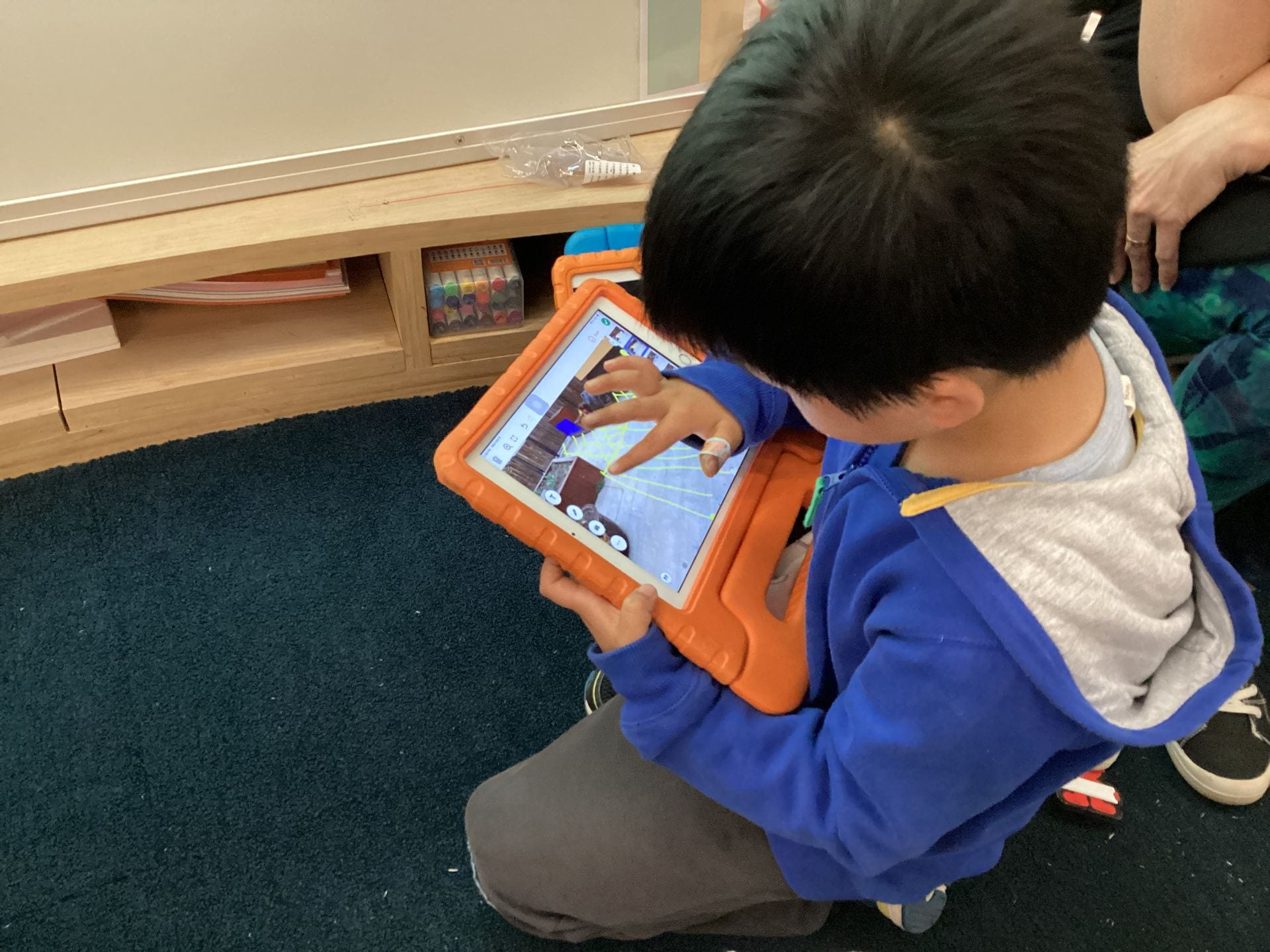
Noah used the iPad to show the class how we could keep the walkways in the playground clear of tricycles.

He thought about what he had learned through his research about the school parking lots, and then used the iPad to show how the lines could be marked on the floor. The yellow lines would be a ‘NO PARKING’ area. The class gave him feedback as he made the plan.


The messages and signs team are ready to begin their work on the signs to help the EY community know how to park the bikes.

Another team will present their ideas to the facilities department and relevant personnel in school, to help them make the changes they need. They will need to convince the facilities team that their suggestions will ensure we have a safe and organised playground.

Tricycle Agreements

The children have been discussing the ‘Bike Park’ and making plans to change the space, to make it more organized and safe. Hearing the children’s ideas on what we ‘should NOT’ do with the bikes, we decided to invite them to think about what we ‘CAN do’ instead.

The children put their ideas on paper, using drawings, words, sentences and discussion to express their thinking.

Then, we put all the ideas down on one chart paper.

In the next few days, the children will present these ideas to the rest of the Early Years classes and decide if changes need to be made to these agreements. Through this experience, we noticed how the children:

  • documented and shared ideas using drawing, emergent writing and annotating images
  • listened actively and respectfully to others’ ideas
  • participated in conversations
  • shared responsibility for decision-making

The Bike Project – Research Groups

Our Bike project continues, with children leading research projects to help them make the best decisions for their outdoor space.


Name for the Parking Spot: Conducting a Survey

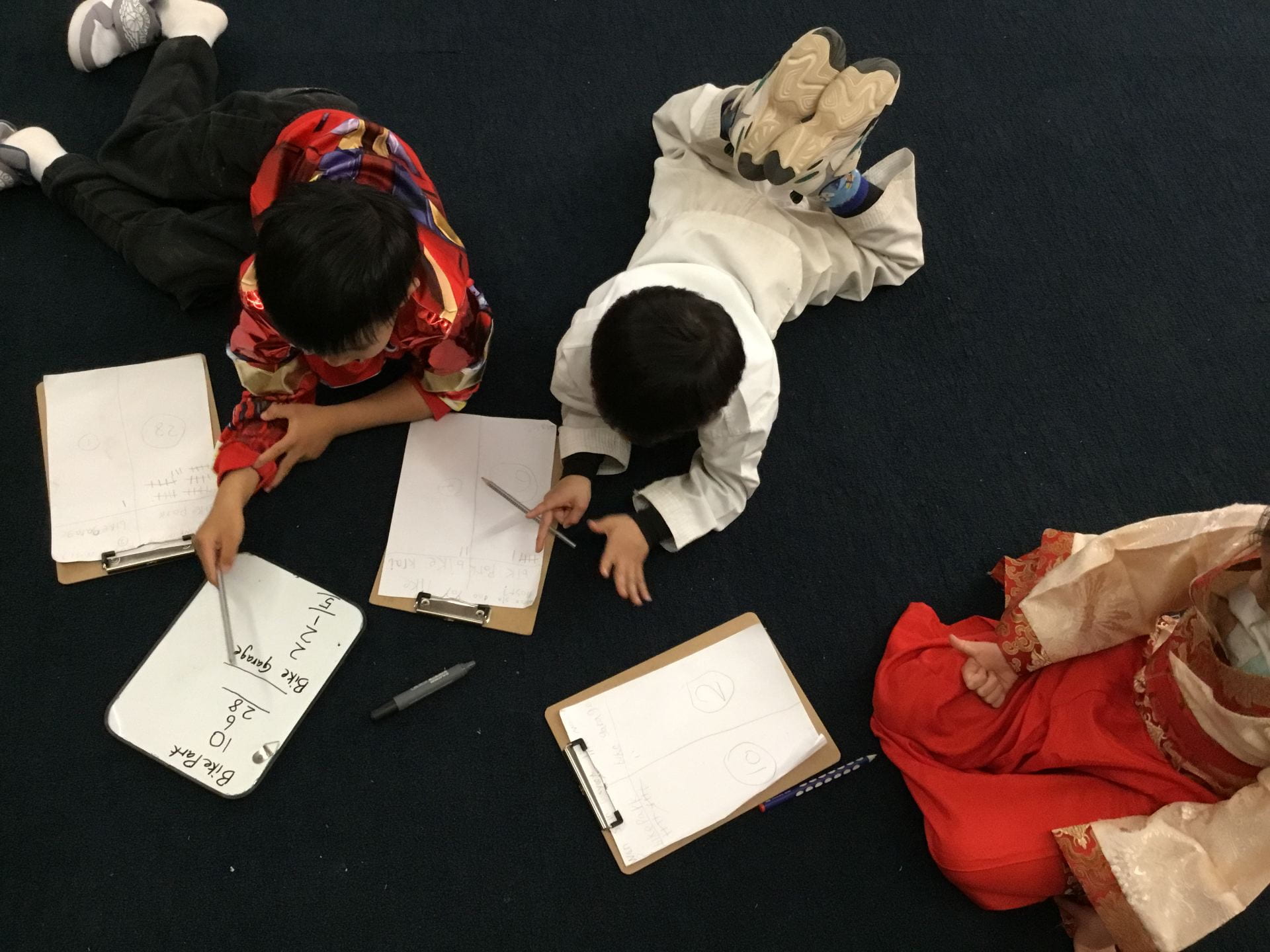
from our brainstorm on the different A group of mathematicians interviewed the Early Years community to find out their preference for the name of the parking spot. The two choices were BIKE PARK or BIKE GARAGE.

The team used tally marks to record the data on the survey.  

Then they worked together to calculate the total for each choice.

Through their research they learned that more people preferred the nameBIKE PARK!


NO PARKING area: Field Visit

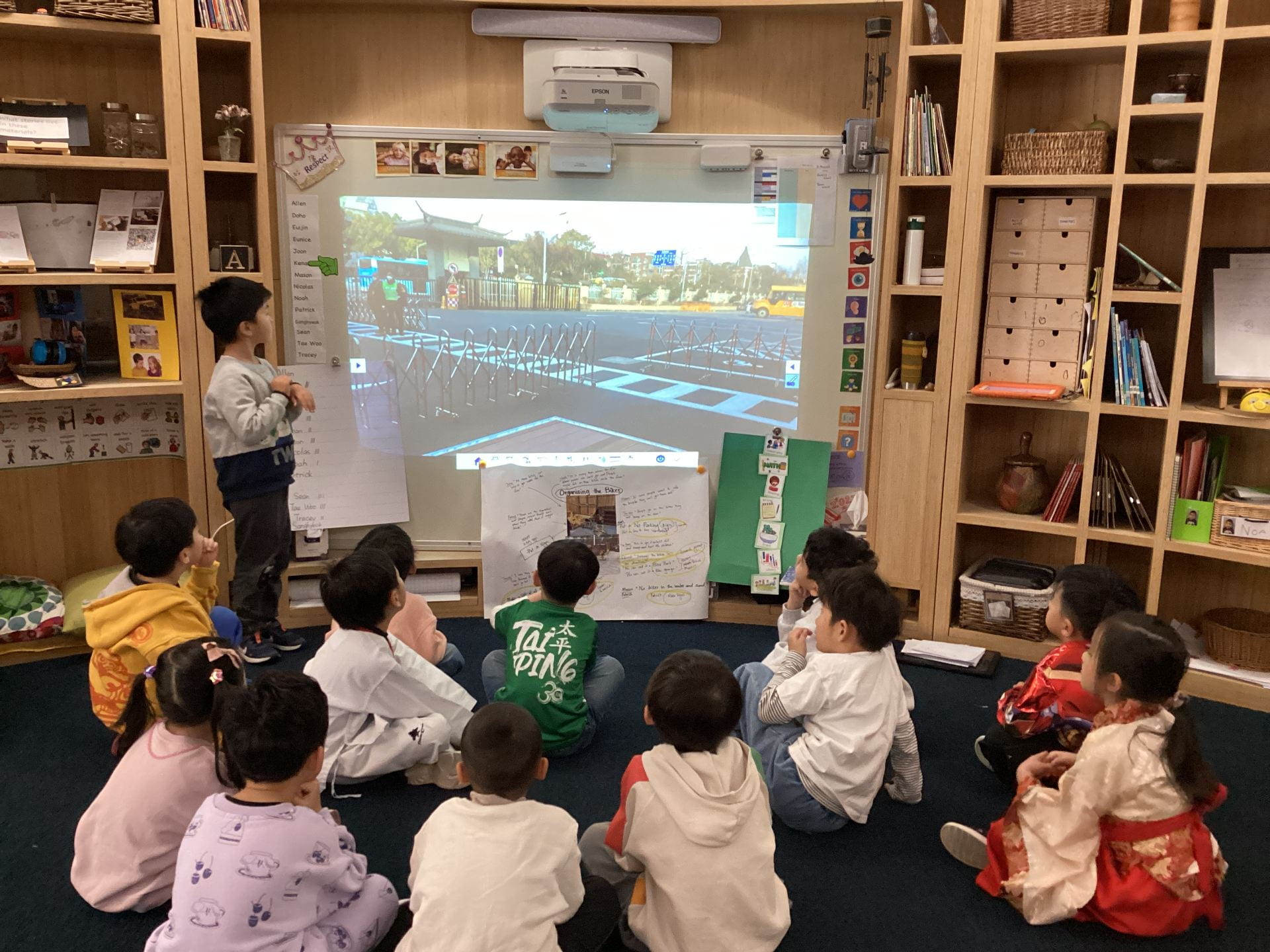
The children wanted to find a way to create a ‘No Parking’ area near the emergency exit. We know the school has many NO PARKING areas and areas where you can park. Noah went on a field visit to learn more.

  • What do we notice in the parking spaces?
  • How is the space organised?

Noah created a video to share what he learned from his research. We wonder how we might use these ideas to help us organise the tricycle park.


Signs and Messages:

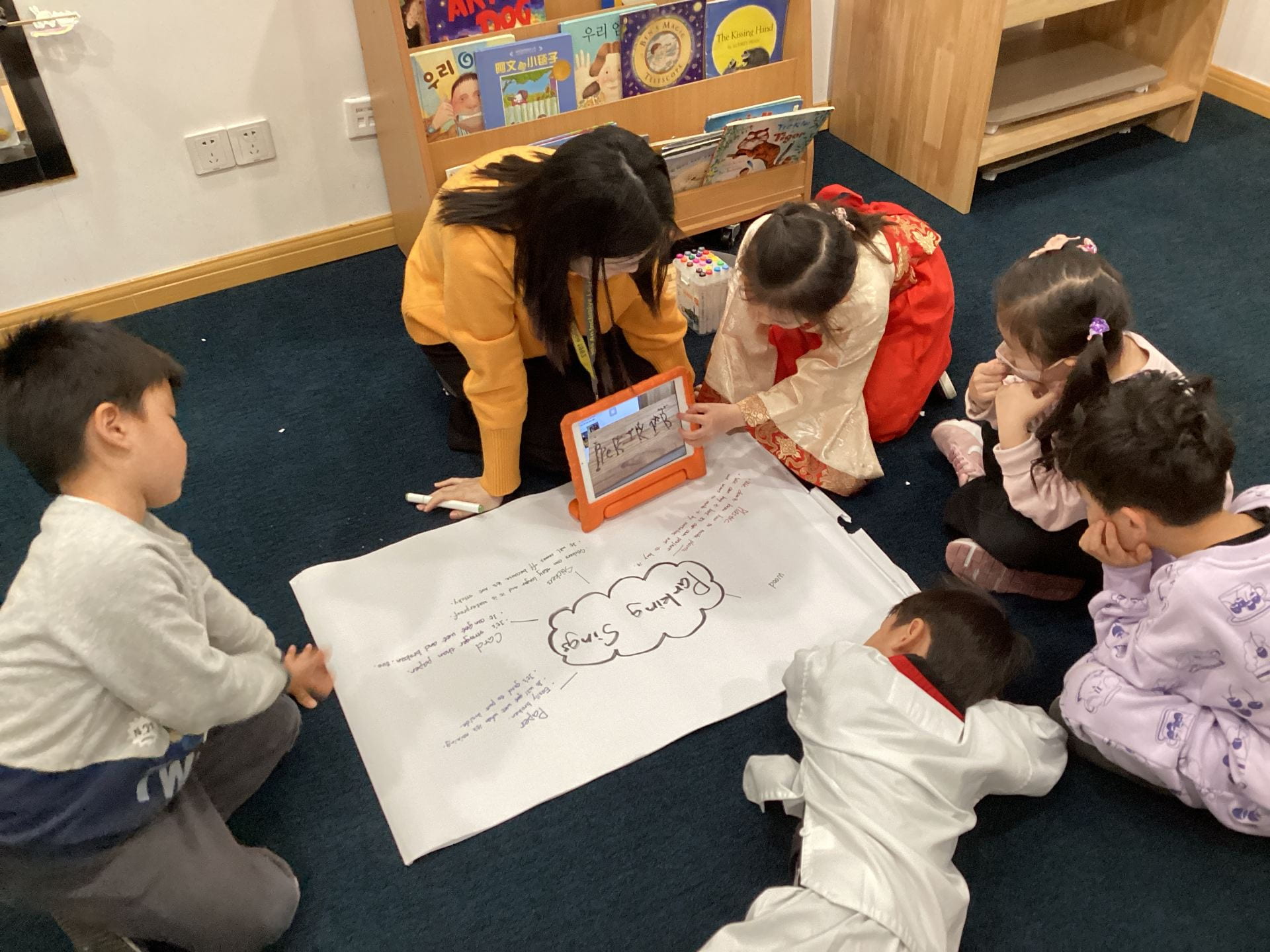
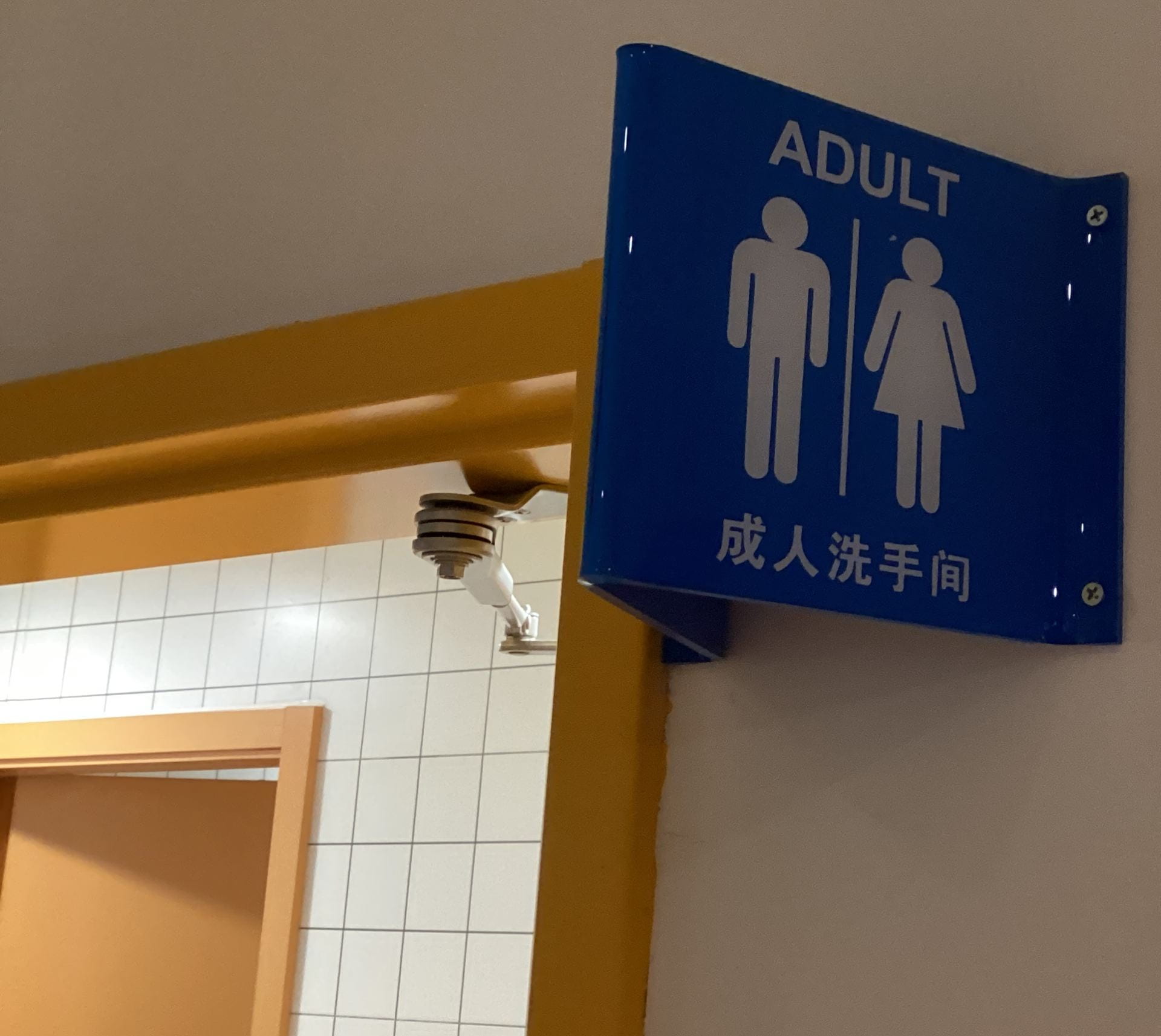
Another team of researchers brainstormed ideas for the signs. They began by looking for signs around the Early Years Centre.

  • What materials are signs made of?
  • How are colours, shapes and words used to share messages?
  • What messages and actions do they communicate to people?

They used the iPads to record their observations and brought photographs back to the team.

The researchers discussed their observations while Ms. Eileen documented key points on chart paper. 

The team decided that ‘plastic’ would not be an appropriate material to use as they didn’t know how to make plastic.

They didn’t want to buy plastic from the shop as it was their own project. They wanted to make the sign all by themselves.


Paper’ and ‘card’ were not the best materials for the signs as it breaks and tears easily.

Although card is stronger, it will get wet when it rains as the signs will be outdoors.


Yet another choice were ‘stickers’. They may last longer and are waterproof, but they might come off after a while.

The team decided that stickers were not a suitable choice either.


They noticed that the ‘wood’ was very strong and wouldn’t rip. If they used thicker wood, it would make the sign stronger.

The team decided that wood would be the perfect material for the signs.

They wondered if someone used stone to carve the wood, or fire to draw the sign. They decided that their next step would be to meet Ms. Jo and Mr. Danny to ask them more about the sign. Other ideas the team would consider:

  • How big does the sign need to be?
  • Where will the sign be placed?
  • How will it be fitted safely?

The team wondered how they might use what they have learned about traffic rules, signs and important messages in their own planning.

We look forward to our next steps as we begin to use what we have learned to organise the ‘BIKE PARK’.

The Bike Project: Fixing the Tricycles

We held a class meeting to talk about our nest steps with the Bike Project.

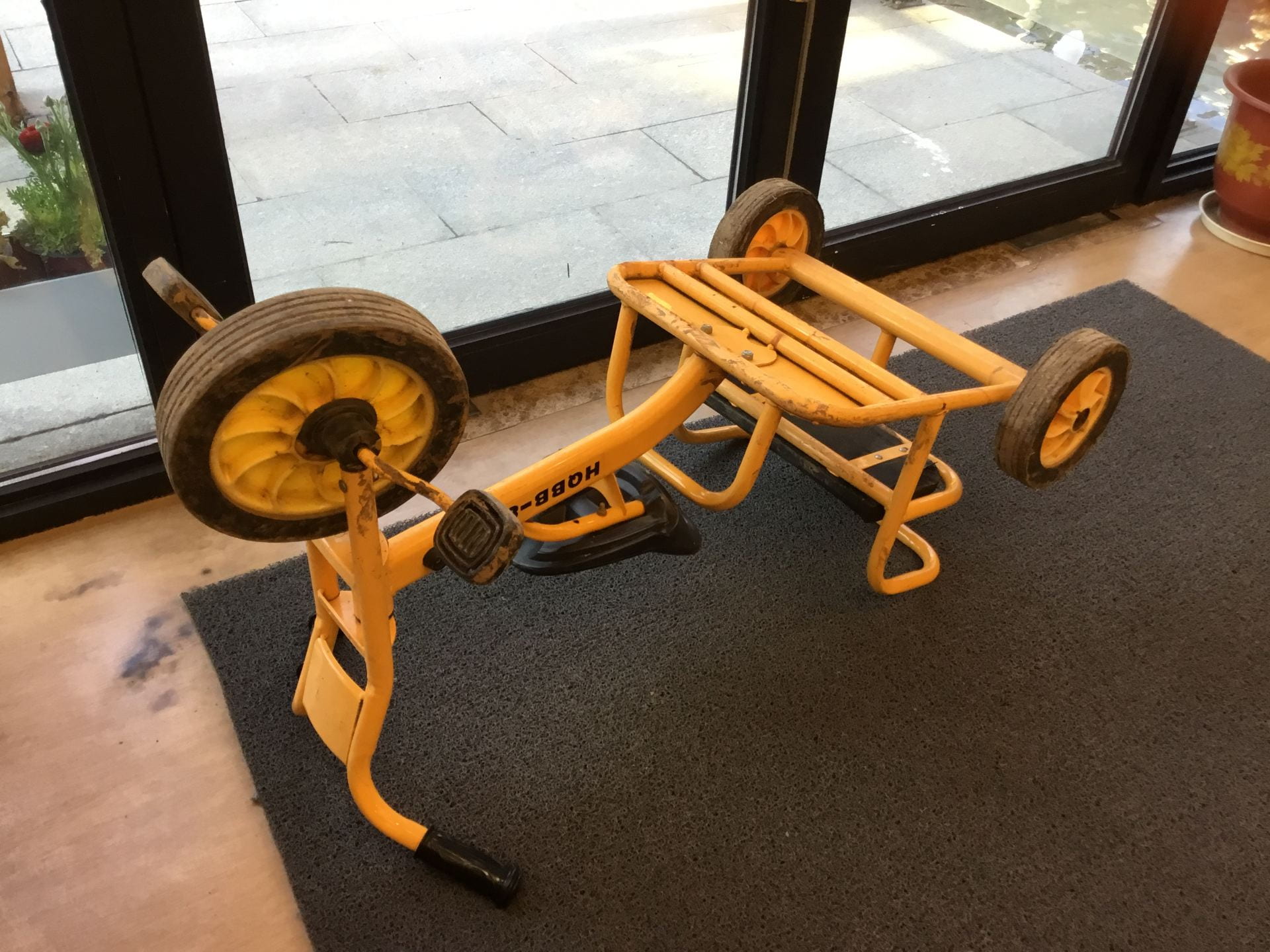
Mr. Danny and Mr. B joined our meeting and took note of the problems the children shared about the older bikes in the playground.

  • The front wheels are wobbly.
  • Some bikes don’t have the pedals.
  • Some bikes don’t have the rubber sleeves on the handles.
  • The seats are moving around.
  • The back tyres are wobbly.
  • Some of the screws at the bottom of the trikes are not tight enough.

A team went back to the design room to bring the tools they needed. They were HEAVY!

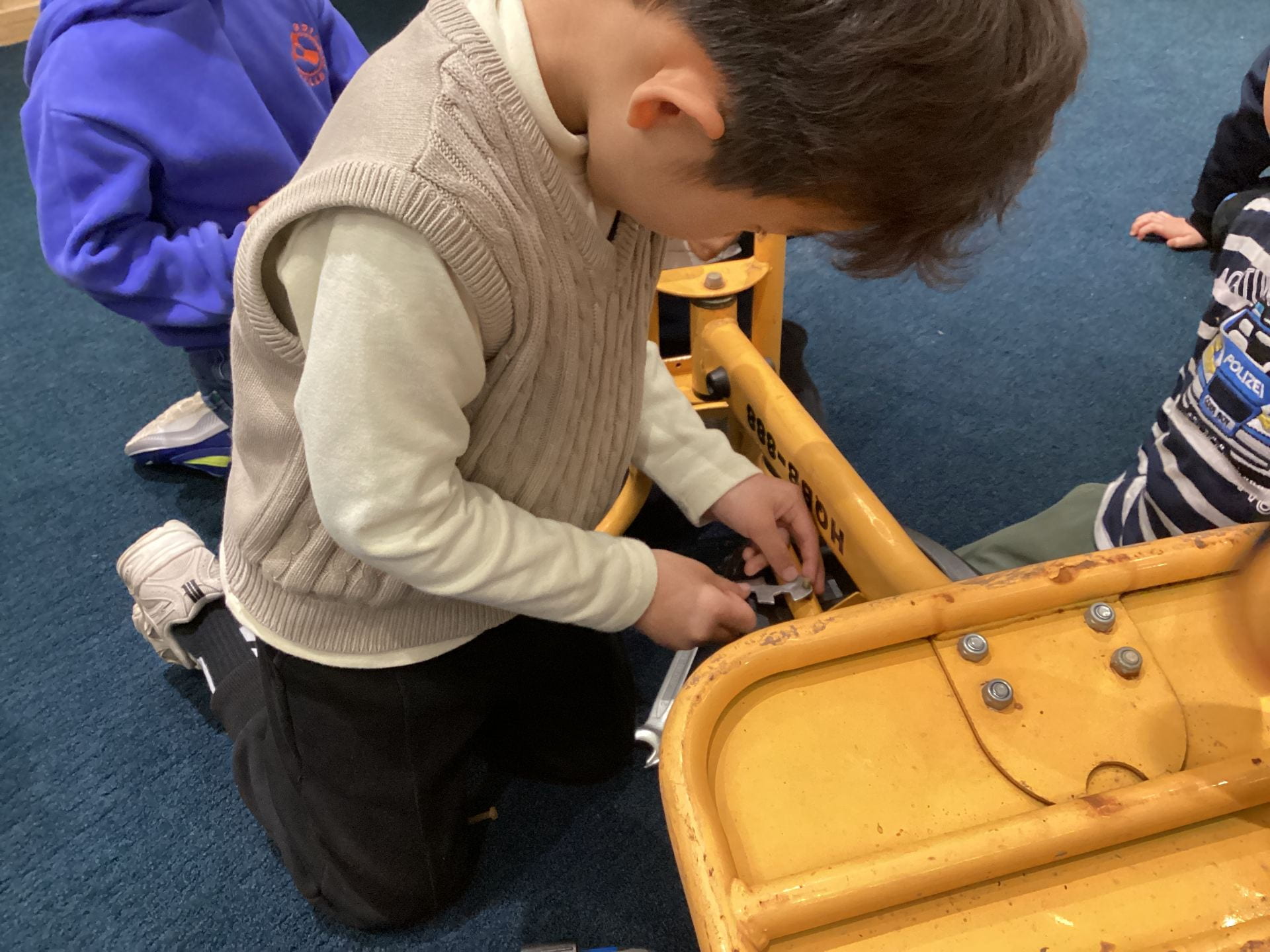
Then, the expert mechanics got to work with their eager assistants, tightening nuts and bolts, fixing the wobbly seats and adjusting the wobbly wheels. 

The mechanics took the bike for a test run to see if there were any more problems that needed their attention. The ride was smooth!

Pinboards for the Shed

(Organization, function, systems)

A few weeks ago, a group of children went into the shed to try and organise the space. They noticed that the spades, sand toys and kitchen items were left all over the shed. We decided to try and organise it.

We ordered some pinboards but they needed to be mounted on the walls.  

The children decided where the pinboards should be mounted.

Ms. Hannah sent the information to the maintenance staff department.


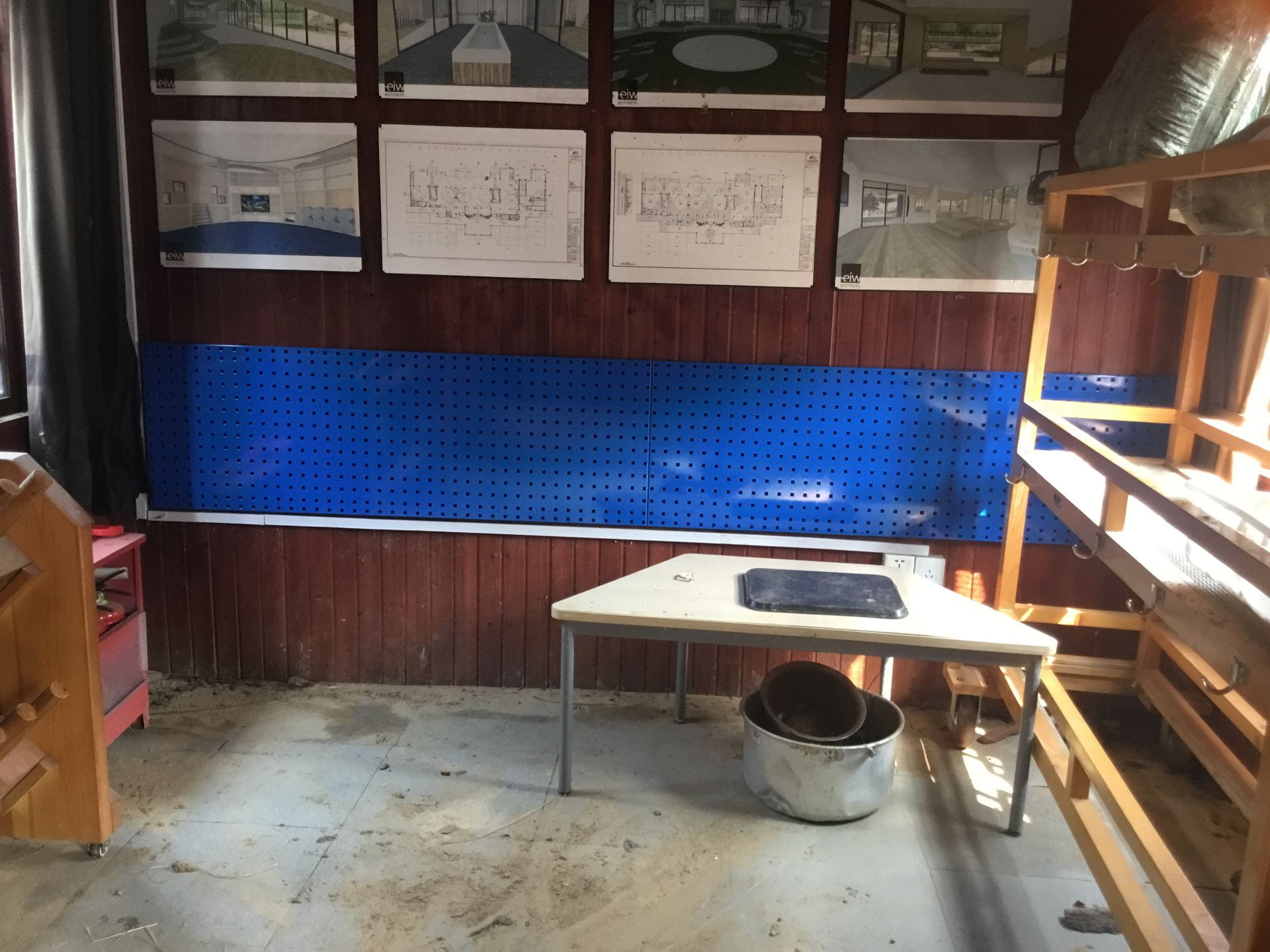
When the maintenance staff arrived, they opened the boxes. The pinboards were blue! We saw some screws in the box.

The maintenance staff thought about the children’s request. There were more pinboards than we had planned to have but the team shared some good suggestions. They began to mount the boards in the shed.

Now we have new pinboards to organize the tools and toys.

Our next step is ‘to discuss and agree on how we might organize the space so that people can use the different items safely’.

We continue to see the children taking ownership over their spaces, observing, discussing and creating functional spaces that meet their needs. The children know they have a voice, and that their ideas and creative thinking can lead to positive changes that support the community. Through these experiences they explore how community spaces can bring a sense of purpose and belonging.

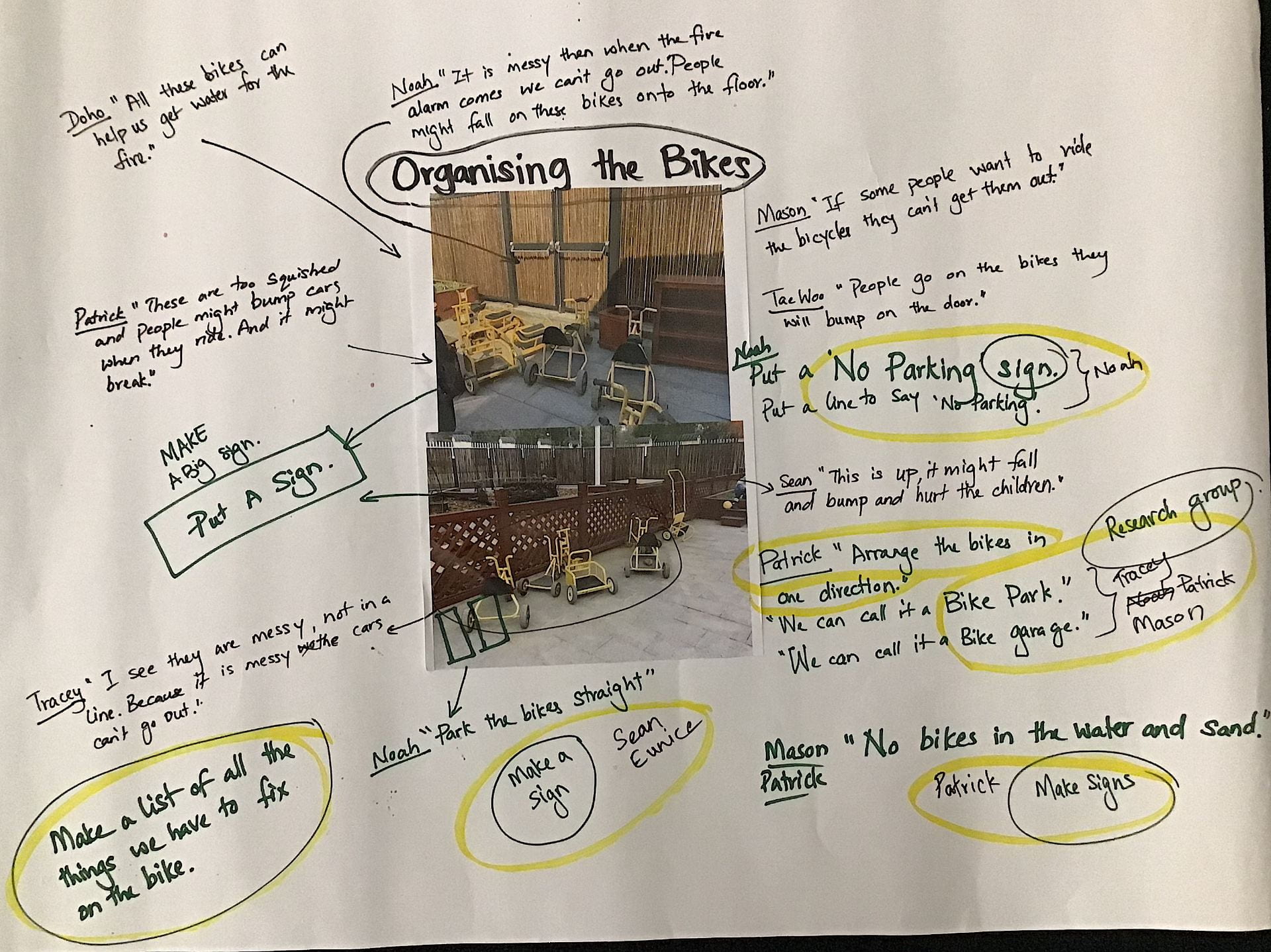
Organising the Bikes

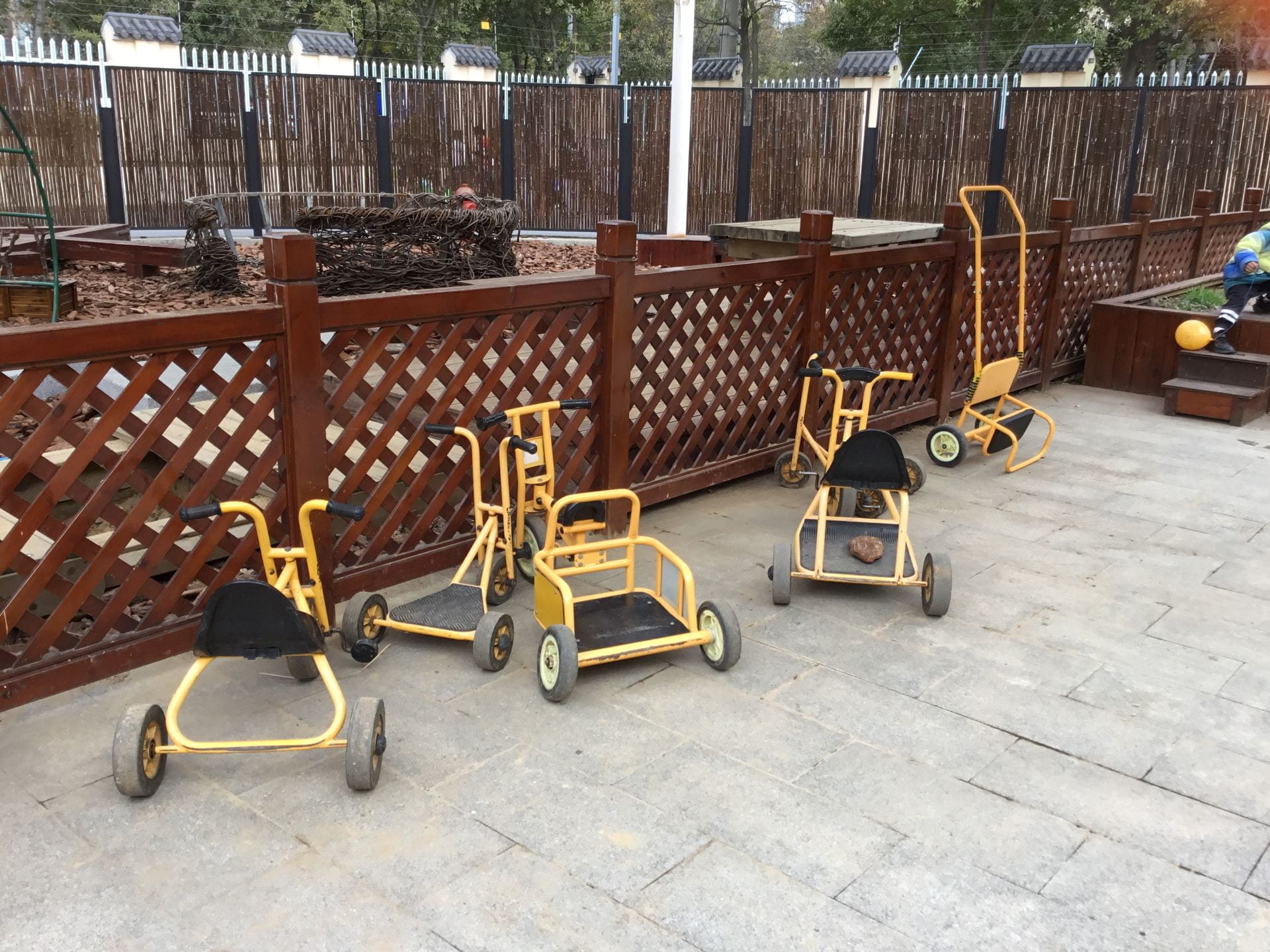
Two photographs of the bikes in the Early Years playground were presented to the class.

What do you notice?

The children looked carefully at the bikes and shared their observations.

They noticed that:

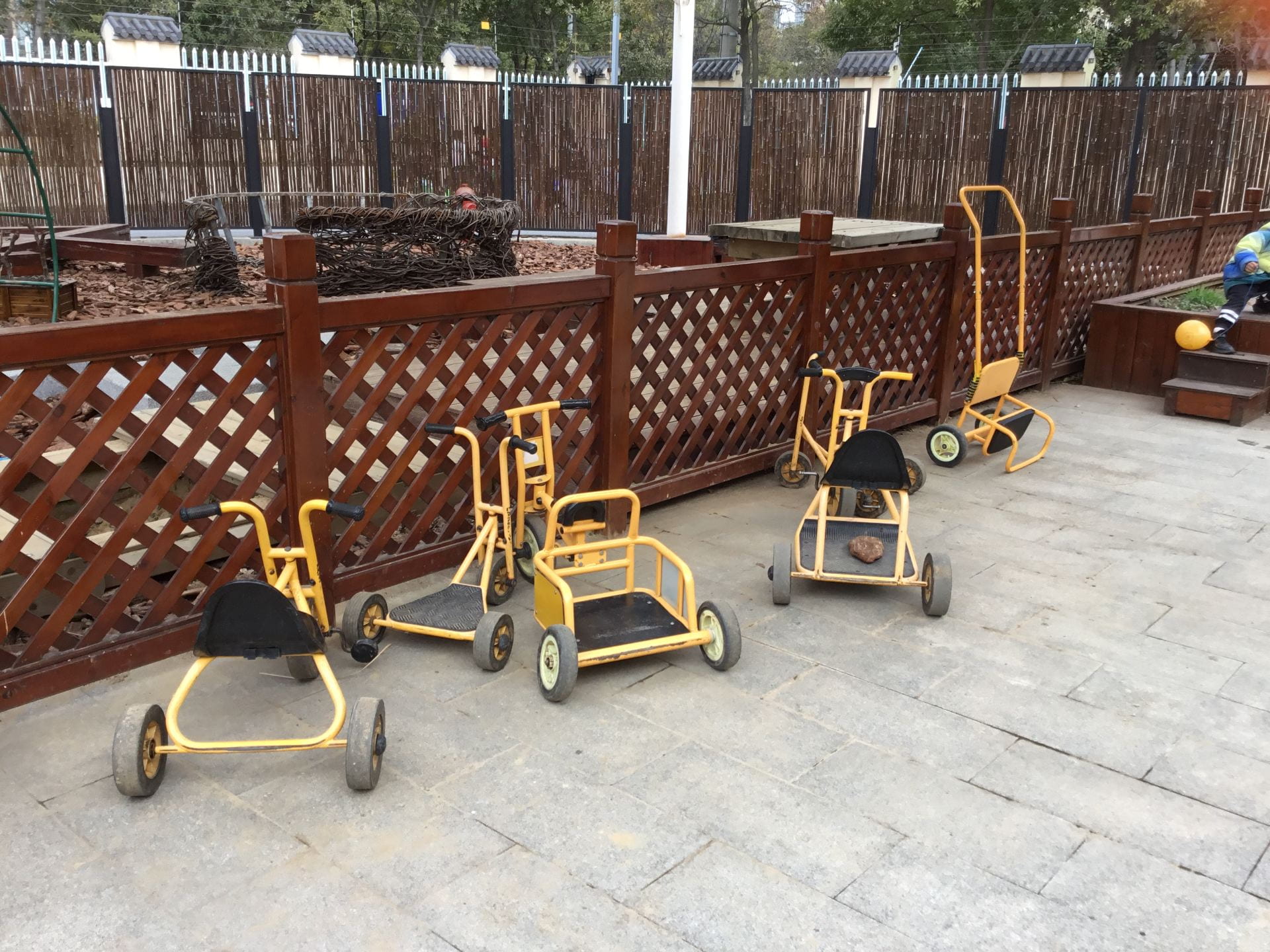
  • The bikes are squished and people might bump into each other when they ride.
  • They might break the bikes when they try to get them out.
  • The bikes are parked all over, (messy) and it is hard to move the bikes out when needed.
  • Some of the accessories for the bikes are not put away safely.
  • People can bump into the exit doors because there is no space to ride them.
  • The bikes are blocking the fire exit and people might fall over the bikes when trying to get out in a hurry.

The children suggested that we:

  • Make big signs to tell people what to do.
    • ‘Park the bikes straight’
    • ‘NO bikes in the water and sand’
    • ‘NO Parking’ sign near the emergency exit.
  • Add lines to show the no parking area.
  • Make a list of all the things we need to fix on the bikes.
  • Conduct a survey to find the most suitable name for the park. The two choices are BIKE PARK and BIKE GARAGE.

Next Steps… 

Creating A 3-Dimensional Map

We began to plan Bee-Bots map. The children revisited their initial ideas to help them make decisions. 

What do we need to consider when we make a map?

We began by thinking about the width of the road. How wide will the road need to be?

What will Bee-Bot need on the map?

How can we use directions to describe position and motion of an object?

We brainstormed ideas, considered different perspectives and began to think of ways to document our plans.

Then, a group of children began to create a map. First, they suggested ideas and made decisions about the location of different spaces and places on the map. They wanted an airport, cinema, garden, hospital, bridge and traffic lights. We noticed how the children listened to each other, considered ideas and collaborated with the goal ‘to make a map for Bee-Bot’.  

The team gathered the materials they needed for the project and used design and creative tools safely to create the map on a large piece of cardboard.

Two teams have completed making a city for Bee-Bot. Throughout the process they considered different perspectives, and challenged and justified ideas to make a city that Bee-Bot would like to live in. The children explored different materials and tools to construct the structures they needed, recycling and reimagining a new purpose for a range of plastic and paper products.

The teams were ready to test the Bee-Bot. They gathered to learn how to programme it. Ms. Jo has given the children some feedback and information that they will use to make a plan for their next step.

TASK: Estimate the distance of ONE Bee-Bot step.

They will need to explore direction, measurement, functions and purpose to plan an exciting and safe journey for the robot.

Approaches to Learning (ATL’s)

  • listen actively and respectfully to others’ ideas and listen to information
  • participate in conversations
  • negotiate ideas and knowledge with peers and teachers
  • share responsibility for decision-making
  • use strategies to problem-solve

The Bike Project

An invitation to create and build.

A group of young mechanics went to the Design centre to look for experts who can help them assemble the new tricycles.

Mr. Danny and Mr. B volunteered to help them with their project. Their task was to assemble a bike that was safe and worked well.

The bike mechanics began by looking closely at all the different components that were needed to assemble the tricycles.

The expert mechanics Mr. B and Mr. Danny worked alongside the children, helping them find the correct parts, the appropriate tools and the nuts and bolts that held the structure together.

The tricycles did not include instructions on how to assemble them, therefore, the mechanics had to work together to solve problems along the way. We noticed that the young mechanics asked the adults questions in order to learn more about the process.

They were deeply engaged in their inquiry, collaborating, testing, and thinking as they learned and applied new skills.

Volunteers from the Early Years classes have assembled all four of the tricycles.

They were excited and proud to ride them in the Early Years playground during their breaks.

The process of assembling the tricycles helped the children explore the concepts; structures, materials, mechanics, tools, safety, purpose, design and collaboration.

Action!

Following the project, the children have begun to notice some maintenance issues with some of the bikes and trikes in the playground.

Attention was also brought to how the bikes are parked each afternoon (systems and organisation). We wonder what steps they would take to help keep the bikes organised and maintained. We wonder what action the children may take as a result of their experience (initiative).

Making Paper

Tracey gathered a few volunteers to make the paper. They went to the Atelier to see if the paper pulp was ready to be turned into new paper.

The papermakers followed Tracey’s instructions to make the paper using the paper making tools she brought from home. They collaborated and shared the different tasks.

At the end of the process, the papermakers remembered to clean up their workspace and the materials they had used.

We will now need to wait till the paper dries on the rack.


We wonder what the children will choose to do with their new paper…

The Nest – Feedback and Updates

A few volunteers from the Nest Re-design Team went to speak to Ms. Jacqui. She was ready to share some information and feedback regarding the suggestions the young designers had proposed.

Ms. Jacqui began by reminding the designers what happened during their last meeting, when she received a proposal for the Early Years playground equipment, referred to as ‘The Nest’. The Design team took notes and drew pictures to help them remember the key points they needed to share when they return to class.

The designers remembered asking Ms. Jacqui about

  • the plants
  • if they can play games in the space
  • if they can have chairs outdoors
  • if they can add a door, a bed and grass

Ms Jacque “I went to see Mr. Arek and his job is to think about and plan the school, to make sure everything is working correctly and safely.”

Designer “And he is in charge of the money!”

Ms. Jacqui explained that we needed to order and pay for the materials we purchase. Mr. Arek has to think about that when he makes a plan.

Mr. Arek said the following might be possible:

  • we can have benches to sit on and a table for picnics
  • plant flowers

We have to keep the circular shape.

He might need to come and ask the designers a few more questions. It might take time. There is concrete under the nest. We will have to wait until the summer to make the changes in the nest.

The designers made a few new requests.

  • a door to enter the space
  • a toilet
  • a roof (when it is raining we can hide in it)
  • some homes for the bees and the butterflies

Ms. Jacqui considered the requests as the designers said that the bees are good for the garden. A home for the bees was discussed. She informed the designers that some people in our community are allergic to bee stings, and they can get quite sick. This means that having a beehive might not be very safe.

Designers “What about birds? Can we build a nest for them? We can put the nest for something to sleep in.”

Ms. Jacqui wondered about the nests for birds. Some birds like to build a nest and some like to live in homes that people make. We have to get permission to build big things, but we can put little things in the EY playground. 

We wondered what birds live in the EY garden and what makes a good birdhouse. Some research is required to help us make a plan.

Patrick and Mason presented the feedback to the rest of the class. The children have more questions and wonderings about the living things we share our space with.

The Early Years Florists

A group of children worked with Ms. Hannah to create a flower arrangement for each class in the Early Years. This is an ongoing project that different groups of children work on every few weeks.

This time, the florists worked on creating a Chinese style flower arrangement with the focus of balance. Joon and Mason were our K2A florists for the week.

The florists had several pointy stands to use with their flower arrangement.

They decided who will use the different stands by pulling paper that were of different lengths.

Ms. Hannah showed the children how to place the flowers on the pointy stand.

Then, the florists had to choose one flower and put it on their stand. Thy had to consider balance, the length of the stems and how the flowers were going to be arranged.

When they placed the second flower, they needed to work out how they can balance both flowers. Then, the florists included the leaves. The florists had to take turns and collaborate, using their skills of observing, thinking and decision making to complete the arrangement beautifully.

The young florists stood back to decide if their arrangements were done well. Finally, they had to agree on which flower arrangements will be presented to the campfires and which ones will remain in the Atelier.

Joon and Mason proudly shared their arrangement with their classmates and placed it next to the class journal to welcome everyone to K2A!

The Bikes

(Organisation, Collaboration, Function of Spaces)

Kenan saw bikes in boxes in the shed. The group of problem solvers wondered who can help them assemble the new bikes.

Mo asked his dad Mr. Danny if he could help. Mr. Danny agreed and asked Mr. B, the Design teacher to help too.

A group of children went over to the Design room to inspect the space.

Would it be a good space to assemble the bikes?

They met the two teachers and had a look around.

Mr. B had many different tools in the room.

Some were very big and heavy. Mr. B showed the young designers some of the tools that we might need to assemble the bikes. We noticed that the children used measurement vocabulary (big/small/heavy/lighter/long/shorter) to describe the different tools.

They decided that the Design room was a great space to assemble the bikes as it had so many tools and plenty of space to work in. Mr. B suggested that we bring one bike to the Design room to begin the process.

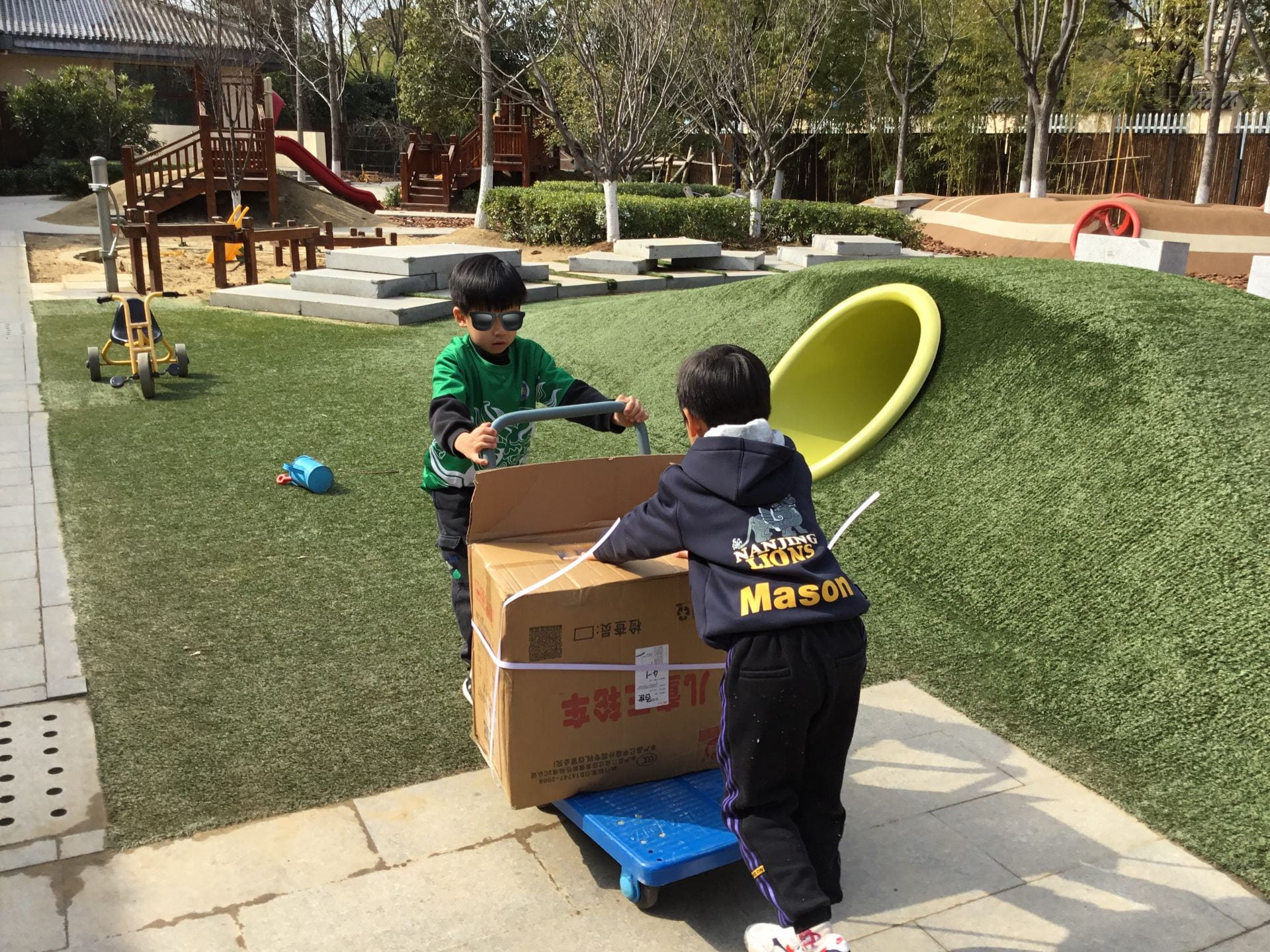
Patrick, Mason and Tracey borrowed a wagon from the Library and used it to transport the box with the bike parts to the Design room.

It was a challenge to steer the wagon, but the team worked together and also had some fun along the way!

The designers in the Early Years will take turn to help with the bike assembly.

We wonder what the new bikes look like.

Are they bigger than the ones we have in the EY playground?  

Are they one or two-seater bikes?

The Shed Project

Capable learners know that their voices are heard, and that their ideas and choices can influence their learning projects and the learning environment. With this in mind, we went outside to inspect the playground.

  • Tracey “This is the shed. Inside the shed there are toys. We play and then we tidy up.”
  • Mason “We can get some things from it. We can play with the sand.”
  • Patrick “We can clean the shed and put the materials into the box. In the box there is a basket and sometimes we put the materials in the box.”
  • Allen “In the house, we can put the toys that are used for outdoor play. Inside, the toys are broken. Some toys are not really hard so we can’t break them. We need to use it carefully to get the sand.” (in Mandarin)
  • Eunice “Inside the shed there are things for cooking like mud and sand and spoons and bowls. Sand and water make the mud.”
  • Doho “The shed looks like a house.”
  • Kenan “The shed is not clean because some things have mud on it.”

A group of problem solvers went to the shed to inspect it.

Eunice “There are boxes inside.”

Sean “This is a box.”

 There were many boxes in the shed. What was in there?

We inspected the boxes to find out. 

Tracey “We can use the empty boxes to make things like K2B.” 

There were new pinboards in some of the boxes. We don’t know how to make them so we wondered who we could ask. We decided where we would like the pinboards. These boards will help us organise the tools and materials in the shed. 

Sean “Put the pinboard here.”

  • Kenan “There is a little car, we need to make it.”

  • Patrick “My dad always teaches me how to fix things. I can make it. Can we ask Ms. Jo?” 

Noah, Patrick, Tracey, Mason and Kenan want to help.

  • Tracey “I think it is a new table.”

We wonder if we can find an expert to help us fix the bikes and the shelf.

Mason and Patrick recalled some maintenance staff coming in to fix a broken sink in the Early Years.

  • Patrick “They wear the uniform. They can fix it. The uniform is blue and red. I saw them go under the sink and fixing.”
  • Mason “I saw it and I tell him it is broken. And he get a tools (a knife). He cut with it.”

When the children were playing outside Ms. Shemo told Mo about the new bikes in the shed.

  • Mo “My dad is a design teacher because he can fix things. I can ask him if he can fix the bikes.”
  • Ms. Shemo “Could your dad help the children fix the bikes in the shed?”
  • Mo “I will ask my dad when he comes to the gym. I will ask if he can help because he knows how to fix the things, that is why he is a design teacher.”

We are excited to see how the EY problem solvers sort out the shed.

The Nest – Presenting New Ideas

The children at NIS know their voices are powerful and that it can impact their choices and opportunities for learning. Therefore, we have been designing, planning, creating and discussing ideas for ‘The Nest. Our next step was to think about the different ways we can use ‘The Nest’. 

  • What can we do with the space?
  • How might we use the nest?

We began by discussing the ideas shared by PreK-K1B students.

Then, we used paper and fine-line markers to document our own ideas. The children began to discuss their thinking, drawing and adding labels to express ideas.

We collated the suggestions on a chat paper and noted the key points. They presented their ideas to the rest of the class. Some of them included:

  • Playing games
  • Having a picnic
  • Eating snacks
  • Resting
  • Drawing
  • Growing plants
  • Taking care of nature by building homes for birds and squirrels

The children in the other EY classes presented their own ideas to the group.

Their next step would be to present the ideas to Ms. Patrick and Mr. Arek. They will consider the suggestions and look for ways to incorporate the ideas presented by the children in the Early Years.

Approaches to Learning (ATL’s)

  • organize information
  • draw conclusions and generalizations
  • use discussion and play to generate new ideas and investigations
  • present information in a variety of modalities
  • listen actively and respectfully to others’ ideas and listen to information
  • express oneself using words and sentences
  • participate in conversations
  • negotiate ideas and knowledge with peers and teachers
  • use mark-marking to convey meaning
  • share responsibility for decision-making

The Nest – Prototypes

The young designers made a list of the materials they needed to create their prototypes of ‘the NEST.

In Design, they looked for materials and collected them in paper bags. We noticed how the designers tested the materials to see if they suited their design plans.

Some of the designers arranged their materials on the tabletops, then reconsidered their choices based on the properties of the materials. These are important considerations that designers often reflect on as they create and manipulate materials for a purpose.

The designers began to work on their prototypes. They were encouraged to refer to the shape and design choices they had documented on their plans. As the designers worked with the materials, they talked about their own projects and provided suggestions to their peers. Some of the designers ran in and out of the classroom, revisiting ‘the nest’ to see if their prototypes were accurate replications and improvements to the current structure. The teachers noticed some of the designers reconsidering their initial choice of materials. Through trial and error, the young designers continued to make improvements to the prototypes.

Tracey and Patrick reassessed their designs, reconsidering the materials as well as the structure of their prototypes. Patrick ran to a brick wall to see ‘how’ the bricks were laid, deciding that the pattern was an important consideration.

Sean, Doho, Eunice and Tae Woo considered new materials that were available in the Atelier and in the classroom. Mason decided to combine natural and synthetic materials in his design. While creating, the young designers followed the natural cycles of design as they planned, created, reflected and improved their structures.

Design Learning Outcomes:

  • choose tools and materials
  • make a product using known procedures or through modelling of others
  • use trial and error to make changes, solve problems, or incorporate new ideas from self or others
  • develop their skills and add new ones through play and collaborative work
  • explore the use of simple, available tools and technologies to extend their capabilities


The Prototypes

The Stool – Ongoing Project

Ms. Shemo purchased a stool from one of the Eco-friendly projects at NIS. One morning the stool fell and broke. The children considered the problem for a while.

When Ms. Jo. Came in to class, Noah reminded Ms. Jo that the stool was broken.

Designers are also problem solvers. Ms. Jo asked the young designers if they could fix the stool. They thought this was a good project. The children went to the Primary School Design Pit to find materials to fix the stool.

The designers agreed that they should use “some sticky things” to fix the stool. Glue sticks, masking tape, duct tape, transparent tape, glue tack, a hot glue gun, and white glue were the “sticky things” they could find in Design. They thought that the hot glue gun, duct tape, clear tape, glue tack, and white glue were good fixing materials for wood, and were good materials for fixing the stool, but they couldn’t decide which would work the best. Designers sometimes test materials and then decide on the most suitable ones.

After picking the materials for fixing the stool, our young designers started to test these materials. The first one was the Glu Tack.

The young designers brainstormed different ways to apply the Glu Tack either on the seat or stool legs. Whilst testing the Glu Tack they found some other problems, for example, the seat wasn’t put evenly on the stool legs.

They didn’t forget to fix these problems as well. Finally, the young designers got the seat back on the stool. They will leave the stool in K2A until the next lesson to test and see if the Glu Tack worked well.


Test two…

The second material the young designers decided to test was the duct tape. The children used the green tape and pasted the sides down to fix the stool.

Right away they could see that the plastic top moved around. It did not look like a safe choice.

They decided to add a sign to let people know that it was not safe to sit on. The designers will need to reflect on their choice and decide what they need to do next.


Test three…

We reviewed our last test and decided that duct tape wasn’t a good solution. Next, we used hot glue to fix the stool.

Before gluing, the designers brainstormed the advantages and disadvantages of using hot glue.

Mason and Patrick thought the hot glue would make cracks in the seat because the glue was hot. What do you think?

Let’s give the hot glue a bit of time and see if it will make cracks in the plastic seat.

Our problem-solving continues…

Documentation by Ms. Jo and Ms. Eileen

The Nest Project

Big Idea: Designs grow out of natural curiosity.​

We gathered as a group to talk about a piece of outdoor equipment. The children typically refer to this space as ‘The NEST’. The young designers were invited to share what they notice and think about the image.

The first step was to ‘Empathise‘, to learn more about the people who we are designing and creating for. In this instance, it was for the children in the Early Years. 


  • Allen “Ms. Bella like to look this house is broken. Ms. Bella look, said, not good.”
  • Kenan “It is broken and Ms. Bella is looking and she is so sad because it is broken. Boys and girls sit there and kick there.”
  • Eunice “This sticks are broken.”
  • Tae Woo “Ms. Bella is standing and looking fix the sticks.”
  • Chloe “Broken”
  • Tracey “The sticks are broken because the boys and girls are sitting on the sticks.”
  • Noah “I think it is a nest.”
  • Patrick “It is a big stick house.”

After the designers shared their observations, we began to ‘Think’, to find as many solutions as we could to solve the problem with ‘The Nest’.

The young designers went outdoors with their clipboards, paper and thin line markers, to look for innovative ways to solve problems and better utilise this great space.

Then, the young designers presented their ideas to the class as we documented these proposals on large chart paper.

Through our observations, we noticed that the children named and suggested many different design and construction materials and tools in their plans.

They made these suggestions by tapping into their prior knowledge about the properties of materials used for building structures.

Some designers visualised the space in unique ways, bringing in design ideas and elements that would offer comfort and purpose. Their sketches included pictures, words, symbols, and numbers. Essentially, they used what they know about writing to communicate ideas as they documented their thinking on paper.

When presenting their ideas to the class, the designers listened and engaged with interest. We noticed how they made connections with what they see, what they heard, and what they know, while looking for ways to understand and solve problems through authentic experiences.

The children suggested including a title on the chart paper, ‘K2A’s ideas to fix the NEST!’.


We are excited to dive into our next step, to create prototypes!

Design

Through this experience, the children had opportunities to:

    • identify needs and opportunities for designing, through exploration
    • generate ideas from their experiences and interests
    • add to others’ ideas
    • choose an idea to pursue

The Garden Boxes 2

(Responsibility, Ownership)

A few weeks ago, we potted some plants in garden boxes in the Early Years playground. We gathered to talk about our next steps. The children looked at a picture of the plants and began to make suggestions and share their thinking.

  • Tracey “This is the little tree. The little tree is growing up.”
  • Patrick “The little tree is growing up, they climb up. It grows up and up here, on the metal bars.”
  • Doho “Water in soil and tomato go up and big.”
  • Patrick “What seeds is it? I think it is potato seeds.”
  • Noah “Ms. Dora helped us.”

Teacher “Yes, she did, but who will take care of them now?”

  • Tracey “The helpers. US! We need to put water and the sun will let them grow up. We can do one by one. We can line up.”
  • Patrick “4 people helping to water one box. I think Chloe, Sean, Eunice and Doho in one group.”

The children were not sure about this proposal so they continued to share other suggestions.

  • Olivia “I have a different idea. My idea is I want to do the little tree. Have water to the tree. Little tree to be a big tree.”

  • Tracey “Who is sitting good, they can put the water.”
  • Kenan “two people are changing.”
  • Olivia refers to the helper of the day chart and suggests “Kenan and Noah go first. Because he is the helper.”
  • Noah stands up to explain the plan further and reiterate what Olivia suggested.
  • Patrick “Mason and Noah will go tomorrow.”

The children decided that this was the best suggestion, and so a plan was created.  They agreed to take turns to water the plants. We heard the children talk about growth and change, and what plants ‘need’ in order to grow. Many of the children were eager to take responsibility to care for the plants while others listened to the debate.

We noticed how the children shared and negotiated ideas. Their suggestions were considered and in the end, they were able to agree on a plan to care for the plants. The children continue to wonder what type of plants they were growing. It was hard to tell as there were no leaves or fruits on the plants.  


Our learning continues….

Approaches to Learning (ATL’s)

Research Skills

  • Ask or express through play questions that can be researched.
  • Use all senses to observe and notice details.

Communication Skills

  • Listen actively and respectfully to others’ ideas.
  • Participate in conversations.
  • Negotiate ideas and knowledge with peers and teachers.

Living things

Students understand that living things have basic needs, including food and water.

The Seeds

A few weeks ago, a few children were exploring in the Early Years Playground. The teacher documented the children’s explorations. Then, we presented the piece of documentation to the children. We read it together and noticed the details in the photographs.

The children involved in the inquiry began to share their ideas. The other children listened with interest, making suggestions along the way.

  • Olivia “I want to find more seeds. Help Ethan find more seeds. I want to help Tracey and Noah.”
  • Tracey “Me too!”
  • Kenan “ME TOO!”
  • Noah “We want to plant them to make another tree.”
  • Tracey “The black seeds put in the mud will grow up, into a big tree.”
  • Noah “The black one is the hardest one to find.”
  • Tracey “We need to find a lot. Its not like the green seed. We need to plant them in the mud.

Teacher “How will people know where you have planted the seeds?”

  • Tracey “We can draw and put it so we can know where it grows.”
  • Patrick “Can I help you Tracey and Noah?”
  • Noah “Everyone can help us!”
     

When the children went outdoors, they ran straight to the tree with the seeds.

They looked on the floor and around the play equipment see if they could find any black seeds.

They saw some on the tree, but the branches were out of reach. Noah tried to jump high, hoping that he can reach the branches.

Two children went off to look for a solution. They came back with some spades. They used the spades to reach some of the seeds. One child threw the spade at the tree, hoping that some will fall off.

 He realised that this was not the best idea. Then, the group of children continued to look for the seeds on the ground. They found some black seeds and shouted with excitement.

They kept them safely in the wheelbarrow. We look forward to their next steps as they decide what to do with the seeds.

Approaches to Learning (ATL’s)

Research Skills

  • Ask or express through play questions that can be researched.
  • Use all senses to observe and notice details.

Communication Skills

  • Listen actively and respectfully to others’ ideas.
  • Participate in conversations.
  • Negotiate ideas and knowledge with peers and teachers.

Living things

Students understand that living things have basic needs, including food and water.

Counting Squares

The students were presented with a picture that had a heap of red and yellow Unit Tiles.

What do you wonder?

  • Tracey “Why does red and yellow? Why are they not rectangles?”
  • Patrick “Who takes yellow and red to mix it.”
  • Kenan “Why yellow and red is putting in?”
  • Mason “What does it mean?”
  • Olivia “Why don’t they have blue and green?”

 Estimate how many squares are in the pile?  

Next, the children estimated how many Unit Tiles there were in the pile. They noted this down.

How many red?

How many yellow?

How many Unit tiles we used to make the pattern?

Then, we watched a video that gave the children more clues. The video stops midway, showing an incomplete pattern. The children used pictures to draw and share the complete pattern, and to find out how many tiles were used in all.

Finally, they were able to record how many red and yellow tiles were used to make the pattern.

Through this task the children were able to:

-estimate

-share their thinking

-document ideas using drawings and numbers

-problem-solve

-work in collaborative groups


The Garden Boxes

(Responsibility, Ownership)

Three children went out to document a task. What was happening out in the playground? Their responsibility was to observe what was happening, gather the information and inform the rest of the children. There were 4 new garden pots in the Early Years garden. What were they for?

The 3 children observed the activities and used the class iPads to take photographs. They used the photos to create 3 short videos to share their information in English, Korean and Mandarin.

The children shared the videos with the class, informing others about the events. We had 3 plants left. We went outside to decide on our next step.


Noah “I see 3 trees.”

Kenan “Me see 3 trees.”

Tracey “I see some lines on the branches.”

Olivia “I see a box.”

Tracey “But that one don’t have it because we didn’t put.”

We had to decide who would get to put the plants in the boxes. We tried various groups to decide on the right number of people that would work together.

The children made suggestions on the number of children in each group.

  • What about 3 in each group?
  • Can we do 7 and 7?
  • Can we have 6 and 7 and 1?
  • Can we have 4 in each group?      

This seemed the best number for each group. We had one person left over and she joined one group of 4. Then we were ready to plant.

Ms. Dora helped us put the plants into the boxes. Then, we added more soil to the left-over garden box and planted the 3 plants. Then, we watered the plants.

We sat down to take notes and sketch our thoughts on our notebooks. While drawing, we thought about the questions we had about the plants and the garden boxes.

Patrick “Why are there no leaves on the plants? It is only October, is it too cold?”

Conceptual Understandings:

Living things: Students understand that living things have basic needs, including food and water.

Inquiry Skills

  • Pose and respond to questions.
  • Participate in guided investigations and make observations using the senses.
  • Share observations and ideas.

Paper – Agreements

(Nature, Causation)

Tracey “We need paper!”

We called a meeting to discuss the ongoing situation we had with paper and card. The paper basket was empty. The children wanted more paper but were not sure how they would get more.

The children began to share ‘why’ they needed paper. They explained that drawing, writing, cutting and making were important to them. They began to see why there was ‘no more paper’. They listened to each other’s ideas and agreed that there was a lot of ‘wasting’.

We had a conversation about how paper could be made, the process it might go through and why we need to be mindful of how we use paper and card.

The children decided that the trees were important so they listed some possible ‘action’ they could take to reduce the waste of paper and card.

  • Patrick and Kenan “One day use one paper.”
  • Olivia “Draw and then put it in the basket.”
  • Patrick “Don’t waste new paper.”
  • Tracey “Don’t crush or throw the paper.”

During the first few weeks of school, Tracey brought in a drawing she had made on recycled paper. She presented it to the class, explaining the process she went through to make the paper. We were all excited and wondered if we could also make paper.

This is an evolving project that we will explore further.

Inquiry Skills

  • Pose and respond to questions
  • Participate in investigations and make observations using the senses
  • Share observations and ideas

The Cave

We often talk about the spaces in our classroom environment, and the different agreements we need to ensure the spaces and materials are used with respect and care.

The Cave’ is an elevated space within the classroom. It is one of the children’s favourite learning spaces within the classroom. It is often a space for roleplay and quiet reading. However, over the last few weeks, there has been some tension around the use of ‘the cave’.

We brought the children together to discuss the issues related to ‘the cave’.

  • Why has it been closed?
  • What are some of the problems we have had when using the cave?

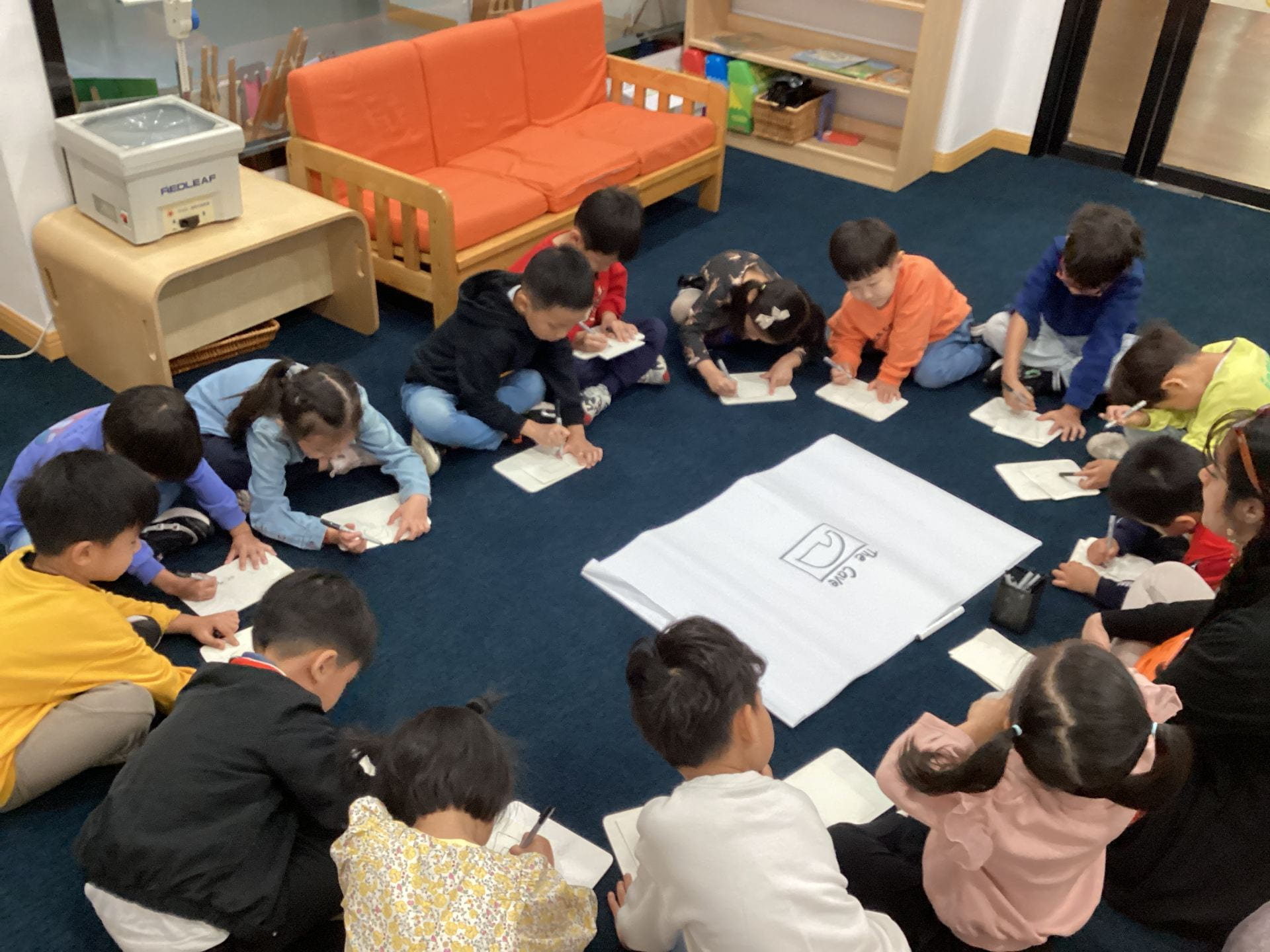
The children had markers and paper to sketch their thoughts. Then, they shared their ideas with a buddy.

The buddies shared what was discussed. Notes and ideas were documented on chart paper [in black]. We made our thinking and observations visual.

Finally, we decided on how we can solve the problem by creating agreements [in red].

A vote was taken on how many children could be in ‘the cave’ at one time. A decision was made after the children were consulted.

During our discussion and documentation of ideas, problems and possible solutions, we noticed how the children:

  • gathered information by listening and interpreting ideas
  • listened actively and respectfully to others’ ideas
  • recorded observations using drawing and writing
  • expressed themselves using words and sentences
  • practised empathy and care for others
  • were respectful to others
  • were aware of their own and others’ impact as members of a learning group
  • shared responsibility for decision-making

The Sandpit

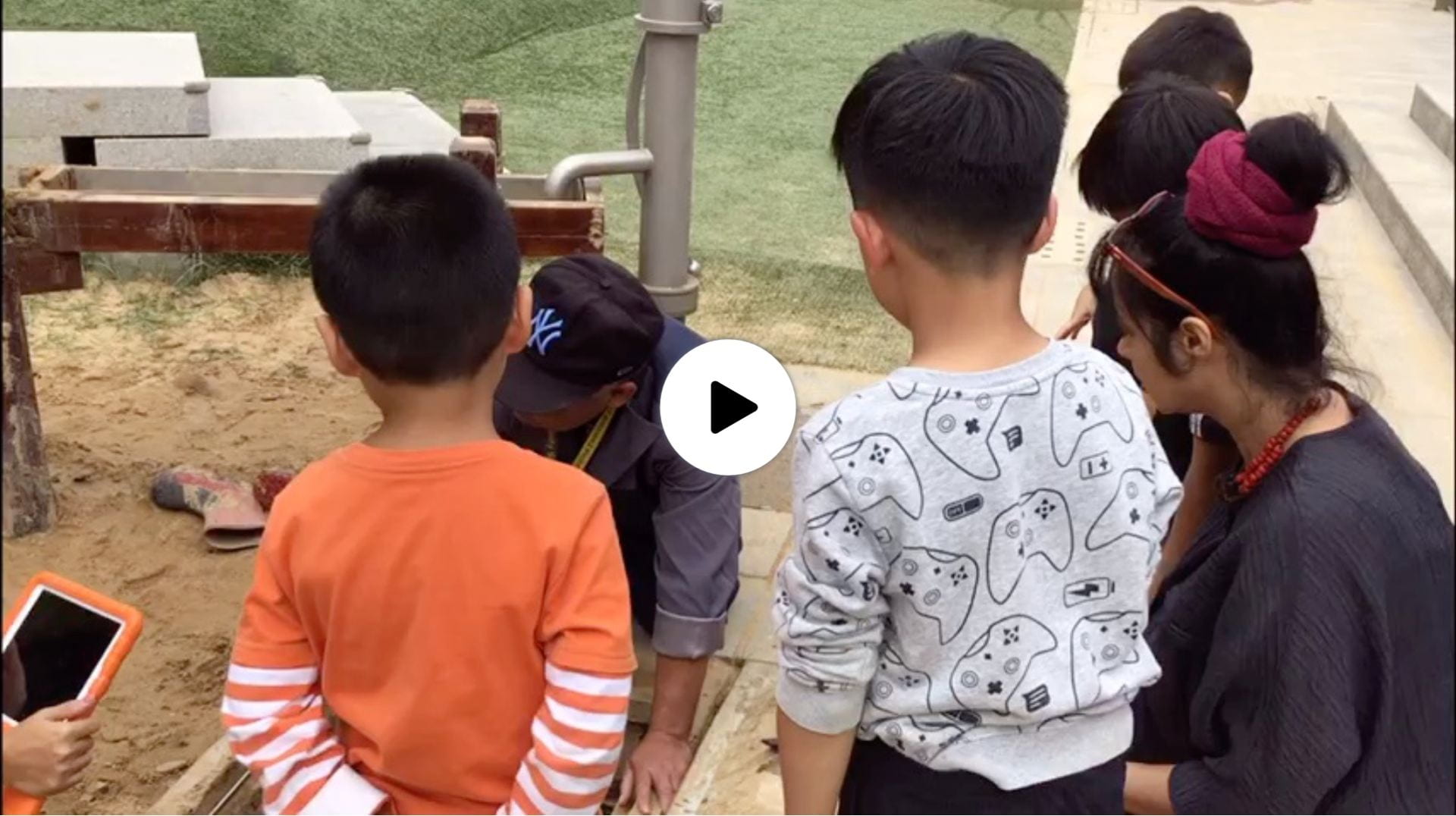
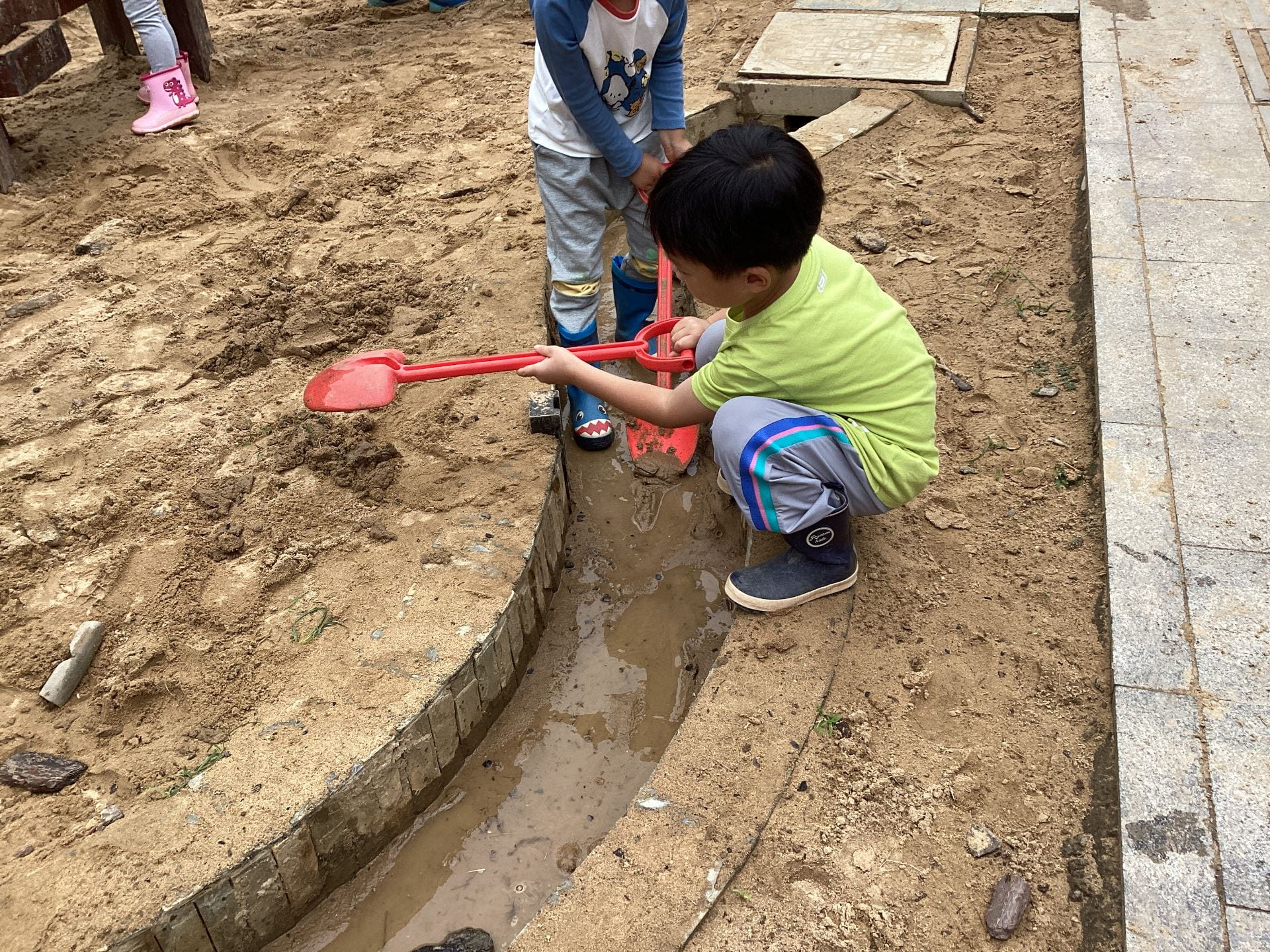
We noticed the Support staff clearing out the sandpit. We were curious and decided to investigate. A few of the children who frequently play in the area, building dams and waterways, went out to speak to the staff to inquire about the work being done. 

Later, Patrick and Noah shared the photographs with the class and explained the situation to everyone.

  • Patrick “We want to make a river and we need water so we put the sand on the waterway. Then there were rocks in the river. They are cleaning the water way and put the rocks on the sand. There is big trouble because the waterway has sand.” 
  • Noah “Everyone put the sand in the drain because we wanted to make a big river. He (the workers) are cleaning the sand. We are watching how they take out the rocks.”

  • Noah “The workers are taking out the rocks. The water is stuck. Don’t put the sand in the pipes because the water cannot go. They were telling not to block the way.”
  • Patrick “Ms. Shemo said, this waterway is not clean.”

When it was outdoor playtime, Patrick ran out to the waterway and began to clear out the drain and waterway.

Noah quickly joined in to help. Olivia and Kenan joined in.

When the water started running down the waterway, they all cheered and squealed with joy!

When children have agency they reflect on their actions and take ‘action’. They understand that they have an active voice and stake in their classroom and community.

Playground Essential Agreements

The children have become more comfortable with their outdoor spaces and are curious about the different options for play. We have noticed the children play hide and seek, race around on the tricycles, make dams and waterways with sand and water. They have been playing creative games, climbing, running, and taking care of the plants in the EY garden.

Today, the children approached the teachers with some playground concerns. They were wondering about the different games and agreements they had for play. After listening to the children’s views, we called a class meeting.

The teachers posted a picture of the children playing and it led to a group discussion about the way we wanted to feel in the playground. The children shared their perspectives, stories and offered suggestions. At the end of the discussion, we made a list of the most important ideas.

When we are playing outdoors, we:

  • can ‘play’ with the toys
  • can play hide and seek
  • use a gentle, careful touch
  • ride the tricycles on the road
  • keep the sand in the sandpit
  • are safe
  • are kind
  • put the toys away when we hear the gong sound once
  • line up when we hear the gong sound twice

We will continue to encourage the children to think of ways in which they can have fun and play safely in all the different community spaces we use.

Powerful Messages about Waste

How might we communicate a powerful message?

How might powerful images communicate important information? 

The students were invited to create the own powerful messages. They used their notes from previous research to think about the important information they wanted to share with others. The students were encouraged to reflect on the issue of ‘waste‘, and think about the action they could take as a result of their learning.

The students went through the writing process to create a first draft. Then, they revised and edited their writing in order to publish their final piece of work. Next, a drawing that communicated a powerful message was created. Finally, we used a green screen to produce a video. The students continued to work on speaking confidently, expressing ideas and information in order to inform and engage an audience.

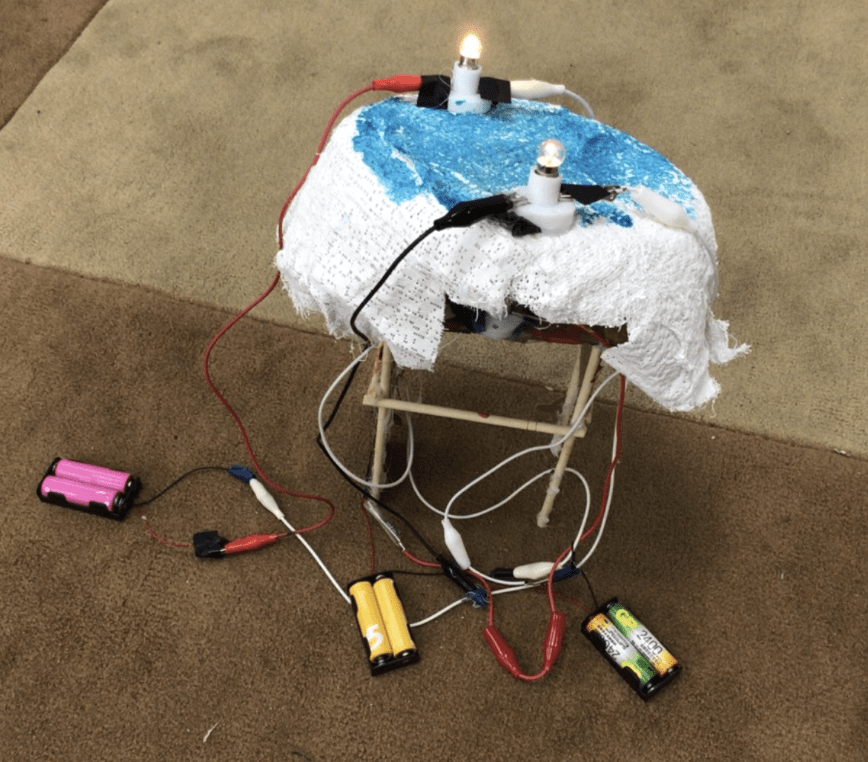
Presenting the Prototypes!

The students have been working on their prototypes over the last few weeks. They were ready to present their prototypes to the class. 

Success Criteria

Then, the students reflected on their learning journey.

Design Challenge – Obstacles and Prototypes

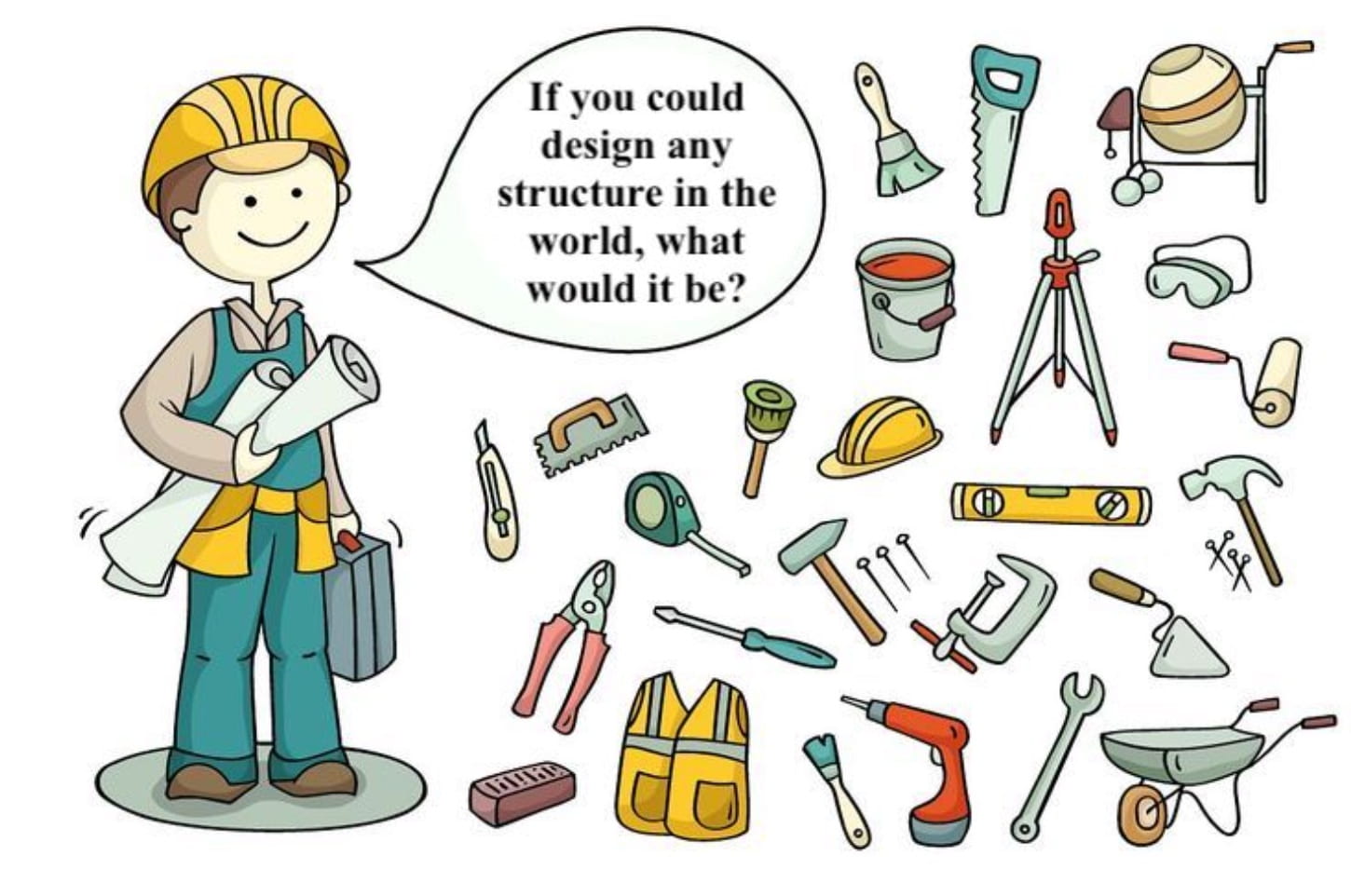
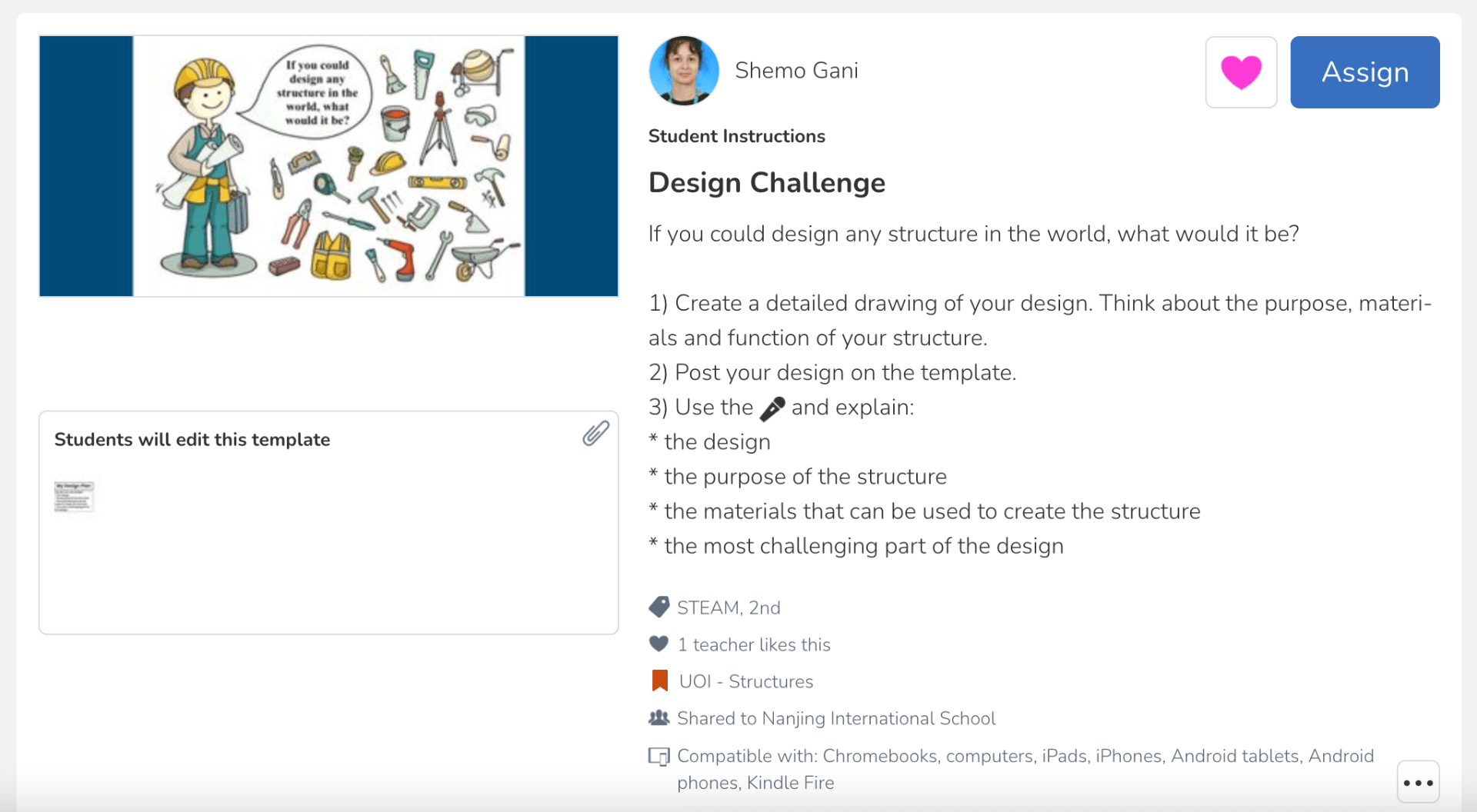
If you could design any structure in the world, what would it be?

The students began to create their design plans, labelling and providing important information about the ‘purpose’ of their structure.

Challenges and Obstacles:

The students shared their first plans with a learning buddy. They interviewed each other, asking challenging and thought-provoking questions about the design, materials and its purpose.

Then, they were encouraged to think about the ‘challenges’ or obstacles they foresee in their own design. They identified this using a red sticker. The students presented their challenges to the class.

Their next step would be to create a prototype of their design. They would need to apply the knowledge they have about materials, and use the skills they have gained through the different design challenges they have experienced during the unit, to complete the task.

Conceptual Understandings:

– we solve problems during the creative process by thinking critically and imaginatively

– designs grow out of natural curiosity 

Design Challenge – The SNOOP Family Home

The Brief:

Your task is to PLAN and then use any type of Lego or any other building material to CREATE a home for the SNOOP family. They have made a list of requirements. Think of how you might design and create a strong, safe and beautiful home for them.

The home:

  • should be 2 floors high (don’t forget the staircase!)
  • each floor should have 2 rooms
  • will need a chimney as they want a fireplace
  • must have lots of windows to let the cool breeze in
  • should have a beautiful garden with two big trees
  • should include an outdoor kennel for the their pet dog ‘Woof’
  • must have a two-door garage to park their two cars
  • an outdoor pool

1) Make a PLAN on paper.

2) Use building materials to CREATE the structure. Make sure you think of ALL the requirements to make a safe, strong and beautiful home.

What do we need to know about building structures?

We watched ‘Look at That Building!: A First Book of Structures‘ by Scot Ritchie. 

This wonderful picture book introduces young learners to basic construction concepts through the eyes of five friends keen on building a doghouse for their pet pooch, Max. Many important concepts, and vocabulary are explored through this simple picture book. 

Snoop Family Home Designs and Final Structures


Tower Challenge!

Explore materials and their properties to build the Tallest Tower!

TASK:

1. Watch the video for instructions.

You will need:

  • 50 toothpicks
  • a material that can hold the toothpicks together (suggestions: tape, clay, play dough)

2. Design and build your tower

3. Measure your tower in centimeters (cms)

4. Reflect:

  • on what you did (the design of your structure)
  • on what you learned about the materials and structure


What we learned…

Paper Power Challenge!

Explore materials and their properties to build a BRIDGE!

1) Watch the video for instructions.

You will need:

  • one A4 regular paper (NO Card)
  • some books
  • some coins

2) Design and build your own bridge.

3) Reflect:

  • on what you did (the design of your structure)
  • on how it helped you hold the coins


Student Responses!

Lots of Pieces – Number Problem

We’ve been trying to organize our stuff. Brian has a lot of puzzles!


What do you notice and wonder?

  • “I notice that there are hundreds of pieces in the picture.”
  • “Does Brian like puzzles?”
  • “If there are 13 puzzles, how much money did they cost?”
  • “How old is Brian?​”
  • “There are numbers on the puzzles so you can see how many pieces there are.”

How many puzzle pieces do I have all together? Just take a guess!

Now, do the math to find an exact answer.


What are some strategies or different ways to add this up, to make it easier to find the total?

Taking ACTION!

The students have been reflecting on their ‘powerful word‘ to explore how they can use it in meaningful ways.  

They decided to take action by planning and creating movies, posters and models that share important messages about our ‘powerful words’ and ‘actions’.


PROTECT

Action by Grace “My powerful word is protect. I made a poster about protect. This poster is for the people who see another people hurting each other. If the people don’t know how to protect those people then they can look at my poster.”

Plan

Poster


Action by Agata “My powerful word is protect. I made a poster to tell people to protect themselves. And when you are in danger maybe somebody will protect you from the danger. So you need to protect yourself from danger or you or someone can get hurt. And protect everyone protect the people that is in danger Protect everybody. And protect the people that are mean to you. After you do that then you are proud and happy of yourself. And you need to protect people everywhere and everyone.”

Plan

Poster


Action by Federico “My powerful word is protect. I am going to tell you to watch out for rocks when you are walking down the street. Kind regard’s For the Parents and Students.”

Plan

Poster


Yuchan Protect fish by not throwing hard things like metal and rocks where the fish live, like the sea, pond and river.”

Plan

Poster

Model


Action by Ethan and Diego “Our powerful word is protect. We made this poster and a video in three languages because we want G1 and G2 students to know that they should not throw rocks to the big rock.”

Plan – Storyboard

Poster


Action by Ella and Hera “Our powerful word is protect. Ms.Delia and Ms.Shemo helped us to take the video. At first we took the video, and then we made a poster. We are going to share our video with pre-K to G1 students. Our message is “Do not fight! Protect your self !”

Plan

Poster


FIRM

Seungbin “Hold the monkey bar firmly or you will get hurt and other people can get hurt and your veins will get hurt.”

Plan

Model

Poster


HELPFUL

Action by Amber “My powerful word is helpful. I created a poster to share it with pre-k to let them know what it means to be helpful to others. First, I made a plan for my second plan. Then, I made my poster plan to make the drawings. Next, I typed it on a computer. Finally, I printed it. Please, be helpful to others!”

Plan

Poster


DANGEROUS

Action by Lawrence “My powerful word is Dangerous, I made a poster for Pre-k ~K2. My message is keep away from Dangerous things.”

Plan

Poster


SMART

Seoyeon takes ACTION “My Powerful Word Is SMART. I created a poster to share with pre-k, k1 – Grade 3. My Message is about Why smart is a powerful word and how we can be smart and about when l am smart what are my feelings.”

Plan

Poster


FIGHT

Action by Seolah “My powerful word is fight. I made animation. First I made the characters with paper and sticks and then I made the animation with stop motion.”

Plan

Poster


Poster


Gihyeon  “My powerful word is fight. Two sharks are fighting because they want to eat the fish but fighting is not good because when you fight then you can get hurt. If you fight hard then your bones will break.” 

Plan

Poster

Model


Action by Yuki “MY powerful word is fight. I made poster to everyone don’t fight.”

Plan

STRONG

Hayoon takes action “My powerful word is strong. I made this animation to show people to be healthy and strong.”

Yuchan, Gihyeon and Seungbin create models and posters to share their powerful words and messages:

Yuchan “Protect fish by not throwing hard things like metal and rocks where the fish live, like the sea, pond and river.”

Seungbin “Hold the monkey bar firmly or you will get hurt and other people can get hurt and your veins will get hurt.”

Gihyeon “My powerful word is fight. Two sharks are fighting because they want to eat the fish but fighting is not good because when you fight then you can get hurt. If you fight hard then your bones will break.”

What are YOUR powerful words and how do you use them? 

Feed the Dingo!

The students were introduced to the game ‘Feed the Dingo’, a desert ecosystem game.

First, the students played the game individually. Then, they gathered to talk about what they noticed. A few students explained that they had introduced the Dingo on the 1st day of the game (the game runs for 12 days (game days).

  • Lawrence “I put all the little animals in the first day and then put the Dingo in.”
  • Grace “My ants always died and some animals that eat ants were all not happy.”
  • Alejandra “One ant could just eat for 2 days.”
  • Ethan “You can just put plants and then they won’t die.”
  • Ella “It’s like feeding the animals and making food chains. Eagle eats the snake; snake eats the frog and another things eat them. The food chain, I read this in a book, there was an island with plants. Too many plants and then they put some deer and the deer eats too many plants and then too many are gone and they put some wolves and they ate some of the deer.”
  • Grace “I put some ants and why are they all gone the next day.”
  • Gihyeon “Maybe they eat trees and ants eat the trees and there.”

The students were introduced to the word ‘ENOUGH’.

  • What does this mean in the game?
  • What is enough?
  • How will it be enough?

Next, the students went off to play the game a second time. This time, they buddied up to work in small groups.

As the game progressed, the students had opportunities to pause and reflect on the game. What can we learn from the game?

  • What did we do well and what can we improve/get better at?
  • What connections do we see?
  • What always happens and what could probably happen in the game?
  • How is this connected to my world and the ecosystems I know?

Our journey begins…

Regrouping and Decomposing

We have been exploring different ways we can make numbers.

Regrouping in math is when you make groups of ten when performing operations.

To decompose (break apart) in math is to break down numbers into parts.

We used these strategies to help us solve addition and subtraction equations. 

Conceptual Understandings:
· the operations of addition and subtraction are used to process information to solve problems
· that number operations can be modeled in a variety of ways

1 2 3 4 5