
How We Express Ourselves 2018/19
Central Idea:
People can express themselves in different ways.
Lines of Inquiry:
- ways we can express ourselves
- accepting our diversity
Key Concepts: form, perspective
Related Concepts: gesture, movement, voice, communication, self-expression, creativity

Story #1
Dragons
 Chinese New Year is a few days away. It is an important time of year in the Chinese calendar. In order to learn more about our host culture, its traditions and festivals, we decided to read the story “Golden Dragon Parade’ by Anastasia Suen.


 We also read the story ‘Bringing In the New Year’ by Grace Lin. Next, we watched a video that provides an explanation about the Chinese New Year. As the students talked about the different traditions and stories, they discussed what they know about dragons. They were fascinated with an illustration of a beautiful dragon.
https://www.youtube.com/watch?v=_u-R-aIq3_E
We decided to create our own dragons. The first step was to sketch the dragon’s face.


Next, the students used water colours to complete their dragon faces.


The next step was to create the dragon’s body. The students folded a strip of card to create the body. They also remembered to use tissue paper to create the tail.


Ms. Tina taught the students how to write Fu “福” in Chinese using a calligraphy brush and special writing paper.
https://twitter.com/NISPreKK1/status/1087941019117805568
One student decided to create her own Fu “福”.

Ms Shemo and Ms. Jao, shared pictures of their doorways which displayed the “天增岁月人增寿,春满乾坤福满门” “福门吉祥事事兴,宝地生财年年旺”… which means ‘long life and happy family’ and ‘everything goes well and prosperity’.


We wonder how people from different cultures express themselves…
SLO’s
-
know that Chinese New Year as an important Chinese celebration
-
know that Mandarin as the main language of China
-
describe what they notice about an artwork
- analyse the relationships within an artwork and construct meanings
- make personal connections to artworks
- engage with, and enjoy a variety of visual arts experiences
- select tools, materials and processes for specific purposes
- use their imagination and experiences to inform their art making
- create artwork in response to a range of stimuli
-
explore the important traditions and practices of their own family and community
-
know that there are people with more than one cultural identity/nationality
-
know why a particular celebration is important in his/ her life
-
explore how rituals and traditions contribute to own and others’ cultural identity
-
develop their sense of identity and self-worth
-
positive acceptance of diversity
- open-mindedness
Story #2
Chinese New Year Celebrations
The students have been singing and exploring culture through music during their regular Mandarin classes. As the Chinese New Year celebrations commenced, the students gathered on the Early Years stage, to sing their favourite Chinese New Year songs to the parent community.
After the performance, the students and parents gathered to create lanterns and make Baozi. The students worked the dough and created 2 delicate buns. Then they were sent off to the cafeteria to be steamed. The students enjoyed their delicious Baozi!


Another group of students joined Ms. Cherry to create Chinese lanterns. They used letter shapes, Chinese characters, sequins and other decorative material to create their lanterns. The parents joined in, to help their children create these beautiful pieces of art.
https://twitter.com/NISPreKK1/status/1088775527039524864
SLO’s
- know that Chinese New Year as an important Chinese celebration
- know that Mandarin as the main language of China
- use their imagination and experiences to inform their art making
- explore the important traditions and practices of their own family and community
- know that there are people with more than one cultural identity/nationality
- know why a particular celebration is important in his/ her life
- explore how rituals and traditions contribute to own and others’ cultural identity
- develop their sense of identity and self-worth
- positive acceptance of diversity
- open-mindedness
- participate in performing and creating performing arts pieces both individually and collectively
Story #3
How do you express Yourself?
We have been watching performances and listening to stories. We have been talking about how we express ourselves. We began to document our thinking on paper.

- Ruby explained that she enjoys expressing herself by working in the garden, with a shovel and a watering can.
- Amber said that she enjoys playing with the ‘chicken’, with her baby brother.
- Tina said she likes to dance, and Ms. Shemo likes to draw pictures.
- “Hip-hop dancing!” said Alejandra. Charlotte and Michelle
- Michelle said she also likes “Ballet”.
- Nicolas “Music, I like the Crazy Frog music.”
- Lawrence explained that he likes to make flowers and other things with paper and scissors.
- Ruby said she likes to arrange flowers. Lawrence agreed and said he likes to do that too!
- Freida “Helping mummy cook with kids’ knives.”
- Ethan said he likes to eat, and Charlotte said she likes eating too.
- Michelle said she likes playing in the home corner and drawing with Sarah.
- Alejandra, Jasmine and Freida said they like expressing themselves through drawing too.
- Felix “I like to play with Lego.”
- Nicolas “Eating together.” Ethan agreed.
 How do you express yourself?
Story #4
Expression Through Music
How do other people in our school community express themselves? Mr. P expresses himself through music!

What about students in the Secondary School?
https://twitter.com/NISPreKK1/status/1086903485642170368
Story #5
Not a Stick?
(self-expression, voice, creativity)
The students were lining up to eat their snack. One student opened up his box and found a banana. He said,
“Its not a banana, it’s a sword!”
The teacher snapped a photograph.
After snack time, the student used the iPad to create a story, using his photograph as a base to set the scene.

https://twitter.com/NISPreKK1/status/1097684226395201536
We wondered if there were any other ideas to support creativity and storytelling.
Ms. Romero, the school librarian had brought in a pack of picture books to help us explore expression, voice, gesture and creativity through storytelling.
‘Not a Stick’

The teachers showed the students the cover page of the story ‘Not a Stick‘ written by Antoinette Portis. The teacher had a stick in her hand. The students wondered what it was for. Together we generated some ideas.
If this is NOT A STICK, what can it be?
a walking stick!

A magic wand!

A paint brush!

We wondered what else it could be…
We decided to create our own story of ‘Not a Stick‘. The students chose a piece of paper with a picture of the character in the book. On each page, he had a stick in his hand. We decided to complete the story by drawing our own pictures.


Next, it was time to read the story ‘Not a Stick’ by Antoinette Portis.
The students began to predict what Piggy might be using his stick for. Piggy had a good imagination!
-

- “It’s for fishing. He got a shark. A fishing rod.”
-

- “Magic. A band.”
-

- “ It’s a paint brush.”
-

- “Exercising!”
-

- “It’s a horse.”
-

- “I wonder if it will be a magic wand” … “Sword.”
We had completed the pages in our story book when Nicolas said,
“We need a cover!”
We decided to call a class meeting. What does a cover need? We put our thinking down on chart paper.

The students made suggestions about the colour we need to use for the cover. There were too many choices. We decided to take a vote. The students counted the totals. Which colour received the most votes?
BLUE!
Next, the students had to decide what the cover would include. They suggested that the book should have a title. EVERYONE wanted to call the book
‘Not A Stick”, the same as the author. What else should we include on the cover?
Who are the authors?
The students said they wanted to tell everyone that the book was by ‘PreK-K1C‘!
The students then drew pictures for the cover, they wanted to draw more pictures of Piggy.
Another student helped to put the pages together.


SLO’s
To use a combination of drawing, dictating, and writing to compose informative or explanatory texts in which they name what they are writing about and supply some information about the topic.
- retell familiar stories, including key details
- identify the front cover, back cover, and title page of a book
- follow words from left to right, top to bottom, and page by page
- recognise that spoken words are represented in written language by specific sequences of letters
- speak audibly and express thoughts, feelings, and ideas clearly
Story #6
Expressing Ourselves Through Storytelling
We have been exploring how we might express ourselves in different ways. The students sat in a circle. At the centre of the circle lay a coloured card and some tubs of loose parts.  The students were eager to play the new game. Ms. Tina explained that we were all going to be storytellers. The students were excited.
How would they do this?
Ms Tina shared some important things to remember when playing the storytelling game:
- The first person starts the story by including an item in the centre, beginning the storytelling process. Some beginning story starters might be…
- Once upon a time…
- One day …
- A long time ago…
- The second person needs to include an item and continue where the story stopped last.
- The story continues to grow as the items are included.
- Everyone gets a turn to tell part of the story.
- Each person can include 1 item in the centrepiece at one time.
- We needed to listen and take turns.
The story…
https://twitter.com/NISPreKK1/status/1100673090147672065
SLO’s
- listen and respond in small or large groups for increasing periods of time
- tell their own stories using words, gestures, and objects
Approaches to Learning (ATL’s)
Communication Skills
Listening
• Listen actively and respectfully to others’ ideas.
Speaking
• Express oneself using words and sentences.
• Negotiate ideas and knowledge with peers and teachers.
Social Skills
Interpersonal relationships
• Be respectful to others.
• Play cooperatively in a group: sharing, taking turns.
Self-management Skills
Organization
• Follow the directions of others.
Story #7
Creating a Flower Arrangement
A group of students expressed an interest in creating flower arrangements. It was a way in which they expressed themselves.
A small group of students gathered around a table, there was a large box on the top of the table. The students were curious about what was inside the box.

Ms. Hannah opened a box carefully. There were some flowers inside.

- Ruby “That’s very cool, I like this flower. Because expressing ourselves for flowers. In Australia, I have some sour stems of the flower. They are yummy.”
- Sophia “I like to eat flowers.”
- Lawrence “I like to eat flowers too.”
Ms. Hannah posed a question “Why are the flowers wrapped in a plastic bag?”
- Ruby “Nobody can open it.”
- Lawrence “因为拔出来有刺,会把教室弄脏。” [Because if you pull it out, it has thorns that will dirty the classroom.]
- Zhisong “因为刺刺的。”[Because it’s spinous.]
- Sophia “我同意。”[I agree.]
The students took turns to touch and smell the plastic bag that covered the flowers.
- Lawrence “软的,湿的,青苔的味道。”[It’s soft, wet and has the smell of moss.]
- Ruby “It smells like stems.”
Ms. Hannah carefully took the flowers out of the bag and placed them in a vase. She asked the students if the arrangement was nice or not, and why.
- Lawrence “No.”
- Zhisong “剪下来,因为太短会歪。”[Cut it off, otherwise it’s too short.]
- Lawrence “这样不好看,因为歪了。”[It doesn’t look nice because it’s slanting.]
- Ruby “I like it.”
The students explained that the stems were too long. Therefore, the flowers did not stand upright.
Ms. Hannah explained to the students how to cut off the stems and leaves nicely. She showed them two different ways of cutting the stems. The first was a vertical cut and the second a diagonal.

“What’s the difference? Why do we cut it like this?”
- Sophia “一个尖的,一个不尖的,这个劈掉了。”[One is pointy, one is pointless. This one has been split off.]
- Lawrence “为什么要斜着剪?” [Why do you cut like that?]
After a short discussion on why the stems were cut in a particular way, the students took turns to cut the stems and leaves.

One student cut off all the leaves of a flower. Ms. Hannah noticed this and picked the one without any leaves and another one with many leaves. She asked,
“What’s the difference?”

- Ruby “Maybe it’s already broken.”
- Lawrence “还有土壤,种子。”[And soil, seed.]
- Sophia “叶子会死掉。”[The leaves will die.]
- Ruby “I think if you put into water, it can still grow.”
- Lawrence “叶子放水里会死掉,因为叶子在水面上有浮力。没有空气。空气就是风,一下小,一下大。”[The leaves will die if you put them into the water. No air. Air needs wind, sometimes it’s big sometimes it’s small.]
The students compared two flowers, the first had withered, and the second was a fresh new flower.

- Ruby “This one is black, this one is not. They feel sick.”
“Why do you like to arrange flowers?”
- Lawrence “我喜欢插花,剪花,还可以用来做手工。因为我本来不喜欢的,但是我看到我的姐姐剪花,插花,我就会越来越熟悉。我插花的时候想着姐姐会和我一起,我的心情是很开心的。”[I like arranging and cutting flowers, also you can do handcraft. I don’t like to do this in the beginning until I saw my sister was cutting and arranging flowers. I got more and more familiar with that. When I’m arranging the flowers, I feel like my sister is being with me, I feel so happy.]
- Ruby “I like to play normal flower and also smell it because I like to eat flower. I like the sour. I like to cook it. We break the flower and put it in the pan then make sour juice. It’s super yummy. It’s like Batman drink! The flower is white and got the green stem. It has to be big and the small one. The small one is not ready. The big one is sour, and I like sweet and sour.”

Approaches to Learning (ATL’s)
Thinking Skills
Analysing
- Observe carefully.
Communication Skills
Listening
- Listen to information.
- Listen actively and respectfully to others’ ideas.
Speaking
- Express oneself using words and sentences.
- Participate in conversations.
Story #8
Zentangle Pictures
A group of students shared that they express themselves through their drawings. We wondered if anyone else expressed themselves through their drawings.

We decided to speak to Ms. Grace Kang. She taught Grade 2 @nischina last year and now lives and works in Korea.
She enjoys expressing herself through her drawings and creates her own postcards and greeting cards! 
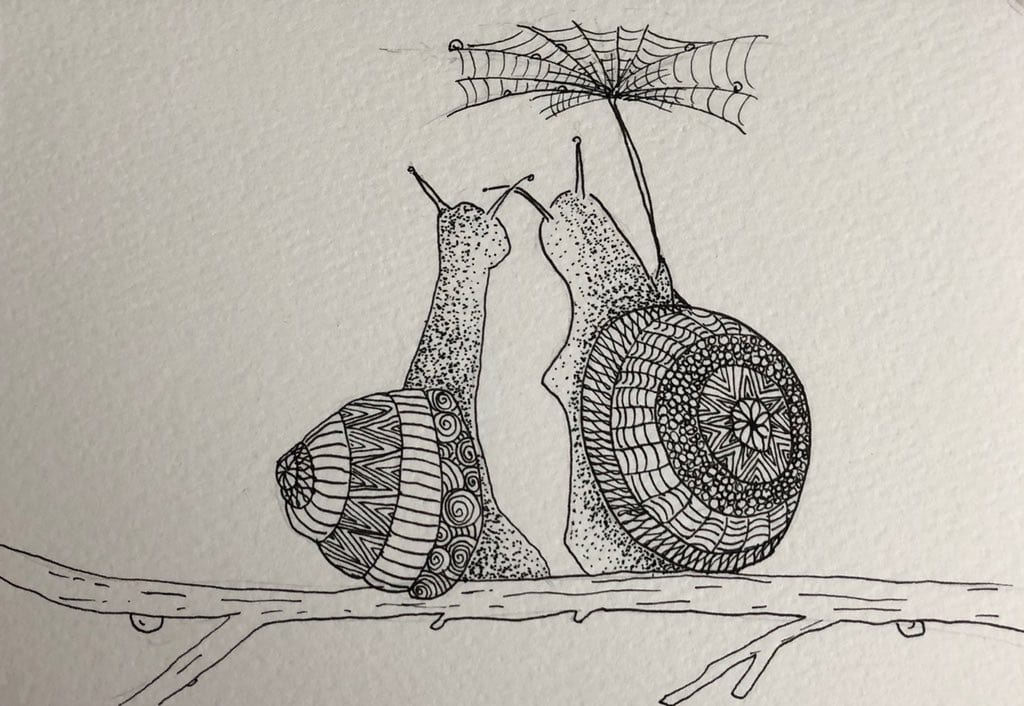
Ms. Grace explained that she likes drawing and ‘doodling’. She used different repeated patterns to create art. She uses squiggles, shapes, symbols and patterns to fill in shapes. Her feelings can inspire her creations.

We began with some waves, zigzags, swirls and heart shapes. The students drew their own pictures and filled in the spaces using repeated patterns.


One student pointed to the ‘Zones of Regulation’ posters displayed in the classroom and suggested that we look for ideas about feelings here.
-

- Like a car travelling too fast.
-

- Like a car travelling too slowly.
-

- Like a car travelling at a good speed.
-
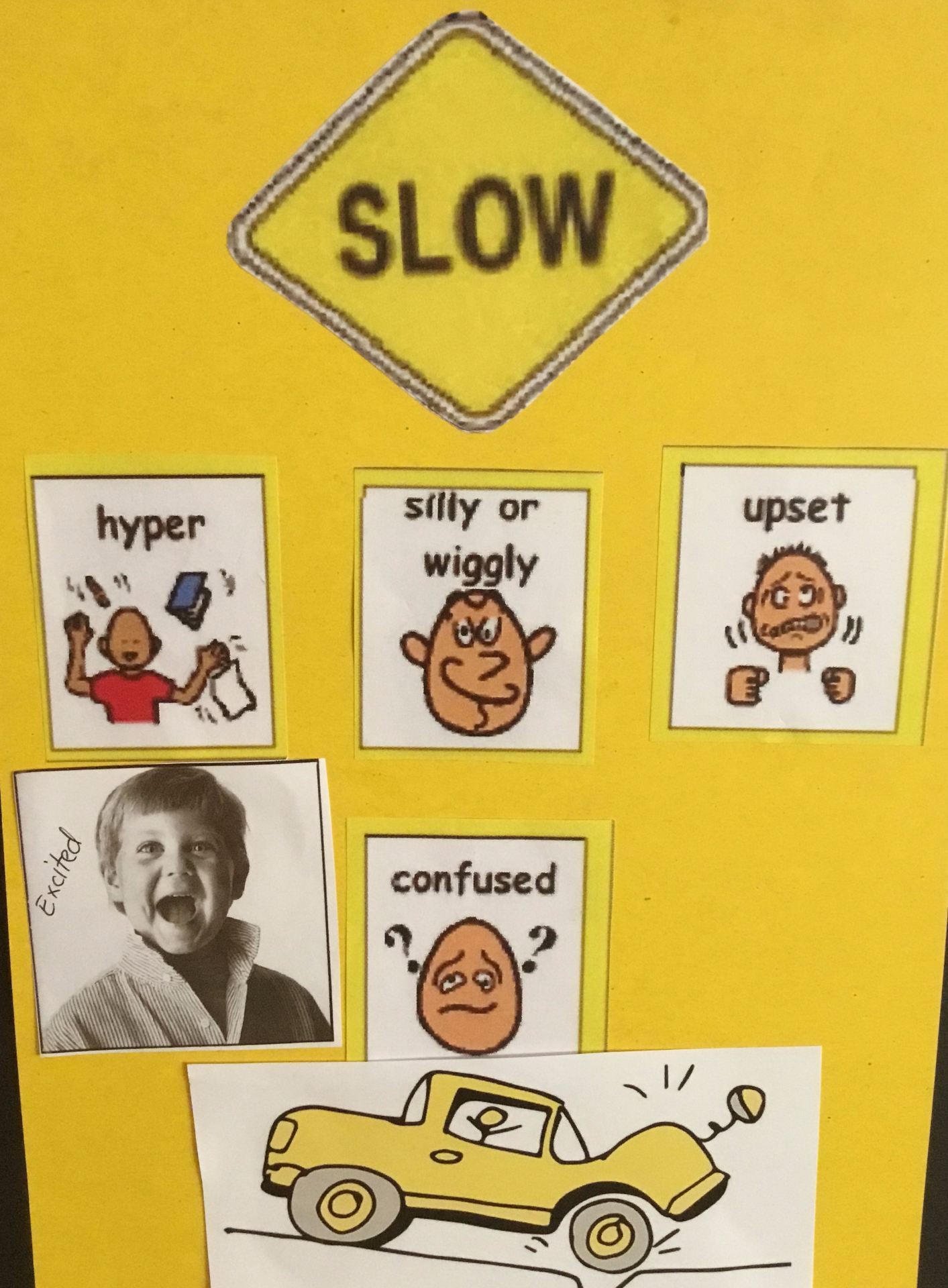
- Like a car travelling on a bumpy road.

https://twitter.com/NISPreKK1/status/1105739413294702592
Here are a few of our creations…


How do YOU express yourself?
SLO’s
- draw simple drawings to express what they see/study
- engage with, and enjoy a variety of visual arts experiences
- select tools, materials and processes for specific purposes
- use their imagination and experiences to inform their art making
- create artwork in response to a range of stimuli
Story #9
Ms. Shemo Expresses Herself Through Dance
Ms. Shemo is from Sri Lanka. She expresses herself through dance. Her clothing reflects her culture.

https://twitter.com/NISPreKK1/status/1105737881459449856
https://twitter.com/NISPreKK1/status/1105738226797502464
Story #10
Sticky Rice from Laos

We went on a journey to Laos with Ms. Mad to hear the story of sticky rice! After the story we had an opportunity to visit Mrs. Mad’s Sticky Rice Pop Up Shop to purchase a rice ball using money from Laos. Ms. Mad enjoys expressing herself and her culture through food. She likes to eat food from around the world!

https://twitter.com/NISPreKK1/status/1106718942381240321
SLO’s
- know that there are people with more than one cultural identity/nationality
- explore how rituals and traditions contribute to own and others’ cultural identity
- develop their sense of identity and self-worth
- positive acceptance of diversity
- open-mindedness
Story #11
Expressing Ourselves Through Photography – Climate Change Challenge
Today is a special day. All around the world, the children are uniting their voices to bringing attention to ‘Climate Change’. We sat down to talk about the impact it has on us. We used a photograph to begin our discussion.
How does a photograph tell a story?

A child wearing a protective mask in Tiananmen Square, Beijing. Beijing’s mayor Wang Hansen has said smog had made the capital “unlivable”. Photograph: EPA
- Jasmine “I see a mask because she is not good.”
- Charlotte “Mask, very not good, not happy.”
- Felix “When the world makes mask, and there we need masks. Then it will come in the mouth. Messy wind.”

- Ruby “I think because it is foggy.”
- Lawrence “Some air in the mouth is not good.”
- Amber “Because we will get sick. Because we breathe some air, we will get a cold.” [in Mandarin]
- Michelle “Because I don’t like it. Because I think mummy say no, no, no. My mummy say because that is very, very, very not good.”
- Nicolas “Because I think that when it is raining, the rain is also dirty, so sometimes when the rain mixed together and when it gets cold and not so good for us, it is a problem. It changes.”
- Michelle “We need that mask.”
- Sarah “If the air is bad, we should put on our masks.” [in Mandarin]
- Ruby “We like to play.”
One student had brought his camera to school. It was a wonderful day to go outdoors, to feel the cool breeze, to see the blue sky and the plum blossoms. We decided to take some pictures. We could also use the iPads!

How might we capture the beauty of our world in 1 or 2 pictures?
What do we miss when we have to be indoors?
The students began by wearing masks to go outdoors. Do we like wearing them? How does it affect us? Why do we need them?
The students looked around them. What would be a perfect picture?
- Jasmine “The sun is very beautiful.”

- Ruby “The grass is so much fun.”


Click…click…click…
Here are our favourite pictures…Do you hear our stories?
-

- Amber
-

- Charlotte
-

- Ethan
-

- Jasmine
-

- Jiwoo
-

- Jooeon
-

- Lawrence
-

- Nicolas
-

- Ruby
-

- Sarah
-

- Ms. Shemo
-

- Si Hyun
-

- Ms. Tina
-

- Felix
-

- Michelle
https://twitter.com/NISPreKK1/status/1106492365785579520
Approaches to Learning (ATL’s)
Thinking Skills
• Observe carefully.
Research Skills
• Use all senses to observe and notice details.
Communication Skills
• Understand the ways in which images and language interact to convey ideas.
Self-management Skills
• Choose and complete tasks independently.
Story #12
Hip Hop and Gymnastics
MYP X-Block students @NISChina express themselves through Hip Hop and Gymnastics!
https://twitter.com/NISPreKK1/status/1108616533675130880
https://twitter.com/NISPreKK1/status/1109034660724531201
Story #13
The Showcase
We remember planning a show for our community. It took us a long time. We had so many jobs that needed to get done. It was so much fun.
Soon, we will have another opportunity to be on stage. This is for our PreK-K1 Showcase. We gathered together to talk about the experiences we have had so far.
We remember taking part in the Chinese New Year celebrations, learning more about China, appreciating the culture, language and traditions.
We created our own story ‘Not A Stick’, using our pictures as a way to express our ideas.
We used small world toys to express ourselves through storytelling.
We shared our stories through the creation of games and drew Zentangle pictures to express our feelings.

We also reflected on how we created stories and shared important messages through our photographs.
We enjoyed going on journeys to other countries through dance, song and food.

Some of us even expressed ourselves while creating flower arrangements!
 As we continued to map out our experiences on how people express themselves and their diversity in many different ways, we wondered how we can share some of these experiences with our community. We looked at a picture of the stage in the PAC to help us plan our ideas.

It was a big space. What should we choose to showcase?

We talked about some of our favourite ideas. After many discussions, the students began to narrow their ideas down. We had 6 options. We listened to the music track of each item to make our choices. It was hard.


Stay tuned to hear more about our next steps!
Story #14
Storytelling with Loose Parts in Nature
A group of students were keen on making things with natural materials. They were designing, discussing and having fun during their break time.
The Story

Felix “We make island here and this is the tree house, there we there is some eggs and animals there. And this is beautiful stones there are in the sand and this one to lay on it. We talked about what do we need to do on the island. We need to have trees and food and some. Circle we can put it in.”

Nicolas “That’s why we were thinking. Just build something. That’s a jungle in Himalaya. Those are jungle, that the tree. That’s a baby egg there and the baby egg is lie on there. The sand is lying because of the wind. That’s a tree. A normal Himalaya tree. That’s the sea. The line is the sea. There are crocodiles in the sea you can’t swim there.


Ruby “We are making a desert to island. This round thing is the sea, the leaves are the bushes, and also these are called the garden and also these has some beautify flowers on it and we put on some leaves. The blue one is castle. The bamboo for the people who come to go into the garden.”

SLO’s
- tell their own stories using words, gestures, and objects
Approaches to Learning (ATL’s)
Communication Skills
Listening
• Listen actively and respectfully to others’ ideas.
Speaking
• Express oneself using words and sentences.
• Negotiate ideas and knowledge with peers.
Social Skills
Interpersonal relationships
• Be respectful to others.
• Play cooperatively in a group: sharing, taking turns.
18 April, 2019
THE SHOWCASE
The time has come to plan our ‘Showcase‘. How will we choose to share our expressions, feelings and ideas? The students sat down to discuss the choices they wanted to include in the Showcase. They decided on 6 different acts.

The groups joined an expert to help them learn more about the different ways we can express ourselves.

The Sri Lankan dance group joined Ms. Shemo to plan the performance. There were 6 students who wanted to choose this form of expression. We decided to call it the ‘Asian Dance’ but then changed the name to ‘Sri Lankan Dance‘. We gathered to talk and document our thinking and ideas on chart paper. 
The students decided that they need to think about the following points:
- costumes
- bindi’s
- candles
- makeup
- dance routines
The students decided that they need six bindi’s (1 for each of them) and 1 for the teacher. They wanted big ones ‘just like Ms. Shemo wore’ during the Sri Lankan dance performance. They also wanted to wear a saree and have nice makeup.

The students wanted to think about the different dance moves. They began to draw the different moves and then showed the moves using their bodies.


Next, they stitched their costumes using a sewing machine.


https://twitter.com/NISPreKK1/status/1118117868334243840
https://twitter.com/NISPreKK1/status/1118117402443534336


The ‘Hip-hop‘ dance group were inspired by the X-Block students who came in to perform on the Early Years stage.
https://twitter.com/NISPreKK1/status/1109034660724531201
The Hip-hop dance group of 4 students joined Ms. Tina to discuss their thoughts and plan their performance piece for the ‘Showcase’.

Together they:
- went to the costume cupboard to see if they can find the costumes they had planned to wear.


- Designed and/or created their own costumes. One student wanted to be a fairy hip-hop dancer, another a boxer and two students decided to be skeletons.


- Dyed or painted their costumes


https://twitter.com/NISPreKK1/status/1118121876130189312
- Sketched ideas for their face paints


- Provided feedback on the different dance moves
- Practiced the steps for the performance


The ‘Cat Song‘ group started with a group of 14 students. They planned their performance with Ms. Hannah.
- Jessica suggested having some dancers as well as singers.
- Michelle suggested that the dancers could sing and dance at the same time.

The group members all agreed with the decisions. The children decided on the costumes and designed makeup for the Showcase. 

Yet another group of students joined Mr. Cal to explore sound, rhythm and beat using drums. They were curious about the different sounds they can make with the different drums.
They decided on a song they would like to play while they performed in ‘The Band‘. The group practiced with Mr. Cal to the song ‘Wavin’ Flag’.


Two students decided to join the ‘Taekwondo‘ group with Ms. Victoria. After a discussion they decided on the:
- costumes
- soundtrack
- lead (person the lead the group)
- Taekwondo moves
They needed costumes and a ‘cool’ soundtrack. They decided to use the song ‘Kung fu fighting’!
https://www.youtube.com/watch?v=jhUkGIsKvn0
The costume for the performance.

One student decided to teach and lead the dance group.

Ruby and Freida decided to express themselves through paints. Ms. Pam led the ‘Painting‘ group as they prepared for their showcase.
Ruby decided that purple hairspray would be a wonderful addition!

The Exhibition
The students eagerly practiced for the showcase. They wheeled the display boards through the gym to the foyer near the Library. The decided where to place the boards and tables that would display their learning journey.


https://twitter.com/NISPreKK1/status/1119101429715619840
https://twitter.com/NISPreKK1/status/1119102317603639297
https://twitter.com/NISPreKK1/status/1119101186638901248


https://twitter.com/NISPreKK1/status/1119081846925447168
Approaches to Learning (ATL’s)
Thinking Skills
• Identify strengths and areas for improvement.
Research Skills
• Ask or express through play questions that can be researched.
• Select information sources and digital tools.
• Gather information from a variety of sources (people, places, materials, literature).
Communication Skills
Listening
• Listen to information.
• Listen actively and respectfully to others’ ideas.
• Ask for clarifications.
Speaking
• Express oneself using words and sentences.
• Participate in conversations.
• Negotiate ideas and knowledge with peers and teachers.
Reading, writing and mathematics
• Understand that mark-making carries meaning.
• Use mark-marking to convey meaning.
Social Skills
Interpersonal relationships
• Practise empathy and care for others.
• Listen closely to others.
• Be respectful to others.
• Play cooperatively in a group: sharing, taking turns.
• Help others.
Social and emotional intelligence
• Be aware of own and others’ impact as a member of a learning group.
Self-management Skills
• Choose and complete tasks independently.
• Follow the directions of others.
• Share responsibility for decision-making.
Mindfulness
• Take responsibility for own well-being.
• Be aware of body–mind connections.
Perseverance
• Demonstrate persistence in tasks.
Resilience
• Show ability to adjust to new situations.
Agency: When learners:
- are actively engaged in various stages of learning, including: thinking about, planning, modifying and creating
- are actively involved in discussion, questioning and by being self-directed in their creating (as opposed to passive receiving)
- apply their understanding of concepts through the construction of their projects/play
- make connections to the real world by taking past experiences into their play worlds
- have an active voice and stake in the classroom/community
- face challenges and are given the freedom to independently overcome these or fail through trial and error or experimentation
- are risk-takers
- express their theories of the world and these are honoured in the environment
(IBO, 2018)