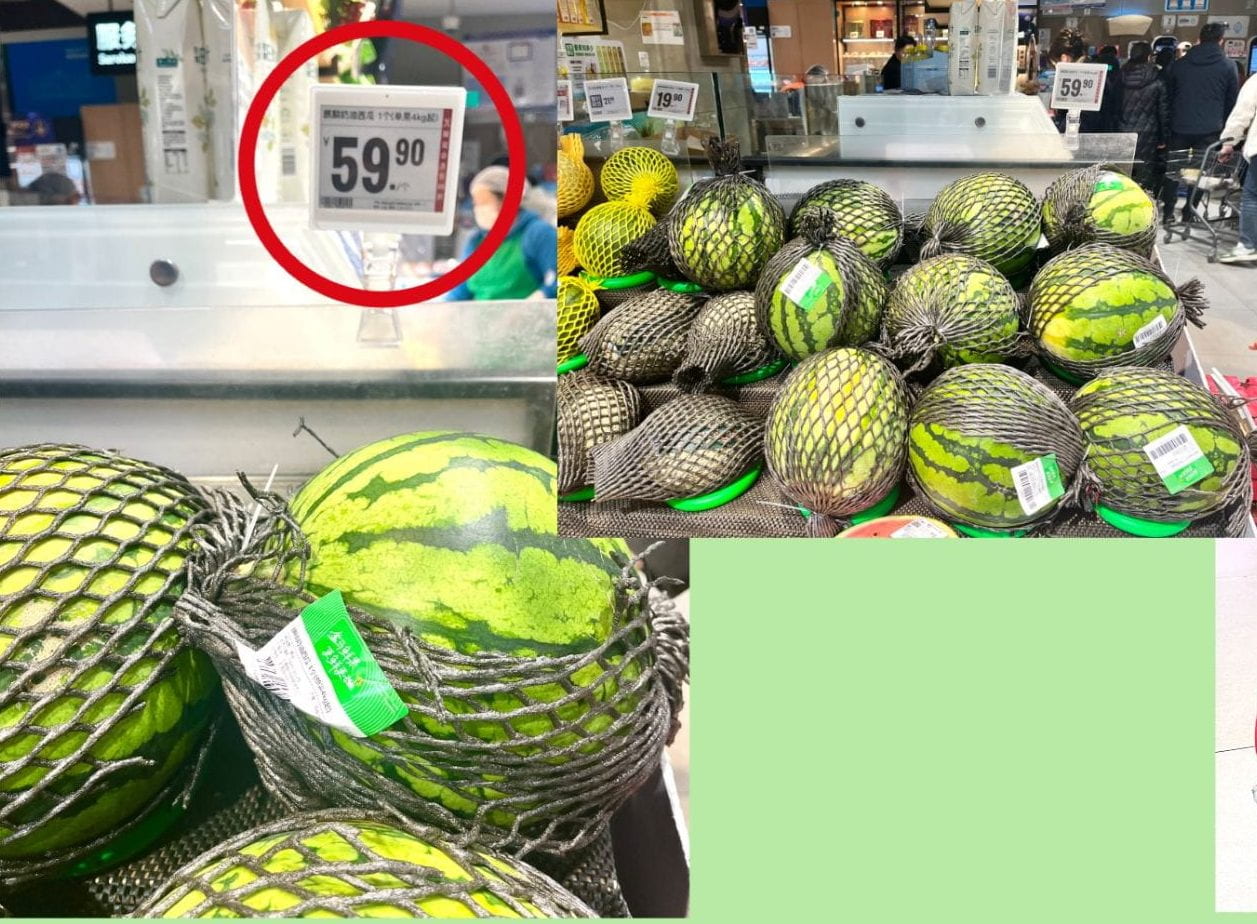
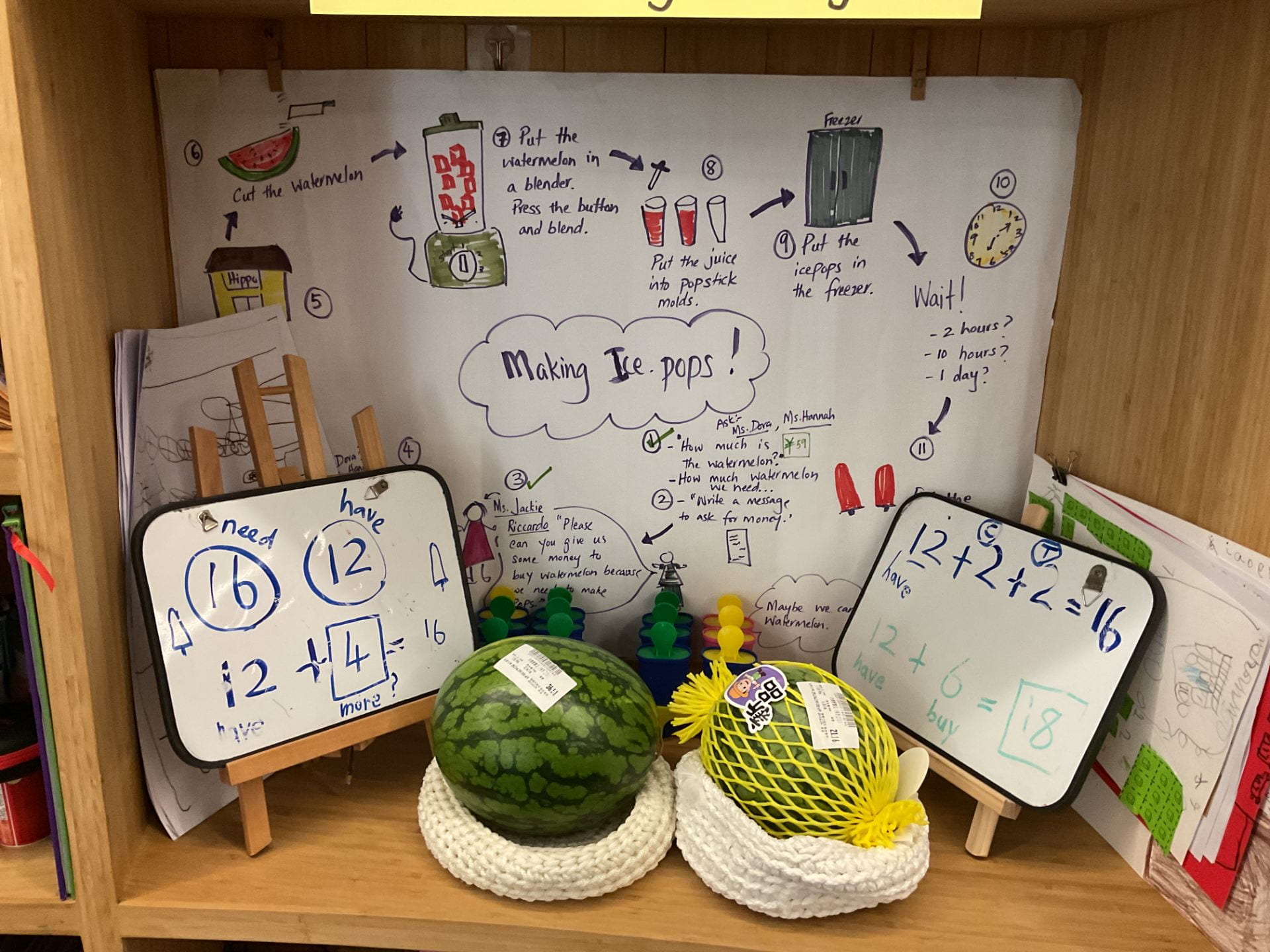
How many watermelons can we purchase for RMB59?

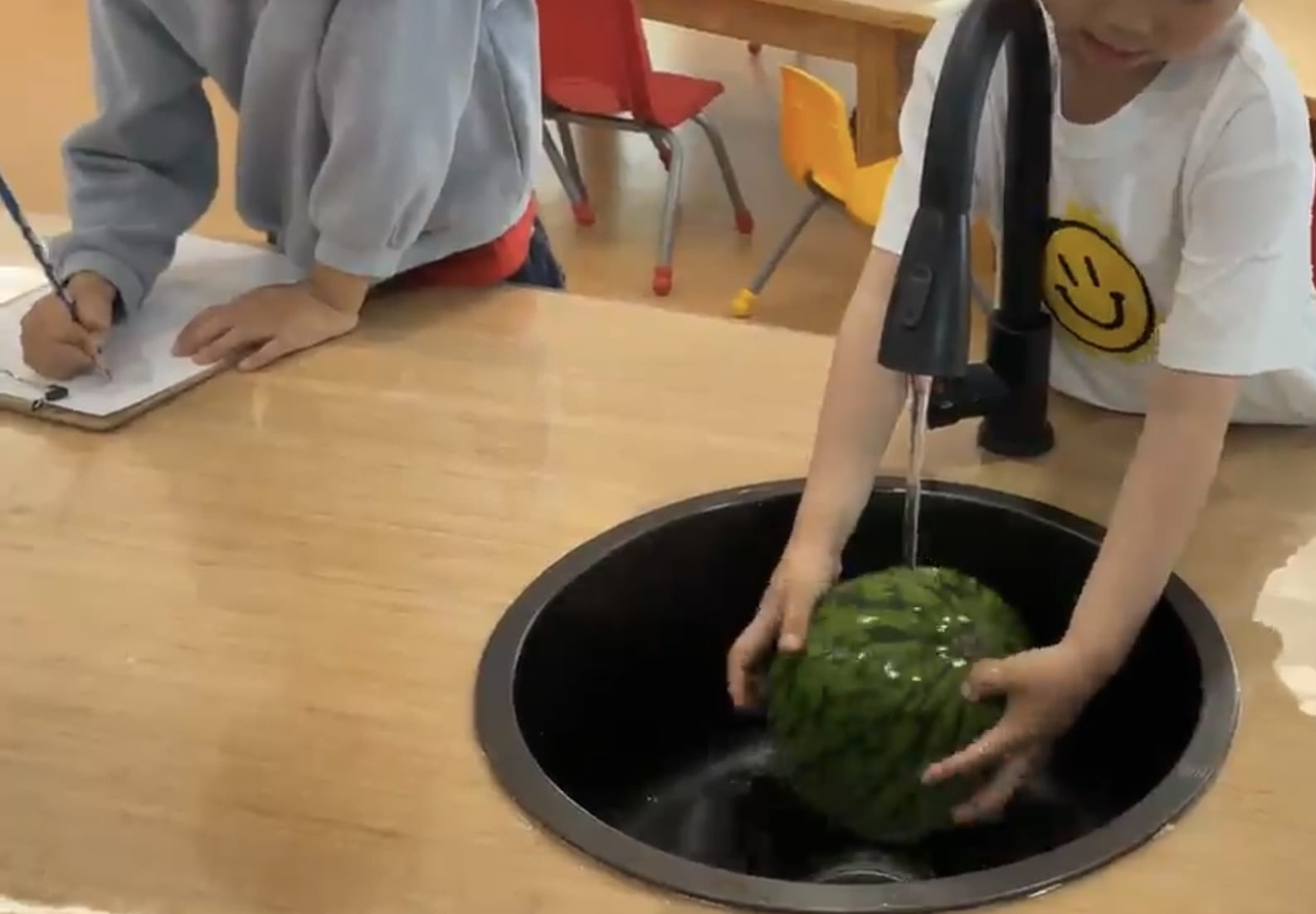
The children have been engaged in various activities related to ‘The Challenge Project’. Different teams will work on specific aspects of the project to help us stay organised. Following on from our inquiry into money, we were now ready to purchase the watermelon. It was time for us to have a small team walk across to the supermarket to buy the watermelon.
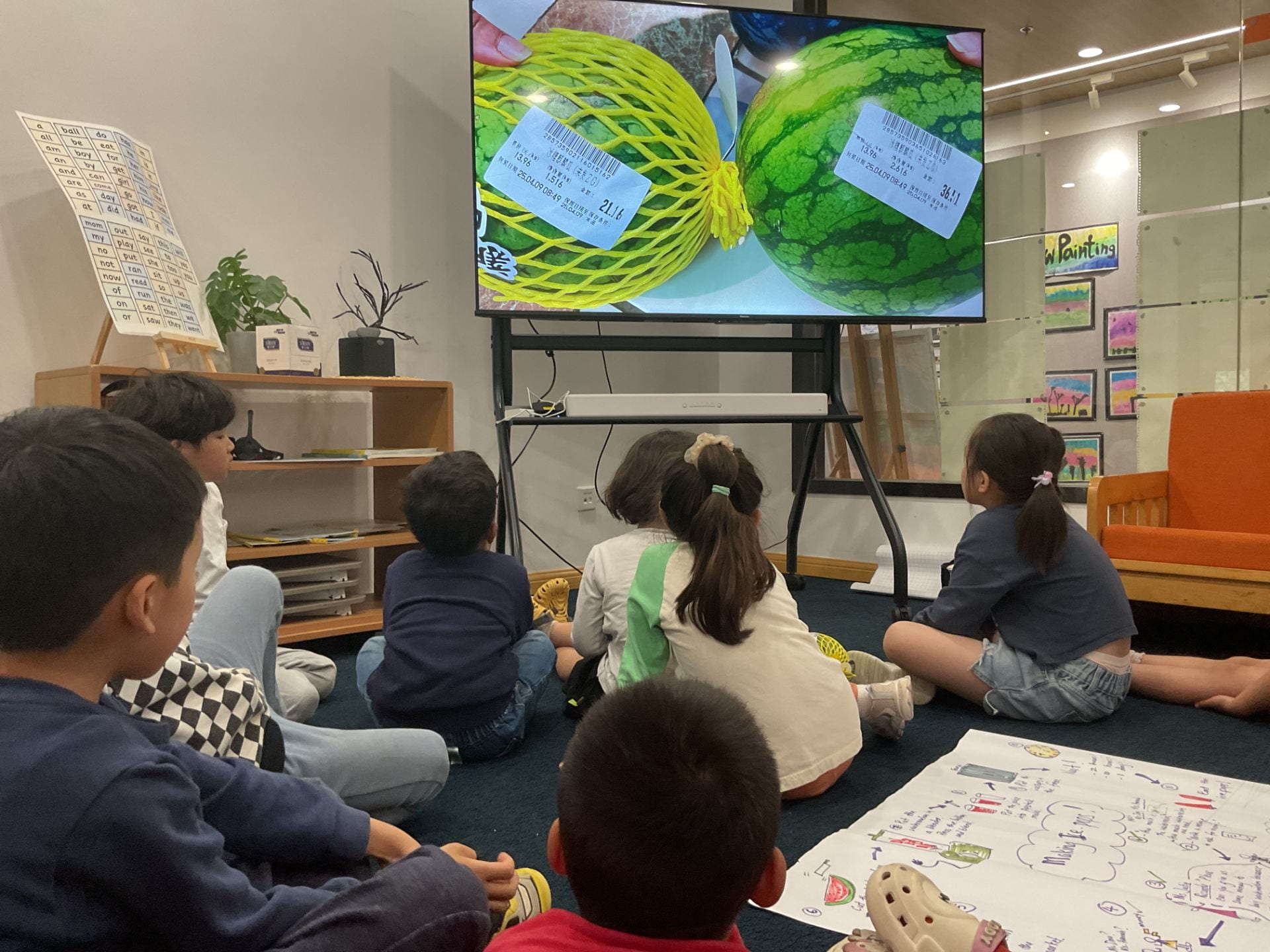
The shopping crew updated the others on their trip to the supermarket.

  • Riccardo “We went out of NIS.”
  • Jacob “We crossed the road. We walk over the walkway. Ms. Hannah helped us. The security guards helped us, he stopped the cars and we can go across the road.”
  • Isabella “We got to Suguo and we need to find the watermelon.”
  • Adalyn “We need to check the money. We had 59 RMB.
  • Suzy “We have to test it to see how heavy the watermelon is. Some of the small watermelons were not as heavy as the big ones.”
  • Isabella “We weighed the watermelons so we decide how many we need.”
  • Riccardo “The Suguo people helped us weigh the watermelon and told us how much money is it.”
  • Jacob “We carried it. If it is too heavy we cannot carry it so we need a small one.”
  • Riccardo “We choose 5 first. “
  • Jacob “We first gave them 57, then we gave them another 59. It was less than 59. 2 left.”
  • Adalyn “The two watermelon we add them and we buy them.”
  • Suzy “We went out of Suguo and we cross the road and we go back to NIS. We were safe.”

The experience at the supermarket helped the children experience the process of choosing and purchasing food items. On their trip, they needed to make many decisions and work together as a team to solve the problems they encountered.

Jacob “We are going to the supermarket to buy the watermelon for making the ice pop challenge. 3 minute challenge our buddy can make the watermelon ice-pop. We use 57 RMB to buy the watermelon and we took the middle one and one small one. We chose not heavy one, we choose the smaller one and smaller so we can carry this, used the basket too heavy. Me and Isabella carry it and go to school. We take a long time.”

Many opportunities for mathematical thinking and learning were explored. These authentic learning experiences are great opportunities for children to explore and learn about concepts through real-life experiences.

Our next step would be to carry out the test to find out how many ice pops we can make from one watermelon.
 

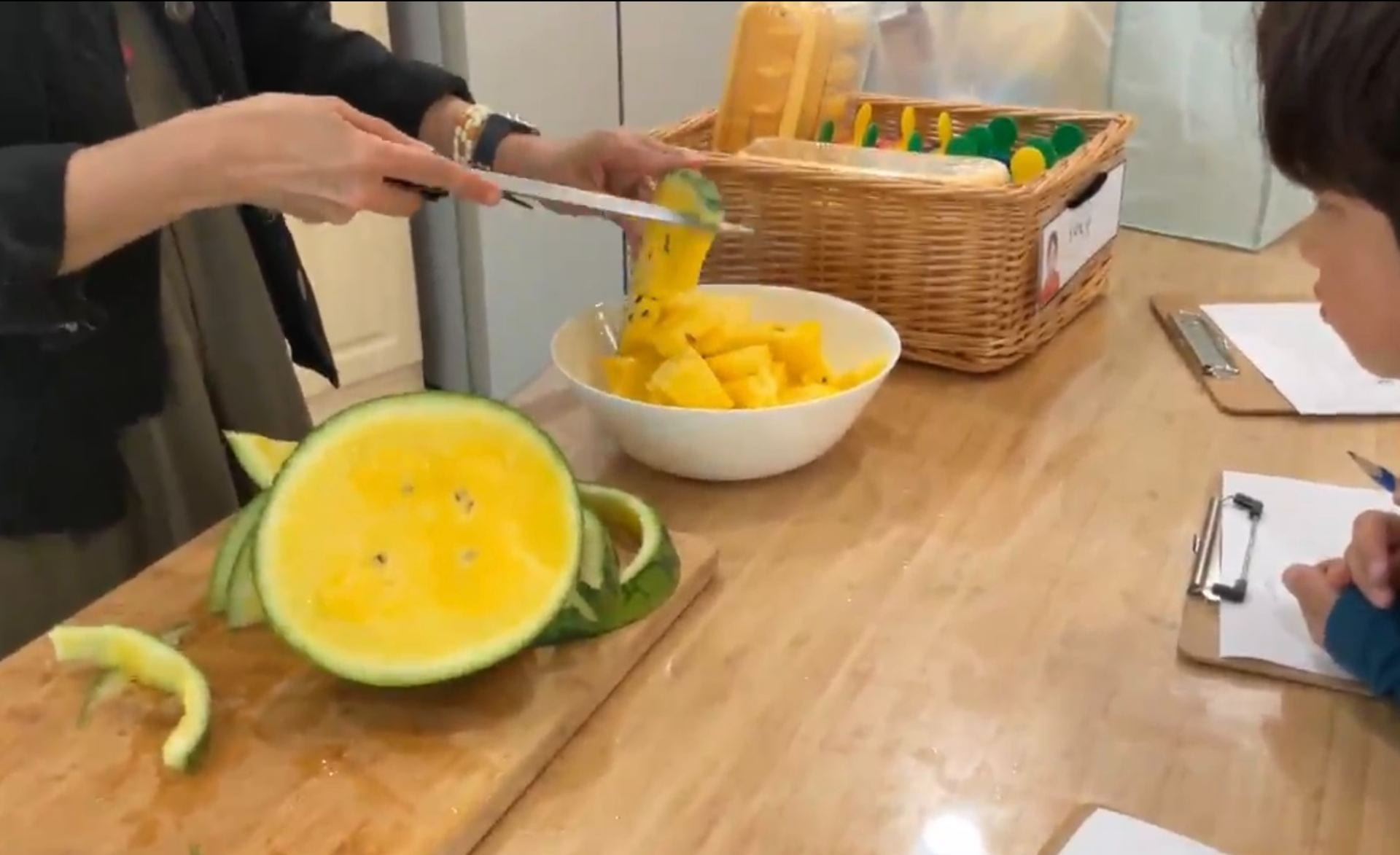
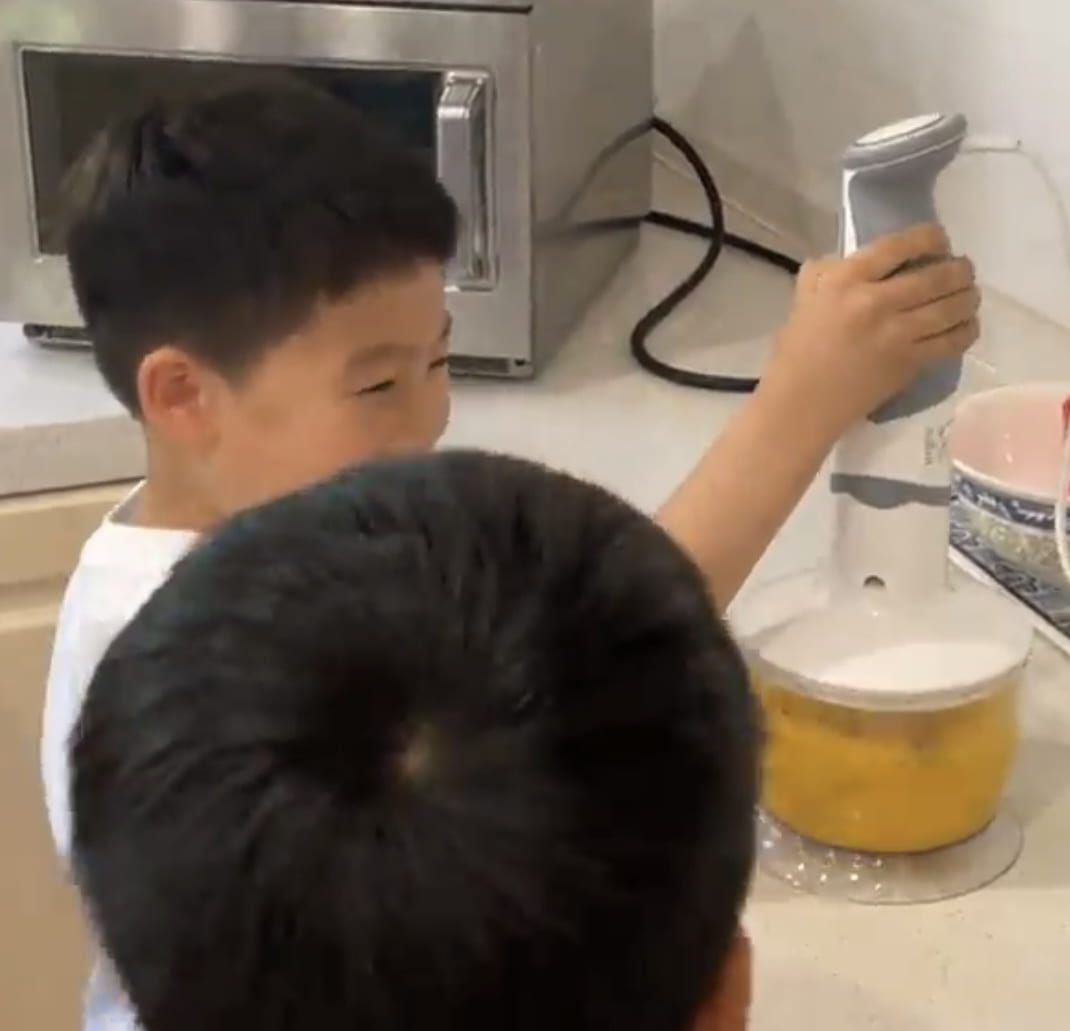
YAY! Making the Ice Pops!


  • Dahyun “We made the ice cream with the watermelon.”
  • Ciel “We put it in the freezer because then it will freeze.”
  • Evan “Then we took it out because we need to eat it in 3 minutes because we need to have a challenge.”
  • Isabella “It was really hard to take the ice pops out.”
  • Evan “Then we eat it in 3 minutes.”
  • Junsu “Some people don’t eat it in 3 minutes.”
  • Riccardo “It was really icy.”
  • Suzy “But it was yummy.”
  • Evan “It was so cold!”
  • Sea “We eat watermelon like ice pops. We eat it, it’s like cold. I ate it but my teeth was so cold.”
  • Adalyn “We eat watermelon ice-pops, it feels like cold.”
  • Isabella “It was sweet.”
  • Suzy “The ice pop, maybe it was sweeter a little bit more.”
  • Ciel “When Ms. Shemo took one ice pop out, it broke.”
  • Junsu “And watermelon is in the body.”
  • Dahyun “I eat ice cream then my body is so cold.”
  • Evan “I eat the ice cream my teeth feels off.”
  • Isabella “Riccardo finished the ice pop in 3 minutes. And Archie almost finished it.”
  • Sophia “Sea and Jacob finished next.”

The children explained, “It was a fun challenge because it was icy.”

We wonder what our next challenge would be…
The Early Years Field Day

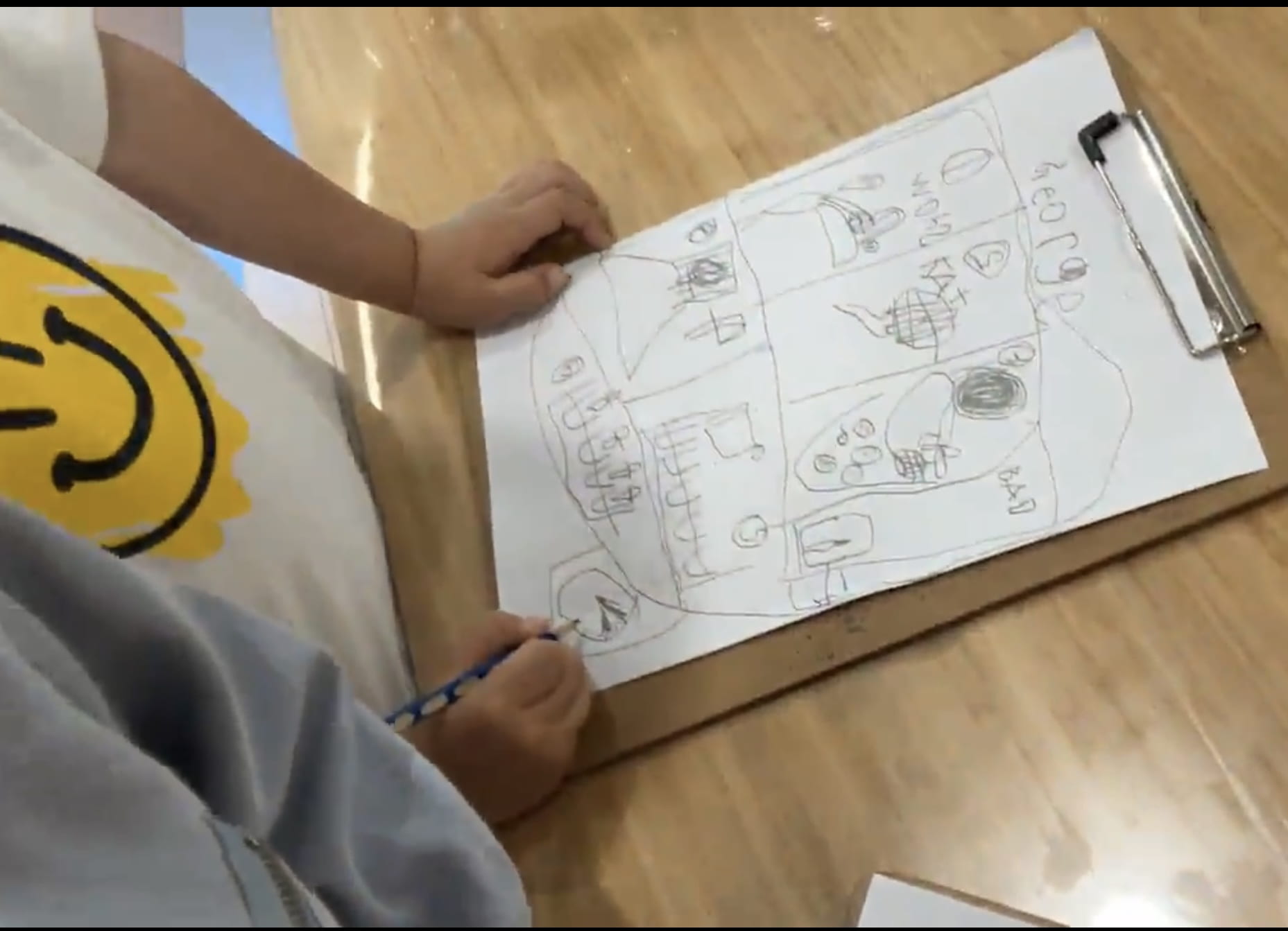
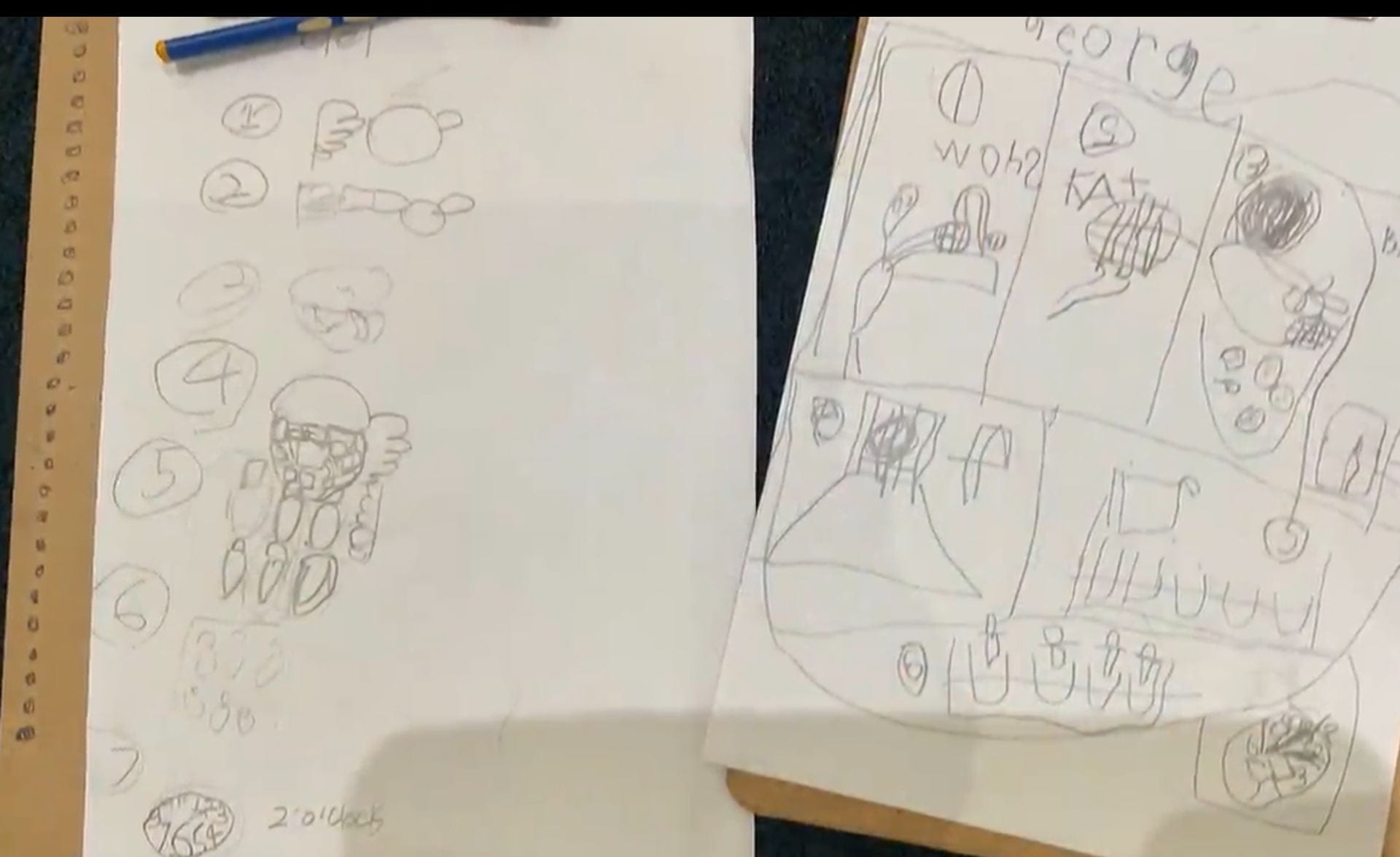
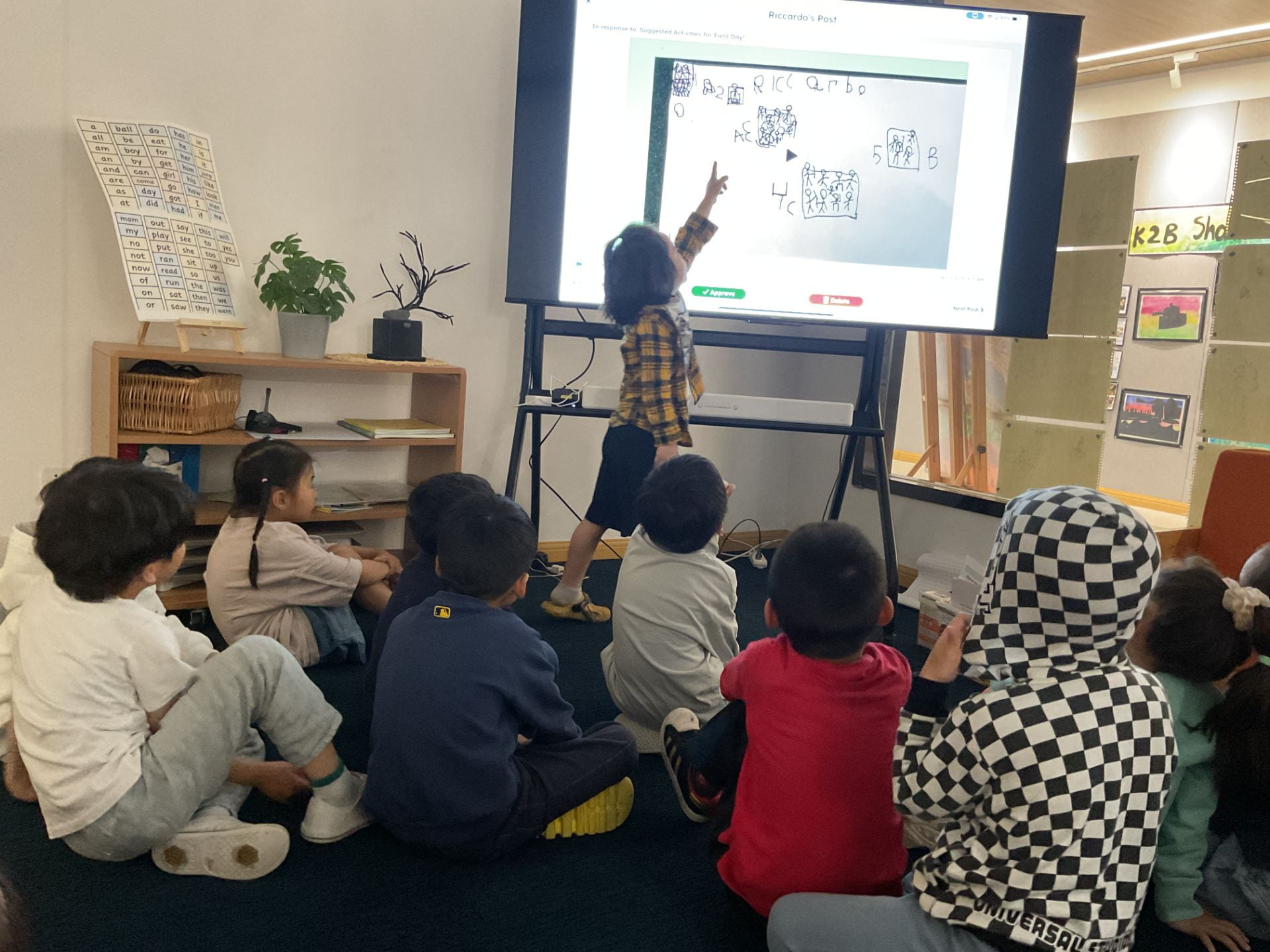
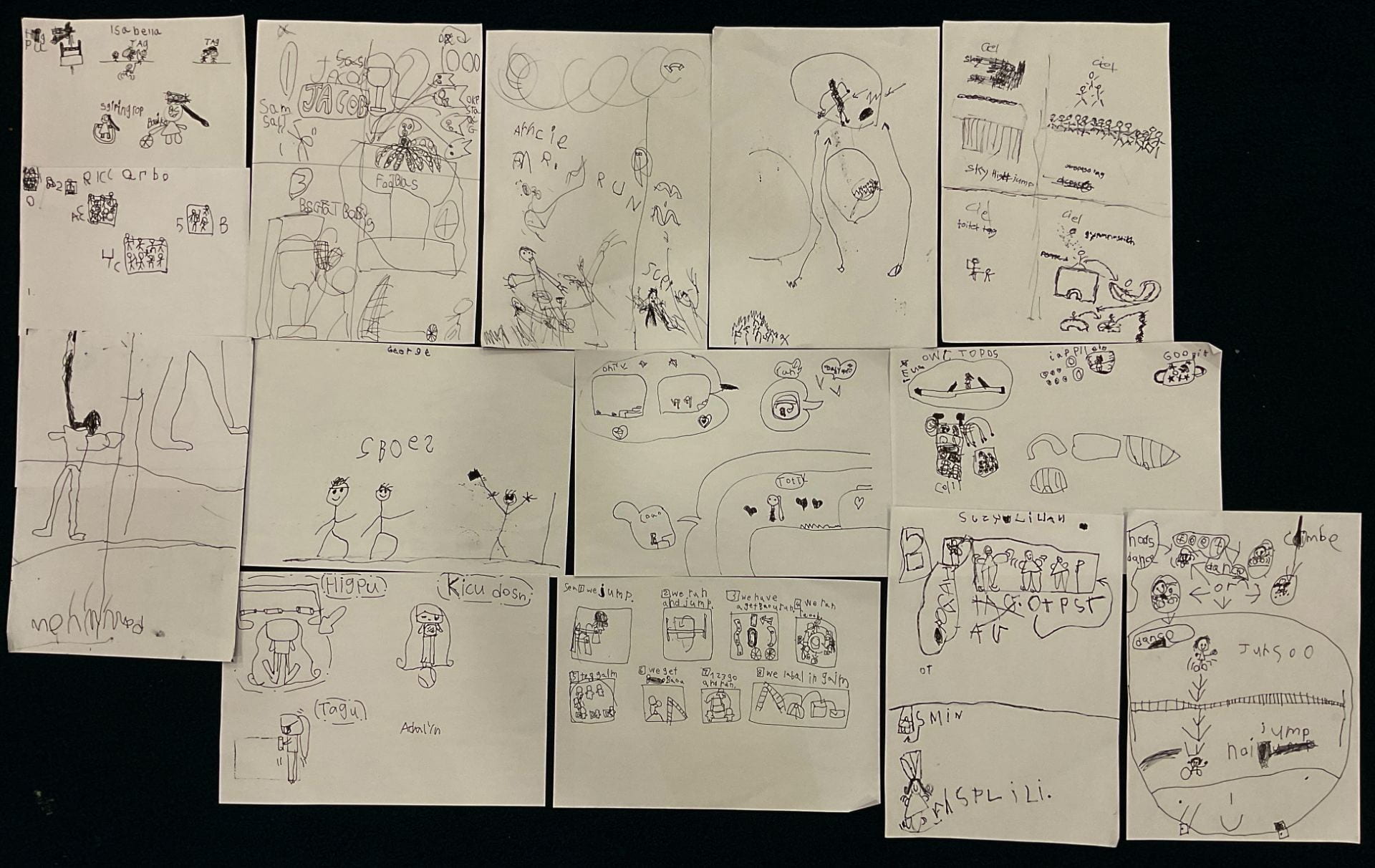
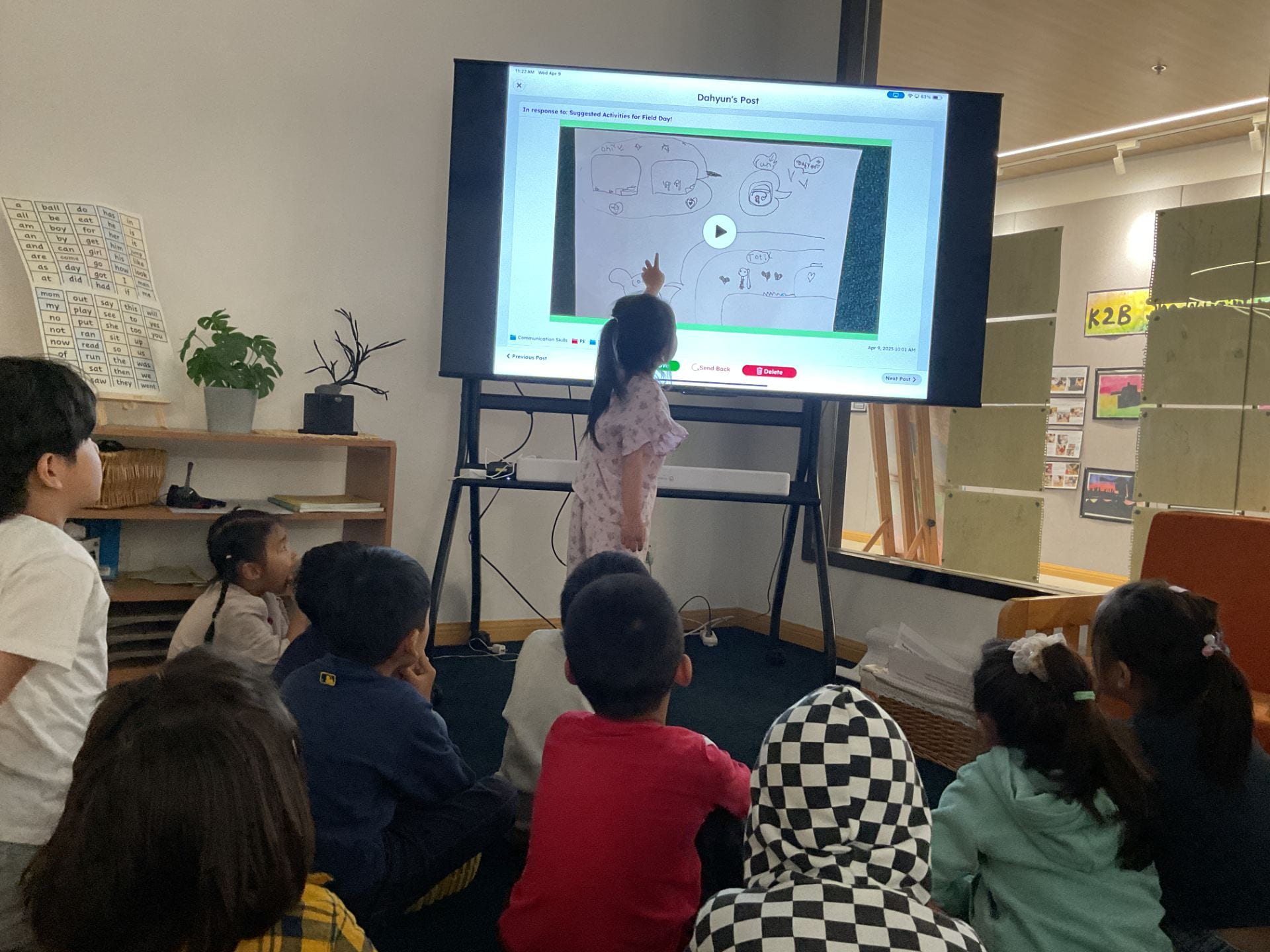
The Early Years Field Day is fast approaching, Mr. Lee wondered if the children had any suggestions for some activities they would like to share with parents. The athletes in K2 put down their thoughts on paper, using drawing and writing to explain their ideas. Then, they presented their ideas to the rest of the class.

  • Adalyn “I just wanted high jump and kicking the ball and Tag.”
  • Ciel “This is high jump, octopus tag and toilet tag and gymnastics.”
  • Dahyun “Octopus tag, toilet tag, running, climbing and high jump.”
  • Euno “Octopus tag, jumping, sit and go on a trolley play and gymnastics.”
  • George “This one is football, this one is running outside.”
  • Isabella “High jump, octopus tag, Tag, skipping rope and basketball and high jump.”

  • Jacob “Somersaults, basketball and football.”
  • Junsu “This is high jump and hand-stand and feet stand and dance.”
  • Mohammad “Running, kicking the ball.”
  • Riccardo “Octopus tag, high jump, alien tag, toilet tag, banana tag.”
  • Sea “This is run and jump, high jump, the team relay, and running round and pass the noodle to another person, tag game, climbing the ladder, running game and obstacle race.”
  • Suzy “Octopus tag, high jump, swing, trampoline.”

We wonder which of the suggestions Mr. Lee would consider including in the field day activities.

We hope the parents will put on their running shoes and be ready to watch, engage and celebrate the day’s events.

Children have ‘agency‘ when they have an active voice and stake in the classroom and community.

Where do we keep the sand toys?

Ms. Jenny shared some photographs of one section of the EY playground, which has been closed off temporarily due to maintenance work. As we shared the photographs, the children discussed what they noticed. They were curious to find out how the maintenance staff would fix the ‘hole in the ground’ next to the sand pit.

One of the problems that children continued to focus on was that the walkway to the shelf where they store the sand play toys had been cordoned off.

They wondered where they might keep the sand play equipment after playtime. The children were thoughtful, explaining what might happen to the toys if they weren’t put away safely.

  • Euno, “These are the lines to tell you that going inside is dangerous. I saw a child go inside and then he go out and that’s dangerous.”
  • Isabella “There is a hole inside that needs to be fixed.”
  • Evan, “People are fixing the hole.”
  • Jacob “The hole is dangerous because if you slip inside you will be sucked in deeper and deeper and cannot come out anymore. (In mandarin)”
  • Isabella, “I see there is some water inside.”
  • Riccardo, “Can we lift the strings and go through in?”
  • Suzy “No.”
  • Isabella “We can stand outside of the lines and watch people fixing it.”
  • Suzy “But if we cannot go inside, how can we tidy up the toys?”
  • Euno “We cannot go inside but our tidy up shelf is inside, then we cannot put our toys back to the shelf inside.”
  • Evan “We should not throw the toys in.”
  • Sea “We cannot leave all the tools on the playground, they will look like trash.”
  • Riccardo “We can use the old tidy up area (shed).”
  • Suzy “Maybe we can give the toys to the fixing people and ask them to help put it on the shelf.”
  • Dahyun “We can make a new one (to be the tidy up shelf).”

The children thought hard to find a solution to the problem. After considering and discussing many different ideas, Mohammed said, “In the garden”.

We were curious about what he meant and decided to invite him to share the safe space he was thinking about. Mohammad went outside with Ms. Sophia to take photographs of the spaces he was referring to. He presented his ideas to the class, pointing to the different spaces we can keep the toys, till the shelf is accessible. Mohammad’s solution was to store the toys under the worktables near the garden.

They could also be hidden in the sand so they will be protected.

When Mohammad was done Junsu turned to Mohammad and gave him a thumbs up and said, “Good job Mohammad!”. The children agreed that this was a good idea!

The children’s conversation highlights their natural curiosity about the environment, and how they use their senses to understand how things work around them. It further highlights their enthusiasm to explore possibilities and be solution driven.

How much is a Watermelon?

Jacob was inspired by our challenge project, particularly the part about making ice pops with watermelon juice. He decided to visit a supermarket to learn more about watermelons. On his return, he shared what he had uncovered.

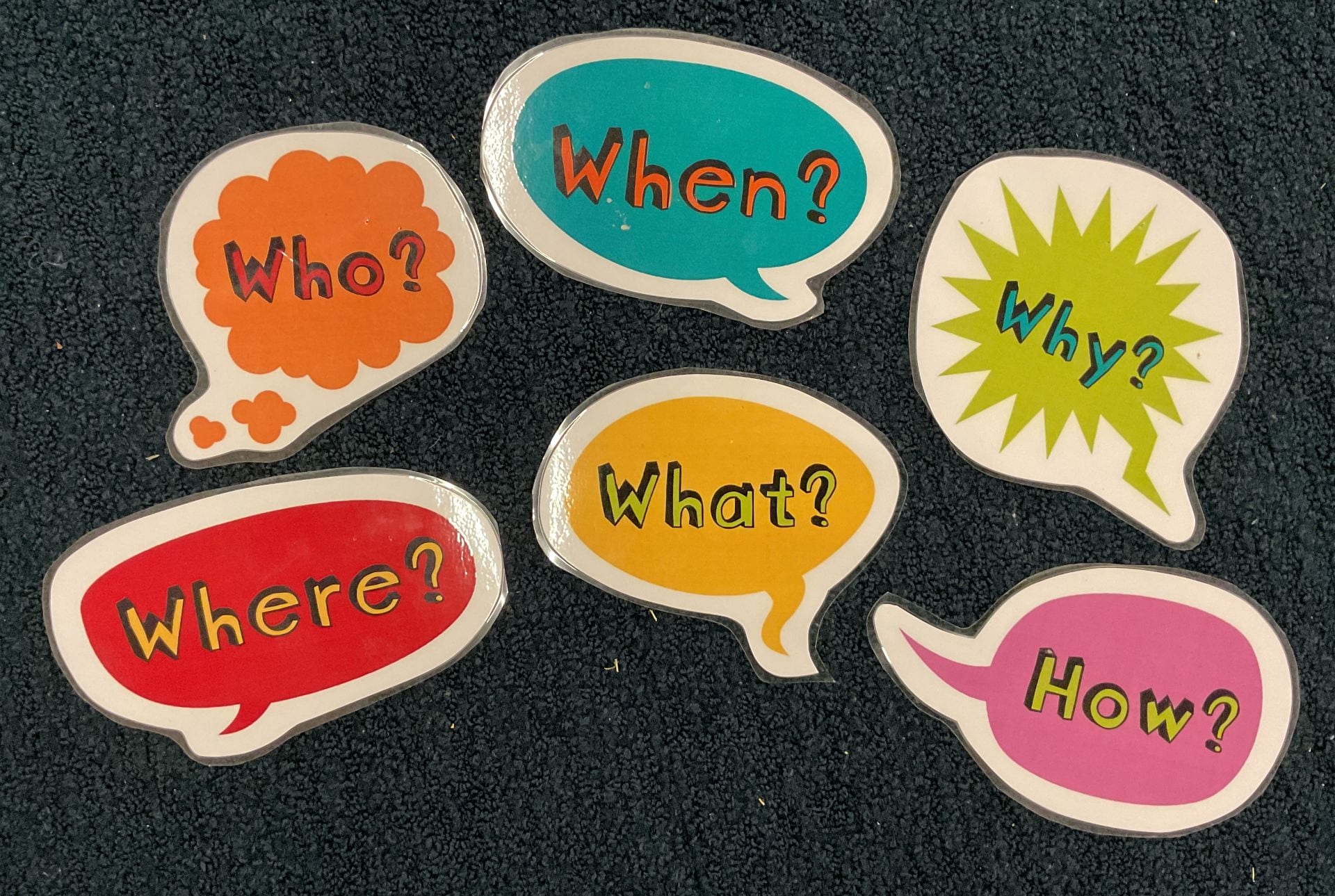
Jacob used the question starters to help him present his learning to the class.

  • Jacob “Me and my mum is going to the supermarket because we want to look the watermelon is how many money. And how big and how small. I go to Hippo to look how heavy and small. I went yesterday. I take a photo because then we know how heavy. It was 59 RMB.”

Jacob’s presentation made us wonder how many watermelons we might need to make the ice pops. We wanted to make sure we had enough for the project, but we also didn’t want to waste any food. 

  • Suzy “Maybe we can first get one watermelon and then we can test it because then if we didn’t know how many too much or too short.”
  • Evan “We need to ask Ms. Jacqui about the money for the watermelon.”
  • Jacob “We need to listen to other people and look.”
  • Suzy “Say it nice and loud because then other people cannot hear.”
  • Sea “I don’t know if Ms. Jacqui gives the money.”
  • Isabella “We need to tell Ms. Jacqui how many money we need.”
  • Dahyun “We can find the market.”
  • Euno “We don’t tell any people then we don’t have money so we cannot buy the watermelon.”


Can we have some money?

A group of children volunteered to take the project plan to Ms. Jacqui to ask her about the money they needed for the project. The children explained that they would need 60 RMB to purchase one watermelon to test the ice pops. Ms. Jacqui was excited to hear all about their plans and invited the children to think about the different steps they needed to take to plan a safe field trip across the road.   

They needed permission slips, money to purchase the watermelon and teachers to accompany them on the trip.   


Do we have enough ice-pop moulds?

Teacher “What about the moulds for the ice pops do we have enough for everyone?”

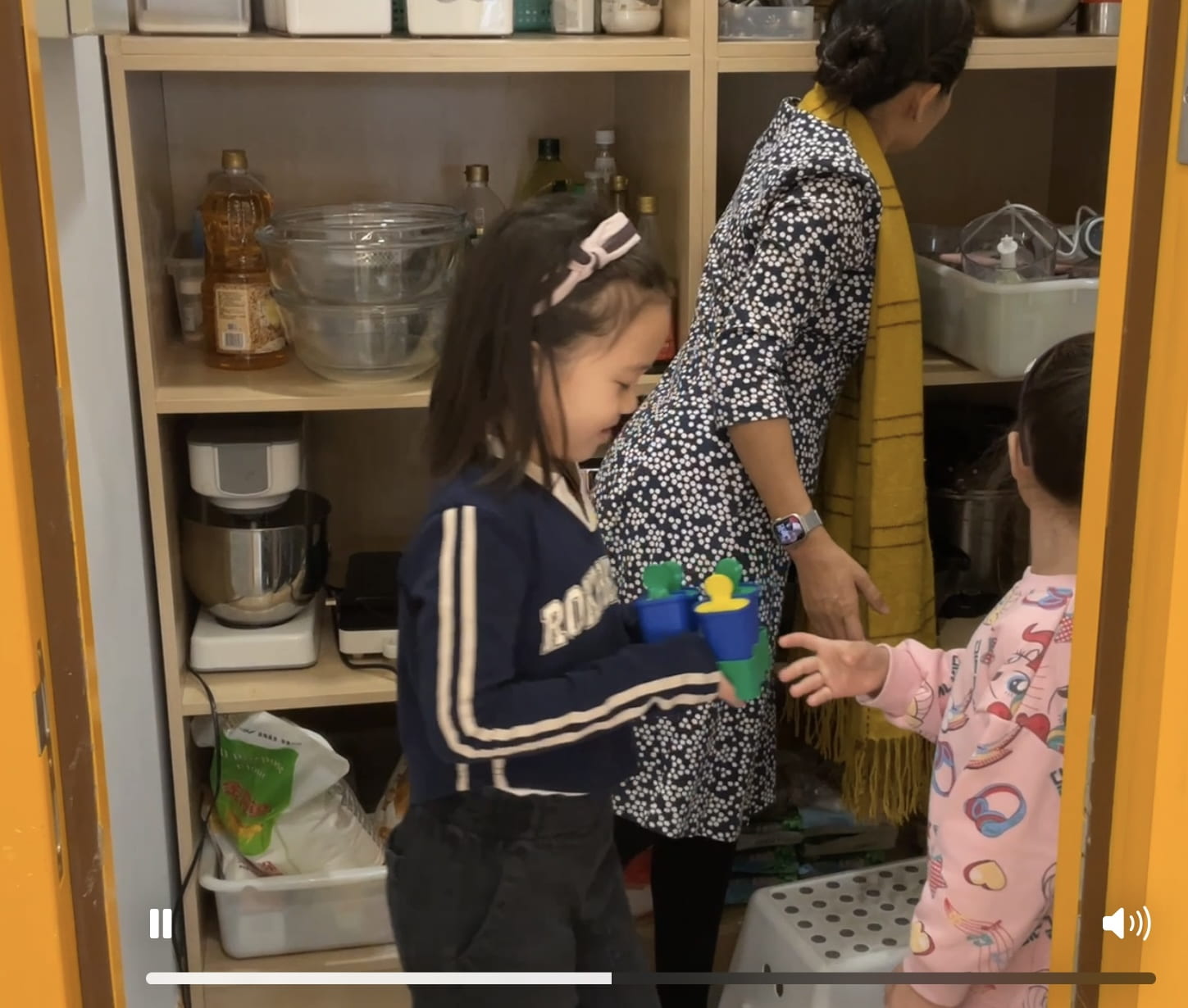
Isabella recalled using the ice pop moulds when she was in K1 and decided to reach out to Ms. Hannah to see if she could find them in the Early Years kitchen. Mohammed and Adalyn wanted to help Isabella with the task.

The team looked in all the cupboards to look for the ice pop moulds but couldn’t find them. After a lot of searching, they found two sets of 6 ice pop moulds in the Early Years pantry.  

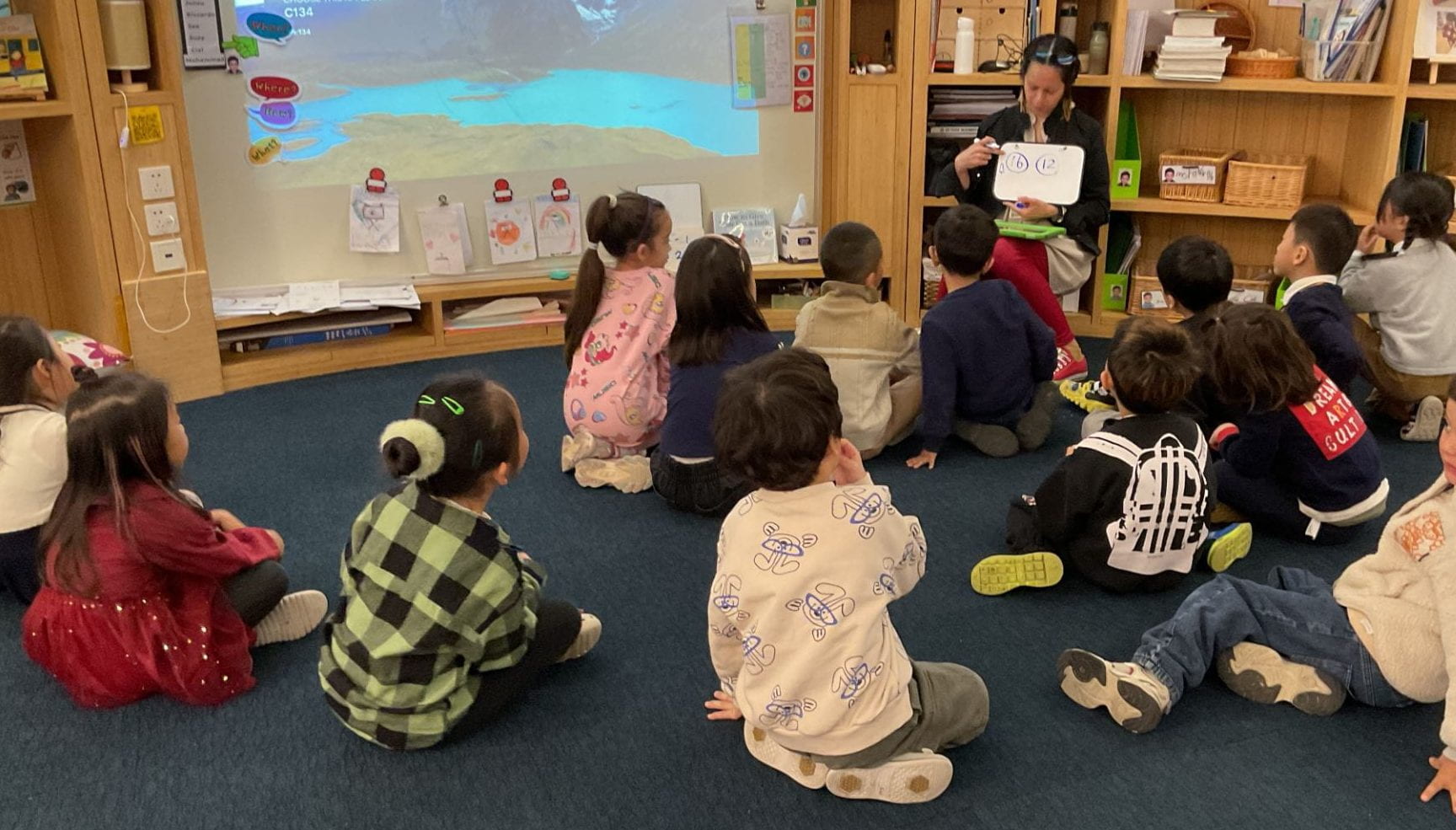
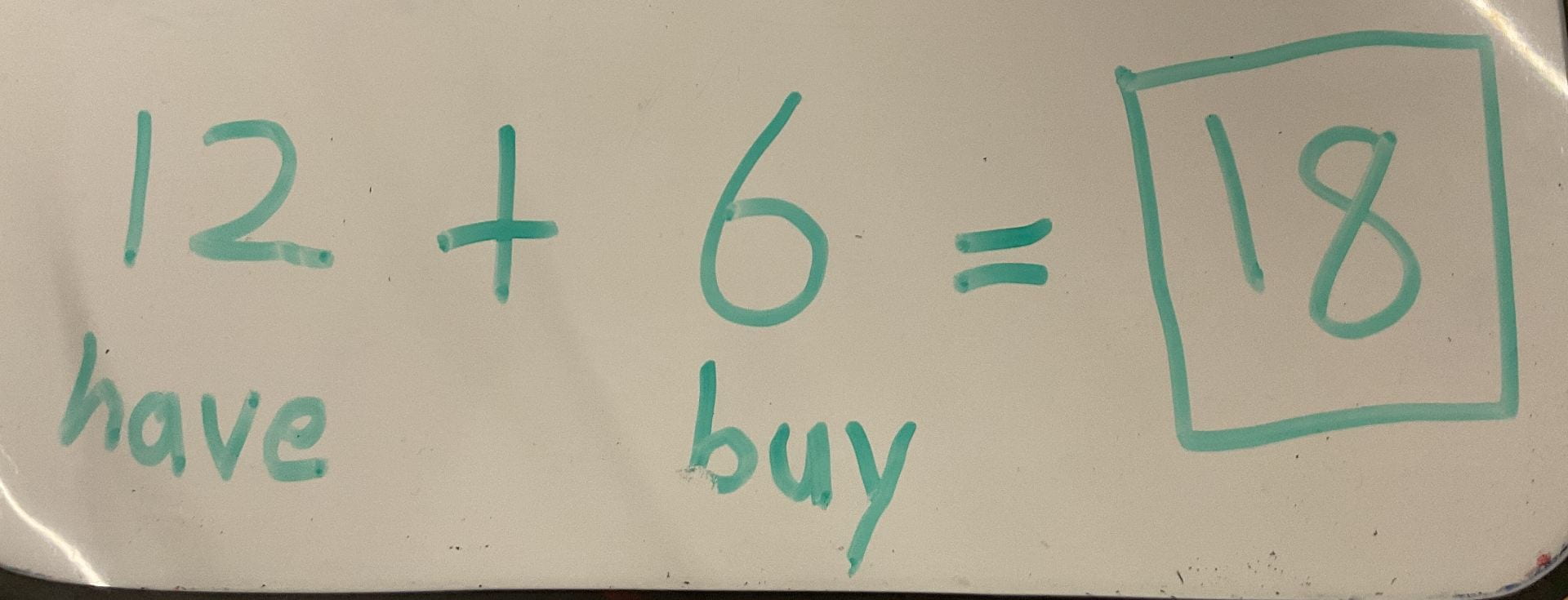
The children decided that they needed 16 moulds for the children and the teachers in K2A. But they only had 12! They used what they knew about numbers and calculations to help them solve the problem.

They decided that they need to buy 6 more moulds to have enough for everyone in K2A.

A Map to the Skyways Kitchen

What is a map?

When Patrick came in to talk to the children about their field trip to the Skyways kitchen, Riccardo and Evan asked him if he had a map to help us get to the kitchen. Patrick did not have a map but provided the children with directions on how to get to the location. We referred to the information and realised that we would need to create our own map using the information.  

We began by asking the children what they knew about maps.

  • Dahyun “A map is if we don’t know a place we can see the map.”
  • Sea “We don’t have a map, we take a map in the school.”
  • Riccardo “You can use a map to find treasure.”
  • Evan “You can use a map to drive the car.”
  • Adalyn “You can use a map to find somewhere.”
  • Isabella “You can use a map to find some place you don’t know.”
  • Suzy “You can use a map to find a place to drive.”
  • Euno “When you want to go to a market but you don’t know where is the supermarket, you see the map.”
  • Jacob “When you don’t know how to go home, then you can use a map to go home.”
  • Sea “We don’t have a map, we can see a map in a handphone.”
  • Dahyun “We cannot go to NIS we can see a map.”
  • George “If you want to go somewhere you can go with a map.” (in Mandarin)
  • Evan “You can walk with a map in the phone.”
  • Riccardo “In some maps, some things are in the right place and some things are not.”
  • Ciel “If you don’t have a map you can talk to another people.”
  • Sea “We don’t have a map in the phone we can put it in the car screen.”
  • Euno “You don’t have a map on the phone you see the iPad map.”
  • Ciel “If you don’t have a map you can make one.”
  • Euno “Mum’s handphone has a map, so my mum has a map.”

What does a map need to have?

  • Ciel “You need a paper, and markers. It has a house, schools.”
  • Sea “Supermarkets, hospitals, fire stations.”
  • Suzy “A car on the road.”

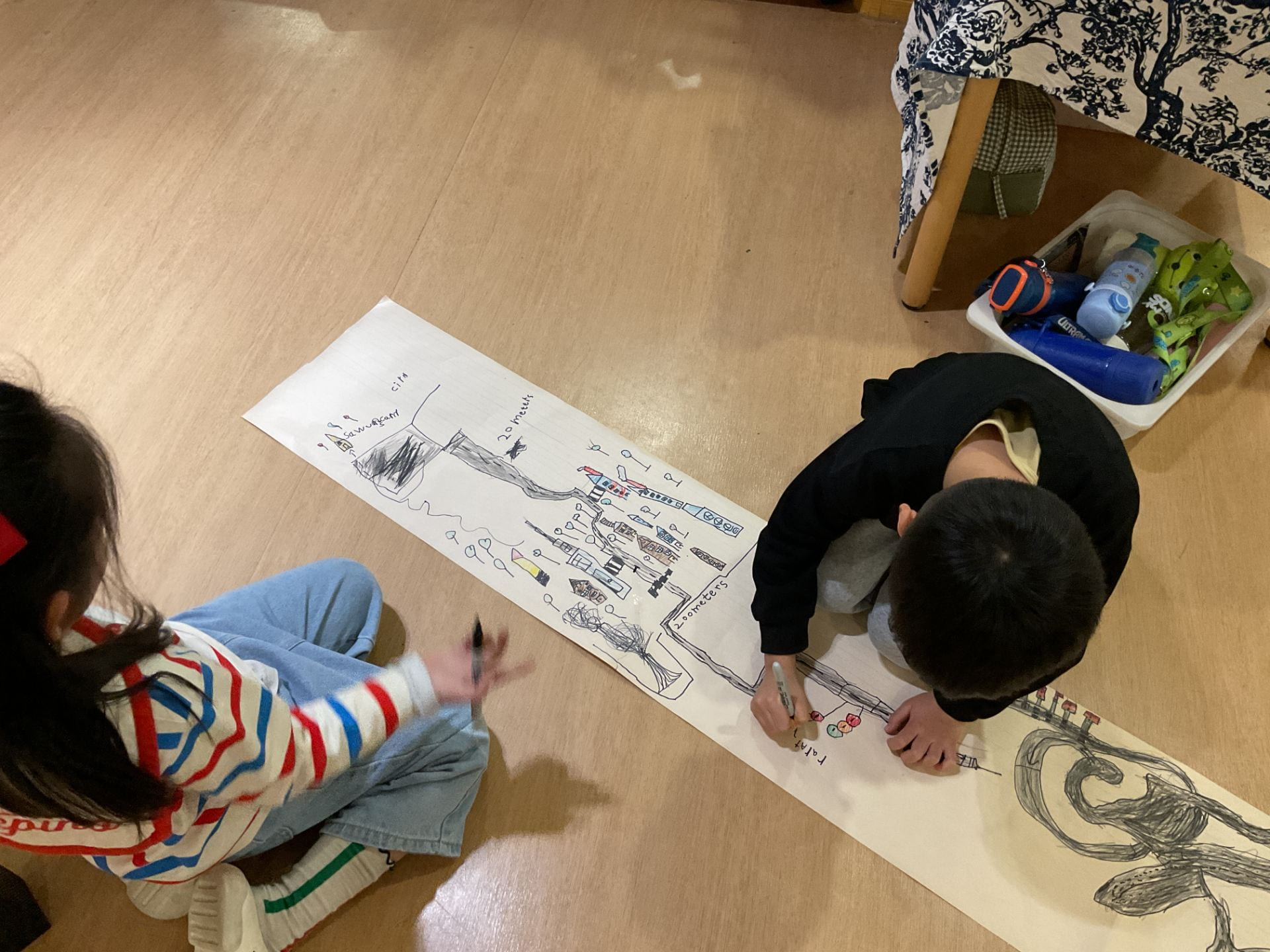
A team of children signed up to create a map to help us with our trip.

The cartographers documented the information using everyday language to describe directions, plotting locations, traffic symbols, and signs along the roadway.

They discussed the ‘purpose‘ of crosswalks and traffic lights and how they keep people safe.

  • Suzy “If we have traffic lights, other cars can go first, then the people will go, and then the traffic light will go green. When the traffic light is green the cars can go. The people have to stop because then they will go under the car’s wheel, that is super dangerous.”
  • Ciel “People need a crosswalk because people need to walk to the street. When you are on the crosswalk you need to look left and right because the car can hit you. When the walking man traffic light turns to green then you can walk. When it is red you can’t go. I go with my sister on the crosswalk. We have elevated roads because we can see the nature.”

The children’s conversations share their understanding of the ‘function’ of signs and symbols and safety equipment and how they communicate meaningful information to road users.


What is 1 Metre?

The cartographers paused to think about some of the information Patrick shared with the directions to the Skyways kitchen. The instructions read ‘go 200 metres’

Teacher “What is 200 metres?”

  • Isabella “We only heard centimetres before.”

Teacher “What is a centimetre?”

  • Isabella “The ruler.”
  • Sea “Only have numbers up to 30 centimetres.”
  • Evan “I think 1 metre is 100 centimetres.”
  • Ciel “I think 1 metre is 9 centimetres.”
  • Jacob “I think 5 centimetres is 1 metre.”
  • Evan “I think 200 centimetres is 1 metre.”
  • Ciel “I think 10 centimetres is 1 metre.”

We noticed that the children’s estimates ranged from 5 to 200 centimetres.

Therefore, we decided to provide them with a comparison example.

  • Shemo “I am about one and a half metres tall. How many centimetres might that be?”

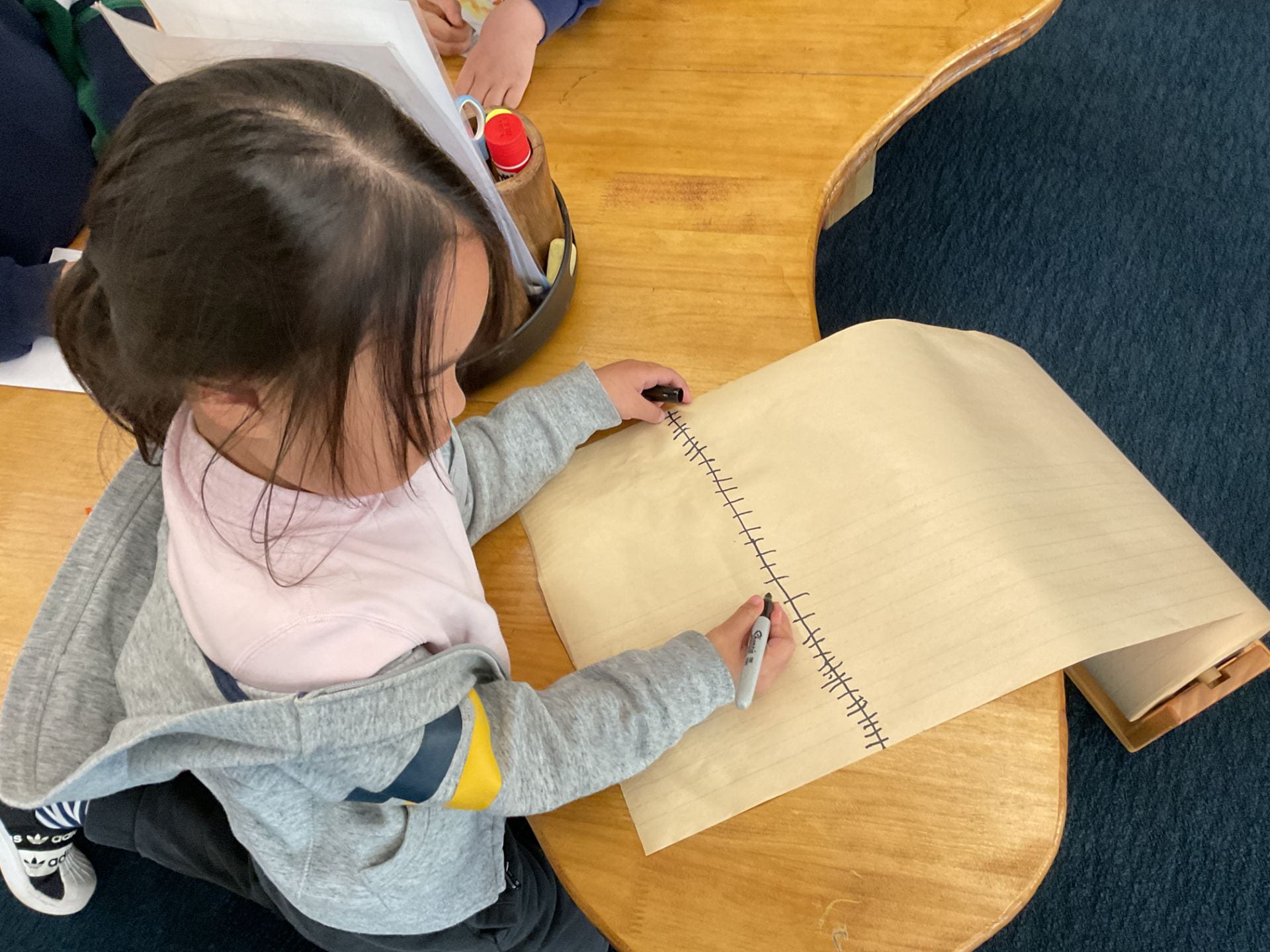
As they looked carefully at the height of the teacher, Isabella recalled measuring height using a long ruler in the classroom.

  • Isabella “Mr. Seth has bigger rulers!”

Isabella brought back a ruler that was 50 centimetres long. The children looked at the number and realised that it wasn’t tall enough to measure the teacher. Isabella went and brought back a longer ruler that was 100 centimetres long.

They placed the ruler close to the teacher, but she was taller than the ruler. They placed the 50cm ruler above the 100cm ruler, the teacher was still taller than the ruler. Finally, they placed a 30-centimetre ruler above the other rulers and added the numbers together.

  • Ciel “I think Ms. Shemo is about 160 centimetres tall.
  • Sea “Because 100 and 50 and 10 is 160!”

Through this discussion, the children concluded that the 100-centimetre ruler was one metre. Now, they wondered how to show 200 meters on the map. After some thought…

  • Isabella “We can just write 200 meters on the paper!”

The children’s conversations and problem-solving show their developing understanding of standard units of measurement and how they are used in everyday life experiences.

Once the cartographers complete their map, they will present it to the rest of the class for feedback. We wonder how feedback and reflections will lead to improving the final map of the directions from NIS to the Skyways kitchen.


The Final Map

The map was presented to the class for feedback. The children decided to colour in the map to make it look ‘beautiful’.

They also suggested that including names (labels) will be helpful.  The children gathered around the map to include the different elements discussed.

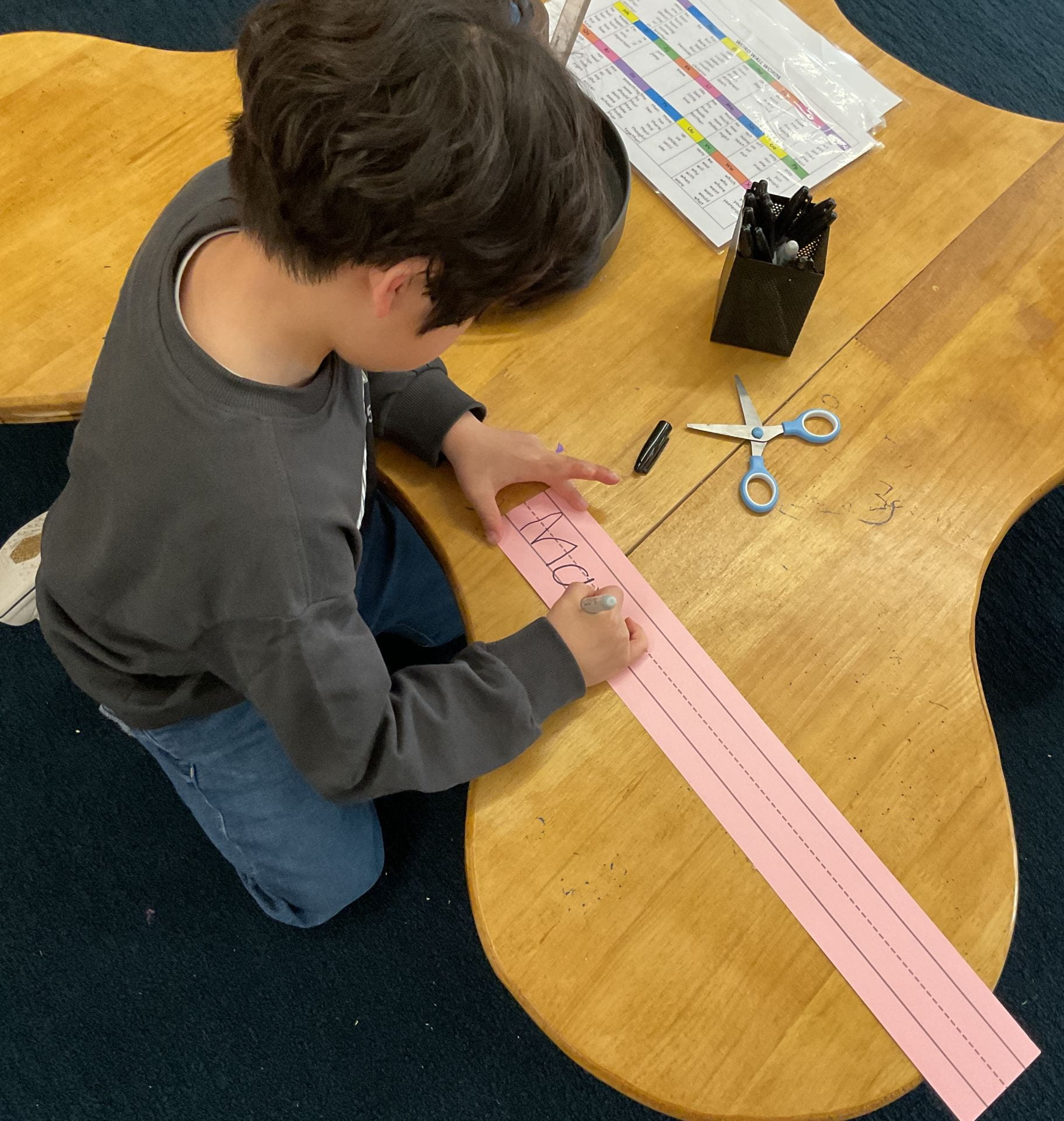
They used what they knew about letters and sounds to write the labels.  We noticed the children helping each other when words were too hard to spell.

Finally, Ciel included a title for the map.

Student Presentation on the Recycling Center in Nanjing

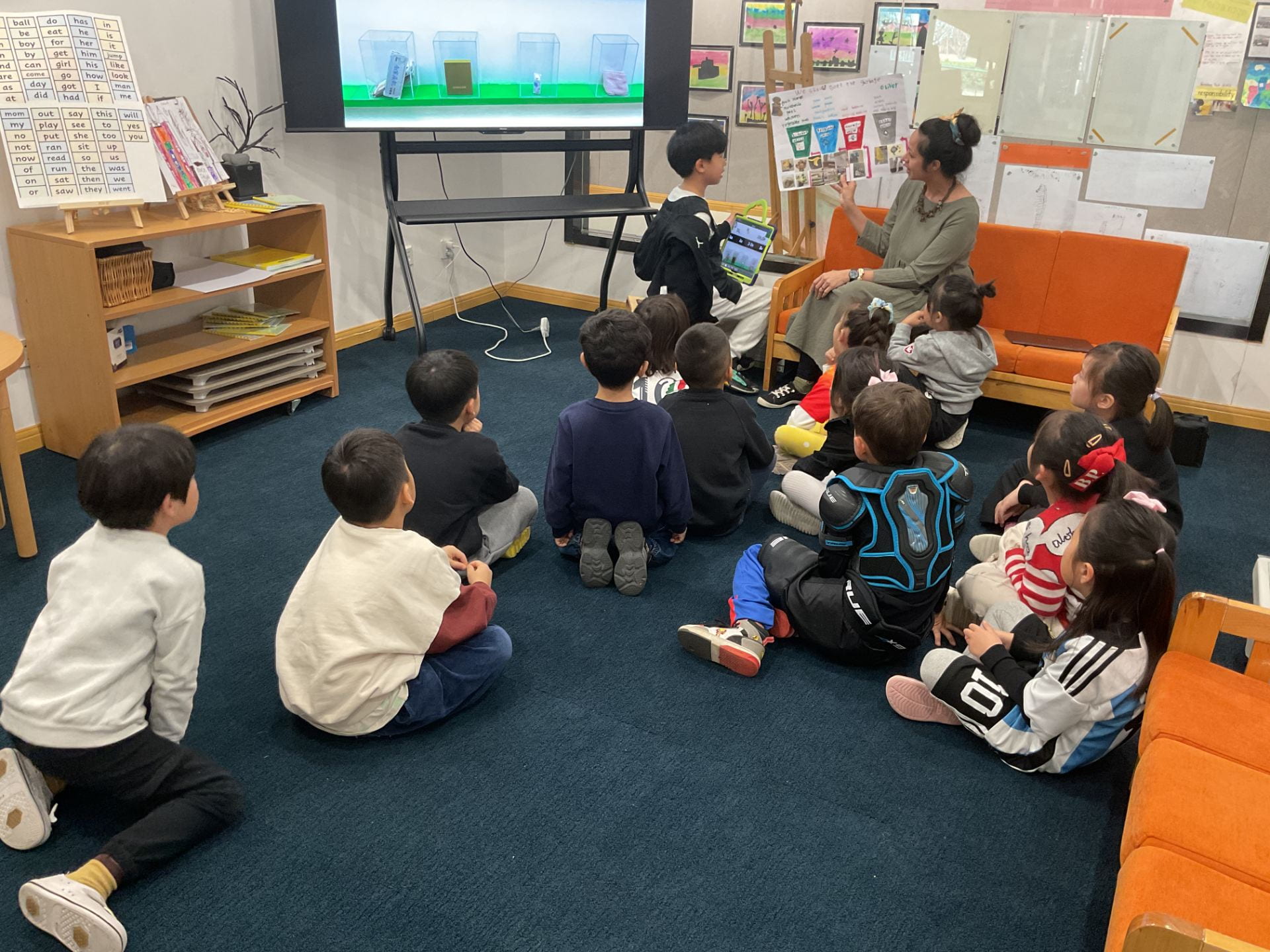
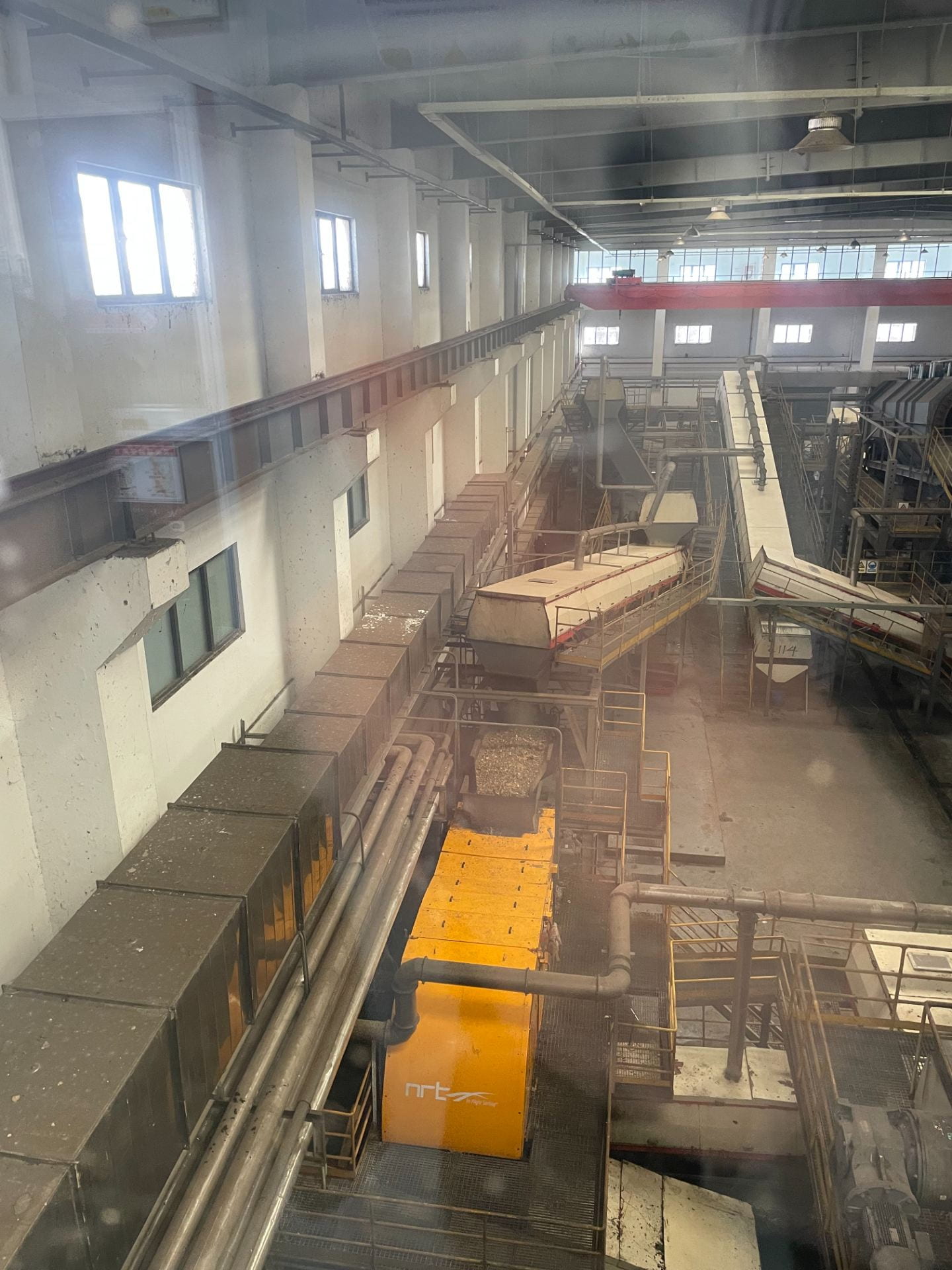
Two years ago, Patrick was in K2A. During this time, he was interested in learning about waste and recycling and made a presentation to his class after conducting his research. Patrick is now in grade 2. He recently visited a waste recycling center in Nanjing in response to a unit of study in class and was excited to return to K2 to share what he had learned during his visit.

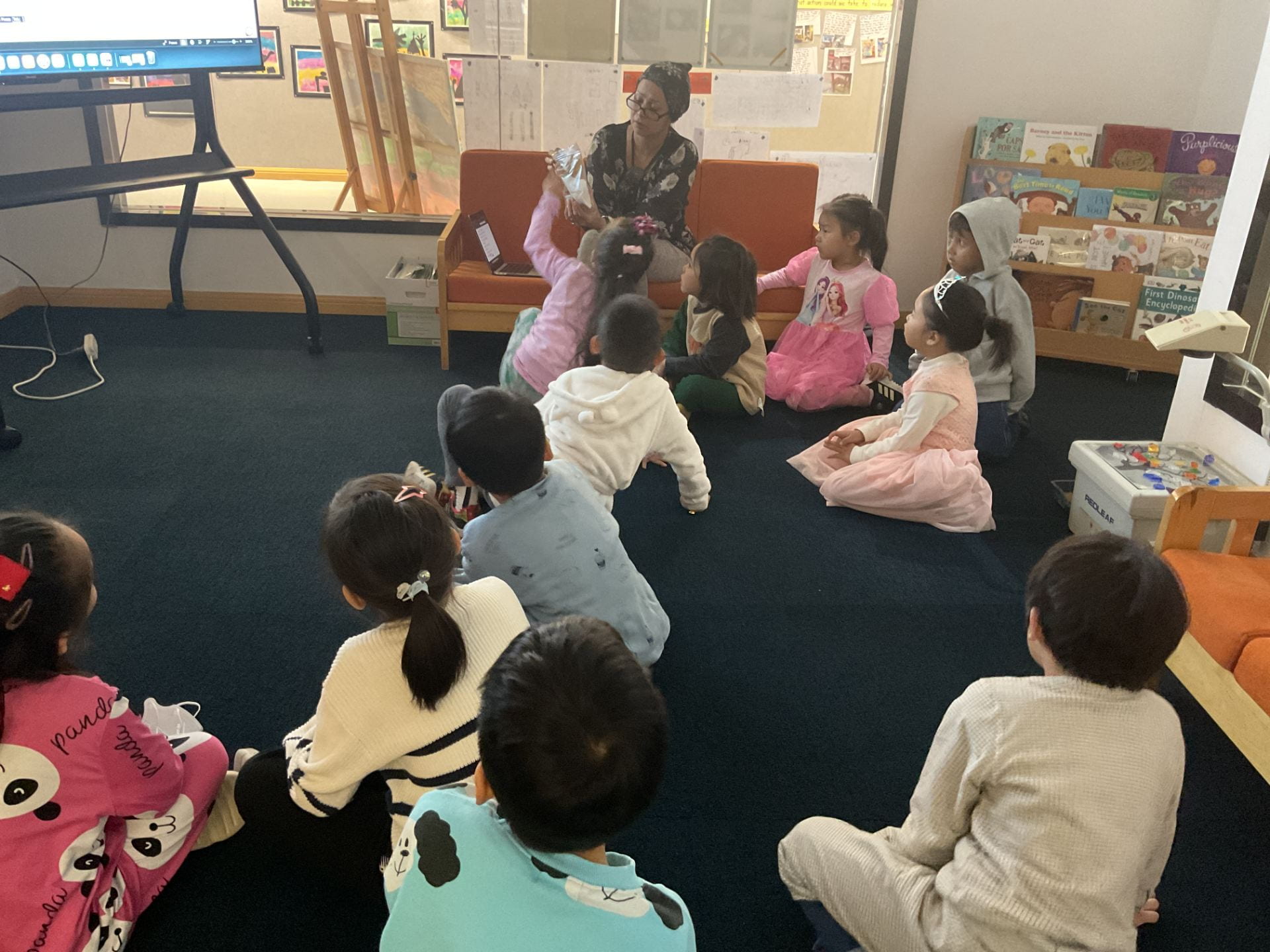
Oliver, who was in K2A the previous year, had created a poster about waste disposal while learning about recycling. Patrick referred to Oliver’s poster, explaining which items could be disposed of in the different coloured recycling bins. The children have noticed some of these bins around the school campus and were eager to learn more about their function in recycling.

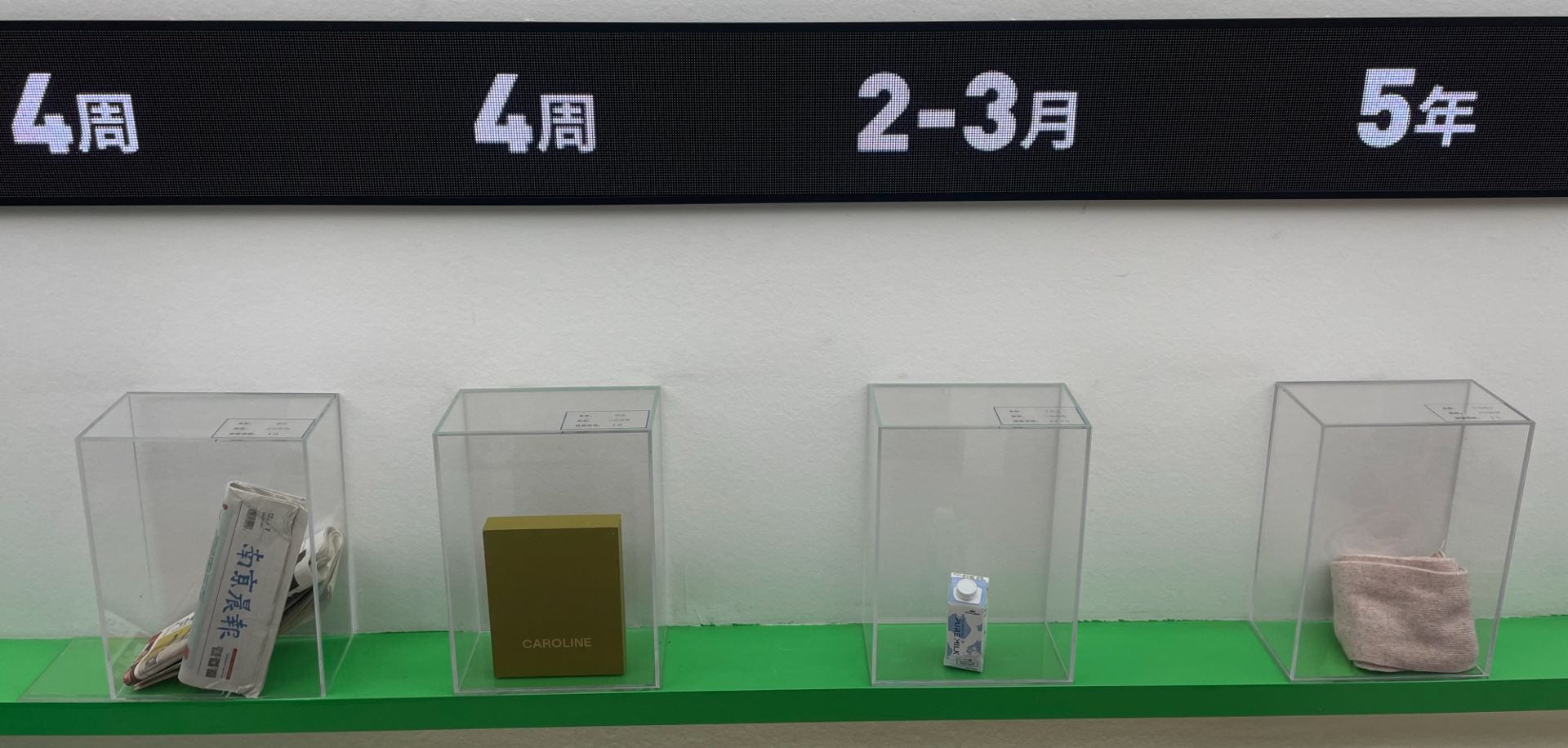
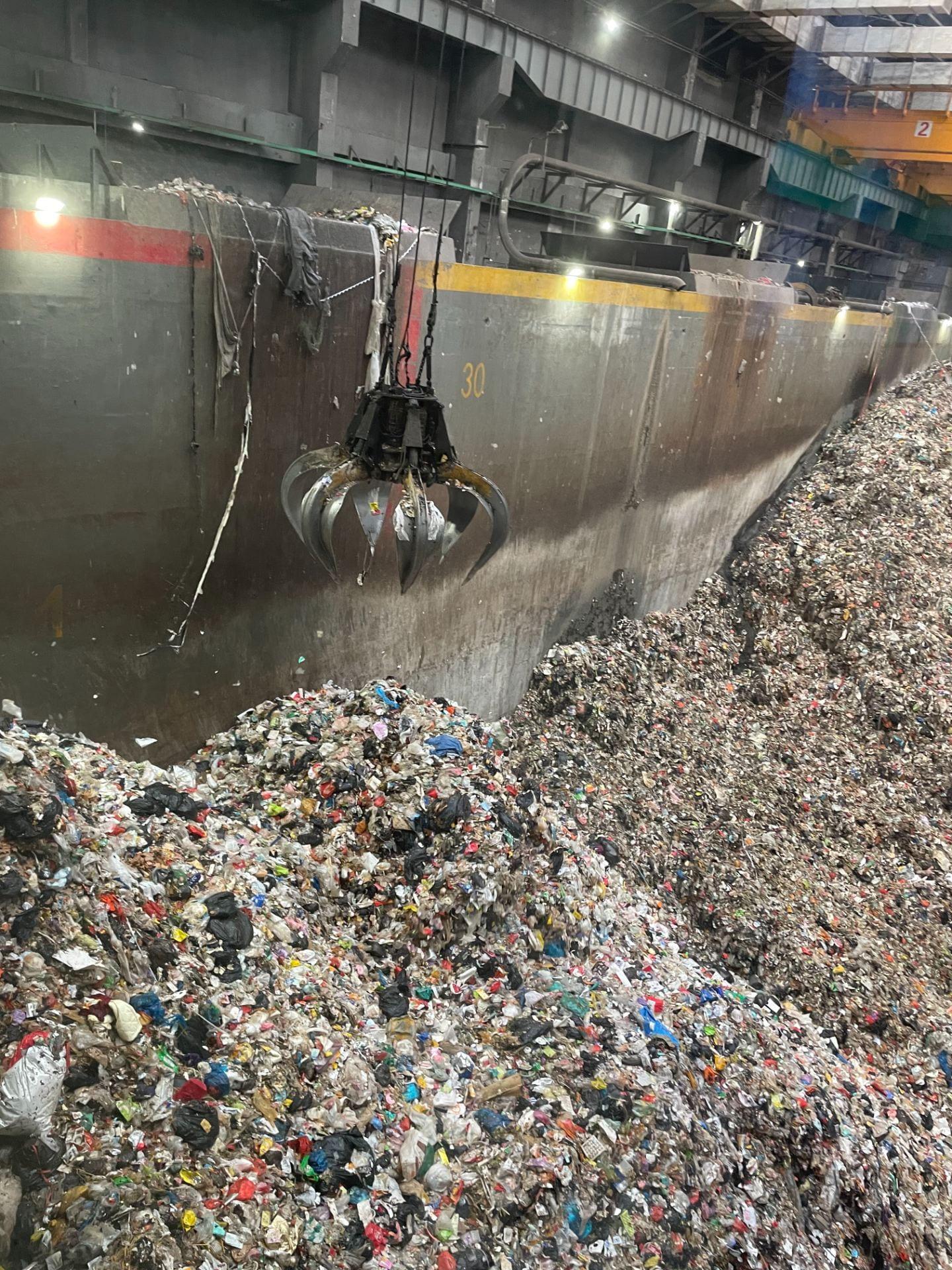
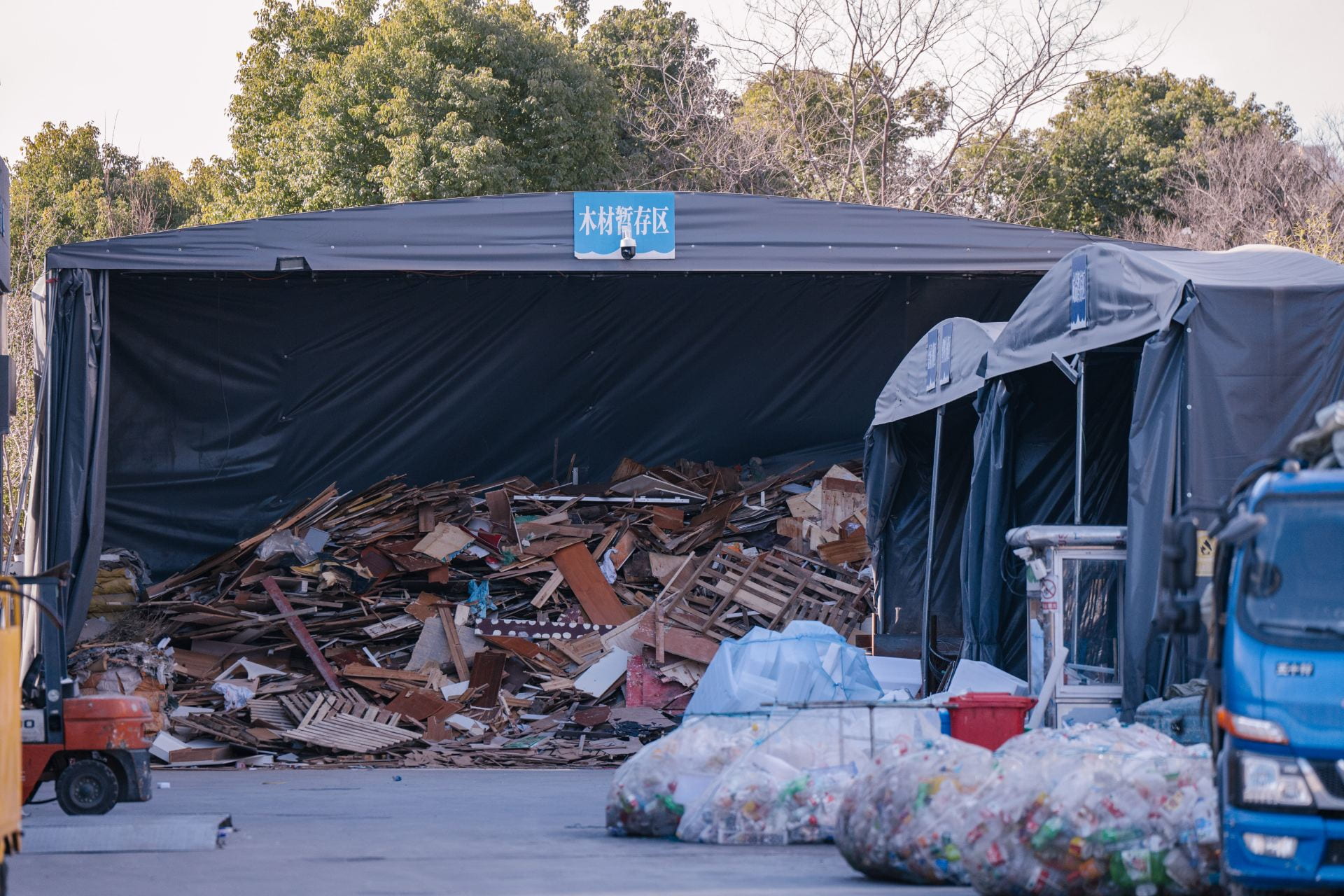
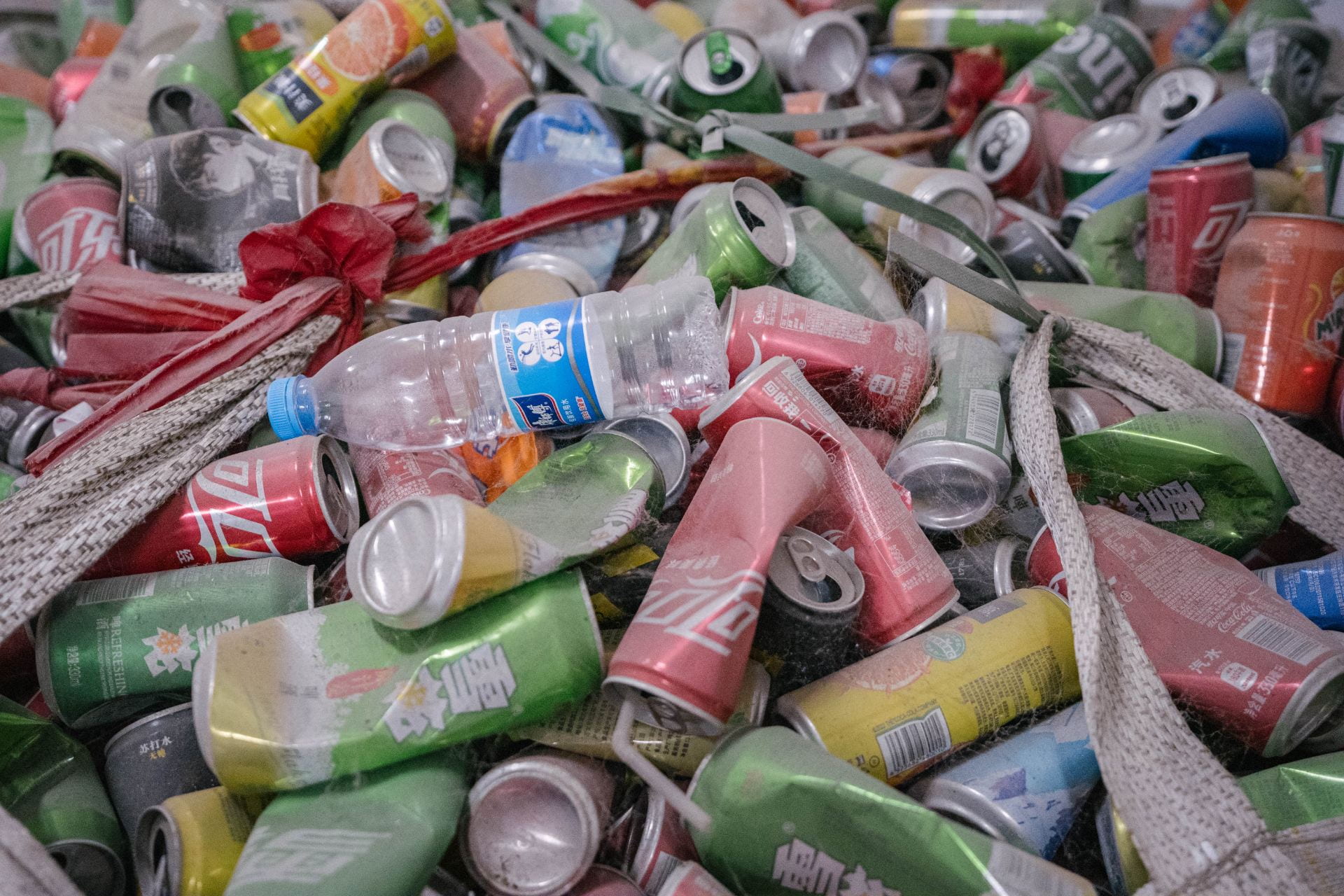
Patrick shared many different photographs of the recycling center, providing explanations on the Process of transporting and sorting materials such as paper, food and plastic waste. He was excited to talk about how long it takes for materials such as paper, fabric and plastic to decompose.

The next day, we revisited Patrick’s presentation.

  • Suzy “It is the machine.”

  • Riccardo “He said it is so stinky.”
  • Suzy “They take long to disappear.”
  • Jacob “In soil. They will disappear in the soil. How many years it takes to disappear.”

  • Suzy “Cardboard is harder than paper so it has the different number. It takes longer to disappear than paper.”
  • Suzy “This is for the trees.”
  • Isabella “This is from the food garbage. Its good for the plants.”
  • Riccardo “So they can grow up big like the trees.”
  • Jacob “I put the new soil in the new plants in the NIS garden, before K2. Ms. Hannah let me help she, I was putting new soil because then the trees will be grown up.”
  • Evan “The things get grabbed and it takes it away.”
  • Isabella “It can carry the weight of two elephants.”

  • Ciel “This is wood. This is to make something new. Maybe wooden chairs.”

  • Jacob “Wooden tables. Some people can make wood chairs and wood tables and something else with wood.”
  • Riccardo “And have glass waste.”
  • Junsu “This is cans. This is waste cans.”

  • Jacob “It will make it into new bottles. Someone will use the fire to make it like disappear, then you can make the new bottle.”
  • Suzy “They are recycling it.”
  • Mohammad “This garbage. This is bad. Water bottle in garbage.”
  • Suzy “Patrick wanted the NIS to be not so stinky. Too many trash. The children are making the trash because they have a lot of trash in their hands from the paper and bottles.”
  • Jacob “And some cans. And wood and cans.”
  • Suzy “He wants us not to make so many trash.”

Ms. Shemo showed the children her snack bag. It was made of plastic.

  • Suzy “Because you have the plastic bag which is going to be the trash.”
  • Jacob “Even the tissue.”
  • Suzy “Ms. Shemo will throw the plastic bag in the bin and then it’s going to be stinky. It is going to take 30 years to disappear.”
  • Jacob “If you don’t want to eat the bread, then it will be in the trash too.”
  • Riccardo “You can buy a snack box to carry it to school.”
  • Jacob “You can wash it then”

Ms. Hannah “Do you notice any trash waste around you at home?”

  • Riccardo “I don’t have trash at home.”
  • Hannah “How do you have no trash? What do you do?
  • Riccardo “Its only a little bit because we don’t use so much. Because my mum throws the trash in the other places.”
  • Euno “I only have a little bit trash at home because so many trash is waste food. Korean trash is different but here we can find other trash altogether. In Korea trash is not wasted.”

We wonder about the action the children will take in response to Patrick’s presentation on the importance of recycling.

Designing the Bike Park Signs

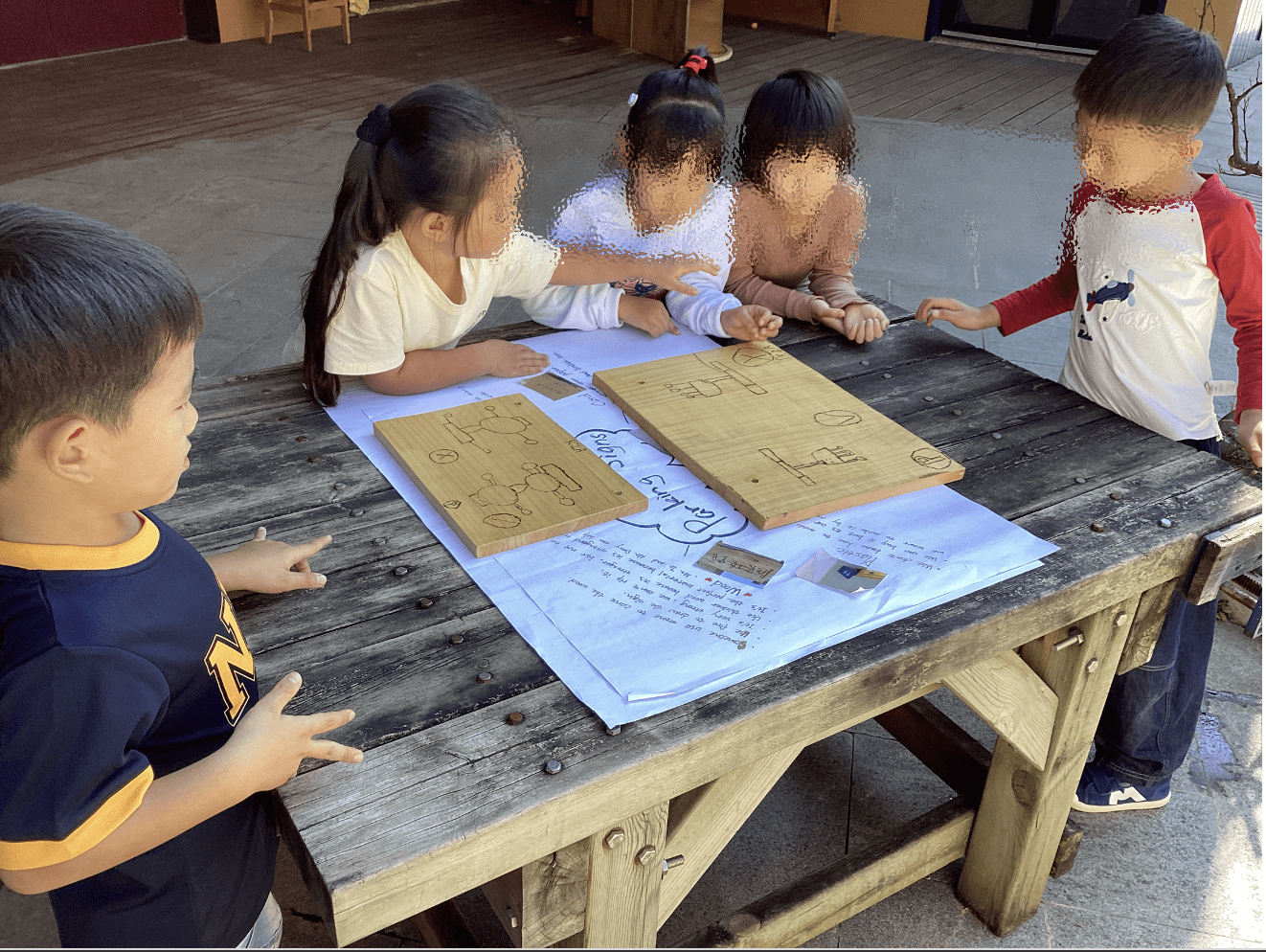
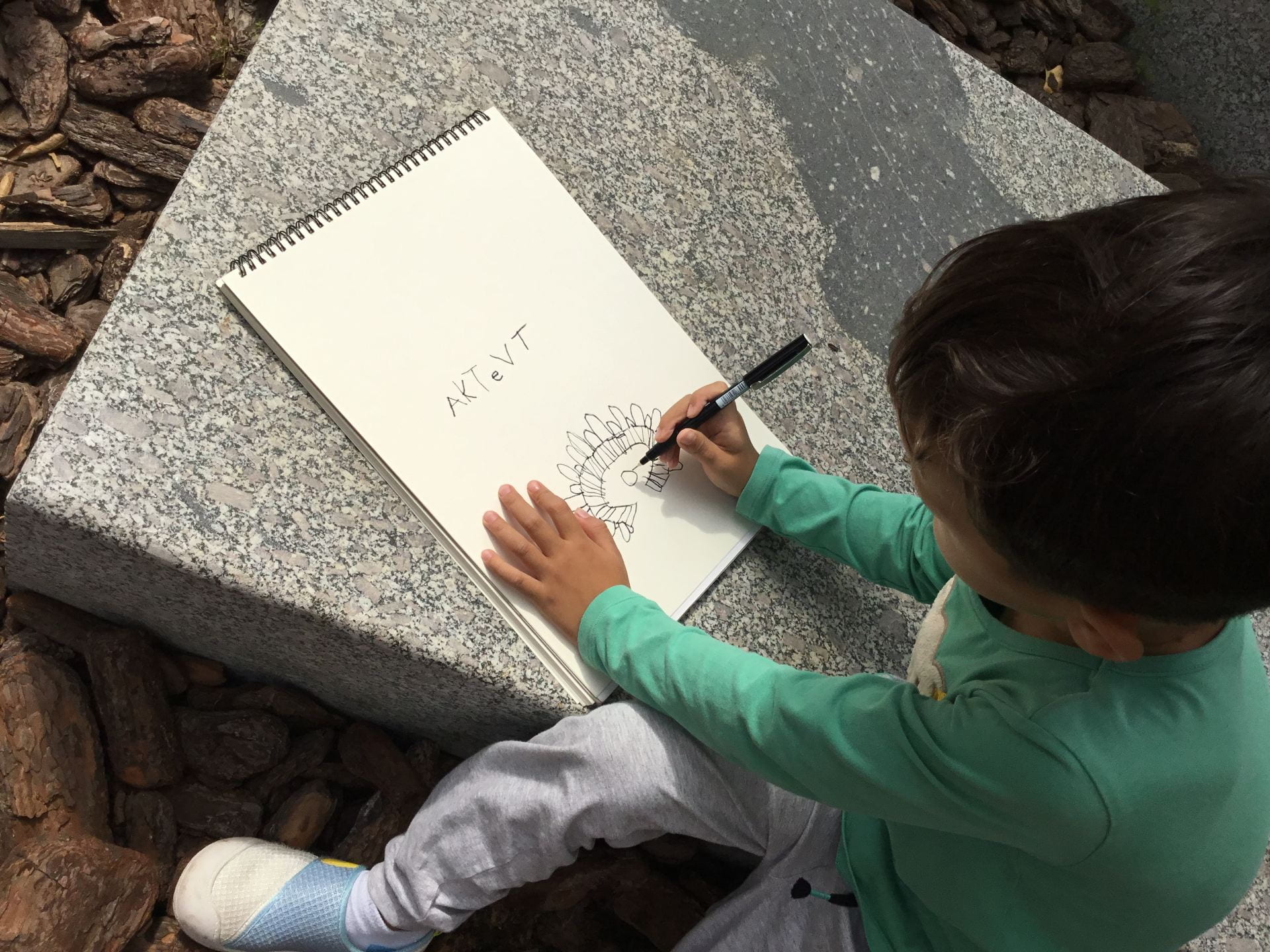
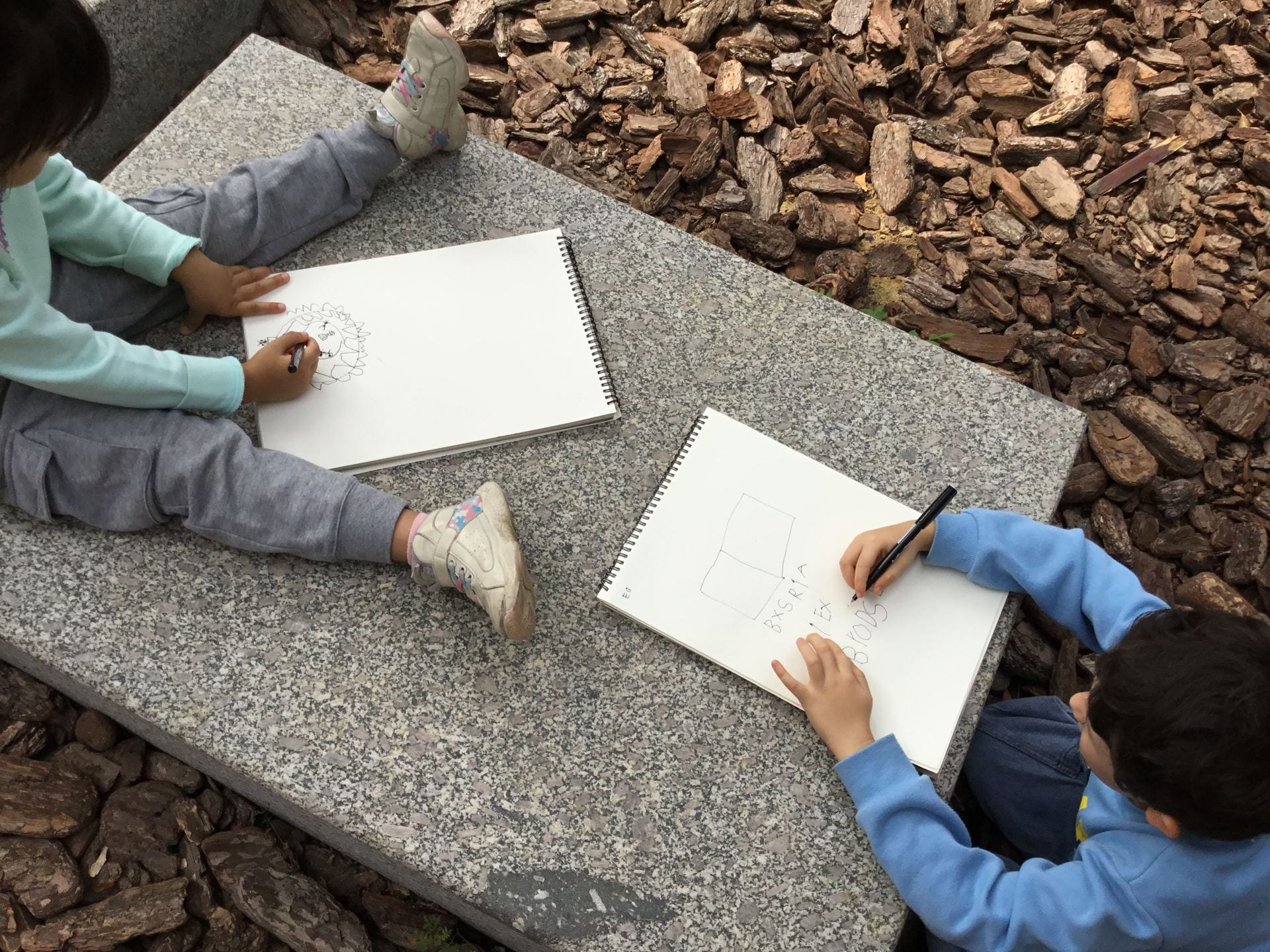
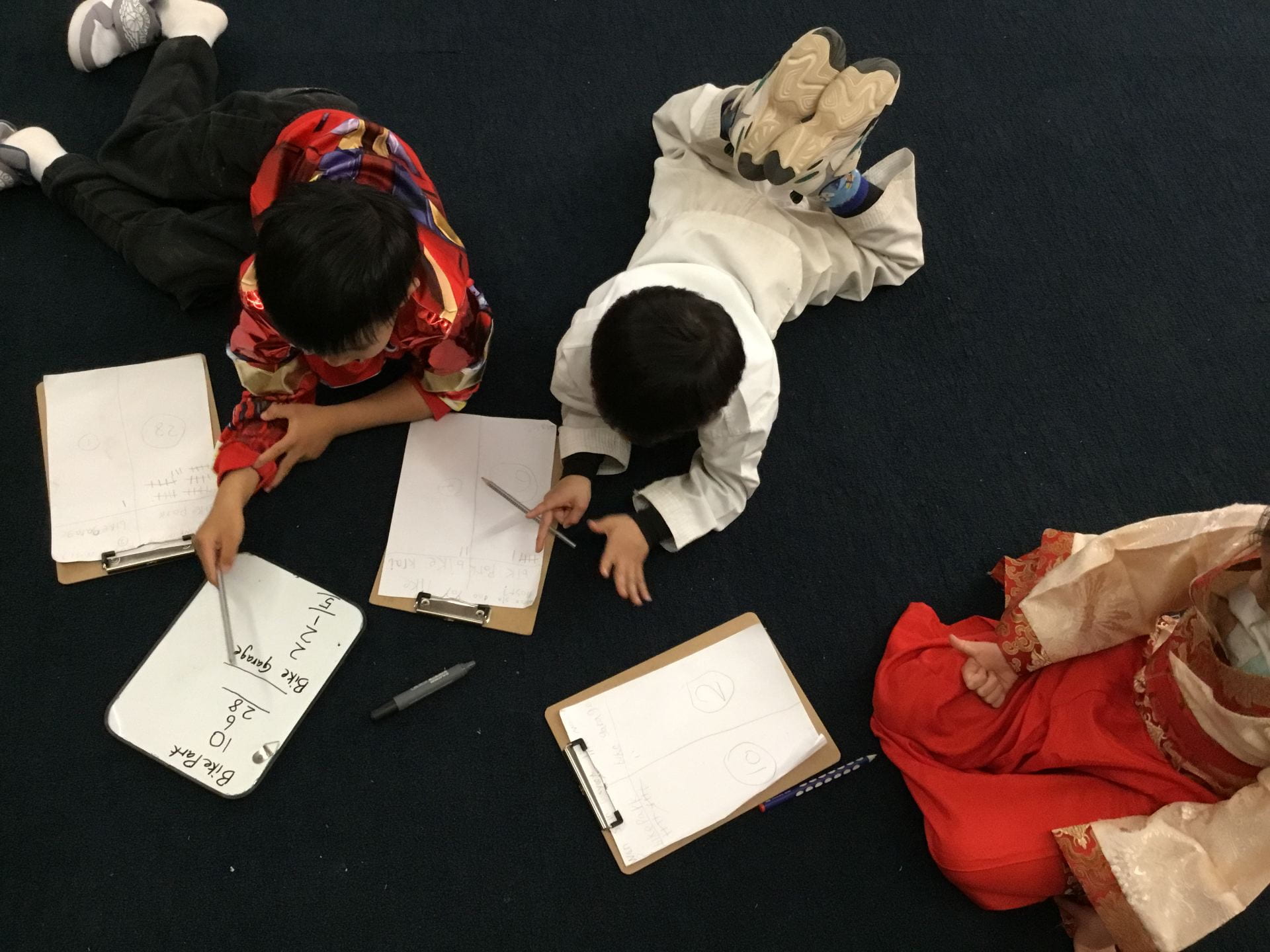
We revisited the bike park project to discuss our next steps. The children were invited to create new signage for the bike park.

A team of volunteers sketched their first ideas on paper. We noticed that some of the children wanted to include drawings, and some of them were keen to use words.

These ideas will be presented to the class to gather feedback.

The Grade 5 Three-minute Challenge

The Grade 5 students were excited to hear about our three-minute challenges and decided to plan challenges for their K2 buddies.

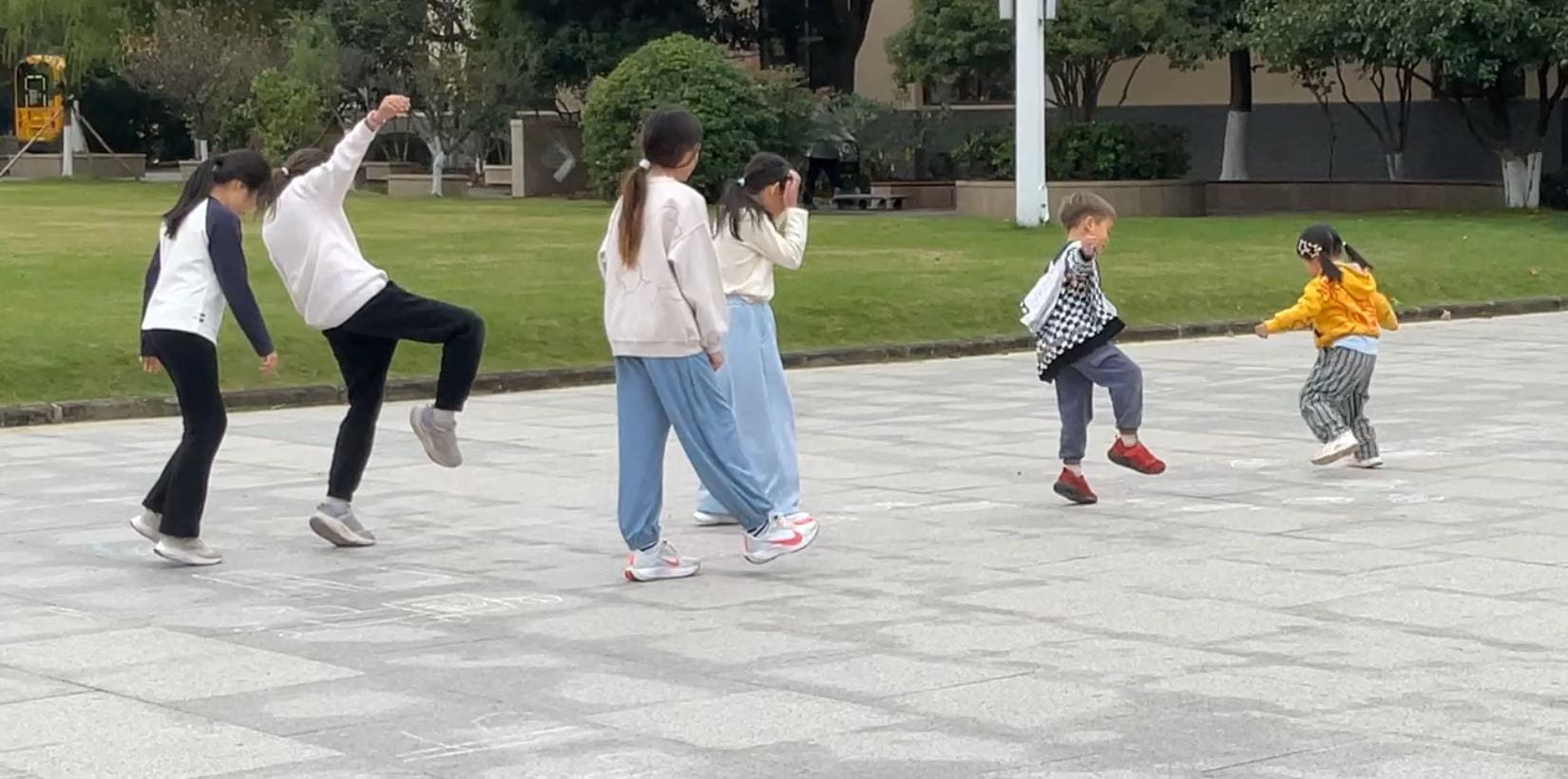
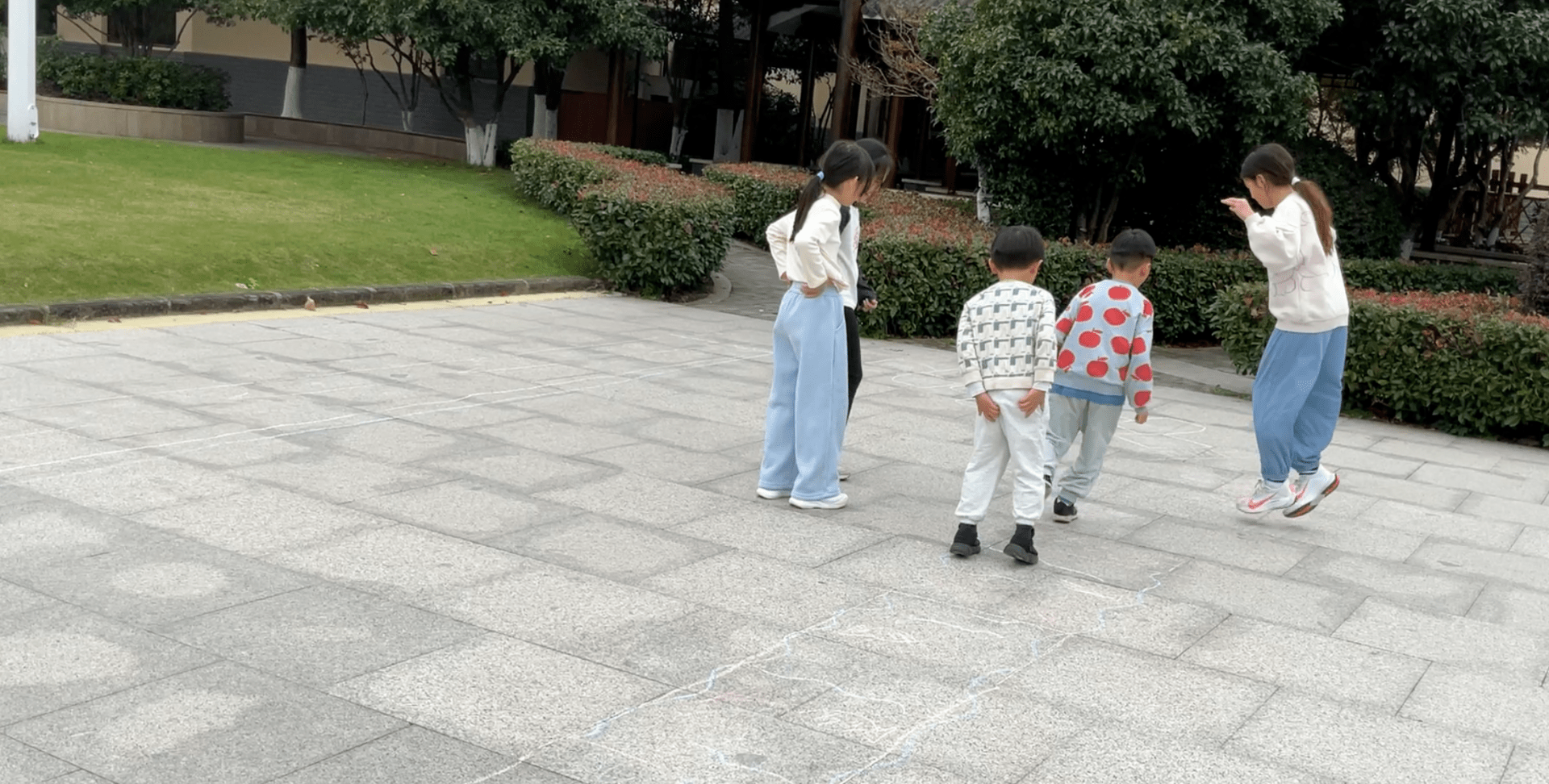
We joined Grade 5 outside the courtyard to play some of the games they had planned for us. The children in K2 rotated around the different stations, attempting to win points and some stickers as they completed the challenges. 

The children reflected on the day’s events, sharing their highlights.

  • Suzy “We played a lot of games.”
  • Archie “We played tag. I like the tag game the most. Octopus tag with grade 5 buddies in 3 minutes challenge.”
  • Junsoo “We played ball game, and I like it the most.”
  • Riccardo “I like the ball game, because it’s challenging but I did a great job and I didn’t be tagged by the ball.”
  • Isabella “For the hot potato game, when the person counted down to 1, and someone was holding the ball, then he will be out of the game.”
  • Euno “I like the octopus game. Octopus game me run to the end and buddy catch people. They didn’t catch us. Then, I don’t know who wins.”
  • Ethan “I like the hot potato game because it is so fun.”
  • Adalyn “I like the octopus tag and I also like the one that has patterns on the ground and you need to follow the patterns to pop the bubbles. And the beanbag game is also interesting.”

  • Isabella “I like the pattern game the most because you can race your buddies and it’s easy for me.”
  • Suzy “I also like the pattern game because I like the bubbles. The bubbles were on the ground. You stand on it and it pops.”
  • Ethan “I like the tiptoes walking part and it was so much fun.”
  • Evan “The hot potato game looks fun because I like the ball game.”
  • Suzy “I did the pattern game in 3 minutes.”
  • Isabella “I also did the pattern game, the hot potato and the red light green light and I also played octopus tag and throwing the sand bag in 3 minutes. It was easy for me. It was a long time.”

  • Suzy “It was a short time, I did it in 3 minutes.”
  • Sea “I like the octopus game because they don’t tag me. I ran fast.”
  • Dahyun “I like the tag game because it was fun. I won 3 times. We got a sticker.”

We wonder how this experience will help them plan for the challenges they want to set for their Grade 5 buddies.

Solving the Waste Problem

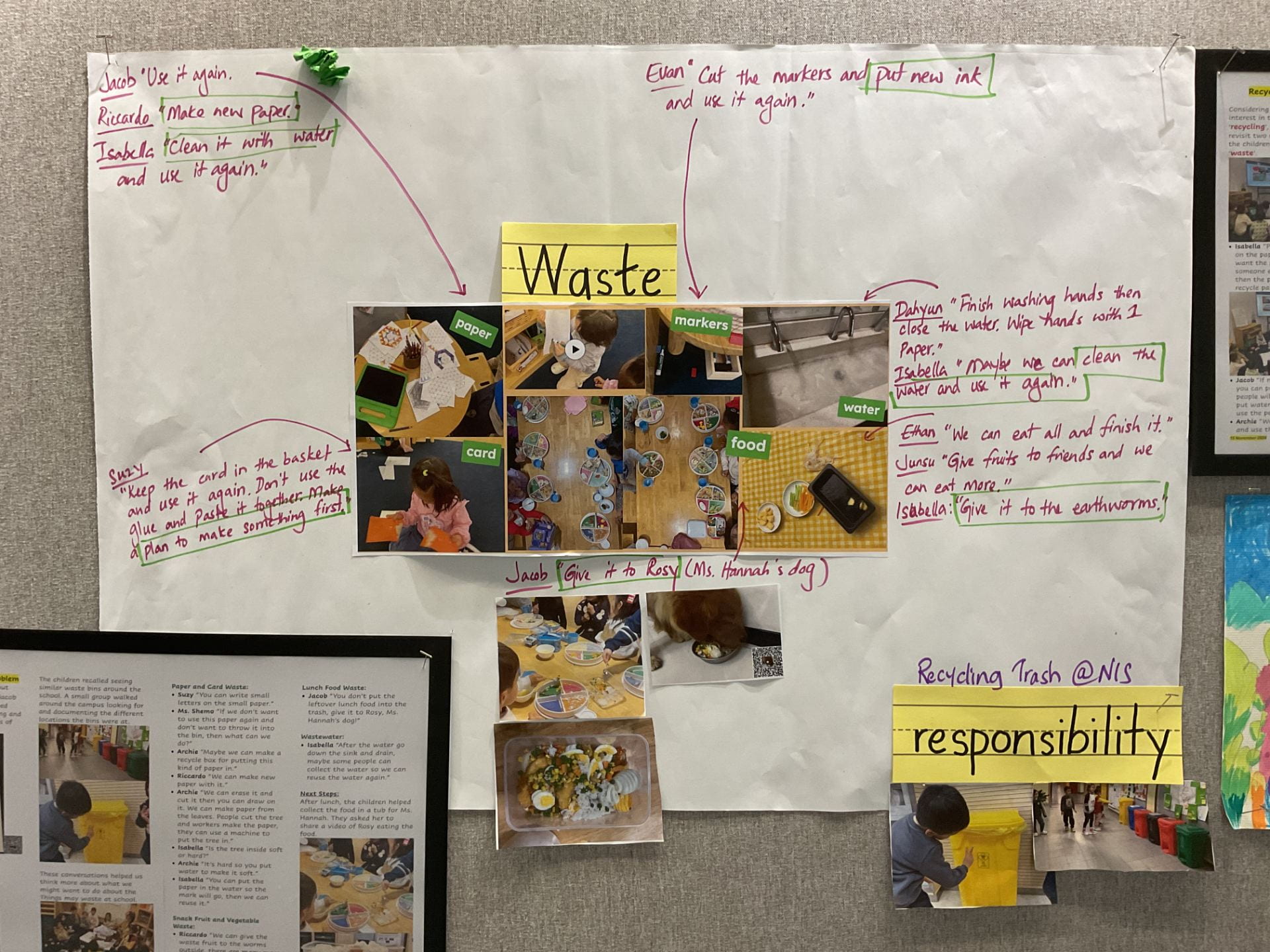
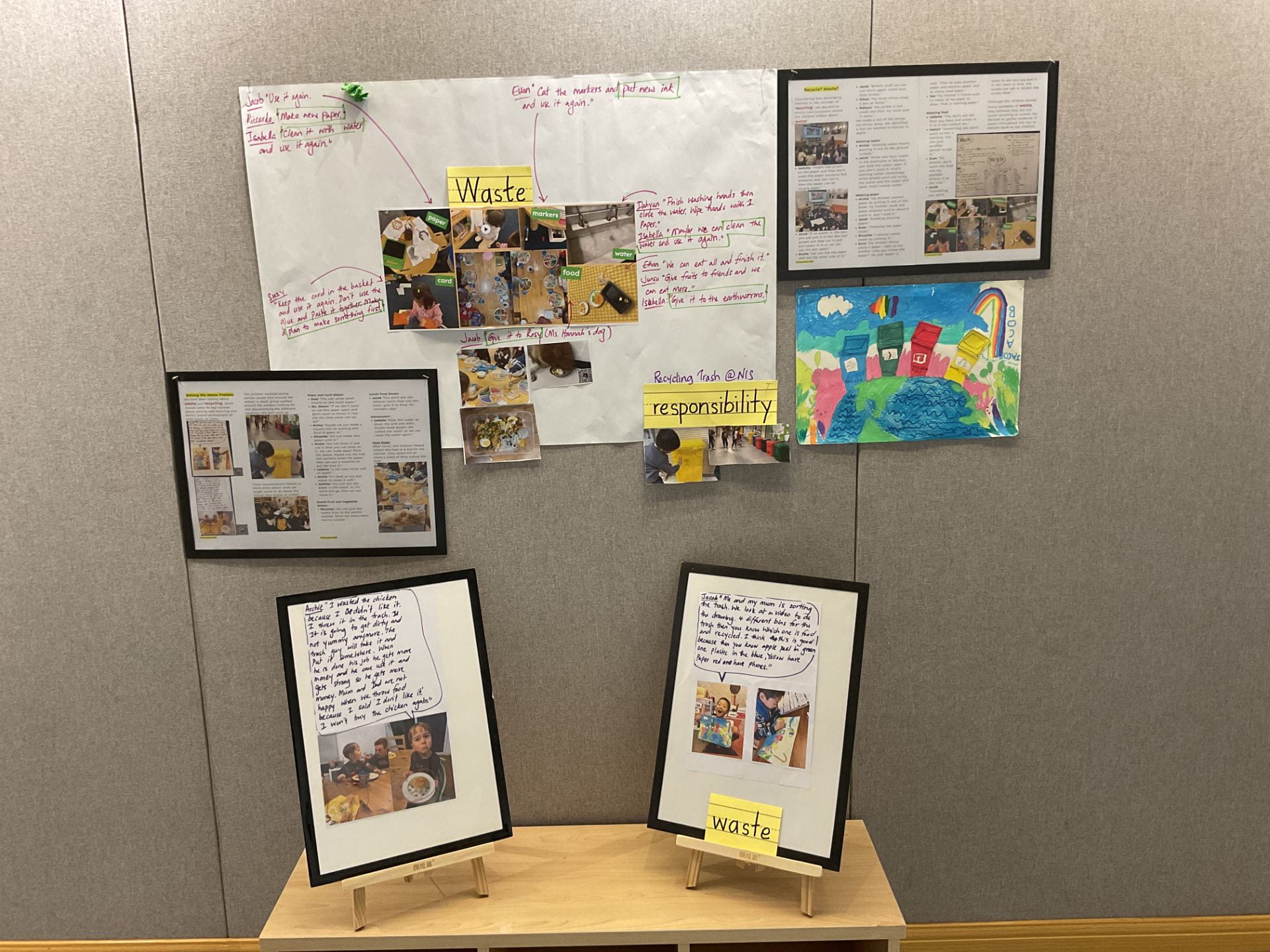
We have been talking about waste and recycling.

Jacob shared what he had learned about sorting and recycling and Archie shared photographs of food waste at home.

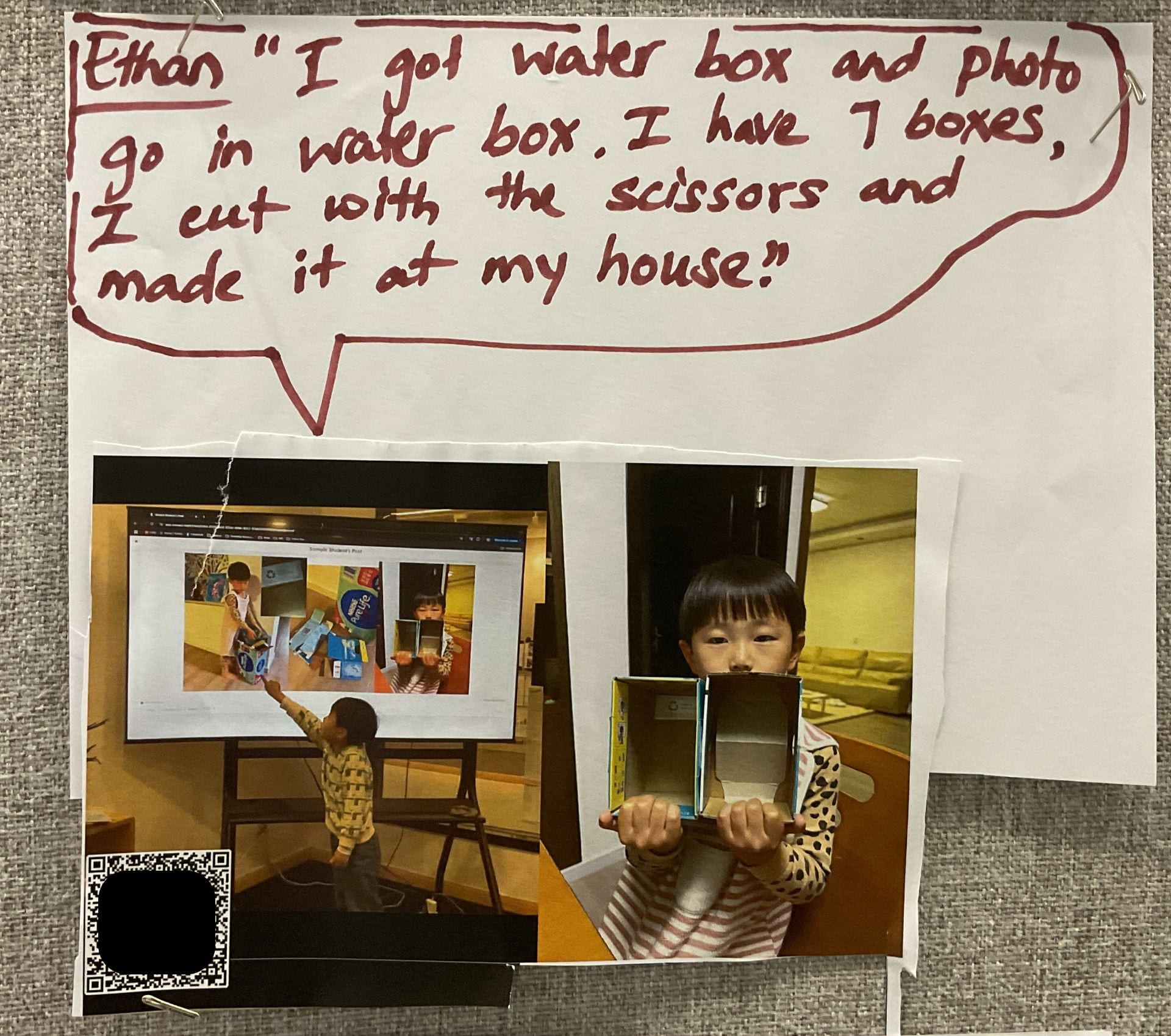
Isabella and Ethan had decided to repurpose the boxes they had at home. Isabella used the boxes to make a home for the cats in her compound to keep them warm during the winter. Ethan used his boxes to store objects.

The children recalled seeing similar waste bins around the school. A small group walked around the campus looking for and documenting the different locations the bins were at.

These conversations helped us think more about what ‘WE’ might want to do about the things we waste at school. 

Paper and Card Waste:

  • Suzy “You can write small letters on the small paper.”
  • Shemo “If we don’t want to use this paper again and don’t want to throw it into the bin, then what can we do?”
  • Archie “Maybe we can make a recycle box for putting this kind of paper in.”
  • Riccardo “We can make new paper with it.”
  • Archie “We can erase it and cut it then you can draw on it. We can make paper from the leaves. People cut the tree and workers make the paper, they can use a machine to put the tree in.”
  • Isabella “Is the tree inside soft or hard?”
  • Archie “It’s hard so you put water to make it soft.”
  • Isabella “You can put the paper in the water so the mark will go, then we can reuse it.”

Snack Fruit and Vegetable Waste:

  • Riccardo “We can give the waste fruit to the worms outside, there are many more worms outside.”

Lunch Food Waste:

  • Jacob “You don’t put the leftover lunch food into the trash, give it to Rosy, Ms. Hannah’s dog!”

(We asked the children to consider other possible solutions to the problem.)

Wastewater:

  • Isabella “After the water go down the sink and drain, maybe some people can collect the water so we can reuse the water again.”

Next Steps:

Our brainstorm highlighted many different ways we can take action to solve some of the issues we found with waste.

  • Riccardo “I have a shop and they can come and buy my toys and I get money.”
  • Archie “When I was in India my mum said I have too many toys and I gave some away.”
  • Euno “I eat all of my rice. When there is too much my mum throw in the bin.”
  • Riccardo “Or you can keep it and then eat it later.”
  • Shemo “What can we do with the fruits and vegetables we remain at school?”

Ms. Shemo “What can we do with the fruits and vegetables we remain at school?

The children decided to take the fruit and vegetable snacks to Ms. Hannah to ask her for some advice.

Over the next few days, the children will work in small groups to explore some of their theories about paper and seek more information about wastewater and composting at school.

The Bike Park Signs

The children had decided to make changes to the Bike Park in the Early Years playground to maintain a safe and organised space. We went back to the documentation we had collected, to think about on next steps.

  • Jacob “We want the bike park to look beautiful.”
  • Shemo “What would a beautiful bike park look like?”

The children began to share their ideas. They believed the Bike Park would look beautiful if:

  • the bikes were parked next to each other in an organised way, each trike in its own bubble space with distinctive lines to demarcate each space
  • there were guardrails at the back to protect the fence
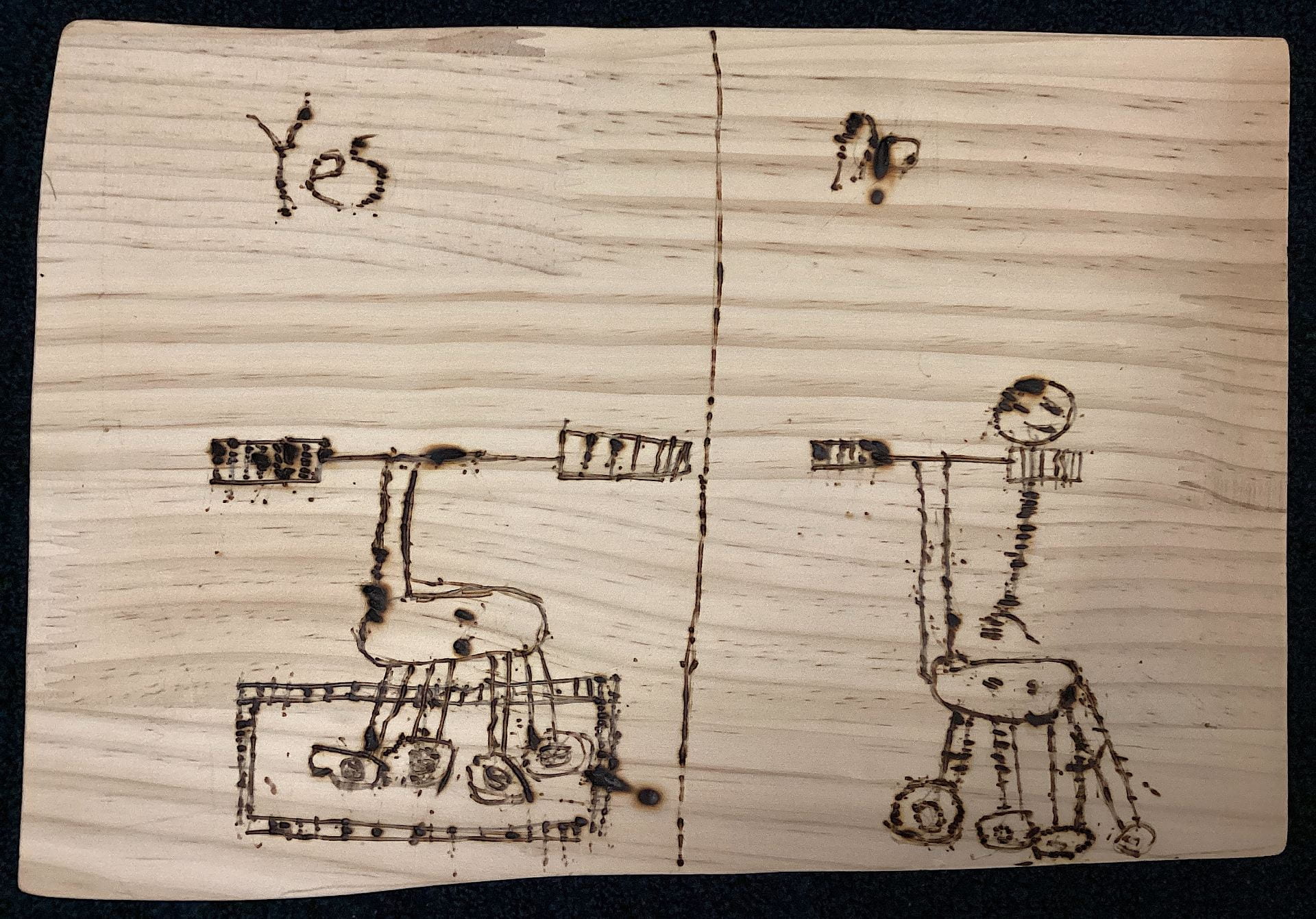
  • there were signs to show where the children were allowed to park the bikes and signs that communicated no parking zones
  • plants that were scattered across the space were cleared away
  • shovels and other toys that did not belong in the space were stored in designated spaces around the playground.

We went back to look at some of the Bike Park signs created by previous K2 students. The children noticed that the signs were no longer useful as they were wet and drawings on the signs were unclear and invisible.

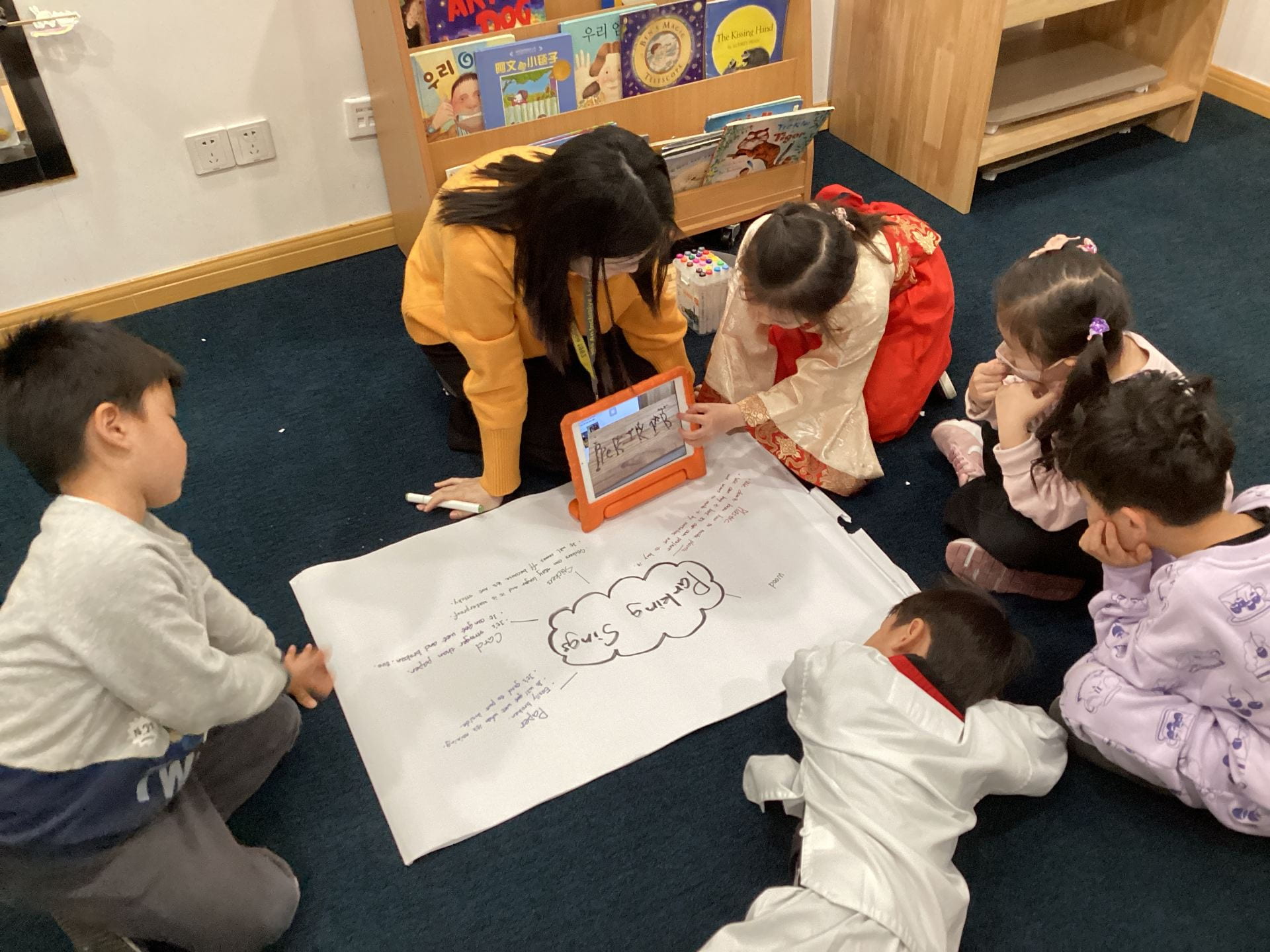
The children decided that they would like to create new signs and discussed important considerations when creating new signs. They talked about the choice of materials. This seemed important as the weather outdoors had affected the previous signs.

A group of children volunteered to take on the challenge of creating new signs for the space.   

  • We wonder how the project may evolve as the children make important decisions about the materials and their properties to create messages.
  • We wonder how they will use signs, symbols, illustrations or words to communicate important information.
  • We wonder how the children will present these new ideas and messages to the Early Years community.

 Approaches to Learning:

  • Use discussion and play to generate new ideas and investigations.
  • Understand the ways in which images and language interact to convey ideas.
  • Make inferences and draw conclusions.
  • Negotiate ideas and knowledge with peers and teachers.

The Bike Park – Safety and Functionality

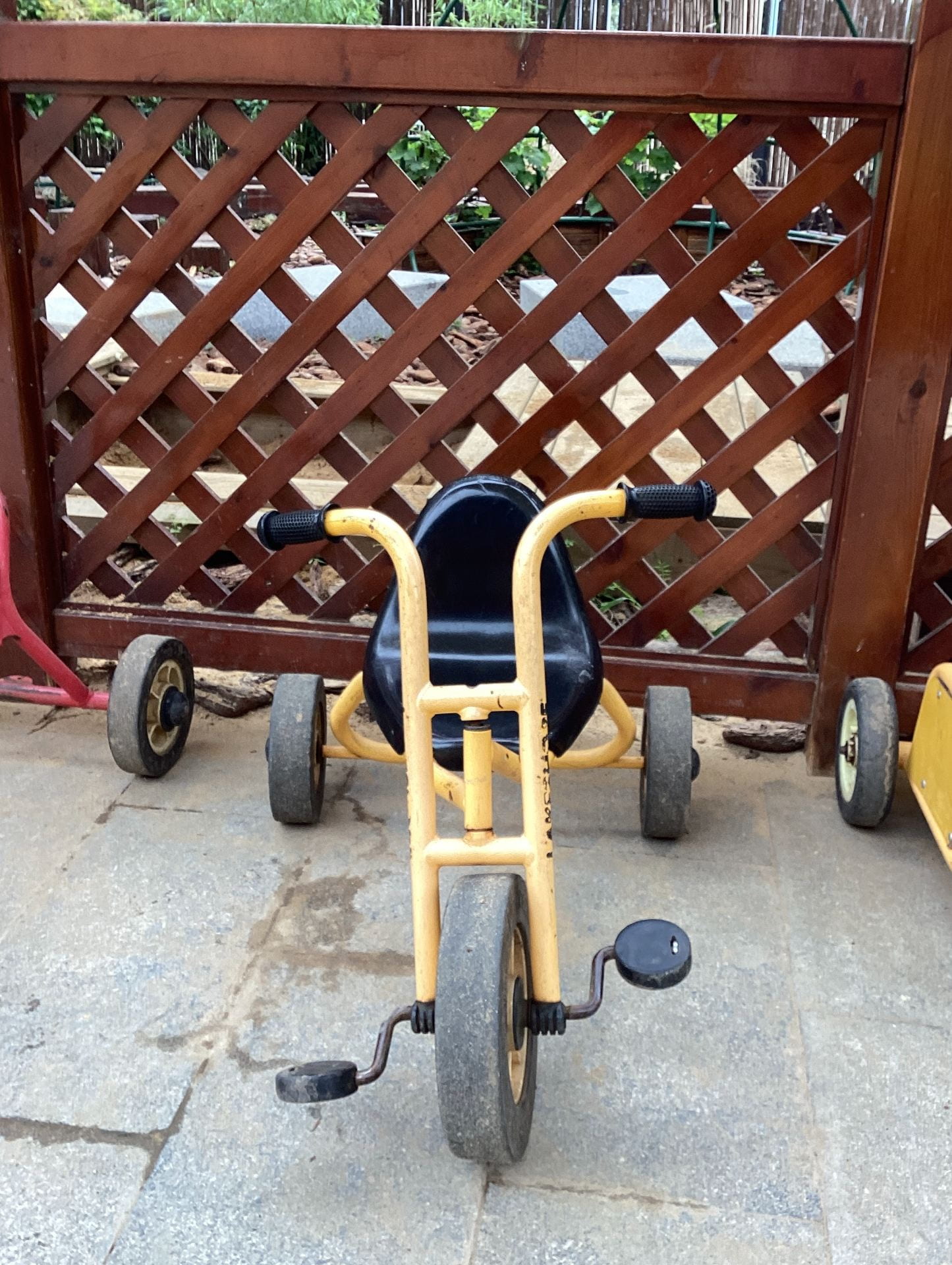
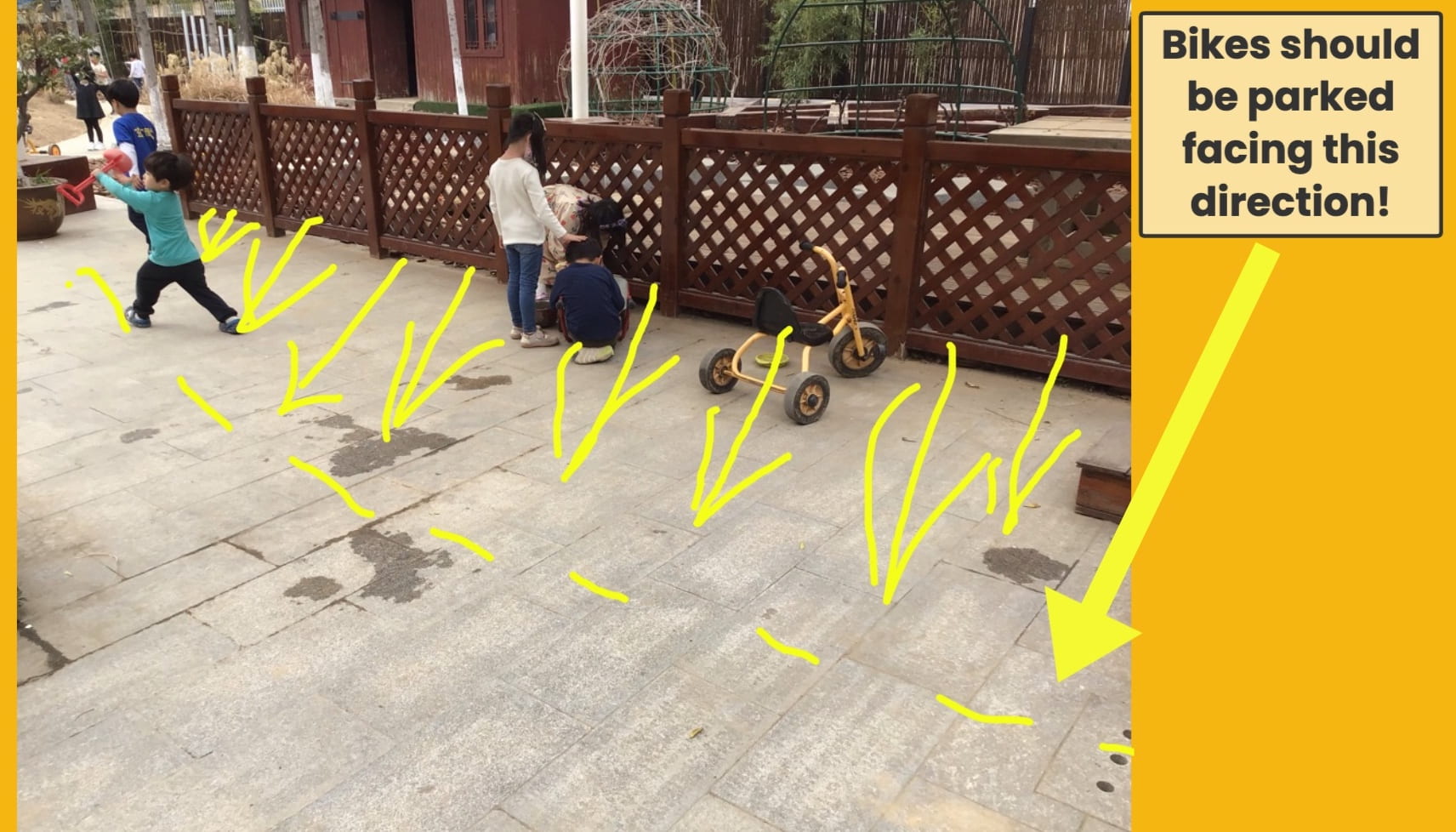
Over the last few years, different groups of children have worked on projects connected to bikes and trikes in the Early Years playground. We decided to share some photographs of the Bike Park to see what the children might notice about the bikes and signs in the play area.

The children quickly noticed that toys and gardening tools were not cleared away after playtime.

They noted that the bikes were blocking the walking path, and emergency exits, and that overgrown plants and bushes were making it challenging to park the bikes in the allocated spaces. Some suggestions for improvement:

  • toys need to be stored away in the correct places
  • bikes could be parked facing forward making it easier to write them away
  • store the sand toys on the sand table
  • clear the overgrown plants
  • Park the bikes along the fence
  • make new signs for the bike park

As they took a closer look at the signs that were made for the bike park, they realised that the wet and hot-dry weather had caused the signs to fade and get mouldy.

The children’s keen observations sparked conversations about the changes they could make to the bike park and play areas safer and more functional.

We decided to share documentation about the bike park from the previous years with the children, to help them understand and appreciate student-led projects that positively impacted the EY.

The children were excited to see some of the work past students had undertaken to make the play areas safer and more exciting for others.  

The children decided that they wanted to create new signs for the bike park. They wondered what materials would be most suitable for the purpose, considering the challenges with the weather and temperature outdoors.

They discussed the properties of different materials such as plastic and wood, providing interesting improvements to ensure the signs would last longer.  

We wonder what elements the children would consider as they move forward in planning, designing and creating new signs for the bike park.

Trees in the Playground!

The children in the Early Years have been curious about the trees we have in the playground.

Fiona’s mum Elise came in to talk to us about some of the trees, sharing images and interesting information about these wonderful living things around us.

She began by talking about trees in the 4 seasons. The children noticed that some “Some trees have no leaves” during some of the seasons.

The Osmanthus tree has blossomed in fall. It is a tree that stays green all year long.

She shared a photograph of a camphor tree. It has a beautiful minty smell, like peppermint. She reminded the children not to eat the berries from them as they can be poisonous.We were excited to learn that wasps like to build their cocoons on the bark of the tree and that they protect the trees from pests.


Camphor trees are some of the oldest trees some can be as old as 750 years. In some countries, this tree is considered a ‘holy’ tree.

We learned that camphor when it is distilled and cooked, can be used in cooking. You can also make jewelry with it.

The next tree she talked about was the ‘ginkgo tree’.  It has beautiful golden-coloured leaves.

The children smelled the fruit. It did not smell good, but she explained that the inside of the fruit tasted good. We found out that only the female trees bear fruit.

Next, we saw the cicada. They come around in the summertime. They sleep in the ground for 17 years and they drink the sap from the roots of the tree. They are protected in the earth.

– Suzy “They still need to grow up.”

We were surprised to learn that cicadas have five eyes! It can see very well when you sneak up on them.

We wonder how the children might explore the playground with their new understandings of trees and plants.

The Mint Tea Shop

Oliver has been growing mint in the Early Years Garden. The mint is ready to harvest. Oliver decided to make mint tea for the community. He approached Ms. Hannah as he recalled making mint tea with her the year before. He hoped to recruit Ms. Hannah as she knew how to make ‘great tea’!


The Plan

Oliver began by planning his tea shop. He decided to make a sample cup of tea to ask his friends what they thought.

Then, he would be ready to offer the tea to others in the community.


Preparing the Sample Tea:

Taste and Flavour Test

Oliver was ready to make mint tea with Ms. Hannah. They sat together to talk about his plan, then moved to the kitchen to prepare and test the tea.

They made 5 different samples to test the strength of the tea. Oliver chose the strongest mint tea to share with his friends as he loved the strong mint flavour.

The mint tea was left to brew overnight. Oliver wrote a message to let others know the tea belongs to K2A.


How do we promote the tea shop?

Oliver shared his process with the class.

He wondered how to inform the Early Years community about the tea testing. The teachers shared a sample community coffee shop promotional video to explore possible ideas.

Oliver was inspired to create his promotional poster, inviting the community to test his tea.

He also made a short video to invite his friends and teachers. Oliver set up his tea shop, preparing the cups and getting ready for his customers. 

He gathered some customer data to determine if they liked his mint tea.

  • Wyatt “The smell of the mint leaves was good.”
  • Lydia “And the drink is yummy.”
  • Eli “I think Oliver should put more leaves in there because if you leave the leaves I think the tea will be stronger.”

Children from the different classes in the Early Years and teachers who passed by the space were invited to try the tea.

As Oliver had a few cups left over at the end of the day, He decided to continue with his tea shop during lunch playtime the following day.

The children gathered to try out his tea again. He was excited to hear some of the children say, “I love this tea it makes me feel so calm.”

Non-Fiction Books: Learning Through Books

Learning about Worms and Silkworms

The children have been exploring and playing with worms and other living things in the earliest playground.

In the last week, we have documented their questions and observations about silkworms.

Considering the children’s ongoing interest in living things, we read a nonfiction book about earthworms. The children were amazed to read and learn facts about earthworms, how they survived and how they help us. While reading the text, we identified the different features of nonfiction books:  

  • The cover of the book has a title that tells us the topic. It could have a picture which helps the reader understand what the contents of the book might be about.
  • A blurb at the back of the book gives us a brief indication about the content of the nonfiction book.
  • There is a contents page which helps the reader find specific information.
  • The pages are numbered to help the reader find the information quickly.
  • Photographs, drawings and diagrams are included on pages.
  • Information is shared about a topic.
  • Labels and descriptions help the reader understand information about images.

Next, we noted all the information the children knew about worms and silkworms. We decided to organise the information into two columns, similarities and differences between worms and silkworms.

Key ideas and observations that the children shared offer opportunities for an in-depth study into worms and silkworms. In the coming days, we will reach out to experts who can give us more information about these living things.

Creating Bird’s Nests

Over the last few weeks, the children have been observing the birds in the Early Years garden (nature). They have been concerned about the mother and baby birds after noticing the broken eggshells scattered on the playground equipment (causation, survival). The children have been discussing ways to help the birds in the playground (safety).

They decided to make nests that they could position around the playground for nesting birds (action). They discussed using a variety of materials including wood, plastic, grass and sticks to create the nests (materials). They began drawing their ideas on paper, using marks, words and pictures to share their ideas with others (organising ideas, making plans).

We wonder how the birds might react to the homes the children create through their project work.

Silkworms

Ms. Hannah shared a sign she had made for the mulberry tree in the Early Years garden as she noticed that some of the tender fruits were on the floor.

While having a meeting to discuss the poster, the children shared some of their wonderings about the silkworms that PreK-K1B have been caring for in the classroom.

  • Motong “Why the silkworm don’t like to eat the wet leaves?”
    • Lydia “Because they can touch the water and die.”
    • Oliver “Because they don’t like drinking water and eating at the same time, they have a small mouth not like our mouth.”
    • Eli “Because if they eat wet things or get wet in the rain they will not because the water gets their body sick. Because they are very lazy.”
    • Liz “because leaves have wet and silkworms drink lots of water and they get sick.”
    • Lydia “Why is the silkworm eats the leaves and grow up?”
  • Liz “Why is it yellow on the side, why is it not white?”
  • Oxford “How can the silkworm take the food when he is stuck on the box?”
  • Wyatt “Why does the silkworm eat the leaf?”
    • Eunbyul “Because worms like leaves.”
  • Lydia “Why does he have little circles on his body? Why does he have more colours like white and yellow (on the body)?”
  • Eunbyul “Why are there lines on the yellow (strings)? Why does the silkworm eat the leaf and then become in the yellow?”
    • Lydia “Because them is broken and they look like a butterfly.”
    • Eli “Its because Ms. Hannah put the yellow ball there because the silkworms can play with it. That is like a, first silkworm and turns into a cocoon and then a butterfly. It’s a cocoon.”
    • Jeongyoon “They get big and then they come yellow.”
  • Liz “What is inside his tummy?”
  • Oliver “How do silkworms peel their skin up to grow?”
  • Eli “Why when it’s a baby it’s black and when its not baby its white. How can it turn black to white?”
  • Oxford “Where did Ms. Hannah find the silkworms?”
  • Jeongyoon “Why is the worms so long?
    • Wyatt “Because he eats the leaves for a really long time.”
    • Oliver “Its because the worm seat more leaves the longer they become.”
    • Oxford “When he is small he eats and go big big big and then get long.”
  • Lydia “Why the silkworms has legs and worms have no legs?”
  • Oxford “What is black on the end?”
    • Oliver “The black is poop.”
    • Lydia “I think there is a baby silkworm there.”
    • Eli “I think it’s because their mouth is black.”
  • Eli “How does the silkworm survive every day?”
  • Lydia “Why does the silkworm have no ears? Can they hear something?”

We gathered to build on our knowledge of silkworms. The children had wondered about the different coloured cocoons and the silk moth.

We watched a time-lapse we had taken a few years ago to see how the silk moth comes out of the cocoon and the different cocoons Ms. Karen had collected over the years.  

We will continue our inquiry to learn more about these interesting creatures by inviting Ms. Hannah and PreK-K1B to answer some of our questions.

The Eggshells

We noticed some changes in the play area and decided to take a look at the slide where the bird was sitting on the nest.

  • Oliver “Broken egg.”
  • Lydia “And so many people play and have so many noise and the birds nest will fall and the egg is all broken.”
  • Eli “I think it’s because when someone goes into that and they take a shovel and it hits the bird egg and it falls on the floor and it broke.”
  • Lydia “And the people take the shovel and play and the people don’t know and people throw the shovel and the bird nest is fall off.
  • Liz “I think mummy bird think people is so loud and egg can’t listen to the noise and the bird’s mummy thinks throw the egg on the floor.”
  • Lydia “I think the bird nest is on the tree and people catch the tree and the bird’s nest fall out and she is so sad and she wanted to go to another space. And she flies away.”
  • Oliver “If she fly away she accidentally pushed down one of the eggs.”
  • Liz “We cannot use the shovels because the birds mum think shovel will hurt the baby egg. We don’t be loud and mummy is don’t throw the egg down.”
  • Wyatt “We use outside words when we are loud the baby fall out of the tree, the bird mum is sad to the bird.”
  • Lydia “Birds mummy see the egg is fall down and the mummy is so sad, and the people is too silly with the shovel. Don’t use the shovel silly. We can tell the people not to be silly, it means play and don’t throw on the bird’s nest.”

We wonder what we might do to help the birds in the Early Years garden.

A Bird in a Nest

  • Wyatt “Oxford tell me a bird is here and we looked at it.”
  • Oxford “I wanted them. Eli think it’s not real.”
  • Lydia “This bird, her eyes are red. And Ms. Hannah said she is sitting on the nest waiting till the eggs come out.”
  • Liz “I see bird, at first it was not on the nest and then the bird is going on the nest.”
  • Eli “I see the bird I think he was laying the eggs because he was sitting there for a long, long time on the nest.”
  • Wyatt “I see the bird not moving.”
  • Oxford “Why no people can not go in there?”

  • Liz “I think the bird is see the people and it fly away.”
  • Jeongyoon “He is flying away and then eggs will crash to the floor and then break. And then the baby bird will be dead.”
  • Oliver “If there is no tape then people will just go in and scare the birds away while making the loud noises, then the baby birds will not have their mummy they will be very scared. The mummy bird might do a battle and might get distracted and the eggs in the nest might hatch and the baby birds might fall down and get hurt. And people might accidentally step on the nest and they might get more hurt.”
  • Liz “I think no have the mummy bird then the inside bird gets cold.”
  • Lydia “The people are so loud and the bird don’t want to be here and then she will go away. And then egg fall off and then the mummy bird don’t want the bird that falls out.”
  • Motong “If we go there and the bird will go crazy and will kick the baby down. If you go in there with a shovel the baby bird will get scared.”
  • Oxford “The mum bird he will think we are bad people and he will take his eggs and go away.”
  • Jeongyoon “Some people get the shovel and hit the nest then the bird will fall and be dead. The nest will fall and the nest will break.
  • Lydia “The tape Ms. Hannah used was broken so the security used the red one.” (in Mandarin)

  • Oxford “I think outside there is paper and it is raining and then the paper will break.”
  • Wyatt “I think outside the people can help the birds and the baby birds not die.”
  • Lydia “It is hatching the eggs.” (in Mandarin)
  • Yui “The bird protecting the eggs.” (in Mandarin)
  • Oliver “Not letting anything happen to the eggs.”
  • Oxford “She has lines on her neck and her beak is so long.”
  • Eli “I think protecting means she keeps her eggs safe. She sits by it and keeps the eggs under her bottom. Because she is in the tree the rain will not get through the tree.”

  • Liz “I think the bird has red eyes.”
  • Lydia “The bird needs to keep the eggs warm to hatch them. Or they will die if it’s cold.” (in Mandarin)
  • Oliver “My Chinese grandpa and grandma house they have real birds and one looks like a peacock.”

We wonder how we might observe the bird over time to see how it cares for the eggs and the baby birds (needs).

We wonder what decisions the children will make about their environment because of their developing understanding of the needs of living things in our playground (nature)

Earth Week

Does trash last forever?

We began our day by talking about Earth Week and the different activities that we might be engaged in to bring awareness to our role in keeping the environment safe and clean.

During snack time, the children noticed the amount of garbage we were producing. The children shared their observations and began to suggest how we could solve some of the problems we have with trash. 

One suggestion was to reduce the amount of packaged food we purchase and bring to school. Another way is to avoid using plastic or disposable cutlery.

To learn more about trash, we watched a Mystery Science video on the question ‘Does trash last forever?’.

The children were surprised to see the mountains of trash that humans had collected.

They were sad to see what plastic in the ocean can do to the different creatures and plants that live in the water.

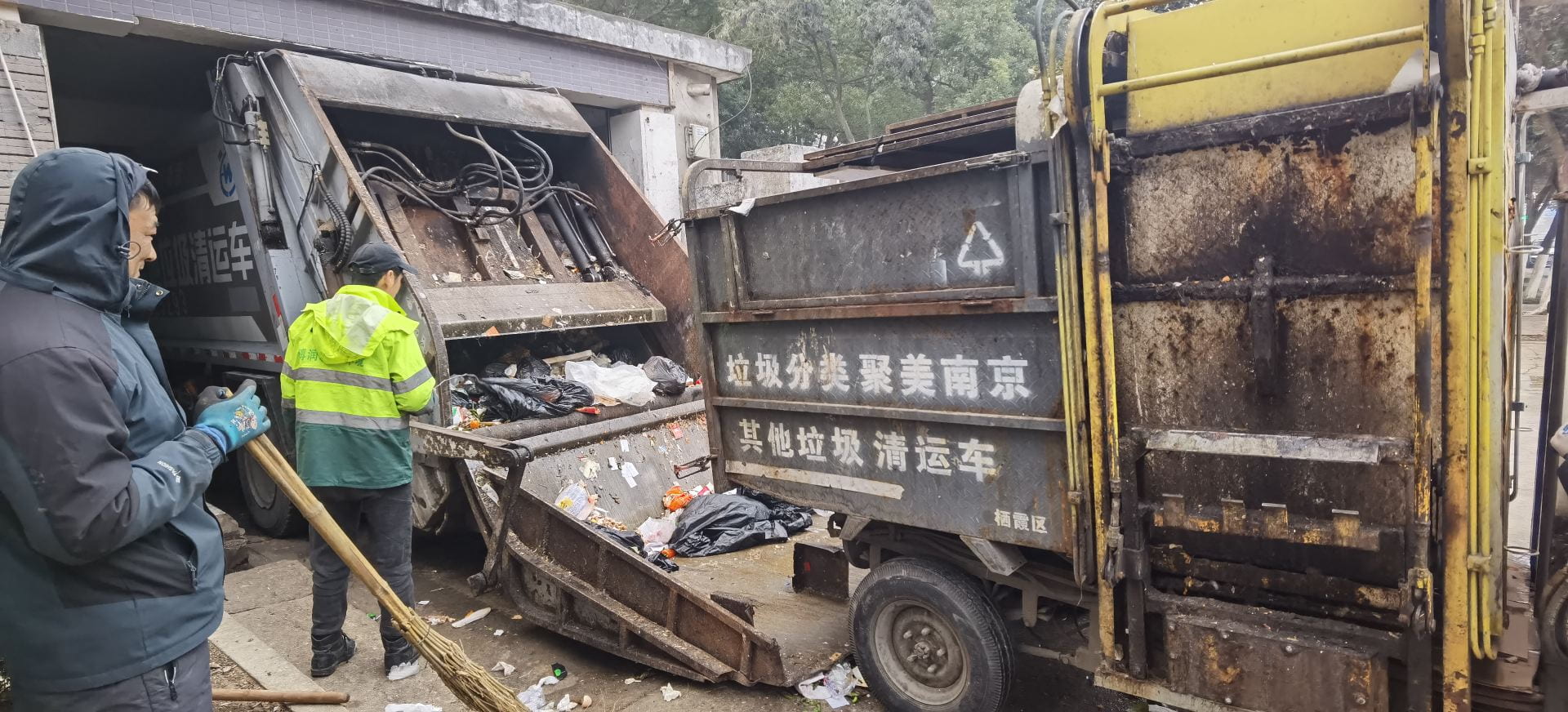
As part of our ongoing research into what happens to the trash and garbage we collect at NIS and Nanjing,  Ms. Nicole gathered some videos and photographs of garbage being collected around the city in Nanjing.

The children quickly recognised the workers in orange uniforms. We talked about the important service they provide to keep the city clean, safe and beautiful. How could we be more mindful of the waste we generate each day and how this affects our environment? 

Finally, we invited the children to bring in all the recycled materials they could find at home to see how we can sort, organise, re-purpose or create with these materials.

The children brought in recycled materials and then thought about the different ways they could recycle, create or re-use the items.

  • Wyatt “I am making an airplane fighting robot.”
  • Oxford “I am making a robot.”
  • Oliver “I am making a new flowerpot for new flowers.”
  • Motong “I am making trash boxes.”
  • Lydia “I am making a unicorn.”
  • Eli “I am making a rocket with a fire engine at the end.”
  • Liz “I made a bird and a bird’s nest.”
  • Beomjun “This is a little home.”
  • Jeongyoon “I am making a drum with a big cup.” 
  • Yui “I made a person with blue hair.”
  • Hana “I made a turtle.”


 ACTION: Taking Responsibility

SEE

  • Eli “I see Oxford cleaning up so many of the toys.”
  • Liz “I see some of the other children are not cleaning up.”
  • Lydia “I see some children are playing with the water and Oxford is cleaning up so many things.”
  • Motong “Oxford is NOT counting things.”
  • Jeongyoon “I see some people drink water when its tidy up time.”
  • Eli “I see the people are not cleaning up the shovels and Oxford had to clean all of the shovels up.”
  • Morning “I see people throwing toys in the Shed when its clean-up time and it’s very messy.”

THINK

  • Liz “I think other children are not cleaning up and are running around. I think play the things and not clean up.”
  • Oliver “I think some people just don’t want to clean up, they just count and clean up only 3.”
  • Lydia “I think them is play together and teacher ring the bell and them not clean up, just play.”
  • Eunbyul “I think some people do not clean up and drink water.”
  • Motong “I think Oxford did not play.”
  • Wyatt “When the bell gone, just play and not clean up it’s not ok.

You don’t get the toys and you don’t play.

  • Jeongyoon “I think only some are cleaning up.”
  • Liz “I think the teacher is done and the people are looking and Oxford just cleaned up. The playground is not clean up its not nice because its then so messy.”
  • Lydia “I think play is over and them play and go to drink water and teacher say take 2 gongs and then they go to class and not clean up, Oxford is cleaning up.”

WHAT CAN WE DO?  

  • MotongClean up all the toys and don’t count the toys. We hear one bell we need to clean up, and we hear two bells we can drink water.”
  • Lydia “We can tell people. We can take a paper writing and use the glue stick and tell everybody play and everybody needs to clean up.” Make a poster.
  • Eunbyul “We can drink water after we clean up.”
  • Eli “We can say to people ‘You HAVE to clean up even if you don’t play anything because this is everyone’s playground’.”
  • Wyatt “You hear the gong, you need to clean up.”
  • Morning “Put the trucks on the shelf and the shovels on the hooks.”


Caring for Living Things

We have noticed the child’s continued interest in living things in the Early Years playground. We decided to share some of the documentation the teachers have collected of the children’s play.

  • Liz “We found worms and roly-polys in the soil.”
  • Lydia “We are in the outside and we used the shovel to find the worms and the roly-polys and put them in the water. They were swimming. It looked like people swimming. We gave them to Eli and they are making a house for them.”

  • Eli “I hide them where the wood things are and I put the cap on so the roly-poly won’t come out and I can play with it next time. I put some leaves so they can eat.”
  • Oliver “It’s a baby beetle. They dig in the wood.”

  • Eli “They live in the wood.”
  • Oliver “They love the playground, they want to live there every day. They have lots of fun things to do. They are playing hide and seek under the soil.”
  • Liz “We put worms in the water. It was like water on my hand.”
  • Eli “I think you can’t keep them forever or they will die because you keep them every day in that pot and he eats all of the fruits and then they will have nothing to eat and they will die.
  • Oxford “There we have so much creatures.”
  • Oliver “You can just take a picture of anything you want to keep or the creatures you keep them for many days they won’t have anything to live.”
  • Wyatt “I and Eli play with the roly-poly and then put it in a cup and we just play there. And then finish playing.”
  • Liz “When we look at the worm they are moving, she wants to go to the soil because worm don’t like you holding it. Put it in the soil quickly.”
  • Motong “When we hold the insects we need to put some wet wood because they like it.”
  • Morning “I am looking at the roly-poly because it’s coming in the cup and then we put it back because they like the wood.”

We noticed that the children have a deep appreciation for the living creatures in nature. Their theories about the different insects reveal how they observe, form generalizations and develop understandings of nature. The children’s discussion about their play outdoors shows their sensitivity and growing awareness of how to care for living things and what they need to survive in their natural habitats.

  • We wonder how the children might document what they see, hear and know about the world around them.
  • We wonder how we might continue to develop their curiosities about the different creatures in our environment.  


Important messages to our community…

Rocks, Crystals and Minerals

Groups of children have finding, exploring and wondering about the different rocks and stones they found in the Early Years garden. They often share their ideas and questions to learn about them; what the rocks are used for how they are made and where they come from.

  • Oliver “We want to find lots of crystals and we want to be good at finding sapphires. I want to be a crystal hunter.”
  • Eli “I was telling Mr. Seth which ones can draw different colours.”

What we know and think…

  • Eunbyul “I think this crystal inside have a diamond.”
  • Lydia “MY mummy home have diamonds. I like the diamonds.”
  • Oliver “Diamonds is a crystal that can break through glass. Its like super strong nails, if you scratch it on the glass then it will break.”
  • Oxford “I think that (diamond) is not real.”
  • Oliver “In games I see there are crystals. The name of the crystals one is diamond and gold.”
  • Liz “I think school is not have crystals. I think inside the stone there is nothing.”
  • Oxford “I think we don’t know why Eli can draw with it.”
  • Wyatt “I think diamonds is not in the school because school outside there is diamonds are not there.”
  • Jeongyoon “I think diamond is not real and not in the whole world.”

We wonder…

  • Oxford “Where did you find them?”
  • Eli “In the sand and some of them I cracked them.”
  • Oliver “I found them in the ground make out of bricks.”
  • Oxford “What is in the rocks? Why can he use the rocks to write? What makes it gold inside the rocks?”
  • Jeongyoon “Are crystals real or not real? What is a crystal?”
  • Oliver “I only know 4 names of crystals. I want to know the names of other crystals?”
  • Eli “Which one is a rock and which one is a crystal?”
  • Lydia “Why are some crystals are blue or green? Why are crystals so beautiful?”
  • Morning “Where are the crystals from?”

Having noticed this ongoing interest in rocks, crystals and minerals, the teachers have organised a field trip to the Nanjing Geological Museum.

We wonder what the children might uncover from their investigations and observations at the museum.

How might we capture beauty?

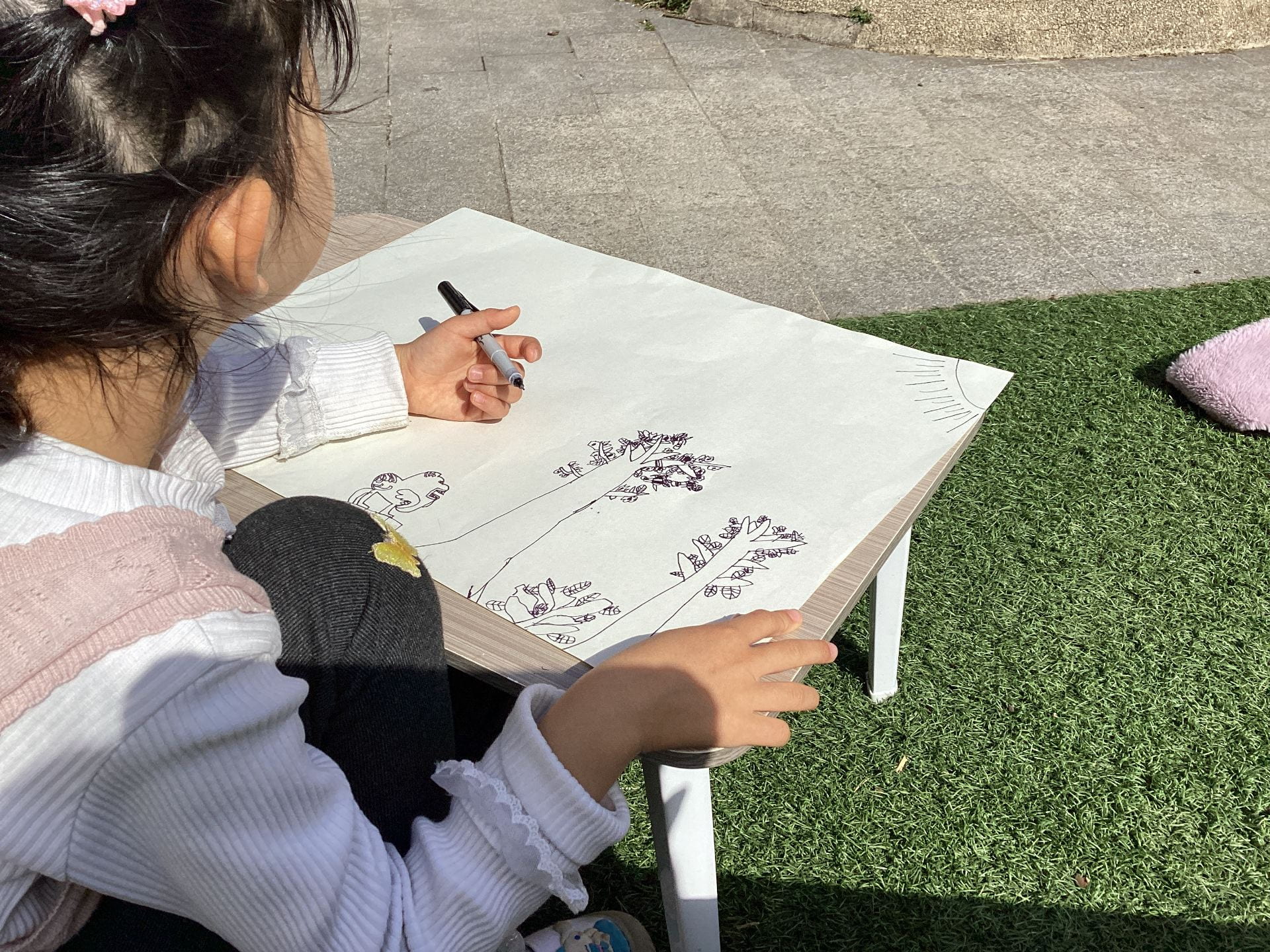
An unexpected observation presented an opportunity for the children to explore ‘beauty’ when Lydia paused while walking across the playground and said, “…a beautiful cherry blossom tree”.

The children collected the soft, shaded flowers that had fallen under the tree. We realised that the flowers would soon wilt and fall from the tree. We wondered how the children might capture the memory of the tree.

Teacher “How can we remember what the tree looks like?”

  • Lydia “We can take a photo!”
  • Motong “We can draw a picture!”

Having agreed to Motong’s suggestion, the artists went to the atelier to find the mark-making tools they needed.

Then, they positioned themselves in front of the tree to create a memory of the beautiful cherry blossom tree.

The artists captured details in their drawings, sharing their ability to use art to express their creativity.

Yui decided to include the resting lions by the side of the tree, Lydia included the artists in her drawing, Liz the elements of nature and Motong’s drawing of the cherry blossom tree showed how he considered, shape, texture and perspective in his artwork.

When Lydia was ready to colour in her tree, she explained that the bark and flowers hadmany different colours”, which is why it was ‘beautiful’.

The Garden Plots – Making Decisions 

The gardening group (composed of student representatives from each class) gathered to discuss their project. Their task for the day was to document what was still growing in the garden and how they might organise the garden plots.

Thirteen gardeners joined the meeting with Ms. Hannah. They began by revisiting their agreements. The gardeners reflected on what it means to be a respectful listener “We talk one at a time and listen to others as they share their ideas.”

Then, they reflected on what they did during the previous session.

  • Emma “We don’t have many plants.”
  • Oliver “Some plants survive when it was snowing, it means when it’s snowing they are not very scared of the cold. The big plant is dead because it’s not cold protection.”

The team wondered about the ‘temperature’ and what plants ‘need’ to ‘survive’ and thrive.

Which plants might grow in the different seasons?

Which ones will survive?

  • Jacob “Because that big plants got too much water and it would die and too much worm pee pee it will die too.”
  • Logan “Earthworm poo, could it help?”
  • Jenny “Not too much water, not too dry (in Mandarin)”
  • Adelyn “Not too much sun”
  • Oliver “If you get a dragon fruit then dig a whole and then a plant will grow and the flower will grow and it is actually a dragon fruit. If you use the outside part of the strawberry seed and put it in the dirt it will grow strawberries. I know how to grow a watermelon to a shape that you want. If you get a square shape cube and dig a hole and then open it and then close it and then it will be the shape.”
  • Albert “If you grow watermelon then you will get a watermelon tree.
  • Keira: “In my home, there are orange trees.”
  • Jacob “Watermelon black and watermelon white seeds. People can eat the white seeds and plant the black seeds.”
  • Emma: “At my home, I have a paprika tree.
  • Albert: “At my home, I have a bamboo tree.”

Teacher “This is a shared space. We have 5 classes. Which means we need to find a way to share the plots. How might we do this?”

The gardeners gathered their clipboards with paper and writing tools. They looked at the plants in the plot and began to draw to share their observations and thinking.

Teacher” How do you know something is still alive?”

  • Emma “Because the seeds were still in the mud. And it didn’t fall out. Some was out but some not.”

We noticed that the team considered the size and shape of the plots when documenting their thinking. The gardeners were encouraged to think about and explain how they knew the plants were still alive. They used their senses to observe carefully, sharing their theories about the growth of plants and the weather. As they visualised the space, they began to share suggestions on how the plots may be allocated to the different classes in the Early Years.

The gardeners gathered to share what they had learned and to decide on what they would do next.

  • Oliver “One is a bigger plot and one is smaller.”
  • Sophia “Prek-K1 has more children so they use the bigger plot and K2 use the smaller plot.” (in Mandarin)
  • Emma “Also we need to plant so many new plants because only in some places there are plants.”

The gardeners agreed with Sophia’s suggestion.

  • Emma “PreK-K1 has 3 classes and K2 has 2 classes.”
  • Albert “The bigger one to PreK K1 and the smaller one to K2.”
  • George “One class has one space.”

The children took a vote and agreed with George’s idea.

The team’s suggestions were based on the number of classes in each grade level and the number of students in each of them. The teachers wondered how they might encourage the gardeners to show the division of a space.

A Closer Look at Soil and Compost

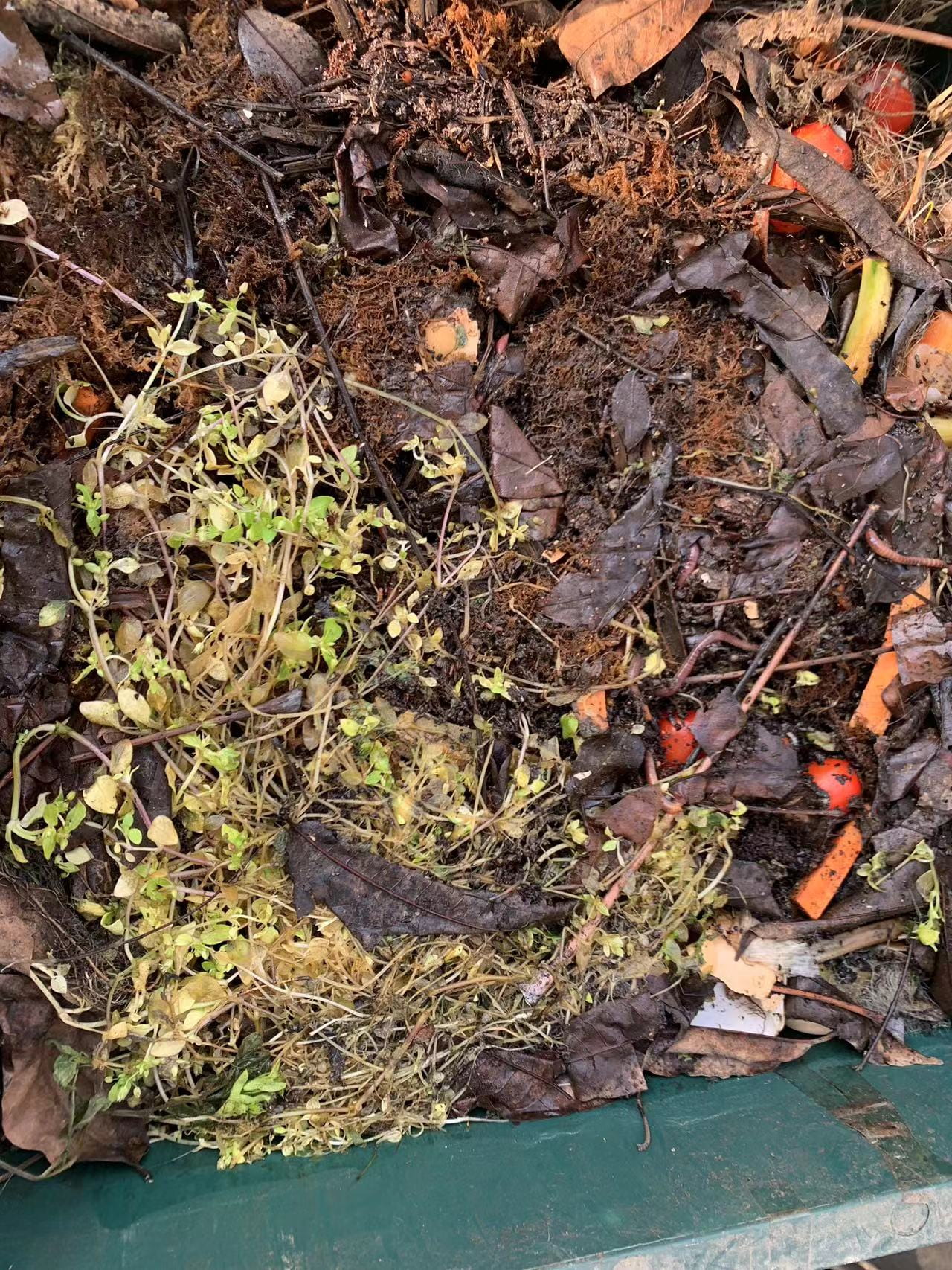
Oliver “Oxford and I put the food waste in the compost bin and then we can make dirt with it. We can turn it to soil. It’s because the wormies are eating all of the fruit inside this and poop out the food and the poop and the pee is good for the plants.”

Oxford “I put dirt in the box. Because no people eat so much fruit.”

What can we learn from Authors and Illustrators?

We read a book about growing and plants. We noted that the illustrator showed close-ups of different pictures to help us notice more details.

What helps us take a closer look at things around us?

  • Oliver “We can look at it close by. We can use a telescope.”
  • Eli “We can use a magnify. We can also use our eyes.”
  • Oliver “I want to look at a worm closely and see what patterns it has. I mean stripes.”

What might be in the soil and dirt? If we look closely, what do you think we might see?

  • Wyatt “We can see a caterpillar.”
  • Motong “Ants. Ants eating food.”
  • Morning “We can see a mouse.”
  • Oxford “We can see a spider.”
  • Lydia “Worms.”
  • Oliver “When I was outside I actually see this big beetle and it also was inside the dirt. It was so big. He was always sleeping on the dirt and he wakes up.”
  • Eli “We can use glasses. The thing that has the list at the front.”

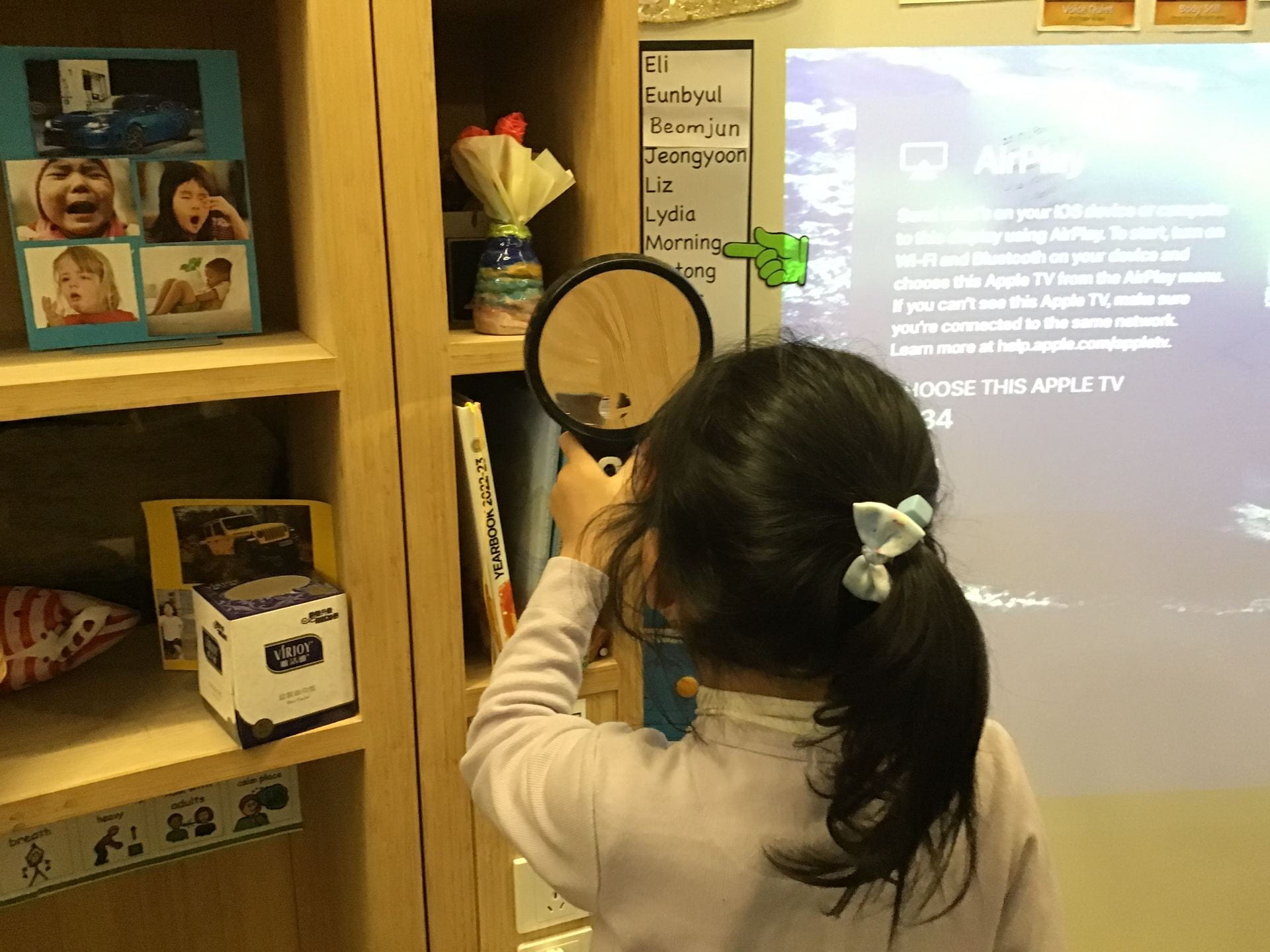
The children found a magnifying glass. They thought it could be used to look at the soil. Yui was very excited to use the new tool and used it to explore the classroom.

We wonder what she discovered!

One child volunteered to get some soil from the garden plots that we could put under the microscope.

He took a second sample of soil from under the wood bark. As he dug into the ground he said “This is so hard.”

He made labels to let the children know what the samples were.

Ms. Eileen used the microscopes and the iPads to help us look closely at the soil.

(Garden Plot Soil, Under Wood Soil)

The children were fascinated with the images. We wonder what they might see as they look closely at the soil.


The class leader and was in charge of taking all the fruit waste and peels to the compost bin.

Each day we will add to the compost bin to help us make new soil for the plants.

Approaches to Learning (ATL’s)

  • observe carefully
  • seek information
  • ask or express through play questions that can be researched
  • gather information from a variety of sources (people, places, materials, literature)
  • listen actively and respectfully to others’ ideas and listen to information
  • participate in conversations
  • use mark-marking to convey meaning
  • document information and observations in a variety of ways
  • share responsibility for decision-making

What can we grow in the garden plots?

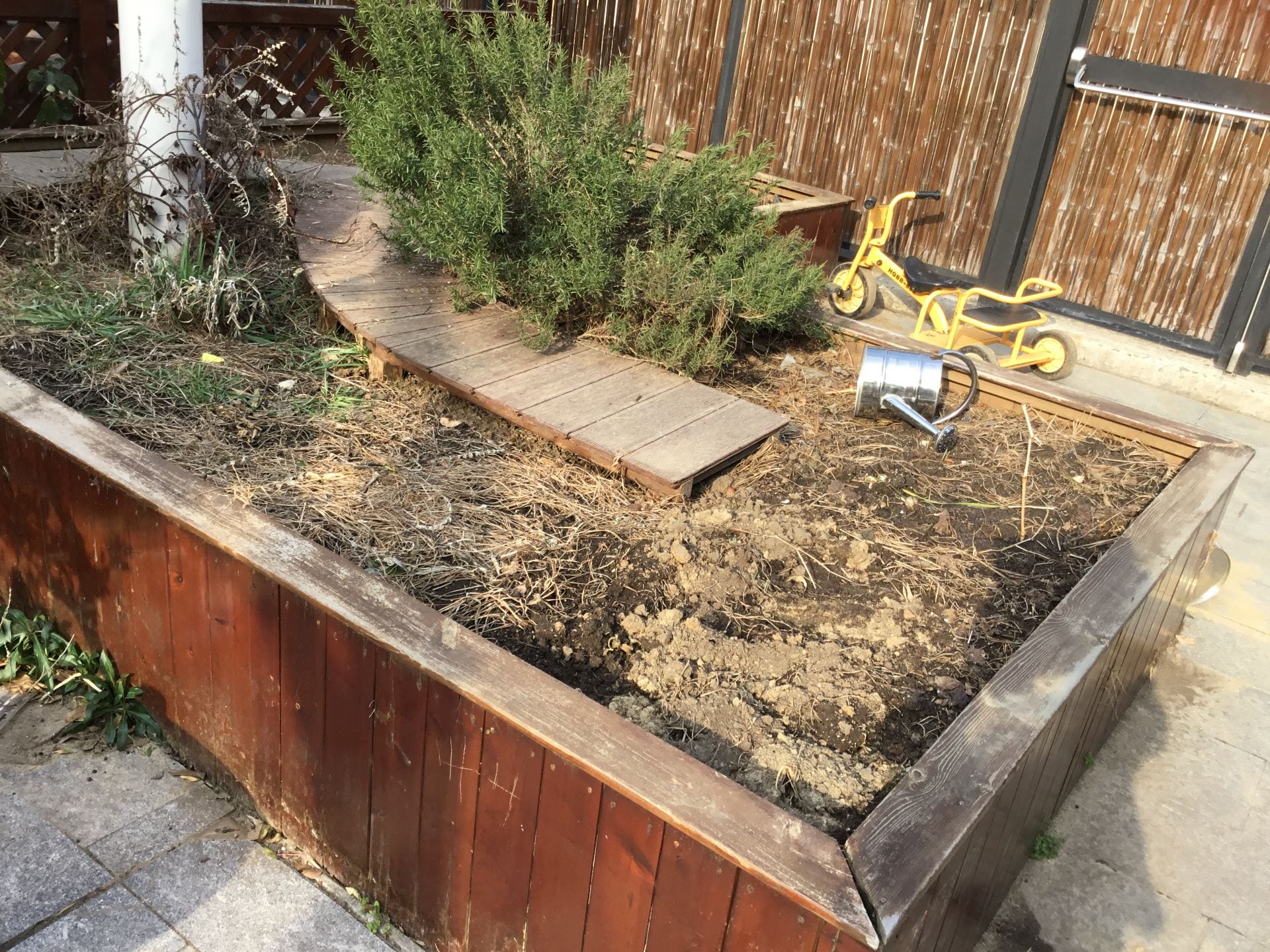
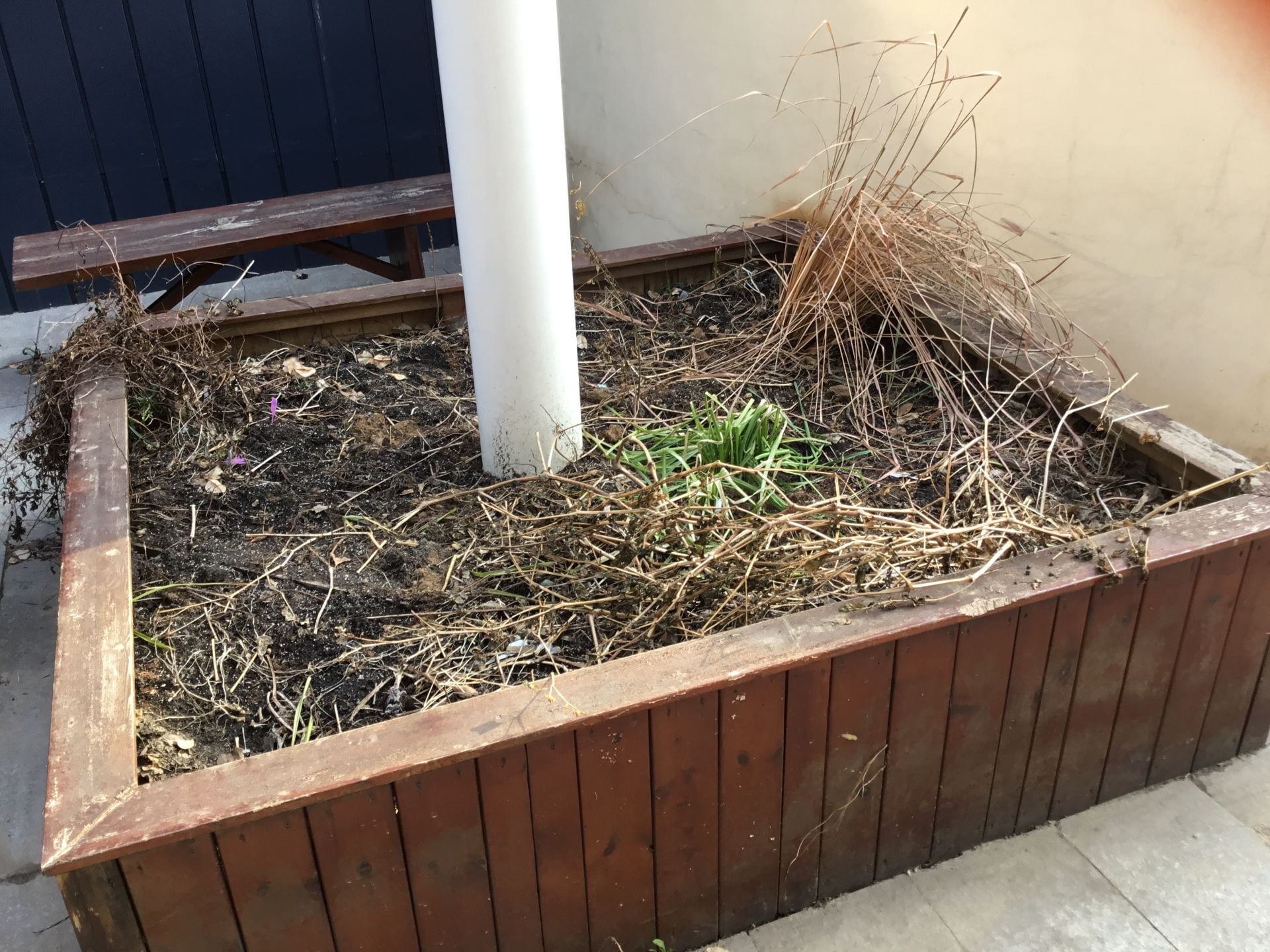
Many of the children worked to maintain the garden plots in K1. The children noticed that some plants had died, and others needed to be pruned.

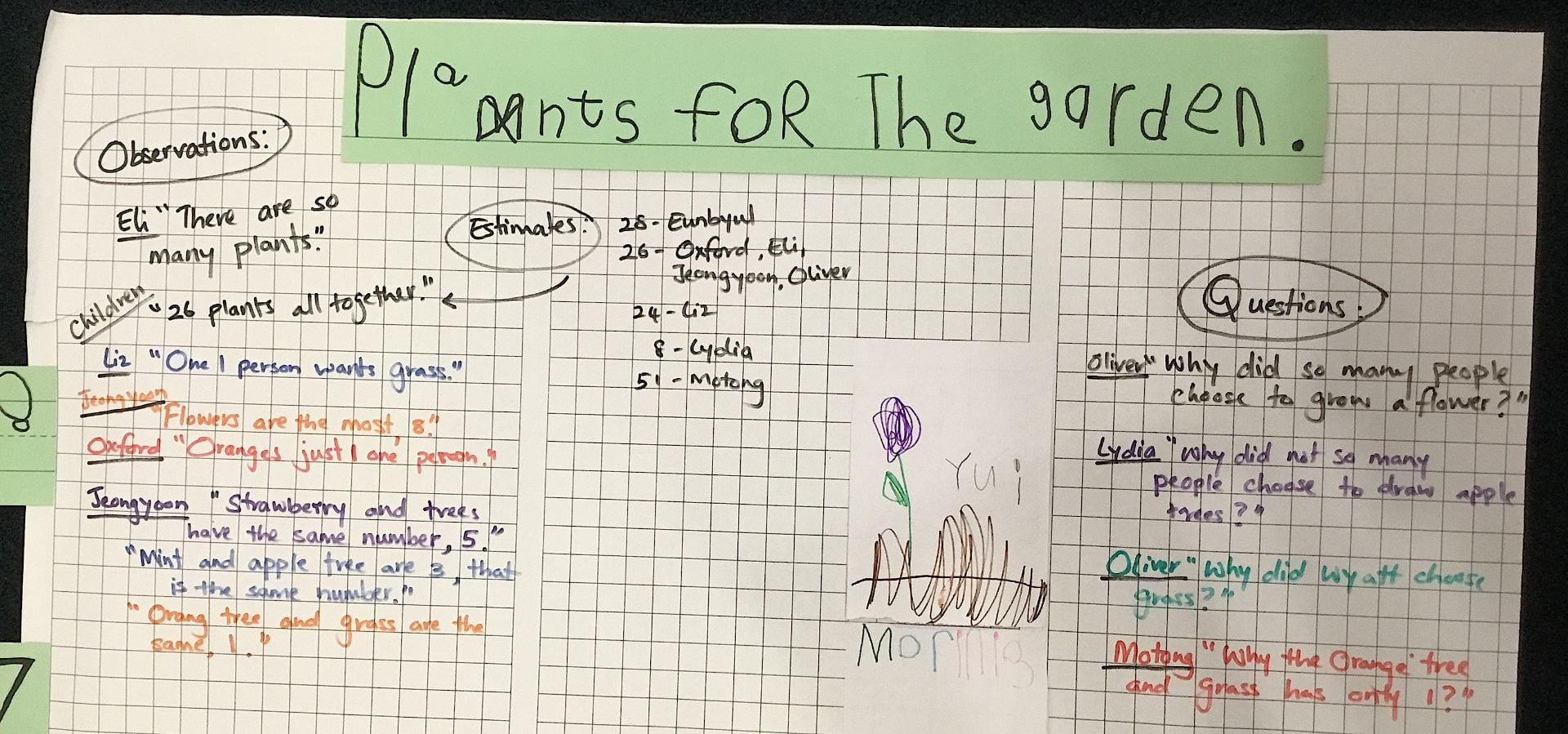
The children began to make suggestions on what they could grow next. We decided to gather this information using pictures and words.

The children were invited to share 2 suggestions. Then, we sorted and organised the information.

The children quickly noticed that some suggestions such as flowers (8) and trees were very popular. Other suggestions were mint plants (3) orange plants (1) grass (1) trees (5) strawberry plants (5) apple trees (3).

We wonder what we need to know about these flowers and plants to be able to grow them in our EY garden. We wonder what resources will help us learn more about the needs of these plants.

Our inquiry continues…

Learning Outcomes: We are learning that we can…

  • gather information by asking questions
  • record data on simple graphs
  • present information using pictographs where one picture equals 1
  • explain data using simple comparative language

Causation & Change – Temperature

Sharing observations and theories…

  • Oliver “This is ice. I found it in the water, and I throw it but it didn’t break. I turned it into little pieces by punching it. There was because it was a cold day, it’s because it’s going to be snowing I think, because there is ice. I feel it’s very cold without my gloves on. In my country Germany, it’s now very very cold. It’s snowing.”
  • Teacher “But in my country Sri Lanka, now its warm. What do you think about that?”
  • Oliver “I don’t know.”
  • Eli “I think it’s because the sun is there and the moon is there and the planet is turning slowly. Because the planet is turning so places, some are cold and some are how.”
  • Teacher “What about in Australia?”
  • Eli “In Australia it is hot too. Because when I was on the trip it was hot. I go outside and I see the sun is up and it’s very warm.”
  • Oliver “But Thailand was near Australia so it was hot. But the first day in Thailand I was sweating. I think it’s also closer to the sun. But if the moon is gone then there would be not so much waves. On a video, I saw that. The moon is just blowing the waves.”

What happens to the fish when the water freezes?

  • Eunbyul “If the outside is cold, the outside is ice and fish water is freezing. I can help him.”
  • Motong “The fish are very cold.”
  • Liz “I think fish died because its so cold. Fish in the water is so cold and fish in the water not moving.”
  • Morning “The fish are too cold and they are hiding in their home in the rock.”
  • Wyatt “It’s cold, fish not moving to the water.”
  • Yui “The fish are not moving (in Mandarin).”
  • Oxford “I think ice in the water. Fish can’t move in the ice.”
  • Jeongyoon “I think fish will die.”
  • Oliver “At home when its not snowing Oskar just catches some frogs and puts them in the water and then its cold and icy and the frogs freeze and I can see lines coming out of the frogs and then they are not moving. They freeze. I think the fish are also frozen.”
  • Eli “I think fish are not moving and then fish are died. One time I find water and it was all ice in it and I hit and it comes out a flower shape and one time I find ice and I tried to walk on it. It was frozen.”
  • Motong “The fish will frozen and cold. They fish are not moving.”
  • Lydia “Fish in there is not moving.”
  • Oxford “The fish is too small and ice is too big. He can’t break the ice because he is too small. He can move in the water. He can’t break the ice.”
  • Oliver “I melt the ice one layer and then I can see some water and I put one ice on top of it and wait for 20 seconds and it connected when I put it upside down. And then it freeze together.”
  • Motong “When the water cold and the water will be ice the fish was very cold.”
  • Eli “I think if we get a shovel and smash the water and the water will break.”
  • Oliver “If you take a shovel and break the ice you might break the fish. Just make the ice very hot and the ice will melt and the it will turn the ice to water and the fish will be happy again. I think the water is -4. Its because my mummy said its -4 cold so I think the ice is also -4 cold. Just take the gloves out and check it to see.”

Ms. Elieen showed the children the digital thermometer.

  • Oliver “That one but its for the ears.”

We decided to see if we could use it to check the temperature at the pond.


A group of researchers went to see what more they could learn about the pond.

At first, they were sad to see the motionless fish. But then, they noticed some fish swimming in the pond! They began to share their theories, tested the temperature of the ice and looked for ways to help the fish. They shared their ideas about the impact of the temperature on the water and the living things in the pond.

They listened to each other, sharing their prior knowledge and making new connections as a result of what they experienced.

On their return to class, the team documented their ideas on paper.

They shared their learning story with their friends, presenting the chart paper and the video story.

The Paper Airplanes

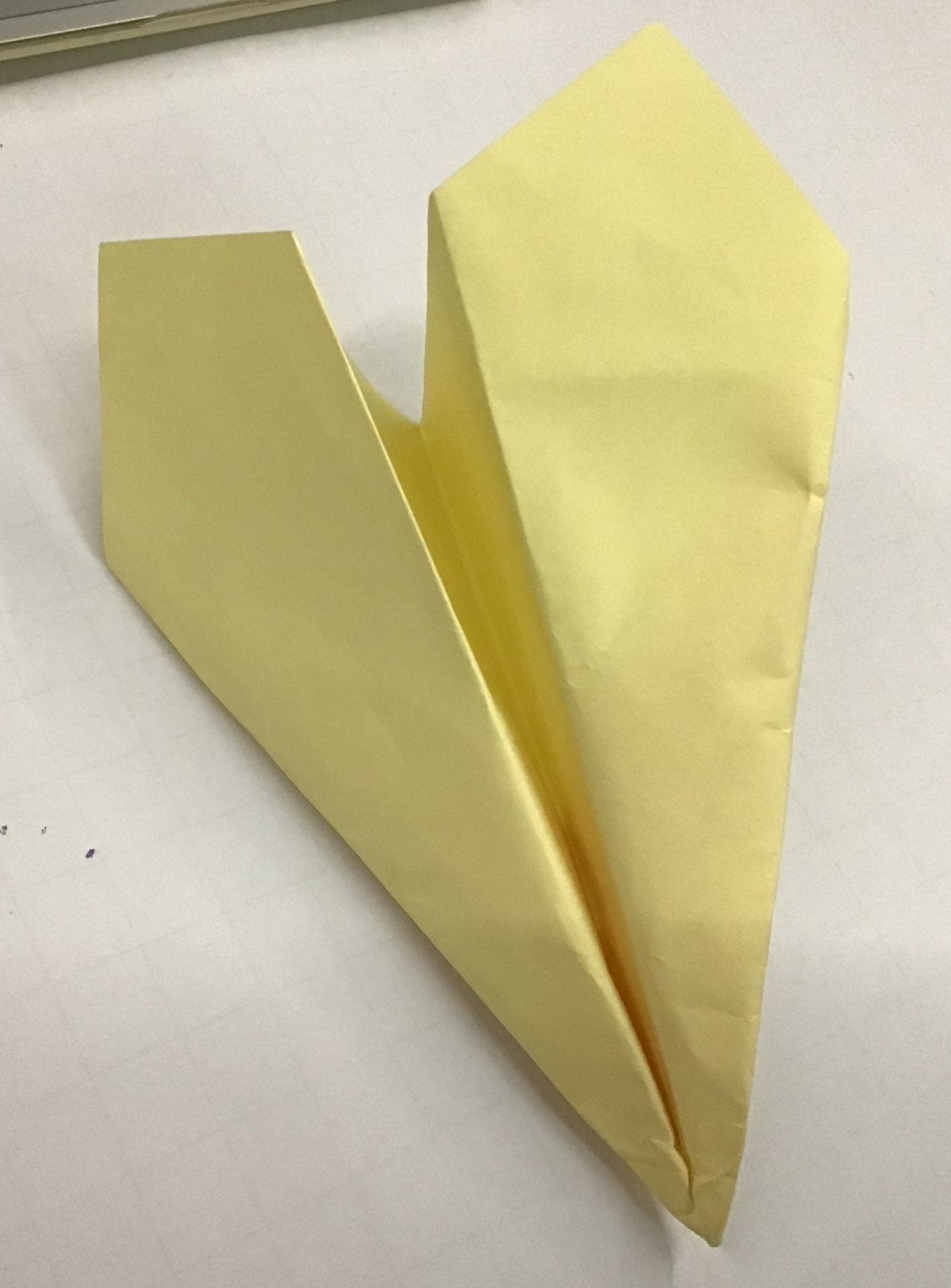
Noticing the children’s interest in making paper airplanes, Ms. Eileen decided to introduce the children to a new design.

The children followed the instructions to make the paper airplane.

  • Eli “I want to throw it outside because outside will have wind so it will fly fast and high.”
  • Howie “I think the airplane the airplane can fly really high and really fast because the wind is really strong and it will go fast. We can feel it when the wind is cold you know what is the wind.”

We looked at a photograph of the playground to help us decide where we might fly the planes from. What would we need to consider?

  • Liz “I think airplanes go to water is broken. Airplane is paper, paper in water is wet and broken.”
  • Oliver “I think the airplane might go round and round all the time I think. Because the wind is going left then the airplane will go left and if the wind is going right then the airplane will go right.”
  • Wyatt “Outside is airplane is go out of school and people can’t go outside of school and then you make it again.”
  • Morning “The airplane will go to the tree and the people cannot play with it.”
  • Eli “It can go over the fence because if you throw on the mountain then it will go over the fence and no one will get it and it might go into the building and there might be sharp things and then it will get a hole in it.”
  • Motong “We can send it from the slide. We can stand on the yellow wall because the airplane will fly very far.”
  • Jeongyoon “If we fly it from the roof, then we can’t get it.”
  • Lydia “I think this flying to outside you can’t take it (the airplane).”
  • Eunbyul “If it goes to a very tall tree then I will not catch the airplane.”
  • Howie “Then, we can climb the tree.”
  • Oliver “The sticks are not very strong.”

How can we find out which airplane has gone the furthest?

  • Oliver “I think if the airplane looks the best then it goes the furthest. And my airplane looks the best.
  • Eunbyul “Throw it and it will go up and down.”

When you run a race, can you start from different places?

  • Eli “No, we have to stay together.
  • Howie “Some people together in the back, the first people will get number 1. The people in the back will be number 2.”

The children explained that they had to fly the paper airplanes from the same location for it to be fair. The children discussed the different options. The children were excited to see many planes flying high above the playground. Perhaps our planes would fly high too!

Many of the children suggested flying the plane from a height as it would help the plane go further. They agreed that the best spot would be the top of the short wall.

We decided to go out and try this out. The paper panes took off from the wall. We watched them scatter around the playground. 

How would we know which plane went the furthest?

Howie suggested that we use a tape to measure the distance. Ms. Shemo did not have such a long tape but had some string instead. We measured and cut out the string to mark the distance.

When we went back to class with the string, we had them in bundles on the floor. Many children believed Eli’s plane flew the furthest because his bundle of string was ‘higher’. We recorded everyone’s best guess using tally marks.

But how would we know for sure? How do we measure things in real life?

Eli suggested using the ruler. But the ruler was short, and it would take a long time to measure them.

Liz suggested measuring them using the white PVC pipes. We brought one over and kept it next to the ruler. It was longer. We noticed the numbers on the ruler and decided to add them to make our ruler with the pipe. But, there were too many numbers to write.

After some thought, we decided to count in 5’s and record them on the pipe. The children helped identify the numbers from 0-100.

Then, we began to measure the twine. We recorded the distance each paper airplane flew. Finally, we had the data we needed. Eli’s paper airplane flew the furthest!

Throughout this experience, the children shared their theories about paper airplanes, and considered the properties of paper. They considered the concepts of speed, height, distance and variables that may affect the flight of the paper airplane. They explored measurement, data handling and number, to find out who’s paper airplane flew the furthest.

The Garden Project

@O and @L were our classroom representatives, working with Ms. Hannah and Ms. Eileen on the ‘Garden Project’.

On their return to class, they presented their ideas to K2A.

They explained the ideas they had discussed, sharing their drawings where they had documented their suggestions for improvement.

The Gardening Team have decided to:

  • cut and prune the overgrown bushes
  • add the cut pieces to the compost bin
  • use the compost to help the new plants grow
  • replant the seeds to make new plants
  • use the lemongrass and mint to make tea
  • and make space to grow other new plants for the season.

The children were excited to be part of the Garden Project.

We look forward to their next steps!     

Nests: How can we help?

We went out to the corridor to look at the documentation about the ‘dead birds’.

The children revisited some of their past observations and theories.

  • Lydia “Cats have eat the birds.”
  • Liz “Cats eat the birds. I think big birds eat small birds.”
  • Eli “I think birds flying and when they are sleeping the cat is down and the cat climbed the tree and then he the ate birds. Birds are in the nest.”
  • Jeongyoon “Nests on the tree.”
  • Liz “I think bird fell down from the nest. Its dead.”
  • Oliver “I think the baby bird fall down and then hits its dead.”
  • Morning “Maybe they rolled and fell down the tree.” 

What new ideas do we have? What can we do to help?

  • Howie “Put the soft things under the tree. If they fall down it will be soft.”
  • Oliver “Feathers, cotton.”
  • Eli “Maybe something bouncy. Maybe grass.”
  • Morning “Paper.”
  • Oliver “I see something white that is outside but it is not cotton.”
  • Oxford “Take the birds to the doctor. Take them home and look to see what is wrong.”
  • Oliver “I think the nest is a little bit not safe for the birds. I think it’s a little bit small. We can build one more.”
  • Morning “Use cotton to make the nest. Maybe grass.”
  • Oliver “Use sticks. Sometimes we can just put a bowl.”
  • Howie “And put inside some soft things.”
  • Oliver “I think they make them with water and mud. To make the sticks not fall off the nests. First, we need to find some stick. Then put some water in the sand. Cover the nests with the mud and then the baby birds can live on them. Not mud, we can use clay.”
  • Eli “I saw lots of sticks outside. I saw a special place that has lots of sticks.
  • Howie “Then we can put them on the tree. We can put them like on the fire trucks, to put the ladder and climb up and put the nests on the tree.”
  • Oliver “If we stick the clay to the tree then the nest will never fall off. Then we don’t have to worry about it anymore.”
  • Eunbyul “Children feed the birds and one more bird is fly and two more birds fly back. Feed the birds seeds.”
  • Motong “We can find some sticks and make a nest. Put paper on the nest because the snow flowing the nest. Put the paper on the top.”
  • Wyatt “Put the bird nest on the tree and the bird is going to the house. And the bird is go there and going to the house. If it’s cold, then there is snow. Snow is body is fall down. Help bird, help to put on a jacket to put on the bird.”

The children ran outside to collect the sticks they needed to build the nest. Oliver found some cotton-like material and put it in another tub.  


We wonder what we might need to think about when creating nests for the birds.

Living Things in the Early Years Garden

What is happening to the birds in the EY Garden?

Over the past few months, the children have found bird feathers and a few dead birds in the Early Years Garden. The children were puzzled and wondered about the birds, often looking for and sharing ideas about the different living things in the garden.

Noticing their continued interest in living things in the spaces around us, we decided to discuss their observations and wonderings. The different pieces of documentation about birds we had collected sparked our conversation. 

We used the question words to help us think about what we wanted to know about the birds.

The questions led us to wonder (Lydia) how the birds died, (Oxford) why the birds didn’t fly away, (Oliver) what happened to the birds after they died and where the birds lived.

We revisited an inquiry project some of the children were engaged in last year (PK1B) to help us think more about the birds that live in the Early Years Garden.

The children quickly recalled looking for the birds and learning that they come into the garden when fewer people were in the area.

They liked to play in the water (Oliver) and live high in the trees for safety (Howie). Lydia recalled looking for the birds in the big tree, which has since been cut down. “They cut down the tree to make paper” she explained.

Oliver recalled seeing bird’s nests on electric cable poles and said he saw some nests made of sticks in the EY garden.

As the children shared many different theories about the dead birds, we gave them paper and writing tools to make their thinking and wonderings visible.

Later during playtime, a group of children found an empty nest on a bush, which had fallen from a tree.

The children were fascinated by the intricate weaving and discussed the materials (cotton, grass, leaves) used to make the nest.

  • Liz “Bird house.”
  • Motong “It’s a nest. The birds on the tree.”
  • Morning “A nest, the nest maybe inside is the bird. Or the birds already died. They use grass because it’s long and the grass is dry, not in the water.”

  • Oliver “I see there is a bird’s nest has been fall from a tree. I think a cat pulled the bird’s nest to the bush. It’s because cats don’t like birds nests, I think.

We wonder what others think happened to the birds in the Early Years Garden. 

We decided to share the documentation and the provoking question “What happened to the birds?” to help us gather more information.

Organising the Shed

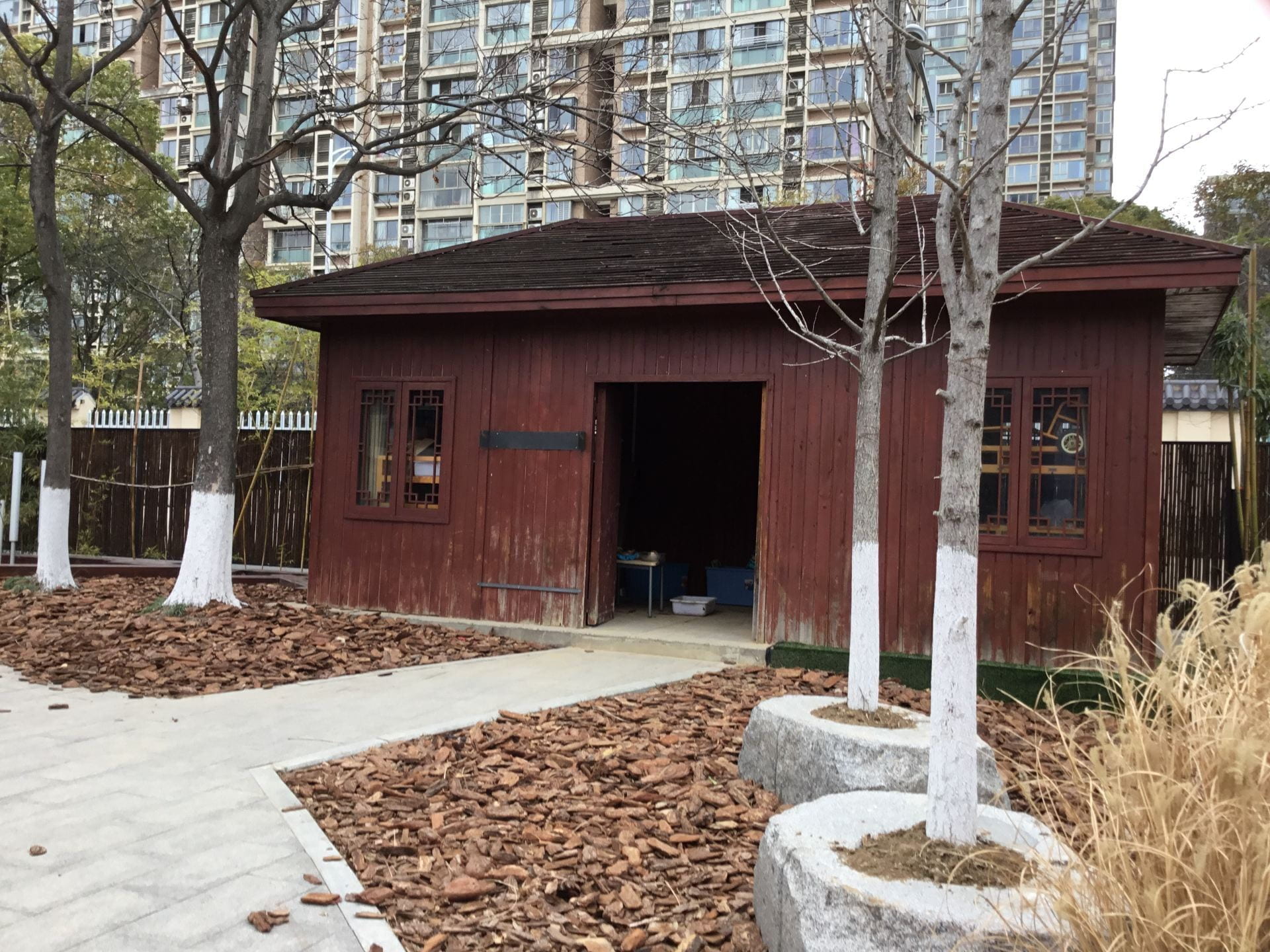
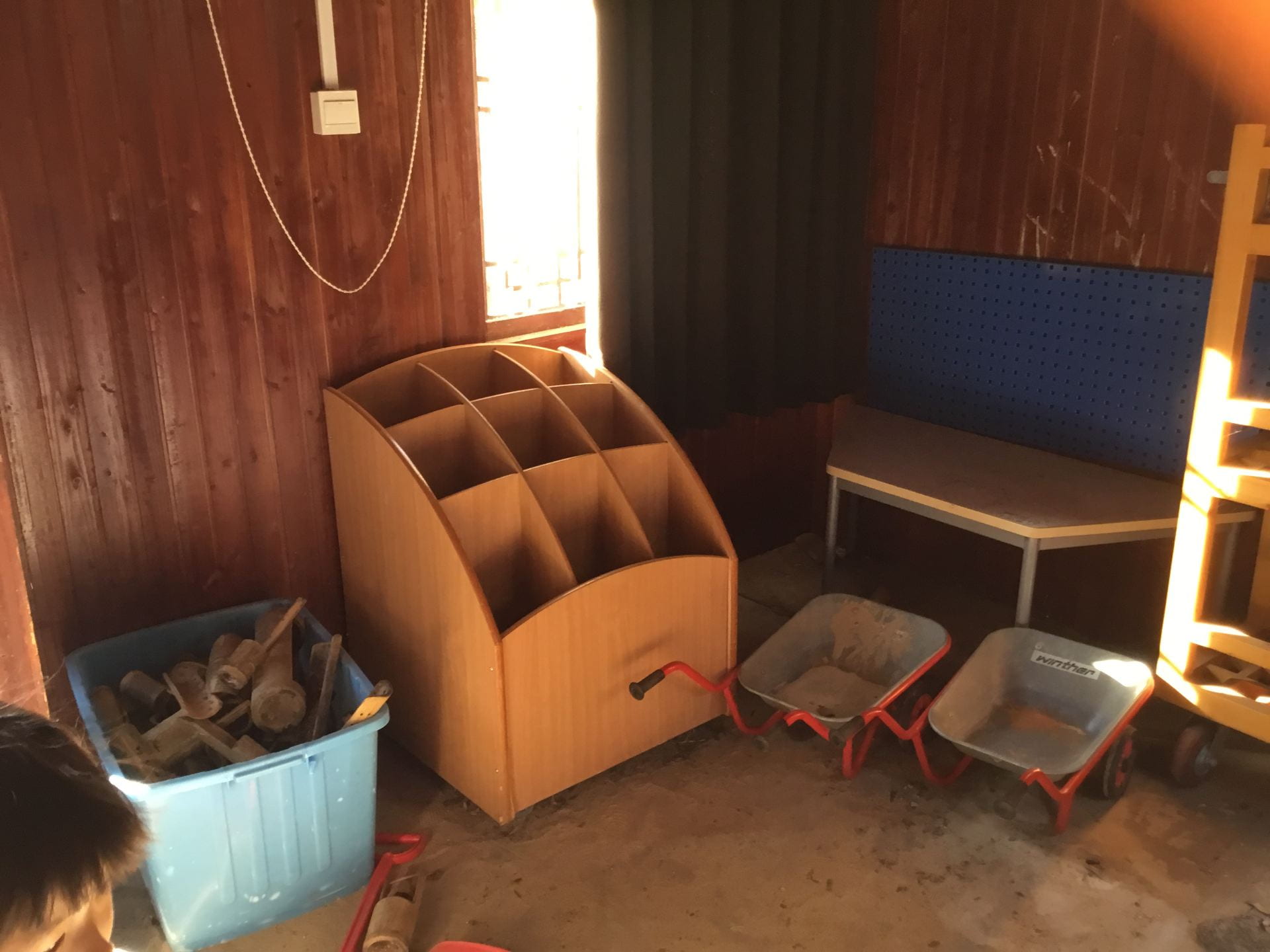
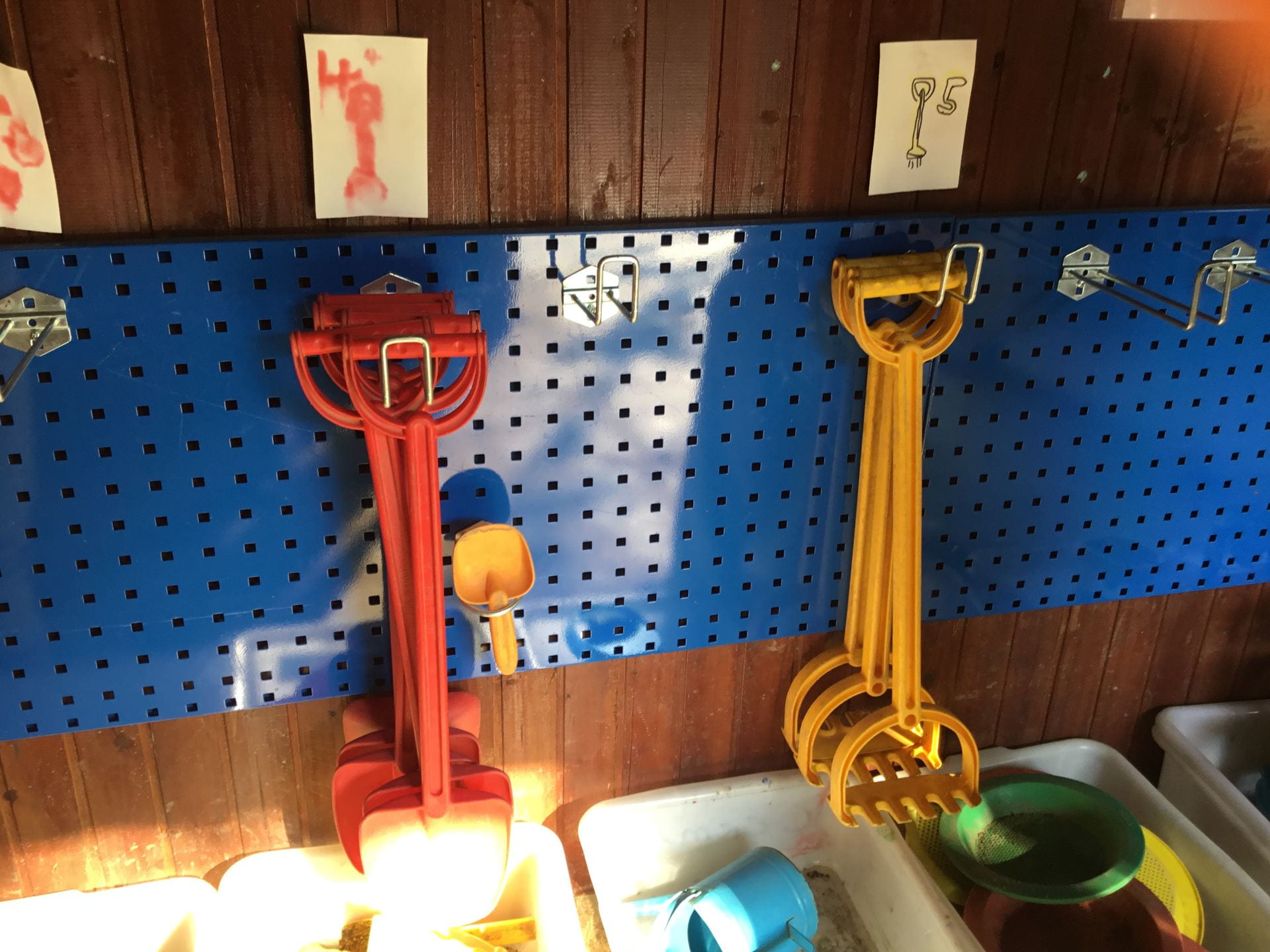
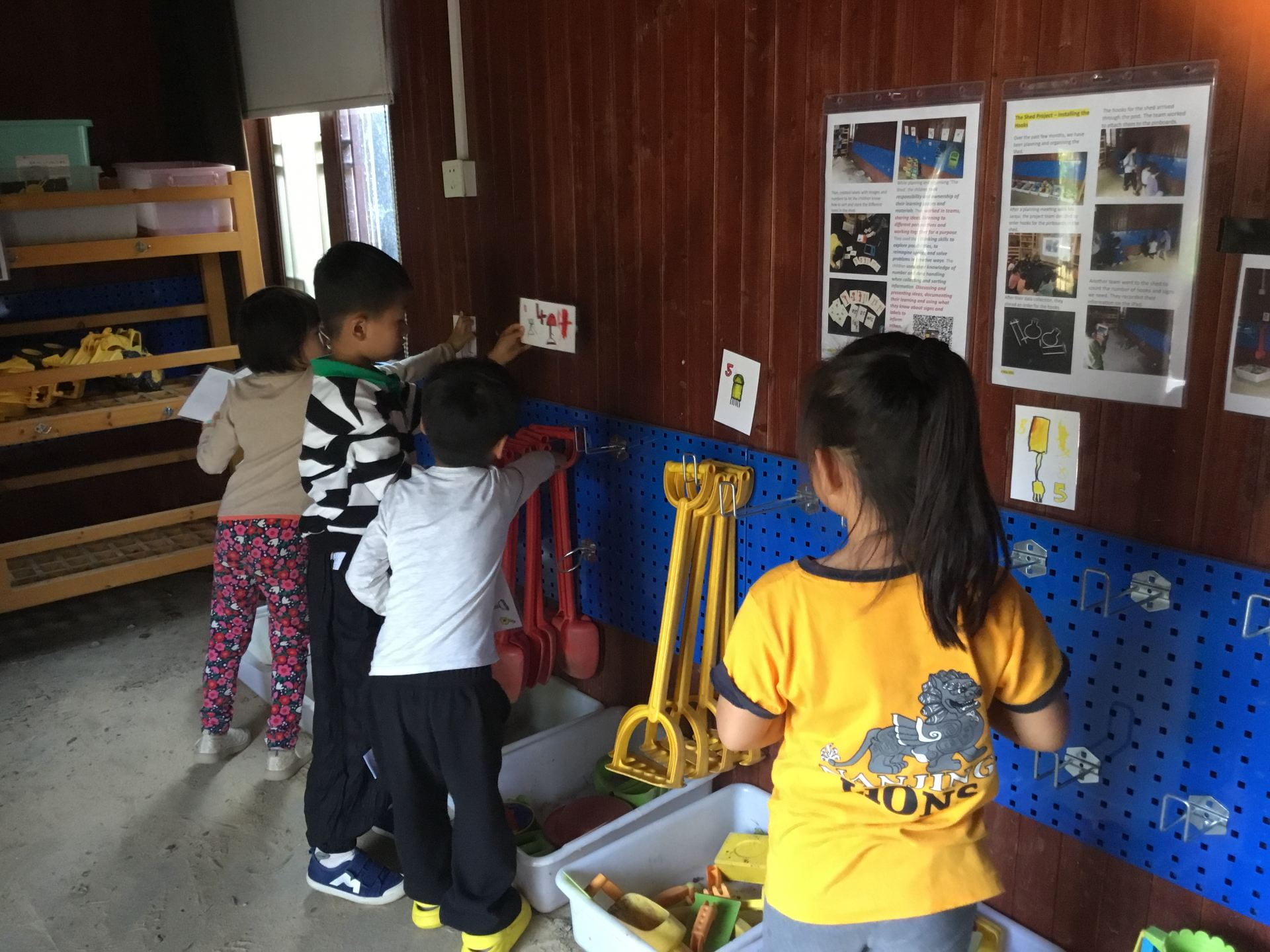
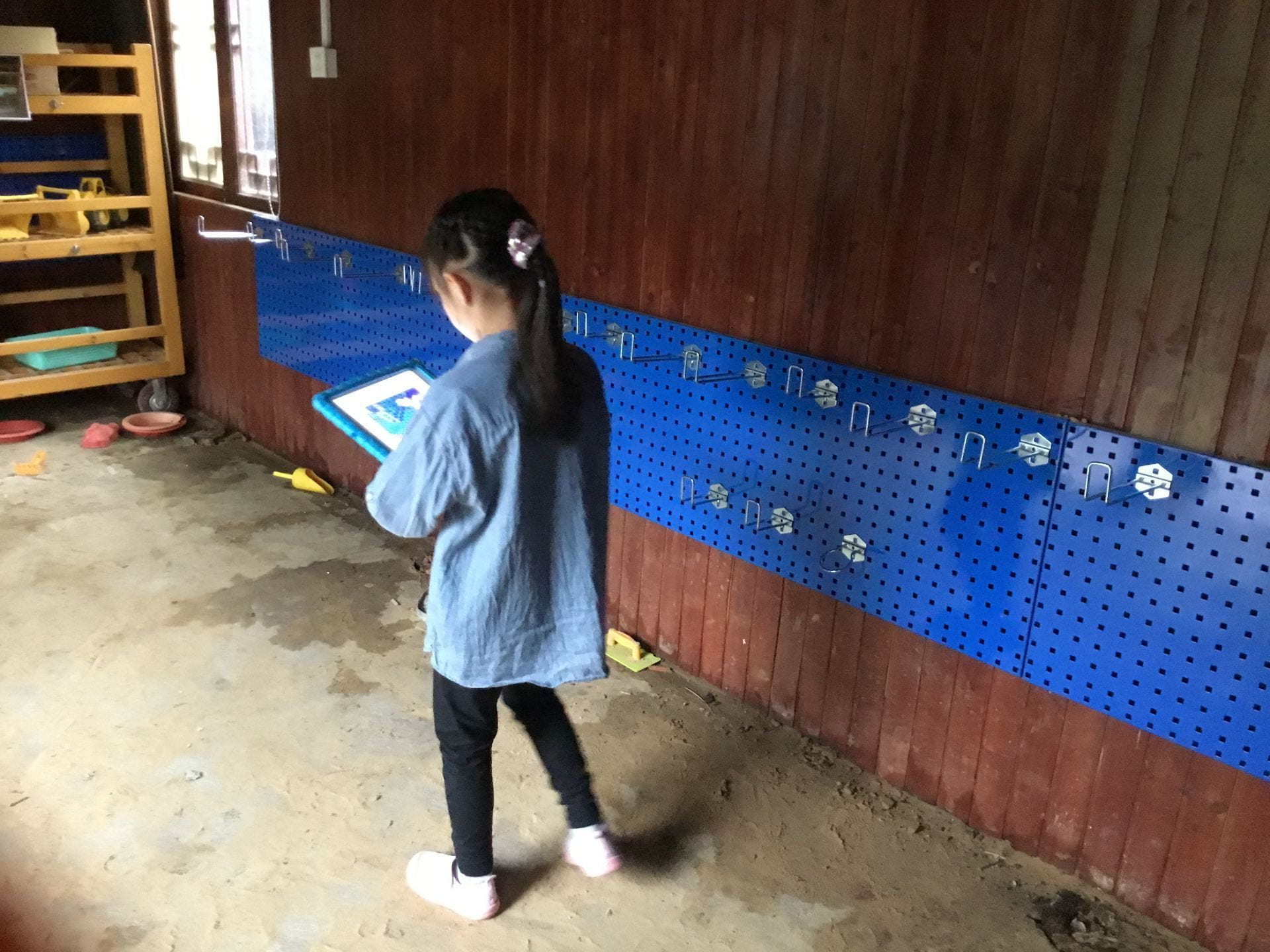
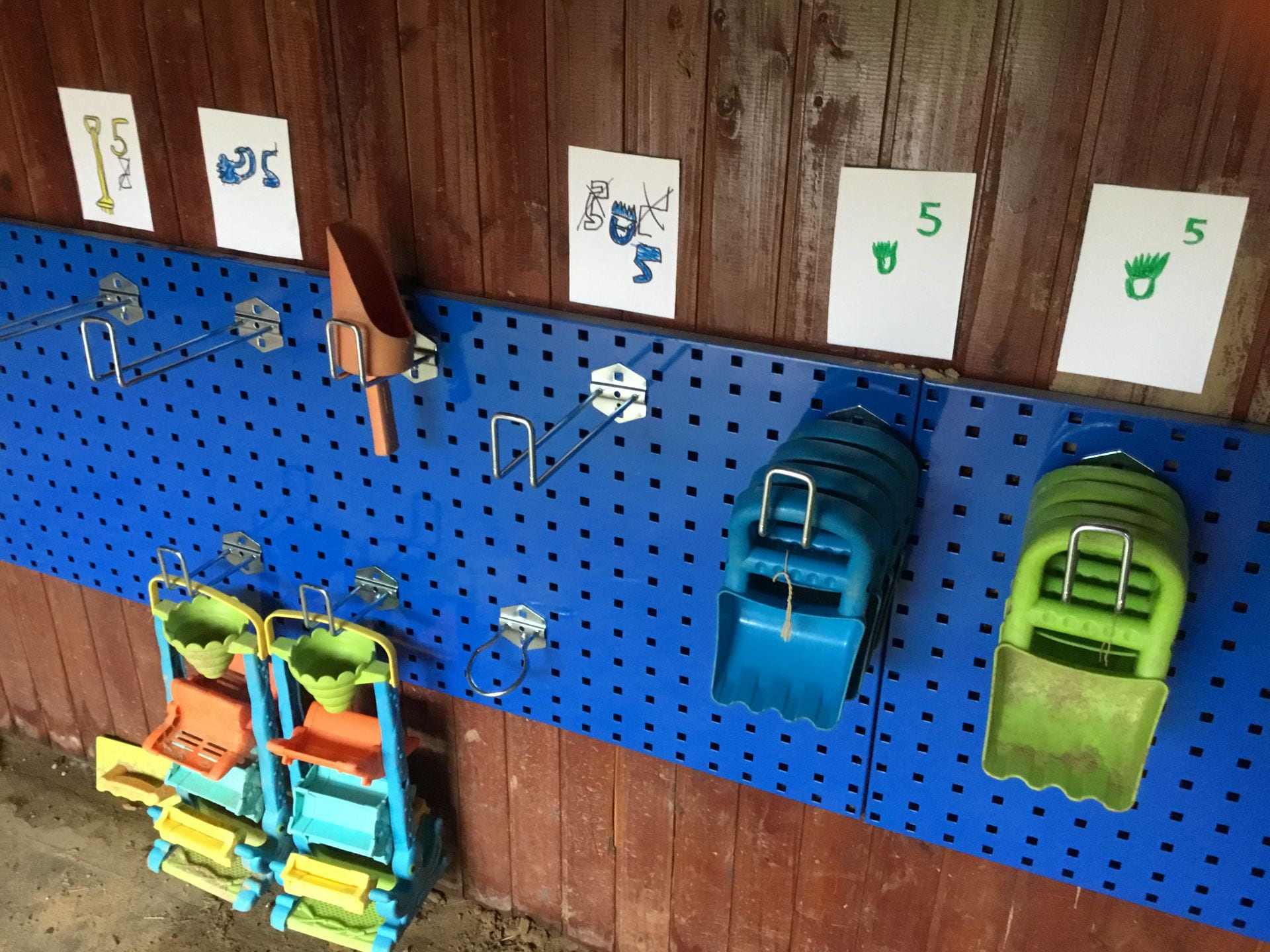
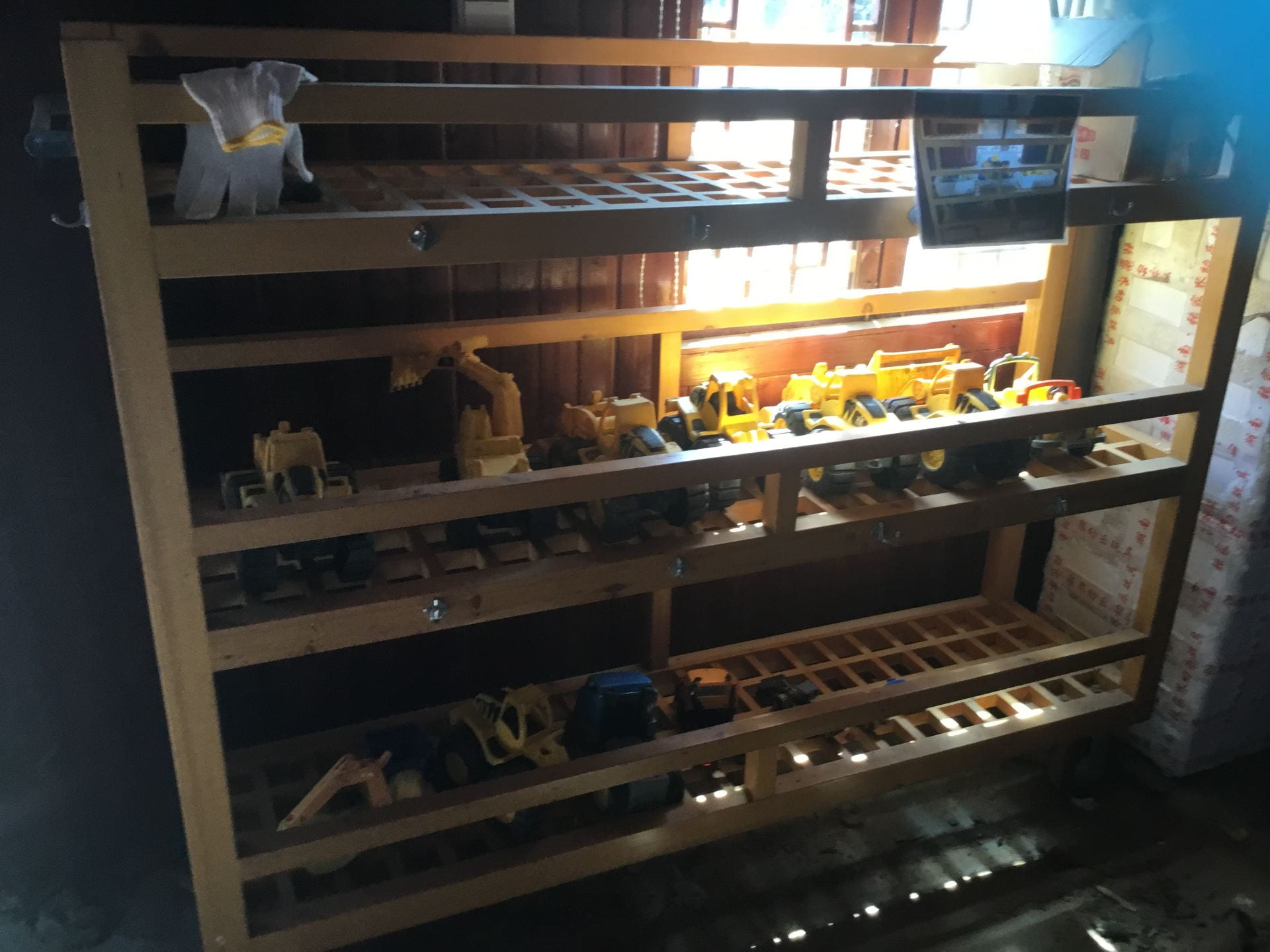
We observed the children at the end of outdoor recess as we noticed that they were having some challenges with putting the toys away in the designated spaces. We were particularly interested in learning more about the storage system in the ‘shed’, a storage space where all the water toys, cooking utensils and trucks are housed.

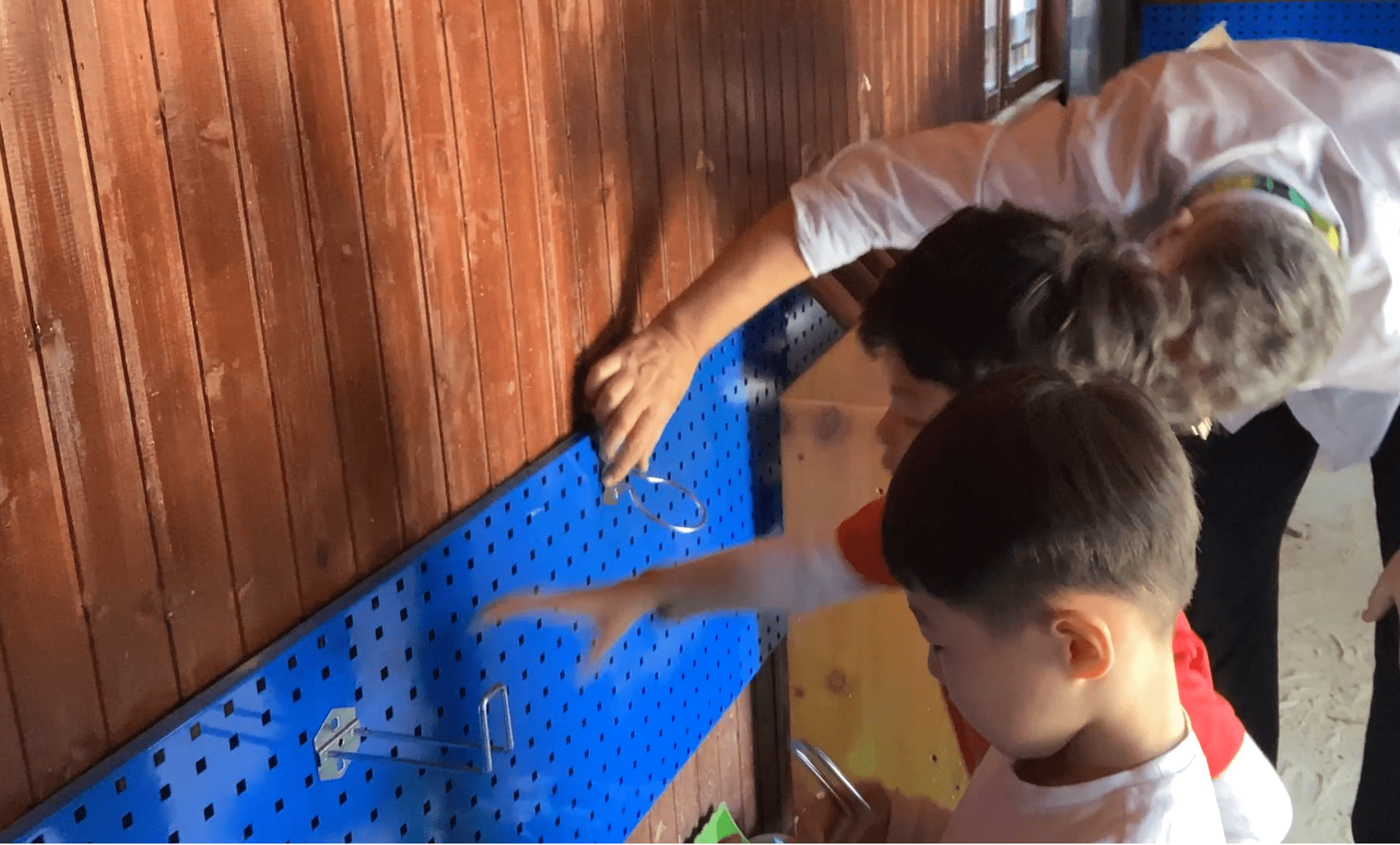
We decided to start by revisiting past documentation on ‘The Shed Project’, to learn more about the space. The previous K2 class had organised the space, ordered pegboards and hooks for the toys, and posted signs to help the children know where to store the toys.

A group of children went into the Shed to think about their next steps.

  • Liz “It is dirty and messy”
  • Lydia “We can clean it up!”

The team worked together to clean up the shed. They gathered all the rakes and spades and hung them up on the pegboards. They sorted the water and sand toys, and placed the bamboo waterplay toys, in separate tubs.

We noticed that the signs and labels were wet, and the messages were smudged.

When we returned to the classroom, the team created new labels for the shovels and rakes.  

We compared a label that was in the shed with a new one.

Teacher “What do you think happened to the label?”

  • Oliver “Melting. The colour has almost go off from the water. Someone came with a bucket of water and put it and it melted the colours.”
  • Howie “It will come off.”

The children decided that a piece of plastic would protect the paper. We looked around the classroom for the type of plastic we could use and discussed each option.

The plastic like the drawer…

Oliver “That is too hard and too heavy.”

The plastic that is used to cover the food container…

  • Oxford and Howie “It breaks easily.”

The plastic pouch…

  • Eli “It is too small”

The plastic folder…

 “It’s too big.”

The different ideas presented by the children moved us to offer a suggestion, a plastic film that is used on the overhead projector screen. The children quickly made the connection.

  • Oliver “Ms. Eileen has a transformer to turn this card save, then no water can melt the colour and smudge it.”

The team went with Ms. Eileen to prepare the cards for the machine.

  • Morning “Put the paper in.”
  • Wyatt “Put the paper in the plastic.”
  • Liz “Then no water in the paper.”
  • Liz “Plastic in the machine.”
  • Morning “It is going on the side and the paper will not fall out of the plastic.”

  • Liz “It is so hot.”
  • Eli “It has power. If you don’t have the power it can’t move out and in.”
  • Oliver “And it can not stick the plastic together. Because it’ hot it sticks.”
  • Oxford “Because this has a yellow sign says no touching.”
  • Eunbyul “It says ‘NO Finger In’.”
  • Howie “If you put your finger it will get hot and stick together.”
  • Liz “Cutting paper because no cutting paper, these is so big. Plastic in and cut into two.”

After presenting their process to the rest of the class, the team went to the shed to put the new signs on the wall.

  • Morning “Put the paper on the wall people will know the yellow one does not go to the red one.”
  • Oliver “The blu tack behind the picture will get smudged.”

Next, the team will visit the rest of the classes in the Early Years to share their video with the children, to tell them about the new labels. They hope this will help the children think more about the way we store and care for the toys in the Shed.

This project was connected to the unit of inquiry ‘How We Organise Ourselves’ as it encouraged the children to look at community spaces around them and to consider how they might take responsibility for the care and maintenance of these spaces.

Investigating Slides in our Environment

A small group of children have been exploring slides in K2. They have been designing and building slides in the classroom and worked in PE to create different slides using a range of resources in the gym.

As more children showed interest in the research into slides, we decided to invite a few more children to join the initial group on a ‘slide hunt’ around the school. As the children walked around, they identified different slides, talking about the similarities and differences between them.

We noticed the children using a range of describing words and new vocabulary to help them talk about the slides. They observed, tested, discussed and documented their observations on paper.


They used their developing writing skills to add labels. We noticed the children sharing their drawings with each other, and giving feedback for improvement.

On their return, the group watched the video with the rest of the class. We wonder how the children’s inquiry into slides will help them talk about other design choices people make when creating objects, buildings and spaces in the environment.

Oliver “Some slides are very scary to slide on. It’s because some can move and if you are that way and you can go the other and its wobbly and you will fall down the slide. Someone hoped they are fun.”

Howie “People can walk on the slide. People can go on the bumpy slide. It is scary. There is also a climbing slide. We have triangle here at the top.” 

We paused to think about Jeongyoon’s observation of two slides. He said they looked the same but were different. We decided to create a chart, documenting similarities and differences between the slides.

We discussed the idea of ‘the same’ and ‘different’. The children quickly noticed the differences between the two structures.

Differences:

  • have different designs (white lines) and colours
  • one had supports for climbing (ropes and stepping stones).
  • different heights and sizes so this also meant that the elevation was different
  • were made of different materials

Looking for similarities was harder. A group went outdoors to take a closer look. 

Similarities:

  • go downhill and uphill
  • slide down
  • you can walk, climb and run up and down
  • are outside in the playground
  • used for play

When discussing the Venn diagram, we talked about the ‘purpose’ of the two structures. The children explained that the structures were for ‘PLAY’.

This brought us to the remaining slides. What purpose did they have?  We revisited the photographs we had of the different slides around the school and began to sort them out.

Two categories emerged through the discussion:

  • For people and wheelchairs to travel and
  • For play

They decided that the category ‘for play’ had subcategories:

  • For stones
  • For sliding

We wonder:

  • how these structures are designed.
  • how we might use different materials to create structures with different characteristics.

What materials might have been used to create or build the objects or structures?

The children began to share their thinking. Some were made of:

  • wood
  • metal
  • plastic
  • concrete powder
  • stones and rocks
  • paint to make it beautiful
  • fabric/material
  • feathers, cotton or wool

We wonder how these structures are designed. We wonder how we might use different materials to create structures with different characteristics.

When thinking and talking about the way things move on slides, the

children began to use the words ‘power‘ and ‘energy‘.

They used the words ‘push‘ and ‘pull‘ to explain their thinking of ‘forces‘. Eli wondered if your heart and blood help you move. We look forward to exploring these ideas further.

Our learning continues…

Approaches to Learning (ATL’s) 

  • observe carefully
  • gather information from a variety of sources (people, places, materials, literature)
  • record observations—drawing, using emergent writing skills
  • notice relationships and patterns
  • express oneself using words and sentences
  • participate in conversations

Revisiting a Project: The Bike Park Signs

Revisiting a Project

We looked at the bikes outside our playground.

  • Liz “It’s messy people will get fall down.”
  • Morning “If we run around and we didn’t know the bike is on the way we will trip over the bike.”
  • Wyatt “If you put them like this people won’t see them clearly, we won’t know if we lost one.”

Ms. Eileen “Is there another way to park the bikes?”

The children started to organise the bikes. We noticed a picture on the wall showing how the children parked the bikes the previous year.

Ms Eileen “Did they park the bikes the same way? Why did they park like this?”

  • Lydia “The bike is opposite from ours, it is easier for children to ride it away.”
  • Liz “If we put them properly when the fire comes, we can go through the door quickly and we are safe.”
  • Wyatt “If we park the bike in a wrong place when the fire comes the bike will burn.”

We went back to reorganise the bikes.

Ms Eileen “Do you think this is the best way to park the bikes?”

  • Morning “We can ride the bike out easily.”
  • Jeongyoon “Everyone played with the bike we can tell them.”
  • Lydia “We need to tell everyone.”

We looked at the parking signs the K2 made together last year.

The children decided to put the signs up to let the other children in the Early Years know how to park the bikes.

The group presented their learning to the rest of the class.

  • Jeongyoon “Outside.”
  • Liz “Bikes clean up.”
  • Lydia “Cars. Me see the bikes are in a mess. (in Mandarin) If a fire comes then we can’t get to the escape door.”
  • Morning agreed with Liz’s statement adding “Clean the bikes.”
  • Wyatt “When people park the bikes in front of each other then its easy for the children to bump into the bikes. (in Mandarin)”
  • Morning explained that the team had an important task so they needed to “park the bikes together”
  • Eli “Park the bikes nicely on the road and the other side. People will step on the wheel and fall down.”
  • Oliver “If you don’t park the bikes nicely, someone will be running where you park the bikes then someone will hurt yourself.”
  • Oxford “I will tidy up and put them back.”
  • Howie “Put them nicely because when someone comes, the people can quickly run outside.”
  • Motong “Clean up the car because the car cannot come in.”
  • Eunbyul “Everybody bikes play and everybody children play and finish then tidy up. Bikes and children and me friend together tidy up.”

The class thanked the team for their work and presentation. Next, the team will need to think about sharing this important message with the rest of the Early Years Community.

The Rainbow Nest: A Plan for Play

We have observed some of the children exploring the new nest in the Early Years playground. We have noticed small groups of children gathering in or around the nest to play games and make snacks with ‘mud’.

At our Morning Meeting, we asked the children about the nest and the ideas they had for play in the new space. A few of the children did not know about the old nest and how it transformed into the ‘Rainbow Nest’.

The children explained that the old nest was:

  • Children “Broken.”
  • Howie “The birds get the stick.”
  • Liz “The cat.”
  • Eunbyul “The sticks around the nest.”
  • Oxford “It’s the water (rain).”
  • Oliver “Its because it has been burned and the fire truck helped to make the fire away.”

Teachers: “But what ideas do you have for the new nest? How might we use this new space?”

We went outside to look at the nest, to sit in and around the space to visualise possibilities.

The children began to record their ideas in their notebooks.

We noticed that some of the children drew the nest, taking care to show the details in the woodwork and seating area.

Howie “Drawing the nest. I am sitting on the wooden planks.”

Others recorded the possible activities in the space.

When the children returned to class, they presented their individual ideas to the other children. We documented these possibilities on chart paper to help us look for the best and most frequent suggestions.


While presenting, the children speaking to the group practised using their voice (oral language) to share their perspectives while the audience worked on being active listeners. 

Lydia “Me is talking about the drawing to everybody.”

The children identified five ways we can use the new nest.

We could use the space:

  • As a reading area.
  • To make cookies.
  • To play and build with sand.
  • To play games.
  • To eat snacks and lunch.

Oliver and Howie suggested making the Rainbow Nest ‘more beautiful’ by adding plants around the nest, on the ground and on the wooden structure.

Oliver “I want to add some decorations on the nest to look more beautiful.”

The children discussed the idea of using the space to have a morning snack. They began to suggest different ways to keep the space clean. As the nest is a community space in the Early Years, we wonder how they might work with the rest of the community to develop these ideas further.

The Rainbow Nest

What experiences might we have in our new space?

What are some exciting things that might happen?

The children began to share their ideas about the different types of play, and the materials they may use in the new nest.

  • Eli suggested that we put some bird seeds on the table at the center of the table to invite the birds in the EY playground to visit the space.
  • Morning suggested that we include some bird homes.
  • Oliver was excited about the possibility of birds visiting the space and imagined the birds would then bring sticks to make their nests. Would there be any eggs?
  • Liz thought hard about the new space and wondered if we could grow some grass around the nest.
  • Oliver built upon her idea, suggesting that we ask Ms. Hannah for some seeds and grow some beautiful flowers around the edge of the nest.
  • Lydia She suggested adding some flowers on the table too.
  • Jeongyoon decided that playing hide and seek in the space would be fun.
  • Motong and Wyatt asked if we could add materials in the space so we could draw and paint in the nest.
  • Oxford, Wyatt and Oliver thought it would be a great space to have a picnic snack.

Developing agreements for the space.

Next, we discussed the idea of food in the space.

  • What would we need to remember if we brought food into the nest?
  • How might we keep this space clean?

After some thought, the children discussed the need for agreements. They didn’t want food on the floor as the nest would get messy and people would not want to sit in a dirty space.

  • Oliver suggested that we only draw on paper and not on the benches. This will help us look after the nest. Oliver “We need a door window and a roof so no cat can come over.”

The children went outdoors with Ms. Eileen and Ms. Jo.

Ms. Jo “How many people do you think can fit in the nest?”

in the nest at one time. The children used their mathematical knowledge to estimate.

They wondered how many children might be able to play

  • Oliver “I think 2, because I counted.”
  • Eli “I think 22. I think this is a big, big space.”
  • Oxford “14 children.”
  • Lydia “6 children. They can sit around (in Mandarin).”
  • Jeongyoon “22”
  • Morning “10 children. Or 6 or 7.”

Over the next few weeks, we will continue to observe the space to document the play and learning experiences that take place in the Rainbow Nest.

Approaches to Learning (ATL’s)

  • use discussion and play to generate new ideas and investigations
  • seek information
  • ask or express through play questions that can be researched
  • listen actively and respectfully to others’ ideas and listen to information
  • participate in conversations

The NEW NEST!

The Early Years community were excited to be back at school. The children ran outdoors to explore the garden, to see what was new and what has remained the same. They noticed a piece of equipment covered with a large black cloth, with a red ribbon at the side. What was under the fabric?

The children were excited. They ran around the structure, sharing their ideas and guessing what might have happened to the piece of equipment that was in this area of the garden.

  • Oliver G “I see inside there is some wood, and some of it is green, orange and yellow. Different colours of water! Blue water!
  • Emma “A new nest!”
  • Oliver G “I see rainbow water!”
  • Matt peeks under the black cloth “Here, see one more!”
  • Motong “Is it a rabbit?” (In Mandarin)
  • Oliver G “Inside I think there is 2 hamsters for K1 and K2. The hamsters are cute!”
  • Eli “A rainbow nest! Because inside it looks like a table. I jumped up and I looked inside.”

We gathered closer to listen to what Ms. Jacqui was saying.

Ms. Jacqui “Last semester, the Early Years students said they would like a nest. They worked on a design and they said we want to sit inside. They wanted rainbow colours. I wonder what the nest looks like now?”

We were ready to unveil the playground equipment.

The children walked in. They gathered around the table and stood on the circular bench, laughing and talking to each other about the new design.

They were excited to see how the suggestions they had made had become a reality. As they walked inside the new nest, they noticed that there was water on the floor.

Oskar G recalled his design and suggestions and quickly reflected on the changes that had taken place and the ones that didn’t.

Oskar G “I don’t see Rosemary.”

The teachers acknowledged his observations, making a quick note of the importance of ‘voice’ and ‘process’ in learning.

Oliver G “There is water on the bench we also need some windows we can also use lots of umbrellas.”

We look forward to observing how this redesigned space meets the needs of our young learners and how it evolves over time. We wonder what stories the children tell around this space, and how it contributes towards their learning experiences in the Early Years.

The Bike Park Signs

Over the last few weeks, a team of young designers worked together with Ms. Eileen and Ms. Jo, to create signs for the bike park. After conducting their research, they decided to create the signs using wood, as this was a material that could be used outdoors in all types of weather. After considering many options for the message, the team decided to use the wood-burning tool to burn the message onto the wood instead of using paint, markers or other writing tools. 

They began by planning their message out using pictures and words, to inform the early years community how to park the bikes safely in the bike park area. Their pictures served to remind the children where to park and in which direction the bikes needed to be stored at the end of playtime.

The team considered the type of wood and the size of the sign. Then, they used sandpaper to make sure the edges of the wood were smooth. 

They learned how to use the wood-burning tool to burn the messages on the pieces of wood. They had to think about staying safe and focused throughout the task.

Finally, their signs were ready to be mounted in the bike park area. They talked to each other about the best place to put up the signs and what materials they would use to attach the signs in the different spaces. Noah decided that his sign should be placed standing upright in the bike park. Mason, Sean and Eunice decided that their signs should be attached to the wooden fence dividing the play area. The team were proud of their hard work, and were excited to see that the Early Years community were now well informed about safe parking in the playground.

K2 students are aware of the impact they can have on the community. They understand how they can actively engage in various stages of learning: including thinking about, planning, modifying and creating for a purpose. Through active discussion and questioning, they were able to direct their own learning. The ‘Bike Park’ project helped them make connections to the real world. Through a range of experiences, they could consider perspectives, possibilities and outcomes that would benefit the community. They considered their own responsibility in shared spaces, and were able to use their voice and actions to bring a sense of purpose and belonging to these community spaces.

The New Nest Design

Following on from our last meeting about the nest where we gave Ms. Jacqui suggestions for the design, Mr. Arek and his team presented a first draft design of the nest to the children in the Early Years. We gathered to discuss the design and give Mr. Arek some feedback and suggestions for consideration.

What we like…

  • Doho “We can see the flowers. The colours are good and have flowers and the nest has a chair. And grass because the flowers can grow up.”
  • Tracey “The nest is beautiful because it’s clean.”
  • Kenan “The nest is good. We can have a picnic.”
  • Joon “The nest is like a rainbow.”
  • Sanghyeok “Have a desk and the flowers, this is good.”
  • Sean “The flowers are good and we can sit down and eat the snack because there are chairs. And we can draw.”

Everyone likes the flowers on the table.

Everyone likes the flowers around the bench.

Everyone likes to have the table.

Suggestions

  • Mason “I think we need to make the nest bigger. And we can have a picnic in it and have some water to drink in it.
  • Allen “I like the inside because the floor is flat. We don’t like the wood chips because its bumpy and it makes us fall down.

Wonderings

  • Eunice “Can we have a bird house?”
  • Sanghyeok “Can we have small animals in there, like birds and butterflies?
  • Mason Can we have a bed in the nest then somebody can sleep in it? Can we make a bigger nest?” Can we have a door? Can we put grass on the floor?
  • Allen Can we put the picnic mat? Can we make it bigger?”
  • Noah “How does the bench part stand up when there are no legs?”
  • Tracey “Why is it a rainbow inside?”
  • Sanghyeok “Why are there flowers on the table?”
  • Eunice “Can we have cushions on the bench?”

The Bug Hotels

We have been discussing and planning where and how to place the bug hotels. We want to make sure the insects that live in them feel safe.

We needed to make the signs to let everyone know where our hotels are on the playground. The children decided to make the signs using wood, as it can be kept outdoors in all types of weather. 2 children went over to the Design room to use the wood burning tool to write ‘K2A’ on the two signs.  


Then, we went outdoors to place the two bug hotels. The teams decided where they wanted to place them so that many bugs make them their homes.

The children took all the bugs they have collected in the classroom out to the hotels. They gently placed the worms, pill bugs and beetles inside the different spaces.

We are excited about the hotels and wonder which little creatures will visit the bug hotels. We wonder if we need to make some signs to let the other children know how to look after the bug hotels.

Our project continues…

A Gift to the Early Years

Amazing Grace Nature School and Mr. Tommy gifted the NIS Early Years some new plants. The children in PreK-K1B worked together with the facilities team at NIS to uproot some of the grass and then plant the new trees.

The children in the Early Years were excited to see 10 tea trees, 3 mulberry trees and 2 new peach trees!

As we discussed the developments in the EY garden, the children suggested ways of showing our appreciation to the facilities team and Mr. Tommy’s team.

They thought about giving them gifts, seeds and plants and even writing them emails. Finally, they decided that drawings on a card would be the best option as they would be doing it all by themselves.

We wonder when we can prune the tea tress to make our own tea.

We wonder how long we will have to wait to eat the peaches and mulberry from our new trees!

The Shed Project – Installing the Hooks

Over the past few months, we have been planning and organising the Shed.

After a planning meeting with Ms. Jacqui, the project team decided to order hooks for the pinboards in the shed. After their data collection, they placed an order for the hooks.

The hooks for the shed arrived through the post. The team worked to attach them to the pinboards.

Another team went to the shed to count the number of hooks and signs we need. They recorded their information on the iPad.

Then, created labels with images and numbers to let the children know how to sort and store the different items in the shed.

While planning and organising ‘The Shed’, the children took responsibility and ownership of their learning spaces and materials.

They worked in teams, sharing ideas, listening to different perspectives and working together for a purpose. They used their thinking skills to explore possibilities, to reimagine spaces and solve problems in creative ways.

The children used their knowledge of number and data handling when collecting and sorting information. Discussing and presenting ideas, documenting their learning and using what they know about signs and labels to inform others, developed their literacy skills.

Homes – The Bug Hotel

During the field trip to the Insect and Reptile Museum, the children went into nature to collect natural materials to make a ‘Bug Hotel’.

They worked in teams to make 2 homes for the bugs, decorating them to attract more living things.

When we returned, the children discussed their ideas for the ‘Bug Hotels’. They talked about the different materials they used, and wondered what types of insects might want to live in the hotels.

The children have noticed many different types of insects and littles creatures in the playground. They think the ants, bees, pill bugs, beetles, spiders and butterflies might want to make the hotel their home. Growing more flowers and plants will encourage the bugs to visit the playground.

The two groups gathered to decide where they want to place their bug houses. They discussed their ideas, trying to agree on the locations. This was challenging as they all had their own preferences.

They had to listen to each other, consider different perspectives and then reach a final decision.

One team decided to place their bug hotel on a tree and the other in the garden near the flowers.

Next, we discussed the different options we have for signage. Paper and card were suggested. However, paper and card are not suitable materials for outdoor signs as they get wet. The children decided to use wood to make the signs.

Over the next few days, they will work together to create the signs and place the hotels and signs in the correct locations across the playground. They are excited to see which insects make the bug hotels their home. 

We know that we share our playground with many different living things. We will continue to use our observational skills to notice and document our thinking to help us make decisions about the environment.

Field Trip Reflections

We had a wonderful time planning and then going on our Field Trip to the Insect and Reptile Museum. We wondered what we learned from our trip and what questions we have as a result of our learning.

The children began to put their ideas on paper. They used drawing and writing to share their ideas.

We gathered to talk about the different ways writers can plan and share ideas with others.

As we discussed what we noticed about each other’s writing, we documented the different ways writers communicate their thinking, planning and ideas.

We could:

– draw, colour, add details and make our pictures look ‘real’

– use our own ideas

– sequence the different events

– add feelings

– use thinking clouds

– add writing using words and sentences

– include ideas in different spaces across a page

– add labels

– show the weather

Then, we went back to improve our work, to share more details through pictures and words.

What we learned:

  • Mason “If you see the snake and if he has a triangle shaped head it is a poisonous snake.”
  • Kenan “I learned about the chameleons can change colour.”
  • Doho “The dragon can change colour, if it is angry it can change colour to red colour. Many colours.”
  • Tracey “The chameleons tongue is sticky so he can catch the fly.”
  • Mason “We saw the bug swim in the water. Inside the water there are weeds and they eat them.”
  • Doho “I see the chameleon was walking in the water.”
  • Joon “I see the water. I saw fish in the tank.”
  • Tracey “The bugs get a jelly.”
  • Mason “The insects will run away if they are not in the cages.”
  • Doho “Some bugs make people die because some bugs have teeth.”
  • Mason “And some bugs have poison because they can help themselves (protect).”

Questions we have…

  • Sean “Why is the chameleon so slow?”
  • Eunice “Why does the chameleon change colour? Why do snakes have peeled skin?”
  • Eunice and Sanghyeok “Why do animals have 6 legs?”
  • Doho “Why don’t touch the snakes with a triangle head?”
  • Sean “Why snakes have poison? Why are snakes long?”
  • Noah “Why do the animals stay in the baskets?”
  • Tracey “How do they make the jelly for the bugs?”
  • Eui jin “Why do snakes go round and round.”
  • Allen “Why snake’s tongue is like a V?”

The K2 inquirers will continue to do their research to learn more about insects and reptiles. 

Earth Week Message

The children have been exploring different spaces around the school, thinking about the things they appreciate about the earth and how they might protect their environment. We decided to spend some time around the pond, listening to the water and watching the fish splash around us. 

We took our notepads with us to draw what we noticed, to think about the environment and how we might protect nature. 

We asked the children to think about nature and take a photograph to communicate an important idea. Here is what they had to say!

We appreciate…

What action will YOU take? 

Organising the Shed: Sorting and Data Collection  

A team of children went to the shed to begin sorting the toys. They placed tubs for the sand toys, put the kitchen and cooking items on one rack and all the trucks and diggers on the shelves.

Next, Doho and Sean went to look for Mr. Jamie, to ask him if he could help the team mount the hooks on the pegboards.

Sean and Doho explained the problems they had, and then they went out to the shed with Mr. Jamie. Together, they were able to problem-solve and make a plan to mount the hooks.

A team of K2 mathematicians went to the shed to gather more information to plan the next step of the project. We needed to find out how many hooks, tubs and racks we will need to sort and organise the different toys in the shed.


The team began to think about the different ways we can record data. We decided to divide the paper into four to record the number of kitchen items wheelbarrows trucks and sand toys.

Then, the data collectors used pictures, words and numbers to record their information. 

We observed the children:

·     gathering, recording and organizing information

·     listening actively and respectfully to others’ ideas and listening to information

·     using mark-marking to convey meaning

·     taking responsibility with tasks

·     using strategies to problem-solve

Proposals to Ms. Jacqui

Different teams have been working together to make changes to the Early Years Playground. They have been conducting their research to look for ways to organise the play areas to make them safe and functional.

The ‘Shed Project’ team had received samples of the hooks for the pegboards.

They checked the height of the pegboards and tested the hooks to see which ones were most suitable.

Doho, Sean, Kenan and Eunice were ready to share what they leaned. They presented their ideas to the class and Ms. Jacqui.

Kenan liked all the hooks but decided that the circular ones were the least useful as they were too big and the tools fell through them.

Doho, Sean and Eunice also preferred the long straight hooks as you could hang more tools on them.

Ms. Jacqui was very happy to see the curved edges on the hooks as they were safer for the children.

We noticed that the children used a range of mathematical vocabulary; bigger, longer, shorter, to express their ideas about measurement.

The class gave them some feedback on the different ways the toys could be hung up.

Ms. JacquiHow many tools do we have and how many hooks will we need? We don’t want to buy too many, we just want to get what we need.

  • Tracey “We can count them!”

Tracey explained that the pegboards could not be mounted higher as the younger children have to be able to reach the tools.

Next, the team will work together to decide how many hooks we need to order for the shed. Then, they will need to put in a purchase order to buy the hooks. Ms. Jacqui suggested that they ask Mr. Jamie, the Grade 4 teacher to help them attach the hooks as he has a drill.


Next, we presented the proposal for the ‘Bike Park’. The children explained the reason for the yellow lines on the floor. We asked Ms. Jacqui if we can paint the floor. Ms. Jacqui agreed that the emergency exits, and walkway should always be clear.

Ms. Jacqui thought about the idea of painting the ground. She wondered if there were other ways to let people know that it was a ‘NO PARKING’ area.

  • Kenan “We can put a ‘NO Parking’ sign!”.
  • Mason “Put and red X on the floor!”

These were all great suggestions.

Next, the children explained the arrows in the parking area. They worked hard to convince Ms. Jacqui that their proposals will help the riders park and ride the bikes safely and quickly.

Ms. Jacqui “Instead of just painting it right away, what else can we try first?”

  • Tracey “We can put a sticker!, We can test it first!”

The children had many different ideas to communicate the message. We will begin to ‘test’ some of the suggestions to see how they work before asking for the floor to be painted.

We noticed how the children shared their thinking, providing examples to convince others of their ideas. We noticed the children listening to each other, building on each other’s ideas to find ways to solve problems and look for the best solutions. We look forward to our next steps in making the Early Years Playground more exciting, organised and safe.  

The Shed Project – Organising the Space

Sean, Kenan, Eunice and Doho have been leading in the ‘Shed Project’. They sat down to decide their next steps.

  • Teacher “The maintenance staff have fixed the pinboards. What do we need to do next?”
  • Kenan “We need to put a thing like a peg on the pinboard.”
  • Sean “What is a hook?”

We looked at some different types of pegboard hooks.

  • Kenan “We need to put the hooks because there are too many things.”
  • Sean “So dirty. Floor is sand. Some people play with sand and throw the sand.”
  • Eunice explained that the sand needs to be “outside in the sandbox.”
  • Doho “Some children put the sand inside. And some children mess it together.”
  • Eunice “Making the things dirty.”
  • Kenan “We need to put the sand back in the boxes. The sand needs to be in the EY Playground.”
  • Doho “Don’t put the sand inside the shed. Play in the sandbox. We need to clean the floor and put the sand back into the box.”
  • Kenan “We need to put the shovels on the pegboards.”
  • Sean “Pans and play cooking things, hang them up on the pegboards.”
  • Doho “NO putting things on the floor!”
  • Kenan “We need to put a sign.”
  • Eunice “Some person is making messy cooking. Don’t make a mess. Go to the sandpit and play.”
  • Doho “Some children making cooking and throw the sand inside.”
  • Sean “Put the trucks on the racks.”

The team drew pictures to share their thinking.

The team presented their ideas to the class and asked for other suggestions to make the space better.

Kenan “We need to put the spades on the pegboard.”

Questions and Answers:

Patrick “Why are the shovels on the pinboard.”

Kenan “Because there are so many shovels. We can use the pinboards.

Patrick “But I did not see the shovels on the floor. Can we put 2 shovels in one hole.”

We might think about the different ways we can organise the shovels.

Sean “Put the trucks on the racks.”

Questions and Answers:

Tracey “Why do not have new toys? Why are there racks on two sides?”

Sean “There are many cars.”

We might need to think about purchasing some new toys.

Eunice “We need to put the sand toys on the rack.”

Questions and Answers:

Tracey “Why is the sand on the floor?”

Eunice “She gets it and puts it on the floor.”

Tracey “Why did she throw the sand out and put it on the floor and the clothes?”

Eunice “She did not throw, she is playing.”

Doho “We need to cleanup inside the shed.”

Doho explained his drawing and answered questions about the shed, the sand on the floor and the shelves on the side wall that will be used to store more toys.

The team will consider the ideas suggested by the class. They would like to propose their suggestions for improvement to Ms. Jacqui to plan their next steps. 

The Bike Park Plan

The teachers set up a time lapse video after playtime to provoke the children’s thinking. We watched the video during our class meeting and discussed what we noticed.

We reflected on what Noah had said about blocking the emergency entrance. We also noticed how Kenan and Noah parked the bikes, making sure they are parked in reverse.

Noah used the iPad to show the class how we could keep the walkways in the playground clear of tricycles.

He thought about what he had learned through his research about the school parking lots, and then used the iPad to show how the lines could be marked on the floor. The yellow lines would be a ‘NO PARKING’ area. The class gave him feedback as he made the plan.


The messages and signs team are ready to begin their work on the signs to help the EY community know how to park the bikes.

Another team will present their ideas to the facilities department and relevant personnel in school, to help them make the changes they need. They will need to convince the facilities team that their suggestions will ensure we have a safe and organised playground.

Tricycle Agreements

The children have been discussing the ‘Bike Park’ and making plans to change the space, to make it more organized and safe. Hearing the children’s ideas on what we ‘should NOT’ do with the bikes, we decided to invite them to think about what we ‘CAN do’ instead.

The children put their ideas on paper, using drawings, words, sentences and discussion to express their thinking.

Then, we put all the ideas down on one chart paper.

In the next few days, the children will present these ideas to the rest of the Early Years classes and decide if changes need to be made to these agreements. Through this experience, we noticed how the children:

  • documented and shared ideas using drawing, emergent writing and annotating images
  • listened actively and respectfully to others’ ideas
  • participated in conversations
  • shared responsibility for decision-making

Composting and Worms

We have been reading books about composting as a result of our inquiry into the composting barrel in the EY playground.

The children had many theories about food and so we left fruits and vegetables out in the classroom to observe what happens to them over time.

During a discussion on composting, we noticed that the children were particularly interested in learning more about worms:

  • How do they live?
  • How do they help us?
  • What do they eat?
  • Do we have worms in our bodies?

Ms. Hannah is an expert in the garden. She likes to grow fruits, vegetables and flowers.

We decided to invite Ms. Hannah to talk about her worm farm and compost bins.

Ms. Hannah showed the children the worms. “We cannot squish them.

They don’t like to feel dry.”

Ms. Hannah let the children hold the worms in their hands. The children squealed with delight.

  • Mason “We can put the tomato and broccoli in the soil and the worms will eat it.”
  • Kenan “We can not put the box on the table because the worms will eat the fruit on the table. We need to close it.”
  • Tracey “We need to give them some water, some mud and soil.”
  • Patrick “And we can put some sticks and wood and cut the tree and put some wood on the floor. And sticks on the top for the worms to climb.”
  • Tracey “Why do the worms eat mud?”
  • Patrick “Why can the worms eat the stinky things?”
  • Doho “Why are the worms long?”
  • Mason “Why can’t the worm drink water?”
  • Kenan “I think he doesn’t have a mouth. He can use his nose.”
  • Heidi “How come we can see lots of worms when it is raining outside?”
  • Tracey “Because the worms need water. And the worms will dry.”
  • Patrick “The worms like the rain, when it comes down the water is all over and the worms like yucky and then the wet.”
  • Tracey “We can use some plates and the top like a house.
  • Mason “Inside have some soil and mud. We need to put the tomato and we put the brocolli and carrot in the worm’s box.”
  • Tracey “We need to put food all the time. Then we can help the worms by putting more food.”

Here are Ms. Hannah’s compost bins.

  • Tracey “This water is good for the flowers.”
  • Noah “The earthworms make the soil soft and that is good for the plants.”

The children wondered what was in the following pictures.

What are these?

We watched a time lapse of worms in a compost bin.

The children decided the following:

  • give the worms some leftover food
  • put the food waste in the composter
  • put some worms in the composter
  • add lots of leaves, food and some soil in the composter

The Bike Project – Research Groups

Our Bike project continues, with children leading research projects to help them make the best decisions for their outdoor space.


Name for the Parking Spot: Conducting a Survey

from our brainstorm on the different A group of mathematicians interviewed the Early Years community to find out their preference for the name of the parking spot. The two choices were BIKE PARK or BIKE GARAGE.

The team used tally marks to record the data on the survey.  

Then they worked together to calculate the total for each choice.

Through their research they learned that more people preferred the nameBIKE PARK!


NO PARKING area: Field Visit

The children wanted to find a way to create a ‘No Parking’ area near the emergency exit. We know the school has many NO PARKING areas and areas where you can park. Noah went on a field visit to learn more.

  • What do we notice in the parking spaces?
  • How is the space organised?

Noah created a video to share what he learned from his research. We wonder how we might use these ideas to help us organise the tricycle park.


Signs and Messages:

Another team of researchers brainstormed ideas for the signs. They began by looking for signs around the Early Years Centre.

  • What materials are signs made of?
  • How are colours, shapes and words used to share messages?
  • What messages and actions do they communicate to people?

They used the iPads to record their observations and brought photographs back to the team.

The researchers discussed their observations while Ms. Eileen documented key points on chart paper. 

The team decided that ‘plastic’ would not be an appropriate material to use as they didn’t know how to make plastic.

They didn’t want to buy plastic from the shop as it was their own project. They wanted to make the sign all by themselves.


Paper’ and ‘card’ were not the best materials for the signs as it breaks and tears easily.

Although card is stronger, it will get wet when it rains as the signs will be outdoors.


Yet another choice were ‘stickers’. They may last longer and are waterproof, but they might come off after a while.

The team decided that stickers were not a suitable choice either.


They noticed that the ‘wood’ was very strong and wouldn’t rip. If they used thicker wood, it would make the sign stronger.

The team decided that wood would be the perfect material for the signs.

They wondered if someone used stone to carve the wood, or fire to draw the sign. They decided that their next step would be to meet Ms. Jo and Mr. Danny to ask them more about the sign. Other ideas the team would consider:

  • How big does the sign need to be?
  • Where will the sign be placed?
  • How will it be fitted safely?

The team wondered how they might use what they have learned about traffic rules, signs and important messages in their own planning.

We look forward to our next steps as we begin to use what we have learned to organise the ‘BIKE PARK’.

1 2 3