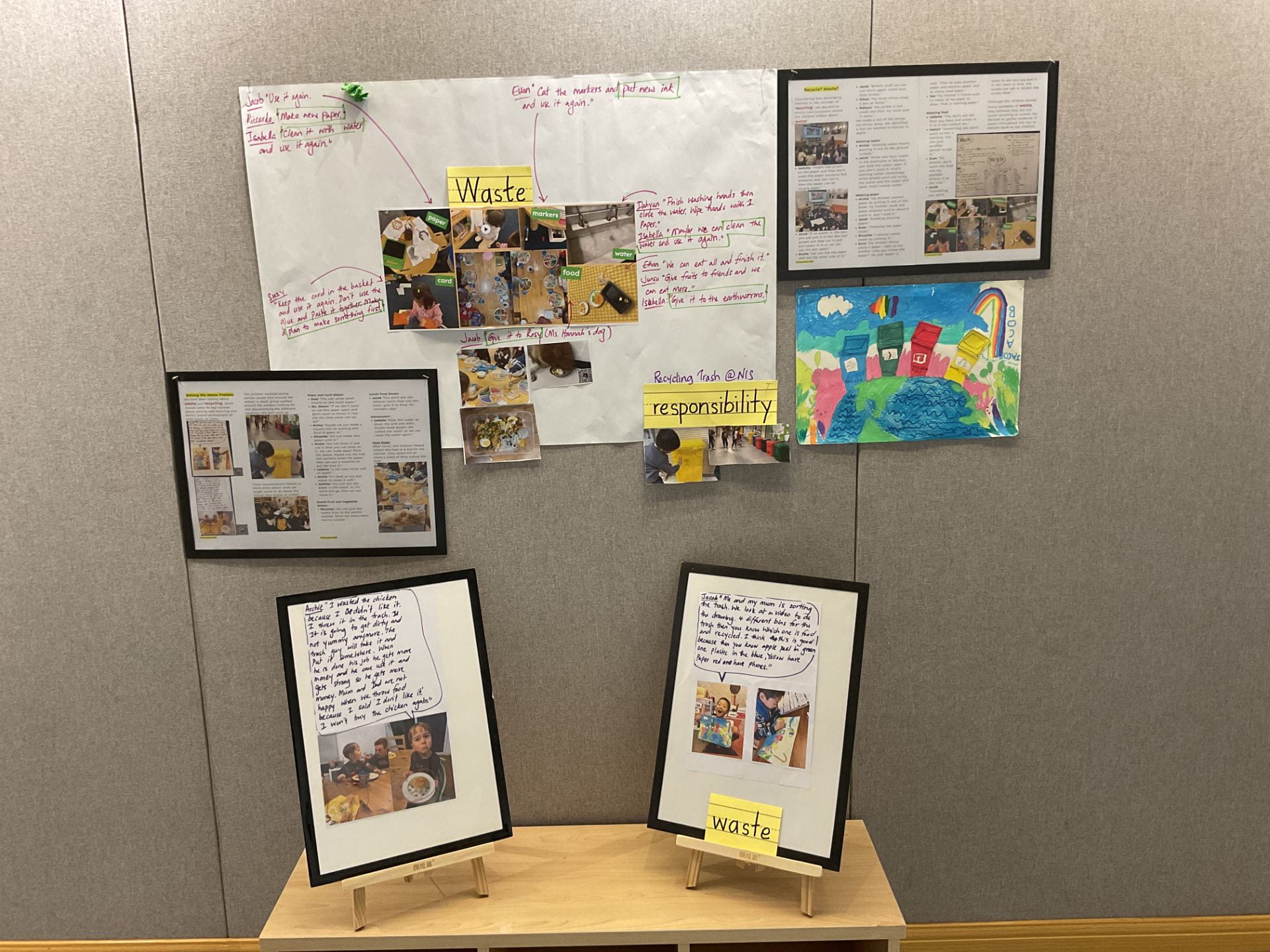
Solving the Waste Problem

We have been talking about waste and recycling.

Jacob shared what he had learned about sorting and recycling and Archie shared photographs of food waste at home.

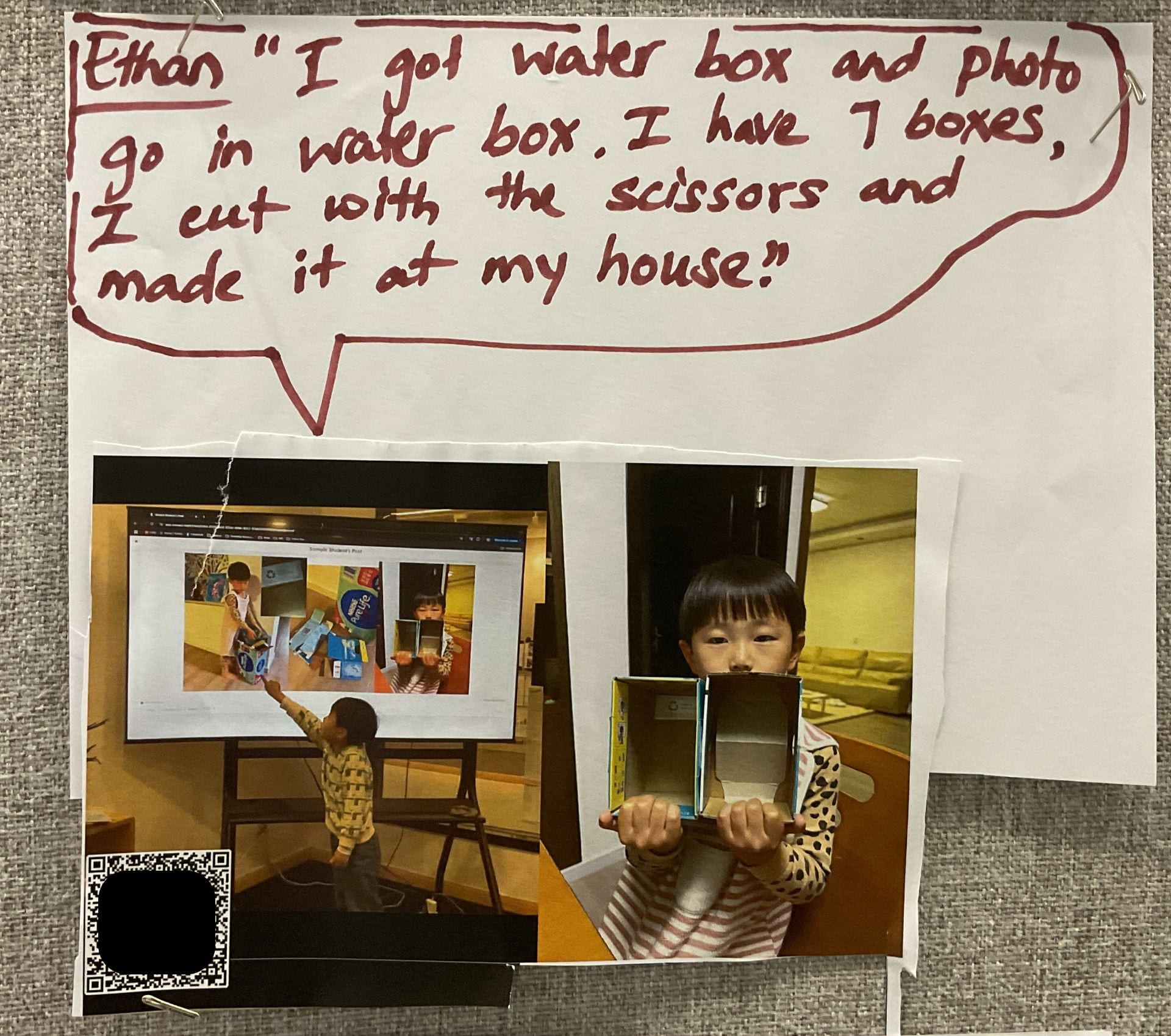
Isabella and Ethan had decided to repurpose the boxes they had at home. Isabella used the boxes to make a home for the cats in her compound to keep them warm during the winter. Ethan used his boxes to store objects.

The children recalled seeing similar waste bins around the school. A small group walked around the campus looking for and documenting the different locations the bins were at.

These conversations helped us think more about what ‘WE’ might want to do about the things we waste at school. 

Paper and Card Waste:

  • Suzy “You can write small letters on the small paper.”
  • Shemo “If we don’t want to use this paper again and don’t want to throw it into the bin, then what can we do?”
  • Archie “Maybe we can make a recycle box for putting this kind of paper in.”
  • Riccardo “We can make new paper with it.”
  • Archie “We can erase it and cut it then you can draw on it. We can make paper from the leaves. People cut the tree and workers make the paper, they can use a machine to put the tree in.”
  • Isabella “Is the tree inside soft or hard?”
  • Archie “It’s hard so you put water to make it soft.”
  • Isabella “You can put the paper in the water so the mark will go, then we can reuse it.”

Snack Fruit and Vegetable Waste:

  • Riccardo “We can give the waste fruit to the worms outside, there are many more worms outside.”
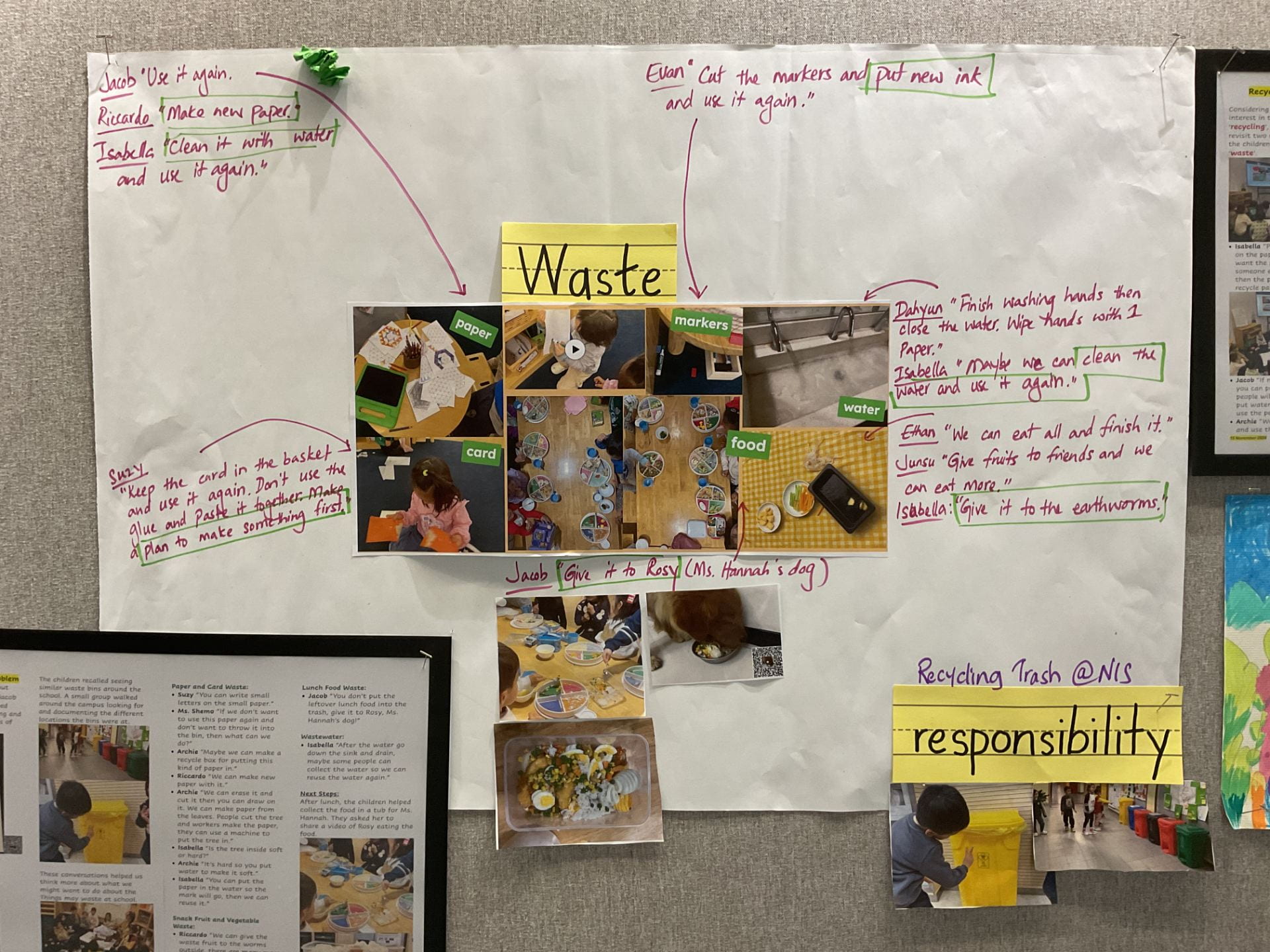
Lunch Food Waste:

  • Jacob “You don’t put the leftover lunch food into the trash, give it to Rosy, Ms. Hannah’s dog!”

(We asked the children to consider other possible solutions to the problem.)

Wastewater:

  • Isabella “After the water go down the sink and drain, maybe some people can collect the water so we can reuse the water again.”

Next Steps:

Our brainstorm highlighted many different ways we can take action to solve some of the issues we found with waste.

  • Riccardo “I have a shop and they can come and buy my toys and I get money.”
  • Archie “When I was in India my mum said I have too many toys and I gave some away.”
  • Euno “I eat all of my rice. When there is too much my mum throw in the bin.”
  • Riccardo “Or you can keep it and then eat it later.”
  • Shemo “What can we do with the fruits and vegetables we remain at school?”

Ms. Shemo “What can we do with the fruits and vegetables we remain at school?

The children decided to take the fruit and vegetable snacks to Ms. Hannah to ask her for some advice.
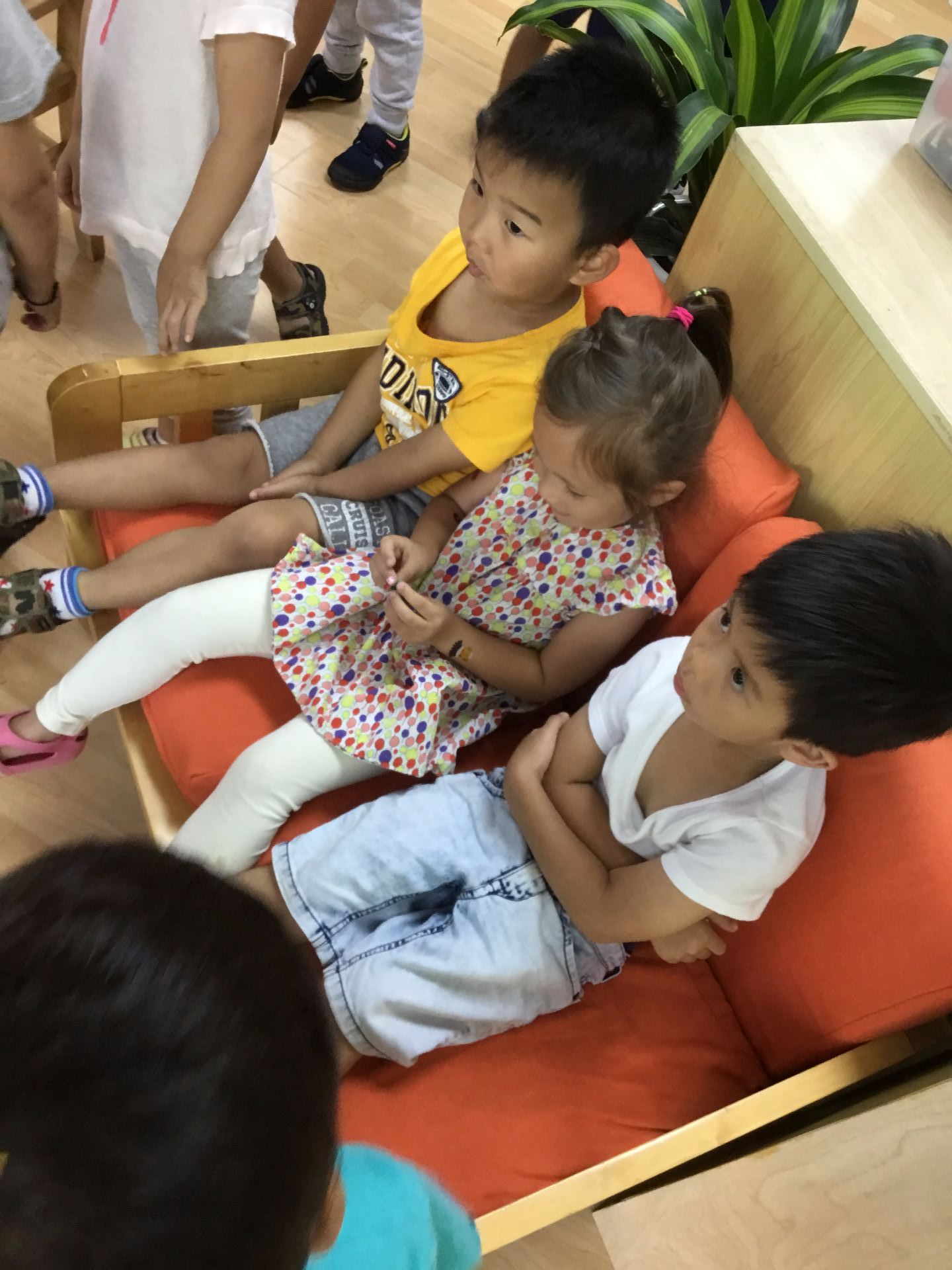
Over the next few days, the children will work in small groups to explore some of their theories about paper and seek more information about wastewater and composting at school.

The Egg Experiment – A Story of Research

A Story of Research

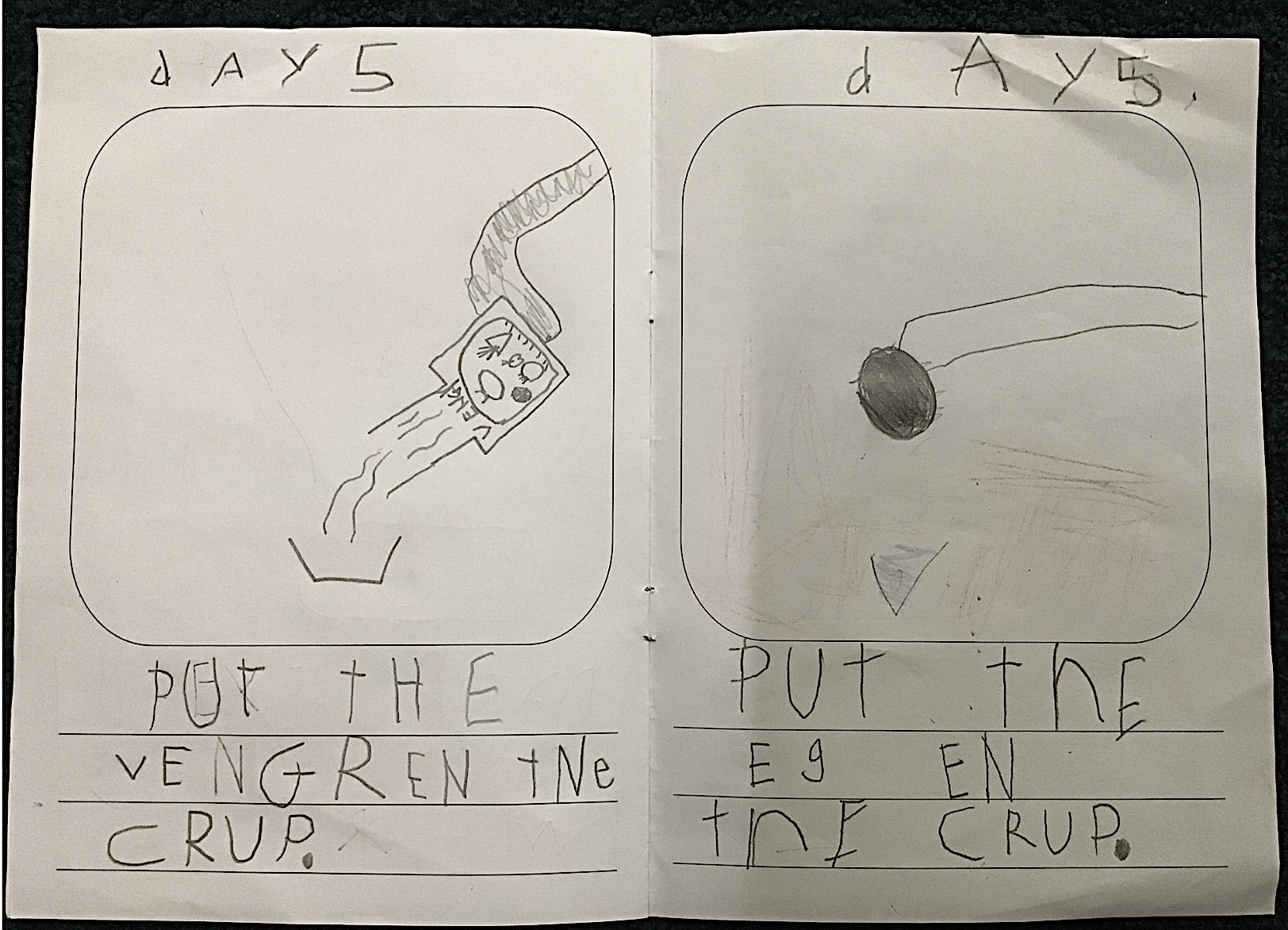
@O had a book full of experiments. He described one to the teacher explaining “The egg becomes soft when it is in the water for 3 days!

  • Teacher “Hmmm, is that so, well can you prove that?”
  • Child “Yes! I can show you!”

He began to make a plan, thinking about how he might share his theories and document the process and findings over time. He drew out his plan, made a list of needed materials, and shared the steps to be taken to complete the task.

At first, the child insisted that the egg needed to be submerged in water. He planned and experimented, even though he subsequently learned that the liquid should be vinegar for the experiment to work.

The teachers encouraged him to complete his first experiment, to observe and document his learning and the outcome of his experiment, to encourage the child to develop the ability to carry out tasks, and to learn through experience.

The child agreed, and documented his observations in his journal, learning new words, and referring to the sight words flash cards to help him spell unknown words.

He labelled his pictures and included details to share the process with others.

He learned how to revisit his journal post on Seesaw, editing and including his daily observations to document his experiment.

The child was excited to begin his second experiment, feeling confident that he knew the outcome.

Through this experience, he practised patience, resilience and learning through ‘trial and error‘.

He questioned to learn more, used observation to gather information and explored patterns and connections. The child used mark-making to share his observations and presented his findings to the community, all important skills, and processes that scientists need in their work. 

Exploring Patterns with @M

One morning during quiet exploration time, @M chose a piece of paper from the recycled basket to make a new creation. He began by (carefully) using a ruler to make straight lines to create a border. Then, he used markers to create pattern towers. This reminded the teachers of the pattern exploration the children had engaged in the day before, where they used Unifix cubes to create colour patterns.

We noticed how @M drew and labelled his ‘pattern unit’ for each new pattern. He had his own rules which were communicated using blocks with numbers and colours. @M tried to think of a unique pattern each time he drew a tower of cubes.

@M sat with his task till he filled his paper with different patterns. When he revisited the patterns and checked them for accuracy, he noticed some errors. He paused to think about the different ways he might correct the mistakes.       

@M first strategy was to cross out the mistake. The next was to add additional cubes to continue the pattern correctly.

As he progressed with his pattern work, he began by creating the pattern unit before making the patterns. His two final patterns were red, orange, yellow, and red, pink and yellow.

Finally, @M drew a column of colours and a second column with question marks. This was to ask others if they could name the colours.

He explained that it did not relate to the patterns that were on the paper.

As we explore patterns in the world around us, we wonder which ones will capture @M‘s interest.

We wonder how he might document patterns in nature…

Our exploration continues…

Block Play with Howie and Eli

A group of children worked on their block structures over a sustained period of time, creating plans, solving problems and making changes to the initial design to suit their story. The adults observed the interactions and documented their play over time. When the children saw the video, they reflected on their play, discussing their initial plans and process.

Howie “This is we building blocks. And Mo Mo is helping us to build. And I put my name on the house and I was playing with my house. And we is building and we use which car to drive on the tracks.”

Eli “The pictures help me of looking     how to build the hospital and the hotel and that is how I know which pieces is which pieces. I like the hospital and the hotel so I will build it the same as the picture. The building blocks and then putting racing car and then driving them around and then building the T Rex into the hospital and the T Rex mommy into the hospital and we build the all of the race cars and the race road and Mo Mo was helping.”

Howie “I was drawing because I want show us I build and someone comes and he sees my picture and then he can’t touch it. It’s the same make as my blocks because it’s hard to build but it has lots of blocks we can build.”

Eli “I have to remember to build the right pieces we have to write hospital and we have to write hotel. Writing help me learn how to write words. But they all look different (blocks). I think which block I need and then I know which blog I used.”

  • How do we make choices about the materials we use to create?
  • What skills do we need to create a story?
  • What skills do we need to work together?
  • How do we record our planning and thinking (making thinking visible)?
  • How can we share our creations and stories with others?

A Research Story: The Paper Airplane

@N has been trying to make a paper airplane using a piece of A4 paper. He approached the teacher and said, “Can you show me how to make a paper airplane?” The teacher noticed several creases on the paper, showing his many attempts at making the paper airplane. After some thought and discussion, @N decided to visit the library to see if there were any books that could give him more information on how to make paper airplanes. He met Ms. Tina in the library and asked if she could help. Ms. Tina showed @N where the books on craft and origami were in the library. Together, they began to look for the books they needed.

The first book on paper crafts and origami did not include directions on how to make a paper airplane. Ms. Tina looked for another book. She looked through the contents section of some books to see if she could find information about paper planes.

@N and Ms. Tina were excited to see that there was a book about paper planes!

@N checked out the book and brought it back to class. He quickly browsed through the pages. He was trying to decide on the type of paper airplane he wanted to make. Others came to see what @N was doing as they were curious about the paper airplane craft book.

@N first tried to follow the instructions to make a plane. He was not sure if he was following the directions correctly. He approached the teacher for help. @N and the teacher worked together to follow the instructions to make a paper plane. When they were both happy with the paper airplane, @N took his airplane outside to test it. A few friends gathered to see what he was doing. They also wanted to make the paper planes.   

@N took the book home to try a few different models. We look forward to his paper plane creation.

  • We wonder which paper airplanes Noah might make.
  • We wonder how far his paper airplanes will travel.

Our story continues…

The Solar System

Euijin sat at the writing table with paper and coloured pencils.

He was immersed in his task while others engaged in conversation around him.

When Euijin finished colouring his picture, he showed the teacher his picture. He began to explain his drawing of the solar system, naming the planets one by one. Next, he took a pencil and labelled the solar system in English.


Euijin’s interest in the solar system led to a visit to the library. Ms. Tina helped us look for books about planets and the solar system. We know that conducting research involves observing carefully, questioning, gathering information and sharing understandings in multiple ways. We wonder if Euijin’s curiosity about the solar system would lead to an inquiry into how the world works, motion and gravity.

Living Things and Ecosystems

  • How might we conduct our own research to develop and share our theories about the world?
  • How might we explore the interconnectedness of living things and the integral role we play in maintaining balance?
  • What action can we take as a result of our learning?

The students have approached and engaged in their research in many different ways. We noticed that some students dived right in, deciding on the living things they were eager to learn more about while a few students observed others engaged in research before deciding on how they might approach their own learning.

The students watched videos, read books and engaged in conversations with other children and adults to learn more about their chosen project (living thing). The students have been taking notes and then making plans on how they might share their learning with others. They used large paper to document their thoughts, questions and possible direction. Their notes included key information, drawings, facts and sketches that directed their next steps. They highlighted key unit vocabulary as they documented big ideas. 

  • A “I didn’t know that some sharks were from eggs and others were like babies” stated one student.

The children chose to share their learning in two different ways:

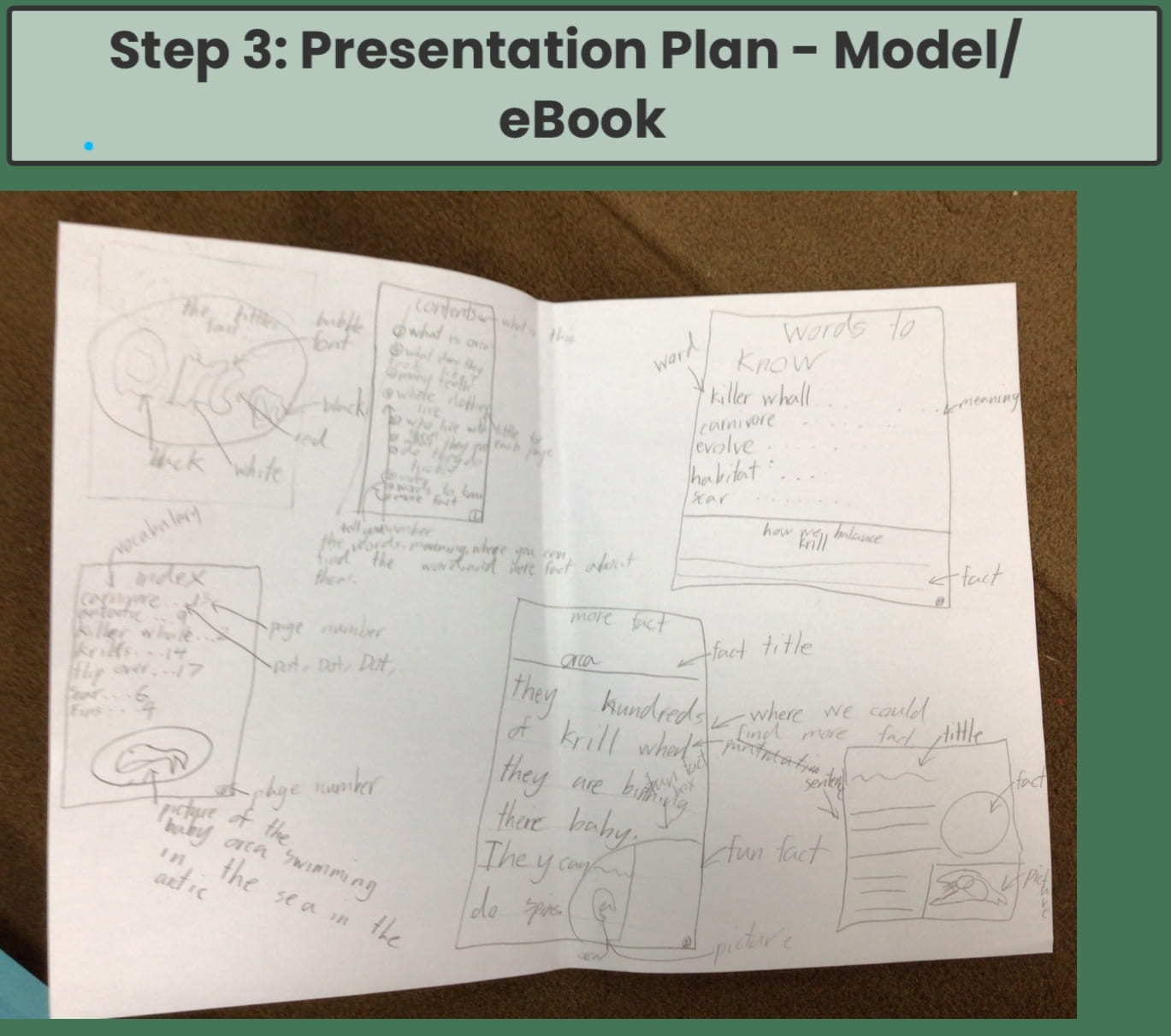
  • using BookCreator to make their own non-fiction book
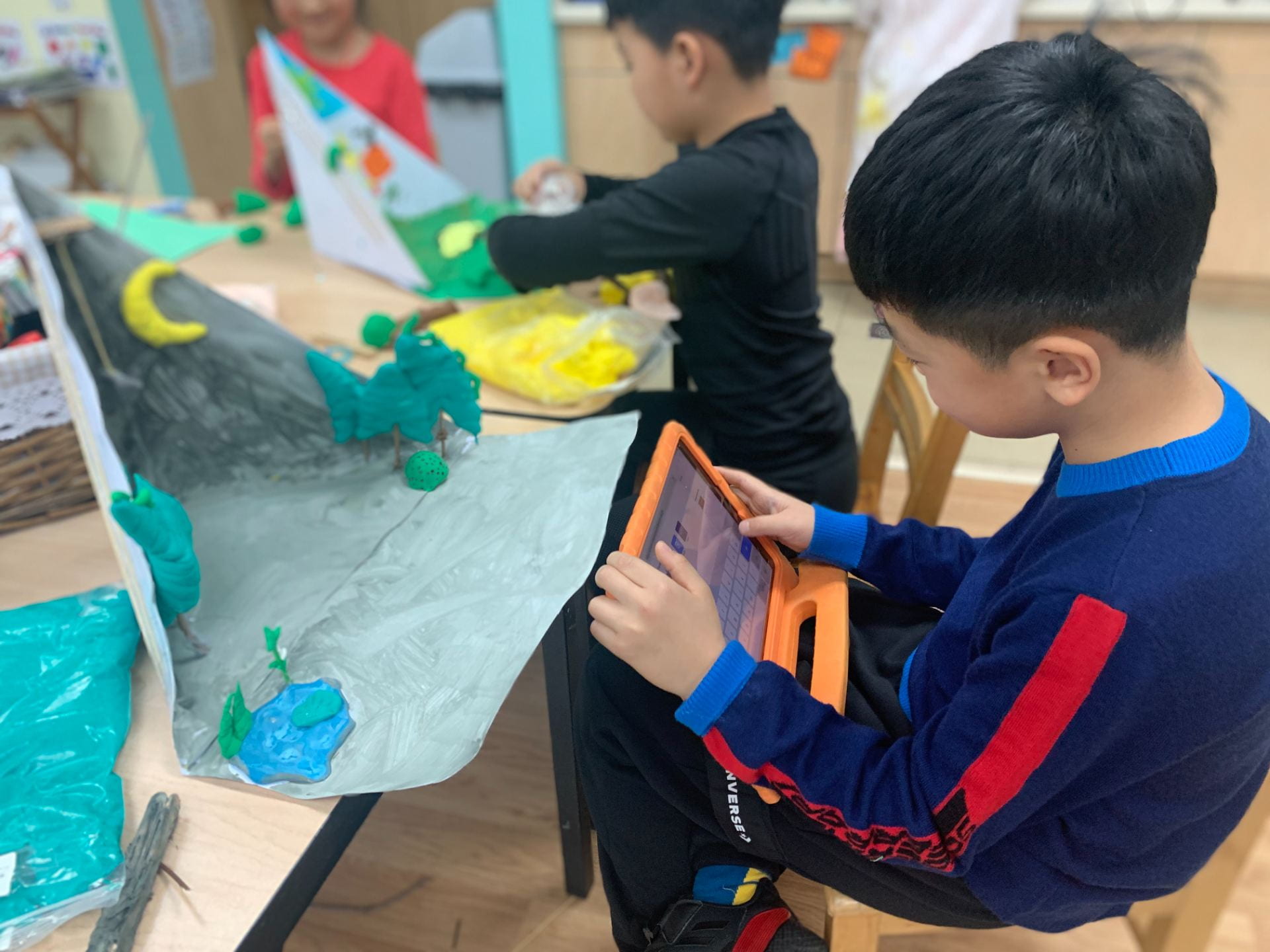
  • creating a 3Dimentional model (triorama) of a habitat and the different living things that exist in an ecosystem

While engaging in their projects, the students reflected on the following:

  • What type of ecosystem would I create?
  • What do the different living things in the ecosystem ‘need’ to survive?
  • How do they live and grow?
  • How can I make sure there is ‘balance’ in my ecosystem?

We noticed that the students thought deeply about the interconnectedness and impact of the different living things in their project. As they planned, designed and created, the adults pushed their thinking further by asking thoughtful, provoking questions, and giving them feedback and suggestions.

  • How would you make sure…?
  • What impact will… have on…?
  • Have you considered what might happen if…?

The students paused to reflect on their own learning journey, thinking about the challenges and big ideas they have uncovered through their own research. 

We noticed how the students engaged with the different materials and tools. They were thoughtful about the choices they made, seeking to find the most suitable materials and making conscious decisions about the way they present their ideas, to make sure that they can tell a story of living things through their project.

  • L “I want to use sticks from the garden to make my trees.”
  • A “I can use real sand to show the seashore. And I can use the shells I picked up from San Ya.”
  • D “I want to hang my bird up so that it looks like it is flying.”

Through their work, the students are learning that research involves:

  • asking or designing relevant questions of interest that can be researched
  • making plans for finding necessary information
  • gathering information from a variety of primary and secondary sources
  • using all senses to find and notice relevant details
  • recording observations by drawing, note taking, charting, writing statements
  • sorting and categorising information
  • noticing relationships and patterns
  • presenting information in a variety of ways

The Museum

The students continue to work on their research projects for their Unit of Inquiry ‘How the World Works‘. Their task is to create a museum to show how technology has changed over time and how it has affected people’s lives.

What is a museum?

We began by visiting a virtual museum by the National Museum of Natural History. The students noticed and commented on the objects, descriptions, information and significance of the objects scattered throughout the museum. We wondered how WE might create a museum to share our learning and discoveries. It was time to make a plan! 

As the students planned and designed their artefact/object, they went back and forth to the information documented in their poster. They conducted interviews, read books and watched videos to learn more about their chosen area of interest.

We noticed how they added and/or re-evaluated the information they have gathered to show their understanding of the concepts change, connection, technology, systems and transformation. Their artefacts/ objects need to show how technology has changed over time.

The following visual rubric was shared with the students to help guide the task.

The students began creating descriptions about their topic, providing information about:

  • how technology has changed
  • how technology has affected our lives
  • the positive and negative impacts of technology

They had an opportunity to share their learning journey with their friends in Grade 2B. The students listened to each other, asked questions and also gave the students feedback. 

Research Posters 

The students have competed their report writing and editing. They are creating an informational poster that would be included in their final museum presentations.

We look forward to their final creations and presentations! 

Inquiry Projects

We gathered to talk about the two images.

We had a discussion on the ways our lives are affected by technology.

Next, we discussed the following concepts.

Then, we began to plan our own research project.

The Steps

The students began to follow the steps in order to develop a Research Plan

We wonder what we will uncover through our inquiry.

Watch this space to learn more… 

I am… Who are you?

We are proud to be part of the Second Grade community. We are excited to be here and ready to learn, share and have fun together. We wonder who ‘WE’ are as individuals. How are we the same? How are we different

We began to collect some data about the people in our class. We began by organising ourselves by height. Who is the tallest in the class? Who is the shortest? This was quite a challenge as the children had to get themselves in line without using spoken language. They quickly began to use gestures to help each other get into place before the timer went off!!!  

What about our names? Maybe we can organise our names in Alphabetical Order! Through trial and error we managed to come to an agreement about the order our names should be in. These discussions help the children justify their thinking and express their ideas with confidence. 

Our next challenge was to create a portrait of ourselves. The children were introduced to the ‘atelier’ in the classroom. This is a space in the classroom that acts as a ‘workshop or studio’. This space is home to many different tools and materials that the children can use to design, create and express their ideas and learning using a variety of mediums.

The children quickly got to work, looking at themselves in mirrors and then creating their self-portraits. 

What makes us unique? 

Then, we gathered to brainstorm ideas for writing about ourselves. The brainstorm would guide our thinking and help us as we generate ideas for writing. 

We used a rubric to talk about the different ways we can make our writing better. Adding more details to our pictures and sentences, being mindful of punctuation and using interesting words can improve our pieces of writing.

Here is a checklist we used to help us remember to check our punctuation, spacing and presentation.

The students wanted to collate their writing and create a book about themselves. When they have completed their books, they will be ready to present them to the class.

We displayed our ‘All About Me’ books because we want everyone to know who WE ARE!

We wonder who YOU are. What makes YOU unique? 

The Board Game

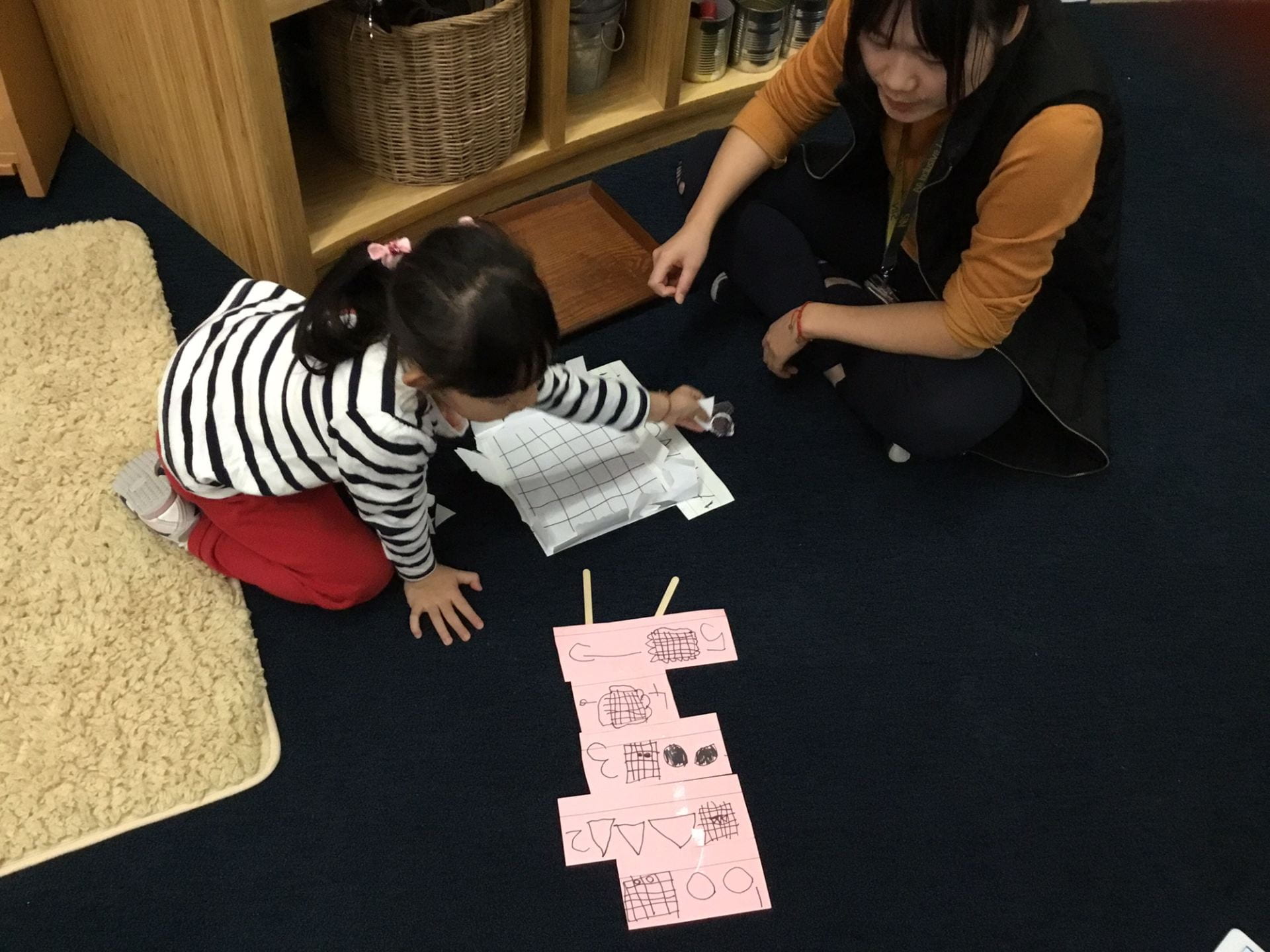
@S created a game using stones from the ‘loose parts’ collection.

Next, she decided to make a chess board game. @S began by making a big square, including lines for playing the game.

She made triangles and circles that represent the two teams.

Then, she made poster to inform others about the ‘rules of the game’ and instructions on how to play the game.

@S “The paper around the game is because we don’t want the pieces to go outside.”

Before sharing the game, @S said “We have to test before we really played.” So she played the game with Ms. Tina and created a video to show her friends how to play the game.

The Instructions:

Step 1: Put the two circles here.

Step 2: Put the triangles here.

Step 3: Put the two black circles here.

Step 4: The people don’t want to go outside so we need this paper here.

Step 5: If he goes outside he cannot go inside.

@S played the game with Ms. Jiao.

Through her creative design, @S:

  • used discussion and play to generate new ideas and investigations.
  • interpreted visual, audio and oral communication: recognizing and creating signs, interpreting and using symbols and sounds.
  • expressed herself using words and sentences.
  • understood that mark-making carries meaning.
  • used mark-marking to convey meaning.
  • chose and completed the task independently.
  • demonstrated persistence in her task.

The Brick House

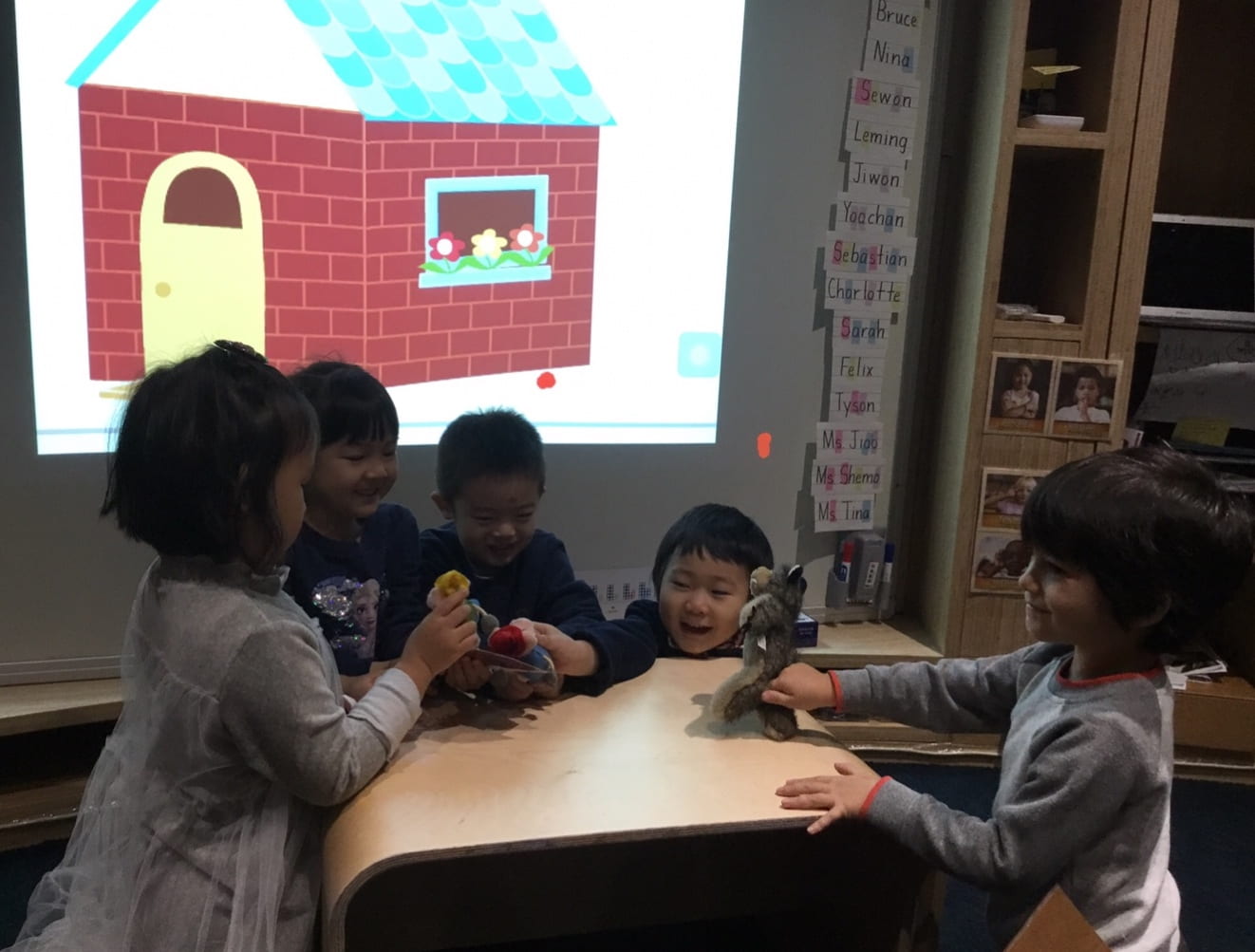
We have been listening to the story The Three Little Pigs.

Leming approached the table that had bricks and wooden strips.

He began to create with the material. Leming noticed that each time he placed a piece of green wood across the two ends, it would fall inwards.

He decided to use bricks as a base, to hold up the falling wooden beams. He was able to solve this problem through experimentation. He explained that he was creating a house for a pig.

He gently placed the wooden beams, careful with his movements.

The last piece.

We wonder what Leming is thinking as he creates. What is his plan?

Leming explains that he has made the brick house, pointing to the props and the story we read. The pig is in the brick house and the green section is the fireplace.

We noticed how Leming has been thinking about the different houses as he built his own. He understood that the brick house had different spaces that were part of the story.

Leming is sharing his creativity through the use of props and stories.

Learning Outcomes:

  • use imagination and original ideas to create
  • explore and retell familiar stories dramatically
  • select tools, materials and processes for specific purposes

How do we capture a moment?

Felix was excited as he came into school. He said that he found ‘ice’ on the grass. He said he had it in his hand and was sad that he could not bring it to class. He was invited to see if there was any more ice on the grass in the EY playground. His eyes lit up. He quickly put on her coat and ran outdoors. He came back with a piece of grass in his hand.

He looked sad.

He stated that there was ice on it ‘just now’. When asked what he thought might have happened, he explained that it has melted because the “inside is too hot”.

What if we did not have to bring it inside?

We thought about this for a moment.

What if we found a way to capture a moment? A picture?

Felix quickly chose an iPad and went back outside to document his observations. He came back with a beautiful picture of frost on the grass. He was simply beaming with pleasure that he was able to share what he experienced in the morning.

Felix “I got it! Ice.”

Conducting Research – Mini Story

Felix had a magnet in his hand. The magnets were frequently used on the whiteboard in the campfire. He held it close to the container where the markers were stored and was excited that the magnet was drawn to the container. He stated that the magnet was ‘getting stuck’ on the bucket.

Teacher “What other things might the magnet get stuck onto? Maybe you can take some pictures while you collect the information?

Felix took on this task with excitement. He held onto the iPad and magnet and walked around the campfire testing his theories and collecting evidence of his research.

We wonder where this inquiry might take us…

Approaches to Learning (ATL’s)


  • observe carefully
  • test generalizations, strategies or ideas
  • use discussion and play to generate new ideas and investigations
  • seek information
  • ask or express through play questions that can be researched
  • gather information
  • document information and observations
  • demonstrate persistence in tasks

Lines

The children have been using many different types of lines in their drawings, messages and paintings. Some of the lines develop into different pictures of objects, and others become letters and numbers.

Lines in maps…

Lines in messages…

Lines in letters…

We read the story ‘The Line’ by Paula Bossio. Upon seeing the cover page, Felix shouted “Ms. Tina!” He was referring to the litter ‘T’ in the title of the story.

The children began to call out and identify the different letters in the title, ‘THE LINE’ that were also in their names.

H is in Charlotte

E is in Michelle and Charlotte

L is in Leming

I is in Michelle

They circled the different letters they recognised.

Next, we read the story and made a note of all the different lines that were in the book. In this simple wordless picture book, a little girl finds a long black line. She wiggles the line, slides and spins inside circles that the line has created.

Later in the story, the line transforms into bubbles, a jungle vine to swing from, a tightrope to balance on and a big, hungry monster! We notice how the author and illustrator expressed the different emotions of the little girl in the story.

We observed the lines Felix and Yoochan have created using the ramps. They have made a road that goes to the beach.

We can draw many pictures using different lines. Here are a few different types of lines.

The children created pop-stick puppets using different lines.

@F uses lightening lines and other shapes to create pop-stick puppets. He then decides to create a puppet show using the different pop-stick characters and objects.

Approaches to Learning (ATL’s)

Communication Skills

Speaking

  • Express oneself using words and sentences.

Interpreting

  • Interpret visual, audio and oral communication: recognizing and creating signs, interpreting and using symbols and sounds.
  • Understand the ways in which images and language interact to convey ideas.

Reading, writing and mathematics

  • Understand symbols.
  • Understand that mark-making carries meaning.
  • Use mark-marking to convey meaning.
  • Document information and observations in a variety of ways.

The Step Ladder

Our new campfire has tall curved shelves. They are great for storing our resources and creations. However, we realised that we cannot always reach the top of the shelves. Even the teachers were not tall enough!  

We decided to order a step ladder from IKEA. It came in a box. It was in pieces! We had to fix it ourselves.

A few of the children took up the challenge. @S stated that she knows how to do it as her grandpa and grandma always fix the furniture in the house. She knows how it’s done.

@S wanted to be in charge of the screws. @F wanted to read the pictures in the instruction manual. It was decided that he would be the person telling the team where the screws fit, and which wooden pieces were needed.

The children wanted to know the name of the tools we were using. We invited @MrZachG the Design teacher, to come over to the Early Yeas space to help us. He told us the tool was a type of wrench!

The children talked about the pictures they saw in the booklet. They noticed the sequence of steps and the need to follow them.  

@F noticed that there are different kinds of screws. He looked closely at the different pieces of wood to see where the screws needed to be inserted. This was a challenge. There were so many different pieces!

He wondered in which direction the screws needed to be turned. After many attempts, @F said…

“Because it’s harder and harder, so I know I’m right.”

Others joined in to see how they can help. The project allowed for opportunities to learn through trial and error.

Conversations revolved around size, measurement, purpose and safety. We wonder what other tools people use to create different objects…

Through this project we had opportunities to …

  • Observe carefully.
  • Seek information.
  • Ask or express through play questions that can be researched.
  • Analyse and interpret information.
  • Listen actively and respectfully to others’ ideas and listen to information.
  • Express oneself using words and sentences.
  • Negotiate ideas and knowledge with peers and teachers.
  • Understand symbols.
  • Understand that mark-making carries meaning.
  • Be respectful to others.
  • Play cooperatively in a group: sharing, taking turns, helping.
  • Choose and complete tasks independently.
  • Follow the directions of others.
  • Share responsibility for decision-making.
  • Demonstrate persistence in tasks.
  • Use strategies to problem-solve.

Approaches to Learning (ATL’s)

First Aid Kit Inquiry – Sharing our Research

How can the medicine help people feel better?

Ethan, Alejandra and Jasmine shared their inquiry about the ‘nurse’ and the ‘first aid kit’ with PreK/K1B.

They shared what they have seen in the nurse’s room. PreK/K1B students were interested in the items in the ‘nurse’s bag’.

They took turns to explain to their friends in PreK/K1B, the different products and items that were included in the first aid kit. Later, Luke posed a question “How can the medicine help people feel better?” 

Jasmine, Alejandra and Ethan were not sure about the answer. They decided to bring the question back to the classroom (PreK/K1C) and have a discussion with their friends.

  • Ethan “生病吃药会好。”[If you are sick, you take the medicine then you will feel better.]
  • Ruby “Sometimes it doesn’t. Sometimes the medicine is not right. There are different kinds of medicine that green one, yellow one……”
  • Seungbin “K1B hurt in Golden Eagle (referring to why do we need medicine).”

Alejandra, Jasmine and Ruby wanted to draw their ideas down and share their findings with Luke.

Here are their ideas:

  • Ruby “The ice pack – when you put on your hair or head or anywhere, then you will be better because you will not feel the hot. The Bubble Gum medicine – it can make you very good that you will never be sick. The cotton stick – it can help dry out the blood. The bandage – when they cover the blood, the blood will dry out then you can play in the Golden Eagle.”

  • Alejandra “This is the bag for somebody hurt and he can put over there and feel better. Medicine all ice pack is for help us if we bump into each other and we are hurt. And it will help us feel better.”

  • Jasmine “So under the nurse chair, nurse get us a lot of things. Nurse gave us a broken thing. You break the blue thing and then down have water. And somebody hurt in Golden Eagle, we can help feel better. Here is the people sit down. Because we have to listen to him, Alejandra and me. Here for people feel better. The nurse people she share me she little bit hurt and Alejandra take there and then Alejandra feel better, then me feel better.”

We were excited to share our answers with Luke ……

Approaches to Learning (ATL’s)

Thinking Skills

Generating novel ideas

  • Use discussion and play to generate new ideas and investigations.

Research Skills

Data gathering and documenting (audio recording, drawing, photographing)

  • Use all senses to observe and notice details.

Communication Skills

Listening

  • Listen to information.
  • Listen actively and respectfully to others’ ideas.
  • Ask for clarifications.

Speaking

  • Express oneself using words and sentences.
  • Participate in conversations.
  • Negotiate ideas and knowledge with peers and teachers.

Snails

A student found a snail on his balcony. He wanted to share his find with the class. We placed the snail under a camera, we watched the snail as it moved around the cabbage leaf.

 We wondered what snails eat and how they live…The students began to share their theories.  

  • Jooeon “Apple, cabbage, pears”
  • Jiwoo “Eyes.”

The students explained that they like to eat different types of fruits and vegetables.

We wondered what the snail had on his back…

  • Jooeon “It is his house.”
  • Ruby “It’s the shells.”
  • Nicolas “Because he is animal. Animals don’t live in the house.” [Referring to the type of houses people live in]
  • Jooeon “Snail house.”

https://twitter.com/NISPreKK1/status/1123565365424869376

We wondered how snails move…

  • Freida “When he moves, he gets slime, like chuchu……He moves slowly, slime comes out.”
  • Ethan “He is Chinese is ‘wo niu’”.
  • Jiwoo “Slowly go. This one he like this. Because here go here.” [Expressing how the body of the snail comes out as it moves]
  • Nicolas “Snails also like to eat dead worms. No, I mean salad.”
  • Ruby “Do you know like snails eat spiders and flies. Maybe they are having the web. Me and mummy, we made the web and a picture.”

Approaches to Learning (ATL’s)

Thinking Skills

Analysing

  • Observe carefully.
  • Find unique characteristics.

Generating novel ideas

  • Use discussion and play to generate new ideas and investigations.

Research Skills

Data gathering and documenting (audio recording, drawing, photographing)

  • Use all senses to observe and notice details.

Communication Skills

Listening

  • Listen to information.
  • Listen actively and respectfully to others’ ideas.
  • Ask for clarifications.

Speaking

  • Express oneself using words and sentences.
  • Participate in conversations.
  • Negotiate ideas and knowledge with peers and teachers.

Spiderwebs

Over the weekend a student noticed a spider creating its web. He often stopped and rested as he created his home. She shared her theories with the class and then invited the students to share their comments and questions.

https://twitter.com/NISPreKK1/status/1123599396644409344

  • Nicolas “I was in my school. I saw spiderweb that big. It was a real one. It was fat.”
  • Alejandra “This spider eat like some mosquitos.”
  • Ethan “Spider Chinese is ‘Zhizhu’.”
  • Jiwoo “People eat spiders.”
  • Ruby “When you cook it, it turns lobster.”
  • Freida “I saw some spiders, she was climbing everyday.”
  • Si Hyun “You are drawing a picture.”

The student drew a picture of her observations. She shared her picture with the class. The students looked closely at her spiderweb.

https://twitter.com/NISPreKK1/status/1123563217437937665

  • Student “I was drawing the spider. This is one that with the markers.” 

We wonder where our questions might lead us…

Approaches to Learning (ATL’s)

Thinking Skills

Analysing

  • Observe carefully.
  • Find unique characteristics.

Generating novel ideas

  • Use discussion and play to generate new ideas and investigations.

Research Skills

Data gathering and documenting (audio recording, drawing, photographing)

  • Use all senses to observe and notice details.
  • Record observations—drawing —using emergent writing skills, when possible, to write comments, annotate images, and so on.  

Communication Skills

Listening

  • Listen to information.
  • Listen actively and respectfully to others’ ideas.
  • Ask for clarifications.

Speaking

  • Express oneself using words and sentences.
  • Participate in conversations.
  • Negotiate ideas and knowledge with peers and teachers.

Reading, writing

  • Understand that mark-making carries meaning.
  • Use mark-marking to convey meaning.
  • Document information and observations in a variety of ways.
  • Communicate using a range of technologies and materials.

A New Baby

Michelle has a new baby brother. She took some pictures of her brother to share with us. We had a very interesting discussion about what we know about babies, what a baby needs and what can we do to help a baby.

What do you KNOW about babies?

  • Felix “Sleeping on the bed.”
  • Seungbin “Baby.”
  • Si Hyun “Me house baby, so small.”
  • Freida “The baby is sleeping in the big bed.”
  • Nicolas “This picture looks funny. Because he is sleeping and eyes closed in the bed.”
  • Charlotte “Baby sleeping is very funny.”
  • Amber “我看到Michelle和弟弟。” [I see Michelle and her brother.]
  • Lawrence “我觉得baby哭了是因为他不想喝奶,刚生下来不习惯喝奶,我小时候也是这样的。” [I think the baby cries because he doesn’t want to drink the milk. When the baby is just born, he is not used to drink milk. I was like that when I was a baby.]
  • Freida “The baby is crying.”
  • Ethan “Michelle坐在沙发上,抱着宝宝。” [Michelle is sitting on the sofa and cuddling the baby.]
  • Jiwoo “Baby, here, eating milk.”
  • Alejandra “Michelle 在帮弟弟喂奶。” [Michelle is helping feed her brother the milk.]
  • Michelle “在医院的时候我帮助喂奶。” [When I was in hospital, I help feed the baby the milk.]

What do babies NEED?

  • Jooeon “Eat and rice.”
  • Lawrence “He need milk.”
  • Felix “My brother likes chocolate, he (referring to Michelle’s baby) doesn’t.
  • Jasmine “He needs eat the rice.”
  • Alejandra “他没有牙齿,所以他不能吃饭,只能喝奶。然后像我们一样长很多牙齿,然后可以上学。” [He doesn’t have teeth, only drinks milk. He will have many teeth just like us, then he can go to school.]
  • Ruby “Only milk because he hasn’t had teeth to eat food.”
  • Michelle “Baby 没有牙齿,他就可以喝奶,不可以吃饭。” [Baby doesn’t have teeth, he can only drink milk, he can’t eat rice.]

What can we do to HELP the baby?

  • Jasmine “我帮助George换衣服,我和弟弟玩车车,我还帮弟弟洗浴缸,我还帮弟弟推推车,我还帮弟弟抱着玩。Me and George play card.我们还玩芭比娃娃。Me and George, we play Jiwoo. Jiwoo with the car, Jiwoo together, he plays my home with me.” [I help George change clothes, I play cars with him. I help him by cleaning the crib. I help him push the pram, I cuddle him. Me and George play cards. We play with the dolls.]
  • Felix “I like broccoli from mummy, Simon like broccoli from Ayi. I play cars, building with Simon. When Simon don’t know where the folder, I show him.”
  • Alejandra “我们可以帮助换尿布,到台湾的时候,我就有两个妹妹,然后我就要帮她换尿布,喂奶,换衣服。” [We can help to change the diapers. When I go to Taiwan, I will have two sisters, then I will help them change the diapers, feed the milk and change the clothes.]
  • Jiwoo “Baby sleeping the house. Baby sad, mummy coming in.”
  • Charlotte “可以喂奶,就像我们一样长得很高。也可以帮助他做一个玩具,然后Michelle的弟弟可以长得高高的,像爸爸一样。等我们长大,我们就会变成妈妈。” [We can help feed the milk, and he will grow as tall as us. We can make a toy for him. Michelle’s brother will be as tall as daddy. When we grow up, we will be mothers.]
  • Lawrence “我们可以帮助baby换衣服,还有也可以给baby喂奶。” [We can help baby change clothes and feed the baby milk.]
  • Nicolas “I have a baby and actually in Germany. When he wants to eat, I show him how to be responsible. I help him to be responsible.”
  • Michelle “如果他哭了,我可以给他唱歌,他就好了。” [If he cries, I can sing a song for him and he will be fine.]
  • Si Hyun “My baby like milk. Me and baby play car. And me house so many cars. Baby milk finish, sleeping. Me go to zoo and baby sleeping and me do it, push the car.”
  • Sarah “我和妹妹在围栏里玩得很开心。有一天妹妹不小心掉下来,我帮助告诉爷爷。阿姨一个人搞不动那么多东西,是我阿姨喂妹妹,因为我抱不动,她一岁了。” [My sister and me paly nicely inside the fence. One day my sister fell down by accident, I help by telling my grandpa. Ayi is too busy to handle so many things by herself. Ayi feeds my sister because she is 1 year old and I can’t hold her.]
  • Michelle “我长大的时候帮他换尿不湿。” [When I grow up, I will help him change his diapers.]

Student Learning Outcomes (SLO’s):

  • their roles and responsibilities within the family and class
  • who their caretakers are and turn to them when needed
  • that everybody has a family
  • that not all families are the same
  • that a sequence events from their routines, life and personal histories can be put in chronological order
  • the importance of people in their lives
  • the ability to take care of things – animate and inanimate
  • their thought for others
  • a sense of wonder and curiosity 

Approaches to Learning (ATL’s):

Communication Skills

Listening

  • Listen to information.
  • Listen actively and respectfully to others’ ideas.

Speaking

  • Express oneself using words and sentences.
  • Participate in conversations.

Social Skills

Interpersonal relationships

  • Practise empathy and care for others.
  • Listen closely to others.
  • Help others.

What do you know about fish?

An Inquiry Into Fish by Charlotte

Charlotte has a big interest in fish. During play time, she shared many things about fish with Ms. Tina. Later she drew a picture about the different kinds of fish and talked about their characteristics. Here is Charlotte’s initial drawing and thinking about fish.

“这里有很多鲸鲨宝宝,长大了很大,小时候很小,而且很多鱼有自己的蛋。” [Here are some whale babies, when they grow up, they will be very big, when they are young, they are small. And many fish have their own eggs.]

Related Concepts: Growth, Change

“这是鲸鲨刚出生的时候,它出现裂痕,金鲨蛋慢慢长大。它们吃虾,它们很小。裂痕越来越多的时候,它就会破壳。” [This is when the whale was first born, it began to have cracks. They eat shrimp. They are very small. When the shell cracks more and more, the shell will break.]

Related Concepts: Growth, Change

“海鳝。我觉得有点儿可怕,它有小颗的尖牙齿,这是开心的。它很快速度长大,长大了就变得长长的。” [Muraenidae or Moray eel.I think it’s a little bit scary, it has small and sharp teeth. This is a happy eel. It grows very fast, when it grows, it becomes very long.]

Related Concepts: Growth, Development, Form, Change

After drawing some fish, Charlotte went to the library to show Ms. Romero her picture and asked if she can borrow some books about fish.

Ms. Romero showed her some interesting books about fish in the sea and also books about sharks.

Charlotte was so interested in building her knowledge about fish in the sea, and she was keen to add to her inquiry about fish. When she came back to the classroom, she decided to keep adding details on her ‘Fish Board’. Here are some more ideas.

“海里还有白鲸,白鲸的蛋。” [In the sea, there are white whales. This is the egg of the white whale.]

Related Concepts: Living Organisms

“旗鱼最快,它有尖尖的鼻子,可以捕捉猎物,它的猎物是小鱼。它是蓝色和白色的,它需要20年才能孵化。等每个蛋都孵化了,它就会长大。” [Swordfish are the fastest. It has a sharp nose, it can catch prey. It eats small fish. It’s blue and white. It needs 20 years to hatch. When they all finish hatching, they will grow up.]

Related Concepts: Growth, Behaviour, Change, Form

“它还没有出生,它出现了裂痕。小鱼。这些是鱼子,它是可以吃的。” [It isn’t born yet, it has cracks. Small fish. These are rows, we can eat them.]

“海里还有珊瑚虫,圈圈是它的窝,它经常在里面吃东西。” [In the sea, there are also coral reef fish, the circle is their home. They eat there often.]

“咸水,才能在海水里,因为它们喜欢咸水。” [Salty water. Only in salty water. Because they like the salty water.]

Related Concepts: Environment, Habitat, Ecosystem, Growth, Change

“水母的头很软,半圆形,它刚出生的时候还没有孵化,它的触角有毒,不能碰。” [The head of the jellyfish is very soft. It’s a half circle. When it was born, it wasn’t hatched. The tentacles are toxic, you can’t touch them.]

Related Concepts: Structure, Form, Growth

A few students were inspired by Charlotte’s inquiry and they joined in to inquire with Charlotte. They had some great conversations about how different fish protect themselves. Later, they too created their own ‘Fish Game’ by using the small toy fish. They had a lot of fun.

Here is a fragment of their discussion.

  • Charlotte “这是大鱼。”[This is big fish.]
  • Ethan “鳗鱼是很小的,有时候有刺,可以发射自己的刺。”[Eel is very small, sometimes it’s stabbing. It can launch the thorn.]
  • Charlotte “有刺攻击别人,保护自己。” [It can protect itself if it has a thorn.]
  • Ethan “鱼在打架,同类的鱼会打架,不同类的鱼不会打架。”[Fish fight, the same type of fish fight, the different type of fish don’t.]

Related Concepts: Connection, Relationship, Function, Form, Survival

The next day, other two students went through Charlotte’s inquiry board and asked if they could add more information.

The students talked, played and worked together as they built on their existing theories. They continued to add more of their thinking on the inquiry poster.

The learning continues…

Approaches to Learning (ATL’s)

Thinking Skills

-Acquisition of Knowledge

use inquiry to acquire information

-Comprehension
make drawing that reflect understandings

Social Skills

-Cooperating

co-operate and share in mixed groups

Communication Skills

communicate in different ways

Research Skills

collect data from the internet to the inquiry

Creating a Flower Arrangement

A group of students expressed an interest in creating flower arrangements. It was a way in which they expressed themselves.

A small group of students gathered around a table, there was a large box on the top of the table. The students were curious about what was inside the box.

Ms. Hannah opened a box carefully. There were some flowers inside.

  • Ruby “That’s very cool, I like this flower. Because expressing ourselves for flowers. In Australia, I have some sour stems of the flower. They are yummy.”
  • Sophia “I like to eat flowers.”
  • Lawrence “I like to eat flowers too.”

Ms. Hannah posed a question “Why are the flowers wrapped in a plastic bag?”

  • Ruby “Nobody can open it.”
  • Lawrence “因为拔出来有刺,会把教室弄脏。” [Because if you pull it out, it has thorns that will dirty the classroom.]
  • Zhisong “因为刺刺的。”[Because it’s spinous.]
  • Sophia “我同意。”[I agree.]

The students took turns to touch and smell the plastic bag that covered the flowers.

  • Lawrence “软的,湿的,青苔的味道。”[It’s soft, wet and has the smell of moss.]
  • Ruby “It smells like stems.”

Ms. Hannah carefully took the flowers out of the bag and placed them in a vase. She asked the students if the arrangement was nice or not, and why.

  • Lawrence “No.”
  • Zhisong “剪下来,因为太短会歪。”[Cut it off, otherwise it’s too short.]
  • Lawrence “这样不好看,因为歪了。”[It doesn’t look nice because it’s slanting.]
  • Ruby “I like it.”

The students explained that the stems were too long. Therefore, the flowers did not stand upright.

Ms. Hannah explained to the students how to cut off the stems and leaves nicely. She showed them two different ways of cutting the stems. The first was a vertical cut and the second a diagonal.

“What’s the difference? Why do we cut it like this?”

  • Sophia “一个尖的,一个不尖的,这个劈掉了。”[One is pointy, one is pointless. This one has been split off.]
  • Lawrence “为什么要斜着剪?” [Why do you cut like that?]

After a short discussion on why the stems were cut in a particular way, the students took turns to cut the stems and leaves.

One student cut off all the leaves of a flower. Ms. Hannah noticed this and picked the one without any leaves and another one with many leaves. She asked,

“What’s the difference?”

  • Ruby “Maybe it’s already broken.”
  • Lawrence “还有土壤,种子。”[And soil, seed.]
  • Sophia “叶子会死掉。”[The leaves will die.]
  • Ruby “I think if you put into water, it can still grow.”
  • Lawrence “叶子放水里会死掉,因为叶子在水面上有浮力。没有空气。空气就是风,一下小,一下大。”[The leaves will die if you put them into the water. No air. Air needs wind, sometimes it’s big sometimes it’s small.]

The students compared two flowers, the first had withered, and the second was a fresh new flower.

  • Ruby “This one is black, this one is not. They feel sick.”

“Why do you like to arrange flowers?”

  • Lawrence “我喜欢插花,剪花,还可以用来做手工。因为我本来不喜欢的,但是我看到我的姐姐剪花,插花,我就会越来越熟悉。我插花的时候想着姐姐会和我一起,我的心情是很开心的。”[I like arranging and cutting flowers, also you can do handcraft. I don’t like to do this in the beginning until I saw my sister was cutting and arranging flowers. I got more and more familiar with that. When I’m arranging the flowers, I feel like my sister is being with me, I feel so happy.]
  • Ruby “I like to play normal flower and also smell it because I like to eat flower. I like the sour. I like to cook it. We break the flower and put it in the pan then make sour juice. It’s super yummy. It’s like Batman drink! The flower is white and got the green stem. It has to be big and the small one. The small one is not ready. The big one is sour, and I like sweet and sour.”

Approaches to Learning (ATL’s)

Thinking Skills

Analysing

  • Observe carefully. 

Communication Skills

Listening

  • Listen to information.
  • Listen actively and respectfully to others’ ideas.

Speaking

  • Express oneself using words and sentences.
  • Participate in conversations.

The Scientist

What is the Learner doing?

Learners:

  • are actively engaged in various stages of learning, including: thinking about, planning, modifying and creating
  • are actively involved in discussion, questioning and by being self-directed in their creating (as opposed to passive receiving)
  • apply their understanding of concepts through the construction of their projects/play
  • make connections to the real world by taking past experiences into their play worlds
  • face challenges and are given the freedom to independently overcome these or fail through trial and error or experimentation
  • are risk-takers
  • express their theories of the world and these are honoured in the environment

https://twitter.com/NISPreKK1/status/1083215496428699648

Space

Lawrence was busy creating stories at the ‘Writing Table’. He explained, “This is the sun, up in the sky.” He pointed upwards.

Lawrence explained that he had seen the sun and the sky at the planetarium. he said the sun was ‘so big’.

We wonder what more we can learn about space…

The next day he went to the school library to see what resources he can find to help him with his research. 

The teacher shared a picture on the screen. It looked a lot like the picture from Lawrence’s drawing.

https://www.wallpaperup.com/311535/Sun_stars_planets_Earth_space.html

The students gathered to discuss their theories. 

  • Alejandra “It is the fire!”
  • Lawrence “That is not fire.”
  • Nicolas “That’s the sun.”
  • Nicolas “We live in the air. The Earth circle on the floor is flat. It’s wiggly when we walk to the side. How can that happen?”
  • Charlotte [Pointing to earth] “We live there, the place we live now.” [in Mandarin]
  • Jasmine “Everybody lives in the Earth. We are standing on the earth.” [in Mandarin]
  • Alejandra “That is the moon. The small one. Aliens live on the moon.”

https://twitter.com/NISPreKK1/status/1064422566444453889

https://twitter.com/NISPreKK1/status/1064461728535109632

Approaches to Learning (ATL’s)

Thinking Skills

Considering new perspectives

• Seek information.

Communication Skills

Speaking

• Express oneself using words and sentences.

Reading, writing and mathematics

• Understand that mark-making carries meaning.

• Use mark-marking to convey meaning.

• Document information and observations in a variety of ways.

Robots

Alejandra “We have a robot. It cleans the ants!” 

What? How does it work?  Alejandra drew a picture to tell us all about it. 

The diagonal lines at the top are the control. The black dots are the ants and the orange square is the robot. The blue squares inside are the buttons.

Alejandra said, “It moves around and cleans the floor. It sucks in all the ants. There is no need to clean the house!” 

Are there robots in school? Where might they be?

A group of students went on a walk to the Design lab at school. They looked around the space. There was a lot of Lego. We noticed some strange equipment on a table. Ms. Cynthia helped us explore further. 

We wondered if we could make our own robots. What would they look like?

A few students drew their own robots.

We wonder, can we create our own robots? 

We decided to ask Ms. Sonya…

We found out that a Grade 9 student at NIS is an expert on robots. He plans to come in to show us how we can make robots step by step!

https://twitter.com/NISPreKK1/status/1062295951312748544

Approaches to Learning (ATL’s)

Research – Formulating and planning

• Ask or express through play questions that can be researched.

The Magnifying Glass

Two children are observing the silkworms.

Learner Agency: express their theories of the world and these are honoured in the environment.

  • “I see dots.”
  • R “Seeds.”
  • K “Seeds. They are silkworms.”
  • R “Eating, they are silkworms. I can see two.”
  • K “Silkworms are a kind of worm that eats dry leaves.”
  • R [pointing to the cocoon] “It’s an egg!”
  • “It’s hatching! Don’t touch! Be gentle R.”

R touches the cocoon gently. She uses the magnifying glass to look at the silkworms.

  • R “They can make big and little with the magnifying glass, when it gets closer.”

R brings the magnifying glass over to the watch.

She looks closer. She moves the magnifying glass and notices how the numbers look different. 

  •  “Numbers! I’m just doing it because it comes bigger.”

Next, she moves the magnifying glass close to her teacher’s eyes. 

  • “Ms. Shemo’s eyes are BIG! And WOW, it changed!”

She holds the magnifying glass closer to the ID card. 

She reads the little numbers on the card.

R continues to look at different items through the magnifying glass, observing how it makes things bigger and smaller.

The Map of the City

Cornelis drew a map. He was eager to follow the map to create a structure. A group of friends gathered to help him. 

https://twitter.com/NISPreKK1/status/975663506140876800

Cornelis “People are on a lookout because the people are looking for the bad guys. They keep them safe from bad guys.”

Franz “We need a swimming pool because if the city don’t have a swimming pool, then they will not be able to swim.”

Cornelis “When the rocket is here, it goes blast off and stops at Mars. And then the people jump out of the rocket. When it is out of space, they jump out. They get in trouble and they fly into a black hole. There are aliens here. They are stuck in the ground!”

Reggie “In the city, when I come back from the rocket I go swimming. When I come back from Mars it is mostly cold, so I go swimming. We like the city. It is really busy. I mostly have to bring heavy loads to Mars like wood, trees, bricks, heavy things, so we can trap the aliens.”

Kai “Because they are bad guys.”

Reggie “They put masks on our mouth.”

SLO’s

  • tell own stories using words, gestures, and objects
  • listen to others

  • learn to take turns

  • participate in communal classroom activities

The Bird Fire Station

Tyler “This is a story about what’s happening in a bird’s fire station. The nest is the main station, where bird firemen stand and rest; the round red plastic that’s hanging there is the “fire bell”, so when there’s a fire, the bell will ring; and the blue plastic underneath the tree is actually a ladder for the firemen to walk down towards the fire truck (the tricycle) that’s parking down there.”

https://twitter.com/NISPreKK1/status/974197359407017992

Making a Dragon

The students had just observed a dragon dance for Chinese New Year. Cornelis decided to create his own dragon costume.

Cornelis “I am making a dinosaur, no a dragon. The tail goes like this [moves the piece of board, using an up and down motion]. I cut one piece of paper and made a line and then I make a belt. I need yellow. I will tell you [Ms. Angie] when it’s done. I have done enough talking.”

Cornelis “Okay, now I have more paper. I can put this here and make it bigger so my outfit will go on.” [The outfit did not go on, Ms. Angie encouraged Cornelis to think about the problem]


Cornelis “Maybe I need it bigger on the other side.” 

Abby “My dragon is eating a pea. He spitted the ball out of his mouth and put it on the classroom floor. I am cutting it because I don’t want anymore paper.”

Cornelis “Okay, no I need a belt.

Reggie “I can cut you one out.”

Cornelis “Okay, I can get the stapler.”

Reggie “Long or small?”


Cornelis “Long, now I will use the stapler. No, not there Reggie. It goes on the back.”

Teacher “What is the belt for?”

Cornelis “I am going to wear it. It is my dragon costume. Myoutfit will go on me. My belt is too small.”

Abby suggests that Cornelis makes another belt. Cornelis decides to make a bigger belt.

Cornelis walks over to Lizzie who helps him solve the problem.

Snow

It was a snow day!!!! The students played in the snow and collected large balls of snow to have a snowball fight!

We read the story ‘The Snowy Dayby Ezra Jack Keats. The story captures the adventures of a little boy in the city on a very snowy day. He makes a snowball and puts it into his pocket…but then it melts! 

We decided to conduct our own experiments.

First, we collected three bags of snow.

https://www.youtube.com/watch?v=92zPv-TsBkk

Reggie “We put snow in three bags to see which one melts.”

We placed one in the classroom. We observed it.

We put one in the freezer.

The last one we kept outside.

The bag in the classroom!

The bag in the freezer (F)  The bag in the classroom (C)  The bag outside (o)

  • Cornelis “The snow bags got higher because the freezer was colder.”
  • Mia “I am looking at the ice. We put it in the freezer.”
  • Students “This one was outside it was not melting. It did not change.”

Some students were exploring how the icicles change to water and then how the water changes into different colours.

  • Reggie “We put ice in the tub and waited for it to melt and then we mixed some colours like paint, and it kept changing colours and it turned yellow and red. Mine ended up purple.”
  • Abby “Mine was brown. I made the brown the only colour.”

Chinese Characters

The students were busy drawing on a large paper during a quiet choosing time.

Franz discovered the Chinese character “” for ‘soil’.

This led to a conversation about Chinese characters and what they mean.

The students were interested in the characters for big, small and person. Ms. Hannah explained what the different characters look like. Reggie was curious about the Chinese characters, and wanted to how many big and small people were in the school. This led to a discussion about who is big and who is small.   He decided to collect some data. He asked for a large piece of paper. He drew a line in the middle and wanted the two characters written at the top of the paper. Ms. Hannah helped him.

Next he wrote his name on the side that said ‘small’ () and asked the teachers to add their names too. After a conversation, Reggie realised that people may need some instructions. He thought of a good spot to display the poster. He placed the poster outside the classroom with a bucket of pens. 

(Agency: When students are actively involved in discussion, questioning and by being self-directed in their creating (as opposed to passive receiving)

Will people notice the poster? Will they add their names?

As the days went by many people stopped to add their name on the posters.

https://twitter.com/NISPreKK1/status/968049453008482312

Fire

I am making a fire there.

  • Mia: Fire comes from the sticks [matchsticks]. I am drawing a fire and more colours because I like it.
  • Teacher: What can you do when there is a fire?
  • Mia: It can run away and then fire is not coming. If you touch it you can be hot. There will be no more babies.
  • Teacher: Why?
  • Mia: Because babies cannot running.
  • Teacher: Have you seen a fire?
  • Mia: Yes! From Peppa Pig. This fire, and always fire in coming on trees, and rocks and all the things.
  • Reggie: When did you make it?
  • Mia: Today.
  • Reggie: What is happening with the fire?
  • Mia: The fire is in the sticks.
  • Teacher: What else do we know about fires?
  • Reggie: You can make them with rocks and sticks. That is how you make fires.
  • Abby: I have seen fire for real. In Canada. I burned my finger.
  • Ryan: Fire is big. Fire is red.
  • Abby: Sometimes it’s blue.
  • Reggie: Some fires are small. Once I put my finger through a candle. My finger will fall off. The fire is blue when you cook.
  • Hannah: The fire is pointed at the top (in Chinese).
  • Teacher: What will happen if we put something into the fire?
  • Reggie: It will burn but metal won’t burn.
  • Teacher: What will happen to the metal?
  • Reggie: It would stay like it is normally.
  • Hannah: It will get hot.
  • Reggie: The plastic will melt but the metal won’t.
  • Teacher: What about paper?
  • Hannah: It will get hot.
  • Reggie: And burn.

We wonder what will happen to different materials if they were put into the fire…

High Speed Train – Ongoing Inquiry

11 September

Ryan, Franz and Tyler showed an interest in playing with Lego cars and train tracks. They frequently build their own types of trains with wooden blocks and Lego.

Teacher “What do you know about transportation?”

Ryan “I know airplanes, cars, buses, I have been on the airplane.”

Franz “I know them too, I have been to many places. I took the high speed train before.”

Teacher “What more do you want to know about transportation?”

Franz “I want to know more about the high speed trains. It goes so fast.

The students, along with the teacher, created a chart with the titles “I see, I think, I wonder”. The teacher recorded their prior knowledge and helped them dig deeper into the inquiry about ‘the high speed trains‘ through questioning.

The teacher showed the students a picture of a high speed train. Conversations continued around the questions:

  • “What do you see in the picture?”
  • ”What do you know about the high speed train?”
  • ”How does the train work?”
  • “What questions do you have about the high speed train?”

How do we travel by high speed train?

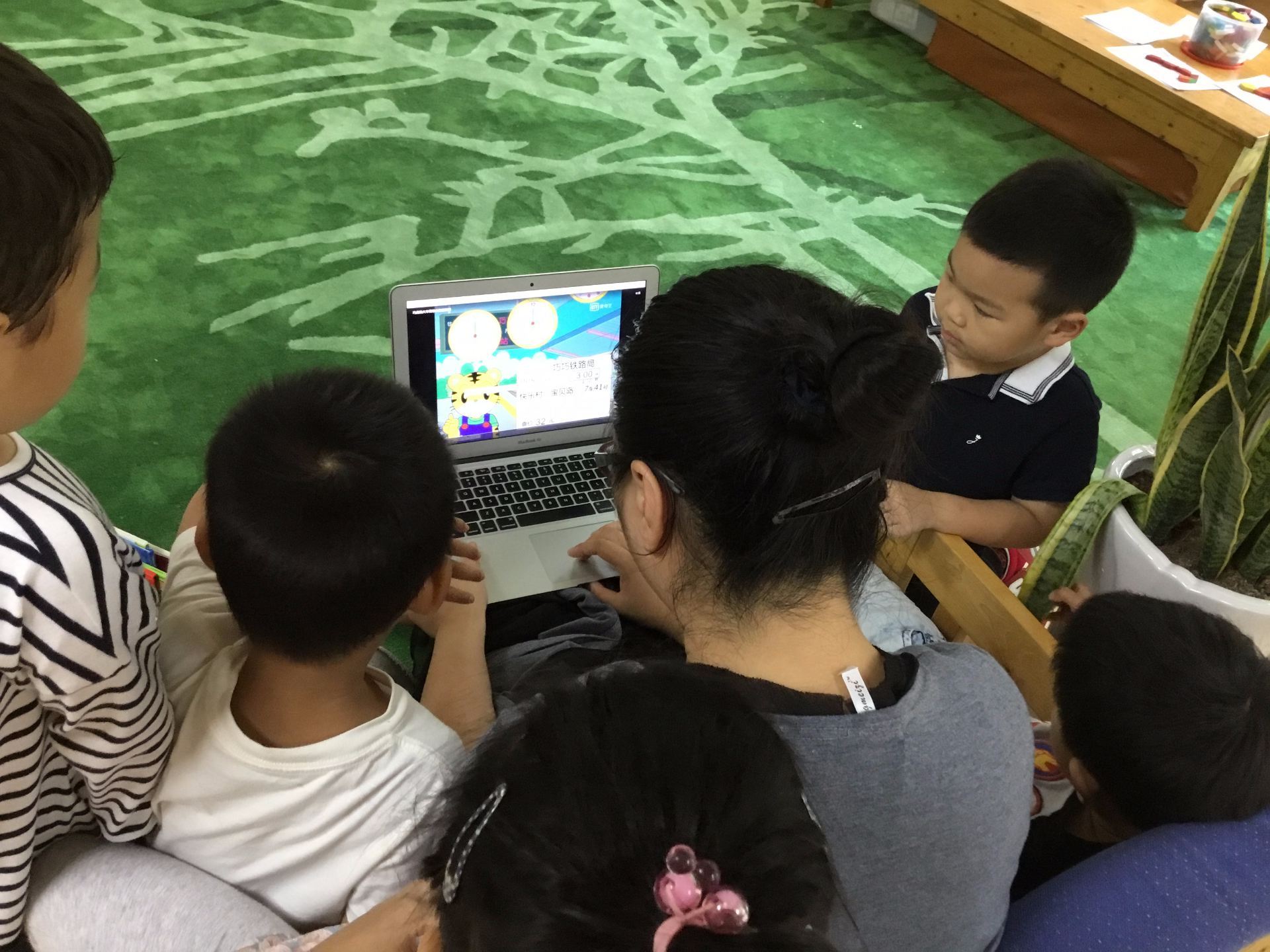
The students watched a Chinese cartoon movie (Qiao Hu) to help them understand the different steps that need to be taken in order to travel by train.

Buy the ticket – pay the right amount of money — find the seat — sit down and watch the scenery from the window — get off the train.

The students discussed what they noticed.

The teacher showed the students a real train ticket. They looked at the ticket to find out what information the ticket provides; the train number, destination, time (starting) of journey to the destination and the location of the seat.

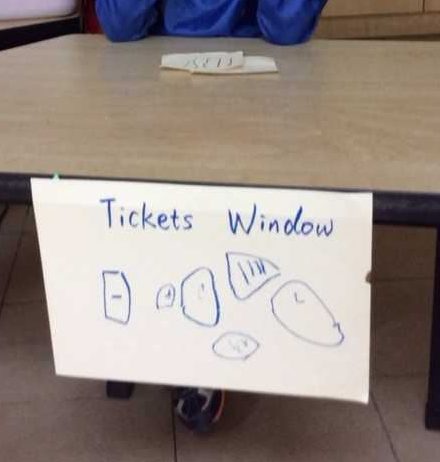
Some of the students wanted to design their own train tickets. They included all the main information above. They reflected on what they had seen and learned about the tickets.

22 September

The students collected items that will drive their play. They helped the teacher set up the station by putting the train together, making the tickets, creating posters and looking for costumes.

The students worked together to play their game. They quickly realised that there were problems with the train trip. Too many people wanted to drive the train, there were too many passengers, some passengers had the same number on their tickets, some train drivers were not sharing the job and it was just too noisy.

Ms. Lucia had a discussion with the students. They had to come up with solutions to the problems. The students thought deeply about the issues. They came up with the following solutions.

  • too many people wanted to drive the train – only two people driving the train, the driver and co-driver.
  • too many passengers – there are 5 seats on the train. If you don’t have a ticket for the seat you have to wait in the waiting area. There can only be 3 people in the waiting area.
  • some passengers had the same number on their tickets – you have to wait till the seat is vacant or you can share with the person travelling in that seat.
  • some train drivers were not sharing the job – we will use a liquid timer so that we can have turns.
  • too noisy – we will use our inside voices.

SLO’s

  • listen to others
  • co-operate and share in mixed groups
  • learn to take turns
  • participate in communal classroom activities
  • develop age appropriate skills for different social occasions
  • find solutions to problems

25 September

Why and how does the high speed train go so fast?

The students watched a video about high speed trains. The teacher explained the information shared in the video. The documentary explained why the design of the train was important and the impact it had on the speed the train could travel. They inspected a model train and noticed the design of the vehicle.

https://twitter.com/NISPreKK1/status/912289358836727808

The students were invited to draw pictures or create models of trains. A group of students went over to the design room to gather boxes and other interesting materials they could use to create their train.

SLO’s

  • listen and respond in small or large groups for increasing periods of time
  • ask questions to gain information and respond to inquiries directed to themselves or the class
  • share ideas and experiences through role play, art and discussion

26 September

The students began to decide what more they could include in their train. The glued on wheels and steering wheels.

https://twitter.com/NISPreKK1/status/912990122747895809

27 September

The students used recycled materials to create their own model trains. They discussed safety while using the tools and materials. They had to think of their design explain their thinking.

https://twitter.com/NISPreKK1/status/912985089155334144

未完-待续  To be continued…

Colour, light and Shadow Play

One student noticed a rainbow on the floor at her home. She shared her experience with the class.

https://twitter.com/NISPreKK1/status/908196747033247744

The students had a discussion about what they noticed.

  • Teacher “What is it?”
  • Ruby “It’s a rainbow!”
  • Teacher “What is a rainbow?”
  • Ruby “It was on the floor.”
  • Reggie “A rainbow is with a lot of colours.”
  • Ruby “I can see purple and red and orange and yellow.”
  • Reggie “There is red green and yellow.”
  • Teacher “Who has seen a rainbow before? What do you know about rainbows?”
  • Franz “I saw it in Sanya.”
  • Reggie “They come in the morning.”
  • Ruby “When I go to school I see a rainbow.”
  • Franz “The rainbow is coming from the sky. From the sun”
  • Reggie “We need water and sunshine.”
  • Ruby “And we need rainbow play dough.”
  • Teacher “Why did the rainbow go away?”
  • Ruby “Because it’s dark.”
  • Reggie “When something goes over a rainbow, when something goes in front of the rainbow it will go away. It was too dark”
  • Ryan “Because it has been shadowed by Ruby’s body.”
  • Teacher “What is a shadow?”
  • Ryan “The shadow is black.”
  • Tyler “The sun is shining on the shadow.”
  • Lawrence “The sun shines on the people.”
  • Franz “No. The rainbow is coming from the sun. I saw the rainbow when the sun went down.”
  • Amber “The sun shines. It’s very long (destination).”
  • Cornelis “The rainbow only shines out of the sun. When it’s too dark you can’t see the sun and then when it be morning with the sun out with the rainbow there it will be longer.”
  • Teacher “Can we make rainbows?”
  • Cornelis “You need to make it with the play dough. You need to make it with the play dough and roll the clay.”
  • Reggie “We can make a rainbow out of clay.”

We wonder if we can make shadows and rainbows.

The students worked with a teacher to explore colour and light.

  • Teacher “What to you notice about rainbows?”
  • Reggie “They have lots of colours.
  • Cornelis “I can make rainbows.”
  • Franz “I can make.”
  • Teacher “Who knows how real rainbows are made?”
  • Reggie “From rain and sun.”
  • Cornelis “And then when the sun goes on the rainbow it bounces, goes boing, boing, boing.
  • Franz “I can make the sun.”
  • Teacher “We are going to find different ways to make rainbows.”

The students look at the rainbow colours on CD’s. They hold it up to the sun, observe how light plays on its surface and name the different colours.

  • Amber (singing) “It can be rainbow.”

The teacher pours some milk into a tray. The students put droplets of different colours of food dye into the tray of milk. They name the different colours they used. The teacher then includes a few drops of washing liquid. The colours begin to swirl in the milk.

  • Teacher “What is happening to the colours?”
  • Amber and Jasmine “Rainbow!”
  • Reggie “Its turning into a rainbow!”

The group continue to discuss what they have observed.

The teacher invites the students to search for rainbows in other places. They use water guns to create the effect of rain.

We continue to look for rainbows…

https://twitter.com/NISPreKK1/status/908672574107697155

SLO’s

  • a sense of wonder and curiosity
  • make observations about locations and patterns in their immediate environment as part of their primary geographical explorations
  • use inquiry to acquire information
  • make statements that reflect their understandings

The Snails

The students notice two small snails in the classroom fish tank. They observe them carefully. They share their observations, ideas and questions with a teacher.

Ryan “The snail climbs so slowly, it climbed forward when he put his head out.”

Brady “It might be afraid of us.”

Ryan “Let’s not talk, lets walk away, it might put his head out.”

Teacher “Do you know where the snail came from?”

Ryan “The snail came from the top of the sink.”

Ryan “Why does the snail stick so tight on the table?”

Perhaps we can explore this further…

Terra Cotta Warriors

A group of students went on a walk around the school. The noticed a large statue at the entrance of the school. They wondered:  

We tweeted out our question and Mr. Pinchbeck and Malia replied.

Tomie: They are made out of clay, and bricks. A villager dug the warriors up.

We watched a video about the warriors.

We wonder if we could make our own warriors.

Reggie: We can use clay to make them!”

We can create our own art!

The students gathered in front of the statue to create replicas of their own. They kneaded and manipulated the clay to create the shapes they wanted. They shared their ideas while they worked together. The students were encouraged to notice the patterns and details on the statue.

SLO’s

  • how to show curiosity and ask questions about artwork
  • how to identify the materials and processes used in the creation of an artwork
  • how to express opinions about an artwork
  • enjoy and learn from creating art
  • exploring and taking risks

The Frogs

1 September, 2017

One student had seen baby frogs near the school pond. He was eager to share his experience with the others. He led the students on an expedition.

“Be careful, don’t step on the frogs.”

The students looked in the bushes, under the branches and leaves.

They were unable to see any of the frogs. Then some students noticed movement in the ‘almost empty’ pond. There were little black creatures moving around on the stones. The teacher hopped into the pond and was able to catch one little frog. The students looked at the tiny black creature. “He is so small” they said. 

We returned the little frog into the pond after observing it. We looked for other frogs in the dry leaves and small bushes.

The students explained that “They live in the holes in the sand. They make tunnels in the earth” “They eat the dried leaves.” “

We wonder how they got there, how they live and grow. Perhaps we can explore this further…

https://twitter.com/NISPreKK1/status/903557168670007296

4 September, 2017

We found some books in the Library about frogs. We wonder what they eat.

The students went back to the pond to look for frogs. They brought some back to class. They enjoyed observing them and shared their understandings.

https://twitter.com/NISPreKK1/status/904540576384671744

The students were invited to express their understandings through their drawings.

SLO’s

  • the features of local and other environments they encounter
  • the impact of simple actions on their immediate environment
  • how to take care of things
  • resources are necessary to meet the needs of living things
  • appreciation of own environment and all living things in it
  • a sense of wonder and curiosity
  • make observations about locations and patterns in their immediate environment as part of their primary geographical explorations
  • use inquiry to acquire information
  • make statements that reflect their understandings

Earthquake Detector

One student made an earthquake detector using Lego.

(Agency: When students are actively involved in discussion, questioning and by being self-directed in their creating (as opposed to passive receiving)

He explained. “This is an earthquake detector, when there is an earthquake it spins.”

Teacher “Which countries have it? Do you get them in China?”

Student “England, Germany, France.”

Teacher “And how does it help people?”

Student “It tells them there is an earthquake. How do earthquakes happen?

We watched a Brainpop video on fast land changes to help us lean more about earthquakes. we will continue to inquire into natural disasters.

SLO’s

  • there are bodies on water/land on Earth
  • how to ask questions about the natural and physical environment
  • that natural disasters can happen
  • enthusiasm and respect for nature and Earth
  • their care and concern for Earth and its environment

We found a replica of an Ancient Chinese Seismograph @nischina

Reggie “It tells you if there is an earthquake. It was made in China. An emperor made it.”

Stay Safe!

The students noticed that some children were opening the safety gates during playtime. They took action by creating a video about playground safety. They shared their video with their peers.

https://twitter.com/NISPreKK1/status/853163861142196227

Agency: When students have an active voice and stake in the classroom/community. When students reflect on their actions and self-regulate.

STOP!!

screen-shot-2016-09-23-at-11-17-07

Agency: When students have an active voice and stake in the classroom/community.

The school playground has 2 exit gates that remain closed at all times. The K2’s were concerned as some students were trying to open the gates. Two students wanted to find a solution. They decided to make a sign to tell the students that they should not be going through the gate. They created the sign and laminated it to protect it from the rain. The students then went to the other classes to share the sign and inform the other students about their concerns.


https://twitter.com/NISPreKK1/status/778876584119848960

https://twitter.com/NISKinder2/status/781003502139109376

Pirates of the Zombie

A group of students decided to create their own ‘Pirate Story’. They wrote the script together, created the props, decided on the characters and actors, and performed for their peers. They had to work together, negotiate and solve problems as they practiced.

https://twitter.com/NISPreKK1/status/742927958432743426

https://twitter.com/NISPreKK1/status/743343841948798976

Agency: When students are actively engaged in various stages of learning, including: thinking about, planning, modifying and creating. When students apply their understanding of concepts through the construction of their projects/play.

Save the Rainforests!!!

We can take ACTION!

Save the Rainforests!!!

Avery feels passionately about the destruction of the rainforests. We decided to watch a video to learn more about the rainforest. She then made a poster and wanted to visit the students in K1, to speak to them about it.

https://twitter.com/NISKinder2/status/724177346173902849

Agency: When students are actively engaged in various stages of learning, including: thinking about, planning, modifying and creating.

What does the engine in the car look like? 

A student wanted to know how a car works. She conducted some research on her own and presented her learning to the class.

https://twitter.com/NISKinder2/status/658565092590546944

Agency: When students are actively involved in discussion, questioning and by being self-directed in their creating (as opposed to passive receiving. When students express their theories of the world and these are honoured in the environment.