
The Gardening Project
The Gardening Project
@O and @L were our classroom representatives, working with Ms. Hannah and Ms. Eileen on the ‘Garden Project’.

On their return to class, they presented their ideas to K2A.
 They explained the ideas they had discussed, sharing their drawings where they had documented their suggestions for improvement.


The Gardening Team have decided to:
- cut and prune the overgrown bushes
- add the cut pieces to the compost bin
- use the compost to help the new plants grow
- replant the seeds to make new plants
- use the lemongrass and mint to make tea
- and make space to grow other new plants for the season.
The children were excited to be part of the Garden Project.
We look forward to their next steps!
What can we grow in the garden plots?
Many of the children worked to maintain the garden plots in K1. The children noticed that some plants had died, and others needed to be pruned.
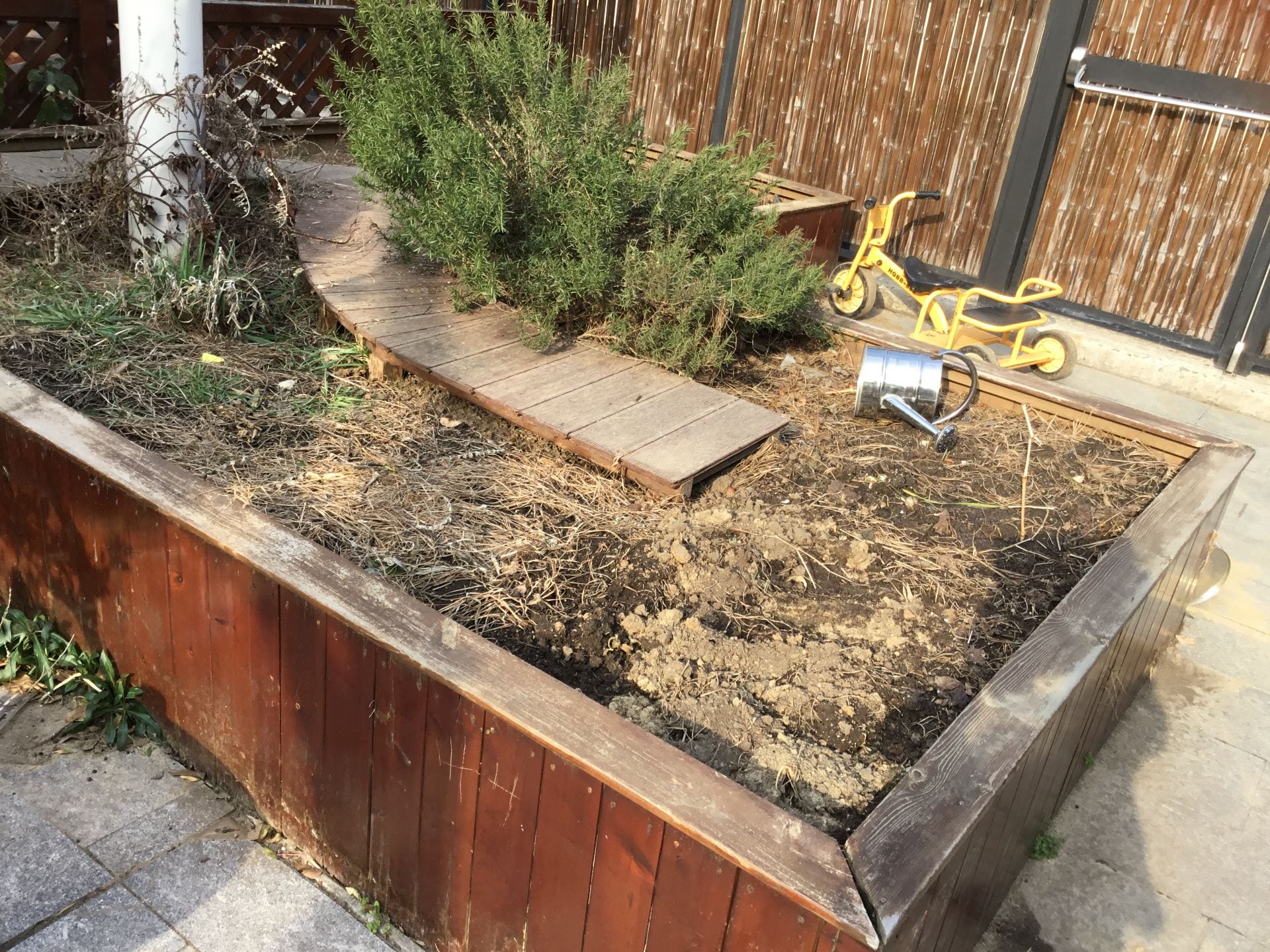
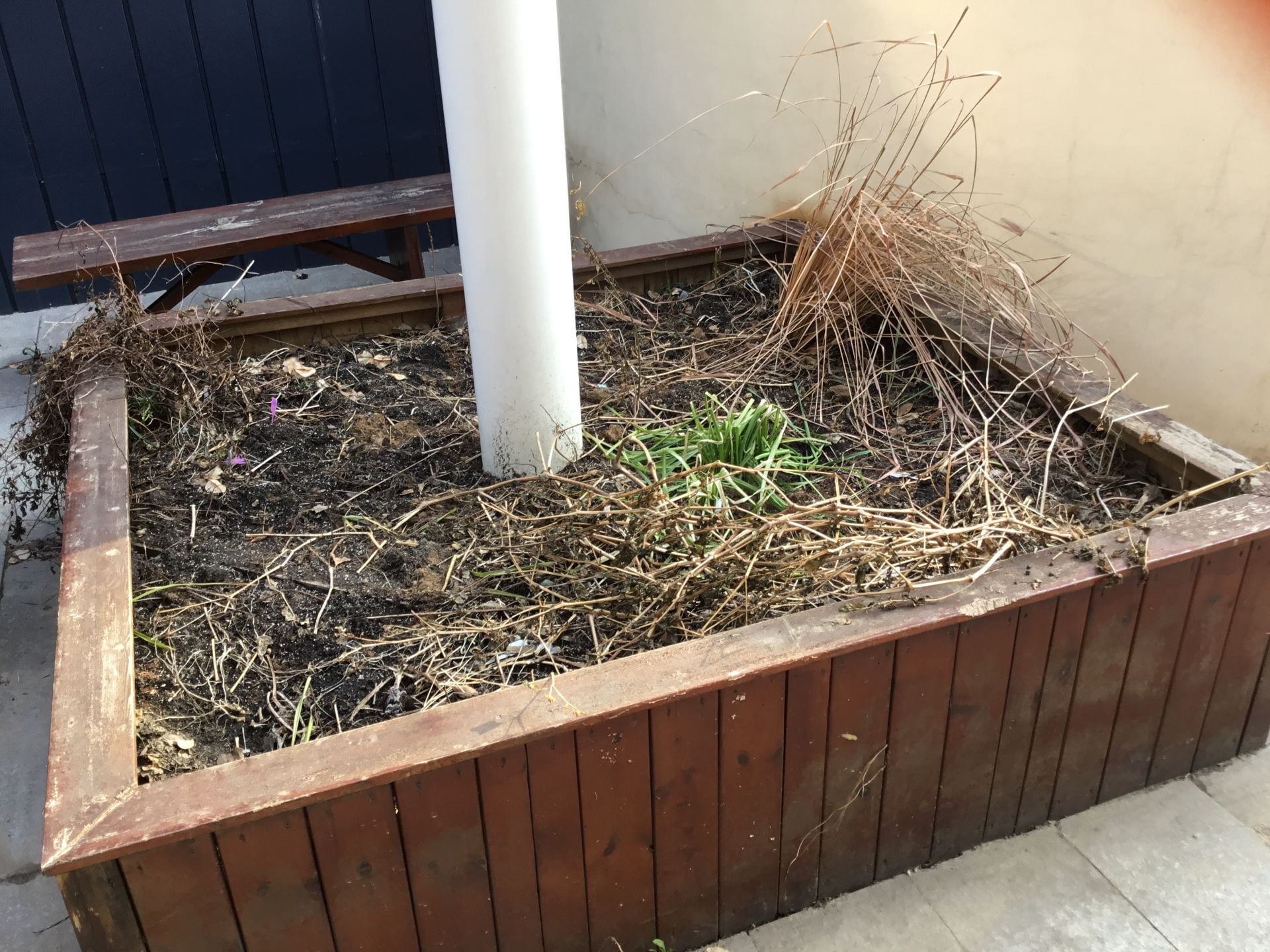
The children began to make suggestions on what they could grow next. We decided to gather this information using pictures and words.
The children were invited to share 2 suggestions. Then, we sorted and organised the information.

The children quickly noticed that some suggestions such as flowers (8) and trees were very popular. Other suggestions were mint plants (3) orange plants (1) grass (1) trees (5) strawberry plants (5) apple trees (3).

We wonder what we need to know about these flowers and plants to be able to grow them in our EY garden. We wonder what resources will help us learn more about the needs of these plants.

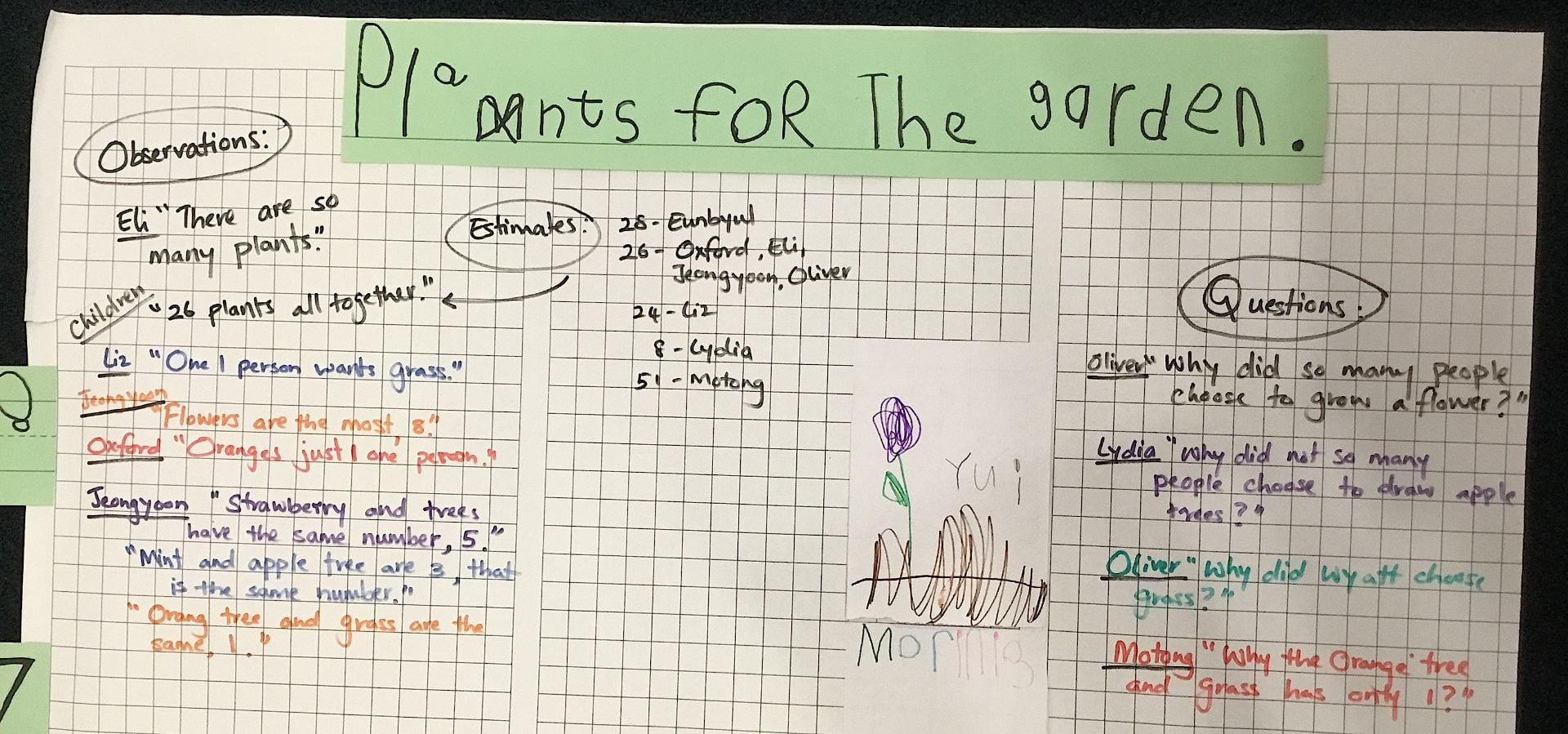
Our inquiry continues…
Learning Outcomes: We are learning that we can…
- gather information by asking questions
- record data on simple graphs
- present information using pictographs where one picture equals 1
- explain data using simple comparative language
Making Decisions
The gardening group (composed of student representatives from each class) gathered to discuss their project. Their task for the day was to document what was still growing in the garden and how they might organise the garden plots.
 Thirteen gardeners joined the meeting with Ms. Hannah. They began by revisiting their agreements. The gardeners reflected on what it means to be a respectful listener “We talk one at a time and listen to others as they share their ideas.”
Then, they reflected on what they did during the previous session.

- Emma “We don’t have many plants.”
- Oliver “Some plants survive when it was snowing, it means when it’s snowing they are not very scared of the cold. The big plant is dead because it’s not cold protection.”
The team wondered about the ‘temperature’ and what plants ‘need’ to ‘survive’ and thrive.
Which plants might grow in the different seasons?
Which ones will survive?
- Jacob “Because that big plants got too much water and it would die and too much worm pee pee it will die too.”
- Logan “Earthworm poo, could it help?”
- Jenny “Not too much water, not too dry (in Mandarin)”
- Adelyn “Not too much sun”
- Oliver “If you get a dragon fruit then dig a whole and then a plant will grow and the flower will grow and it is actually a dragon fruit. If you use the outside part of the strawberry seed and put it in the dirt it will grow strawberries. I know how to grow a watermelon to a shape that you want. If you get a square shape cube and dig a hole and then open it and then close it and then it will be the shape.”
- Albert “If you grow watermelon then you will get a watermelon tree.
- Keira: “In my home, there are orange trees.”
- Jacob “Watermelon black and watermelon white seeds. People can eat the white seeds and plant the black seeds.”
- Emma: “At my home, I have a paprika tree.
- Albert: “At my home, I have a bamboo tree.”
Teacher “This is a shared space. We have 5 classes. Which means we need to find a way to share the plots. How might we do this?”
The gardeners gathered their clipboards with paper and writing tools. They looked at the plants in the plot and began to draw to share their observations and thinking.

Teacher” How do you know something is still alive?”
- Emma “Because the seeds were still in the mud. And it didn’t fall out. Some was out but some not.”
We noticed that the team considered the size and shape of the plots when documenting their thinking. The gardeners were encouraged to think about and explain how they knew the plants were still alive. They used their senses to observe carefully, sharing their theories about the growth of plants and the weather. As they visualised the space, they began to share suggestions on how the plots may be allocated to the different classes in the Early Years.
The gardeners gathered to share what they had learned and to decide on what they would do next.
- Oliver “One is a bigger plot and one is smaller.”
- Sophia “Prek-K1 has more children so they use the bigger plot and K2 use the smaller plot.” (in Mandarin)
- Emma “Also we need to plant so many new plants because only in some places there are plants.”
 The gardeners agreed with Sophia’s suggestion.
- Emma “PreK-K1 has 3 classes and K2 has 2 classes.”
- Albert “The bigger one to PreK K1 and the smaller one to K2.”
- George “One class has one space.”
The children took a vote and agreed with George’s idea.

The team’s suggestions were based on the number of classes in each grade level and the number of students in each of them. The teachers wondered how they might encourage the gardeners to show the division of a space.
Following on from the Garden Project meeting, Oliver and Liz, the two K2A Garden Project representatives picked up their clipboards, paper and pens and went back to the garden plot, to see how they could solve the problem.
We wondered what suggestions they had to divide the space equally.

Oliver walked around the plot thoughtfully. Liz drew the square plot on her paper. The first suggestion was to give each child one space in the plot to plant a seed. This posed a problem as we would not be able to see where the seeds have been planted and who they belong to. They walked around the plot thoughtfully.
The teacher decided to help the team think about sharing by asking “If you had a cookie and you needed to share it equally, how would you do that?”
Oliver drew the cookie on his paper, to show how he would cut it equally first in half, then in quarters and then into eighths. He spent more time in thought and then made a connection. “Give each person a line.” Explained Oliver, drawing horizontal lines across the plot on his paper. However, he quickly decided that this was the solution he was looking for.

Finally, Liz and Oliver decided that the plot should be divided exactly in half.

They documented their ideas on paper, using marks, words, symbols and signs to make their thinking visible to others. They included signs that read, ‘K2A’ and ‘K2B’, on each side of the plot.
Finally, Liz and Oliver presented their process to the class.


We wonder how the gardeners will work out equal shares and what tools they will choose to use to solve the problem.
Dividing the Plot
Lydia joined Oliver to measure the plots. The gardeners recalled using the long measuring tape and twine to measure distance when working on their paper airplane project and decided to use the same tools to measure and divide the plot in half.
We noticed the team working together to read the measurement on the tape. They were wondering what ‘half‘ would be. They tried to read and understand what the numbers on the tape represented. The large column that was in the plot added to the challenge, as although the column appeared to be in the centre of the plot, it was not!

The team worked together, using chopsticks and twine to mark one side and then the other. They ran the twine across the plot to show the division. But was the twine in the middle? How could we be sure it is divided into equal parts?

Lydia and Oliver used Base 10 Blocks to find the half mark.


- Oliver “We measured it with a measuring tape and we used the Base 10 Blocks. That’s how we used to measure it. Then we measured how much K2A and K2B space can get. K2A get 90 and K2B get 90. That is the exact half!”
Another task was to decide which plants needed to be taken out of the plot. Oliver carefully observed the plants. Then, he used an iPad to mark the ones that needed to be taken out in ‘red‘ and the ones that needed to remain in ‘green‘.

The team were ready to share their decisions with the Gardening Project Group at their next meeting.
An update from Oliver:
- Oliver “Ms. Hannah told the group the metal shelf is for putting the gardening things like digging shovels, seeds and watering cans. Everyone who was in the group they drew the shelf where we put the things so they will remember where to put the gardening tools.”
A Closer Look at Soil and Compost
Oliver “Oxford and I put the food waste in the compost bin and then we can make dirt with it. We can turn it to soil. It’s because the wormies are eating all of the fruit inside this and poop out the food and the poop and the pee is good for the plants.”
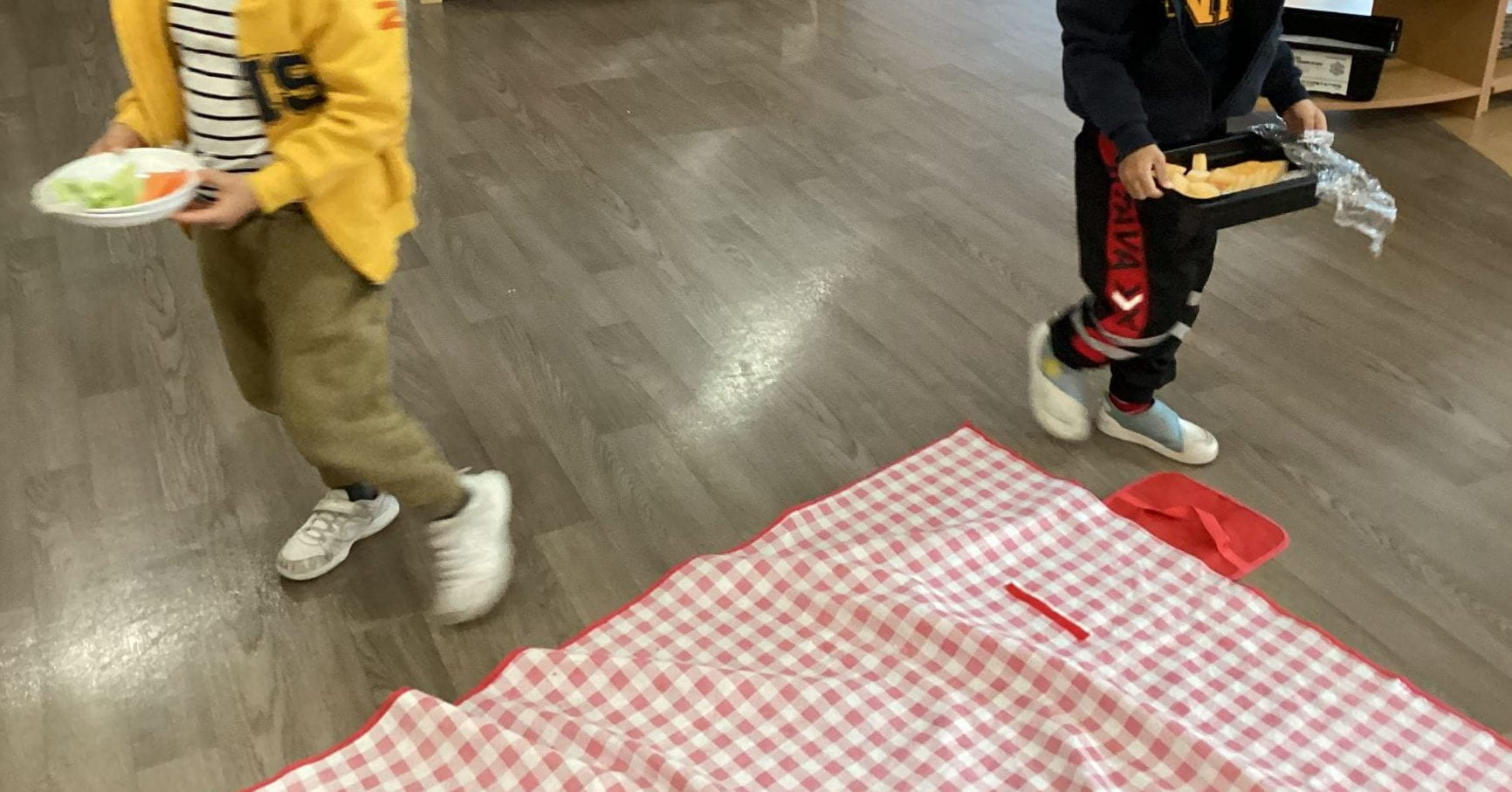
Oxford “I put dirt in the box. Because no people eat so much fruit.”

What can we learn from Authors and Illustrators?
We read a book about growing and plants. We noted that the illustrator showed close-ups of different pictures to help us notice more details.


What helps us take a closer look at things around us?
- Oliver “We can look at it close by. We can use a telescope.”
- Eli “We can use a magnify. We can also use our eyes.”
- Oliver “I want to look at a worm closely and see what patterns it has. I mean stripes.”
What might be in the soil and dirt? If we look closely, what do you think we might see?
- Wyatt “We can see a caterpillar.”
- Motong “Ants. Ants eating food.”
- Morning “We can see a mouse.”
- Oxford “We can see a spider.”
- Lydia “Worms.”
- Oliver “When I was outside I actually see this big beetle and it also was inside the dirt. It was so big. He was always sleeping on the dirt and he wakes up.”
- Eli “We can use glasses. The thing that has the list at the front.”
The children found a magnifying glass. They thought it could be used to look at the soil. Yui was very excited to use the new tool and used it to explore the classroom.

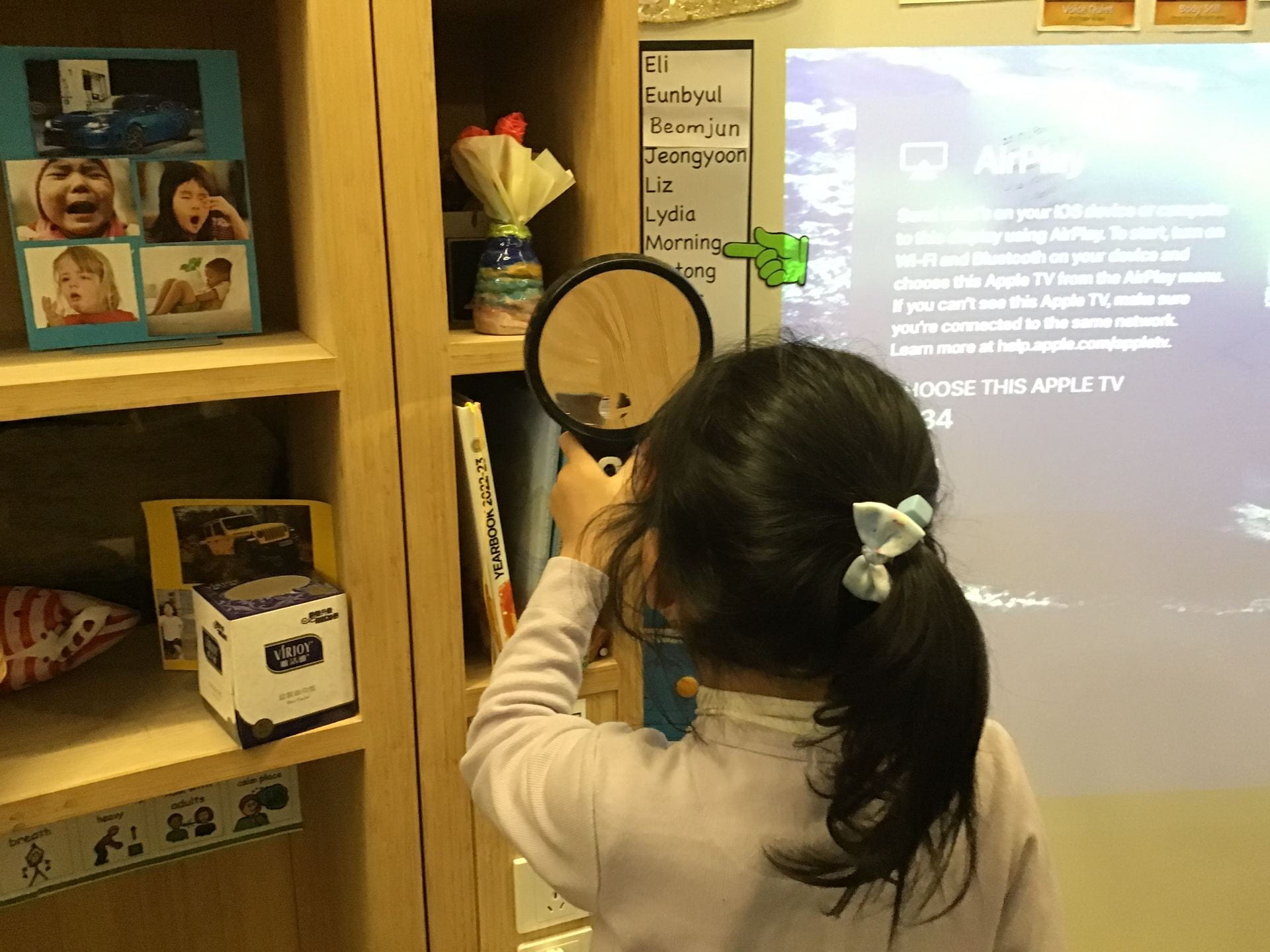
We wonder what she discovered!
One child volunteered to get some soil from the garden plots that we could put under the microscope.
He took a second sample of soil from under the wood bark. As he dug into the ground he said “This is so hard.”


He made labels to let the children know what the samples were.

Ms. Eileen used the microscopes and the iPads to help us look closely at the soil.


(Garden Plot Soil, Under Wood Soil)
The children were fascinated with the images. We wonder what they might see as they look closely at the soil.

The class leader and was in charge of taking all the fruit waste and peels to the compost bin.

Each day we will add to the compost bin to help us make new soil for the plants.
Approaches to Learning (ATL’s)
- observe carefully
- seek information
- ask or express through play questions that can be researched
- gather information from a variety of sources (people, places, materials, literature)
- listen actively and respectfully to others’ ideas and listen to information
- participate in conversations
- use mark-marking to convey meaning
- document information and observations in a variety of ways
- share responsibility for decision-making
The Mint Tea Shop
Oliver has been growing mint in the Early Years Garden. The mint is ready to harvest. Oliver decided to make mint tea for the community. He approached Ms. Hannah as he recalled making mint tea with her the year before. He hoped to recruit Ms. Hannah as she knew how to make ‘great tea’!

The Plan
Oliver began by planning his tea shop. He decided to make a sample cup of tea to ask his friends what they thought.
Then, he would be ready to offer the tea to others in the community.

Preparing the Sample Tea:
Taste and Flavour Test
Oliver was ready to make mint tea with Ms. Hannah. They sat together to talk about his plan, then moved to the kitchen to prepare and test the tea.
 They made 5 different samples to test the strength of the tea.
 Oliver chose the strongest mint tea to share with his friends as he loved the strong mint flavour.
The mint tea was left to brew overnight. Oliver wrote a message to let others know the tea belongs to K2A.


How do we promote the tea shop?
Oliver shared his process with the class.

He wondered how to inform the Early Years community about the tea testing. The teachers shared a sample community coffee shop promotional video to explore possible ideas.

Oliver was inspired to create his promotional poster, inviting the community to test his tea.

He also made a short video to invite his friends and teachers. Oliver set up his tea shop, preparing the cups and getting ready for his customers.

He gathered some customer data to determine if they liked his mint tea. 
- Wyatt “The smell of the mint leaves was good.”
- Lydia “And the drink is yummy.”
- Eli “I think Oliver should put more leaves in there because if you leave the leaves I think the tea will be stronger.”
Children from the different classes in the Early Years and teachers who passed by the space were invited to try the tea.
As Oliver had a few cups left over at the end of the day, He decided to continue with his tea shop during lunch playtime the following day.

The children gathered to try out his tea again. He was excited to hear some of the children say, “I love this tea it makes me feel so calm.”