Furry Invaders @ the Seed Atelier!
 An army of black, furry creatures recently invaded a section of the Seed Atelier garden, crawling across the sand and pebbles surrounding a large pine tree. We decided to introduce one of these furry specimens to the children, inviting them to study the fascinating creature.
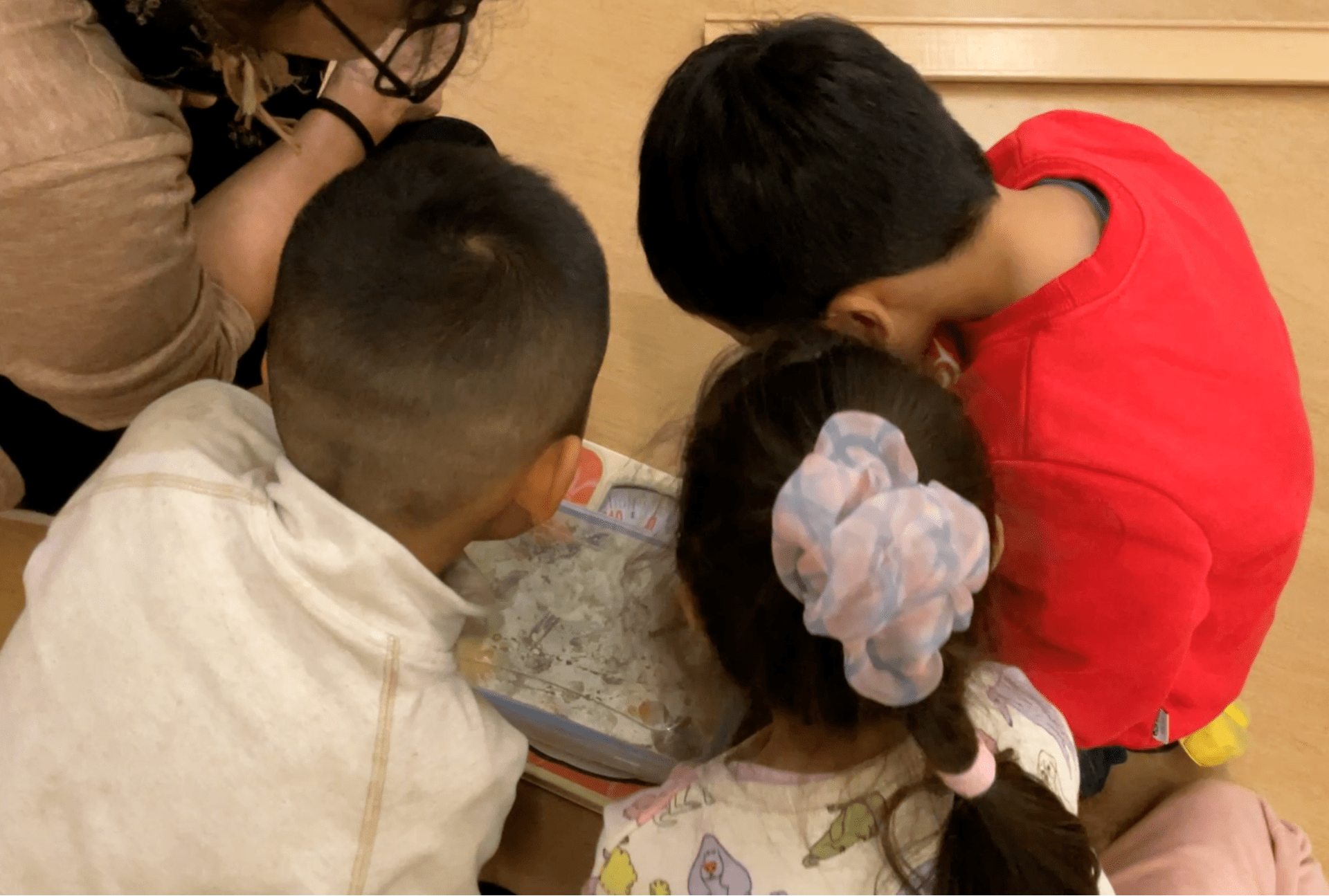
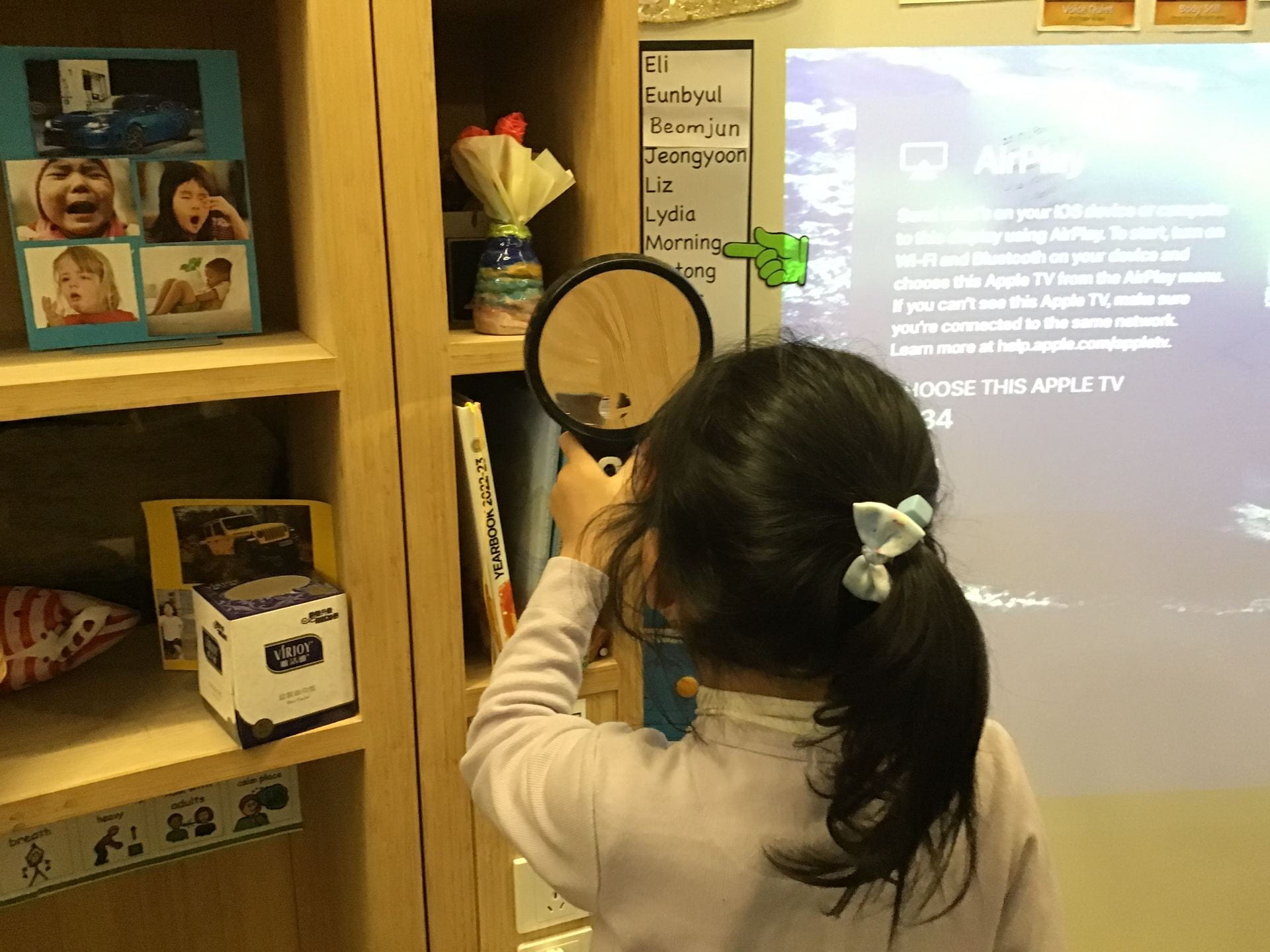
 To deepen our understanding of this little invader, we utilised a variety of research tools. The young entomologists took a closer look at the crawling insect using a microscope and an iPad, allowing their observational skills and prior knowledge to guide their inquiry. Noah was quick to share his theories on what the insect might be.
- Noah “I think it is a chopper, it lives in the ocean.”
- Asel “This is black colour.”
- Noah “It is a worm.”

- Noah thought for a while, he appeared unsure, “What is it? It has spikes. And they have teeth and it can eat people!”
- Asel sat back with a surprised expression. “Eat people? It not eat people!”
- Noah “Is it moving?”
The tiny creature moved around on the leaf.
- “No way! It is eating red colour.” said Asel, pointing to its red head.
- Noah [screeching with excitement] “It came out!”
- Asel [pointing to a space where the light played on the container] “What’s happening? I see pink colour in here.”
- Noah “I think he is going in water.”
- Asel “No. Because… my is water with mommy and daddy.”
- Noah “He is small. He is long. It’s so cute!
- Asel “WOW!”
- Noah “Oh, so cute.”
- Asel “WOW!”
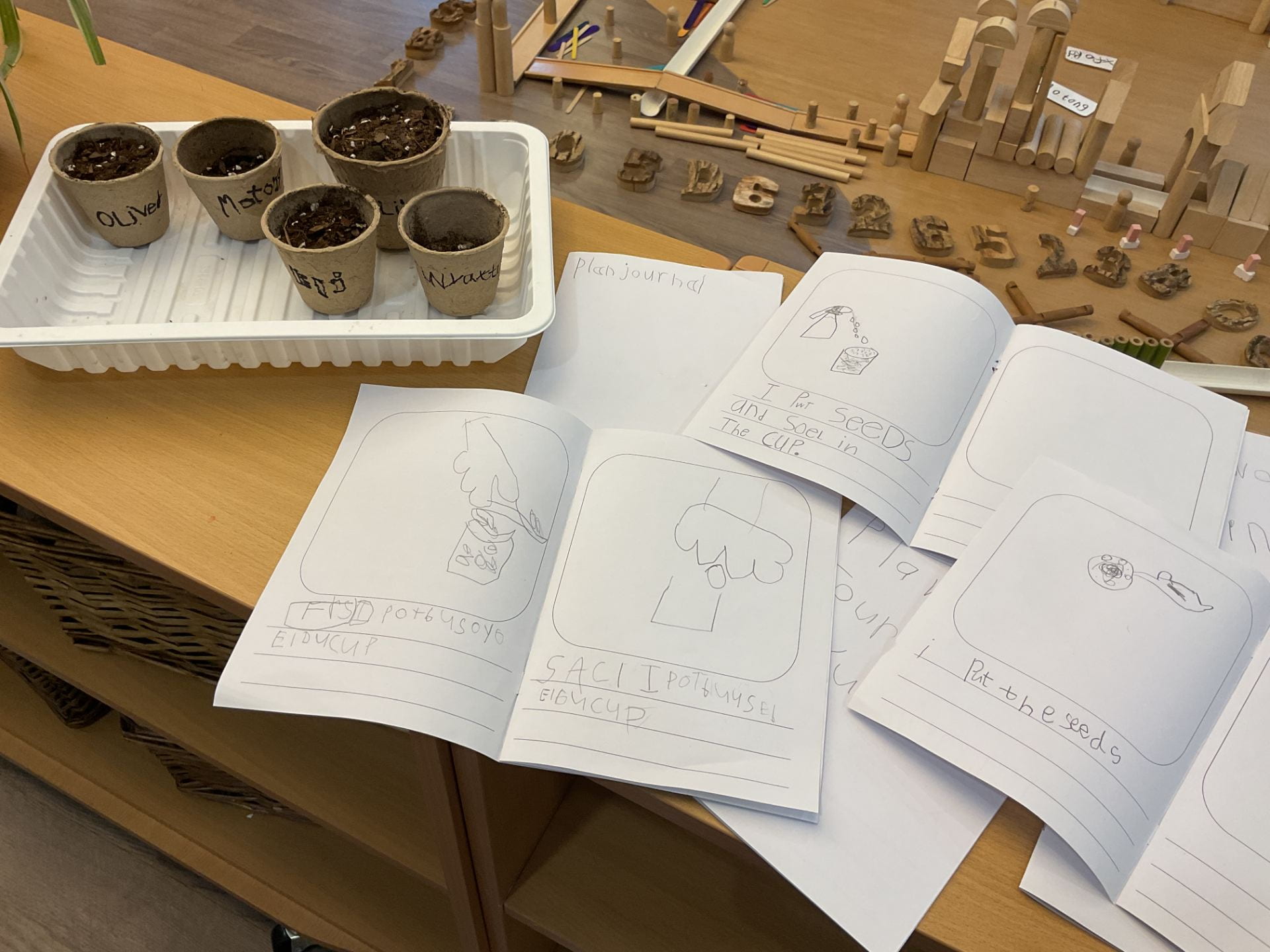
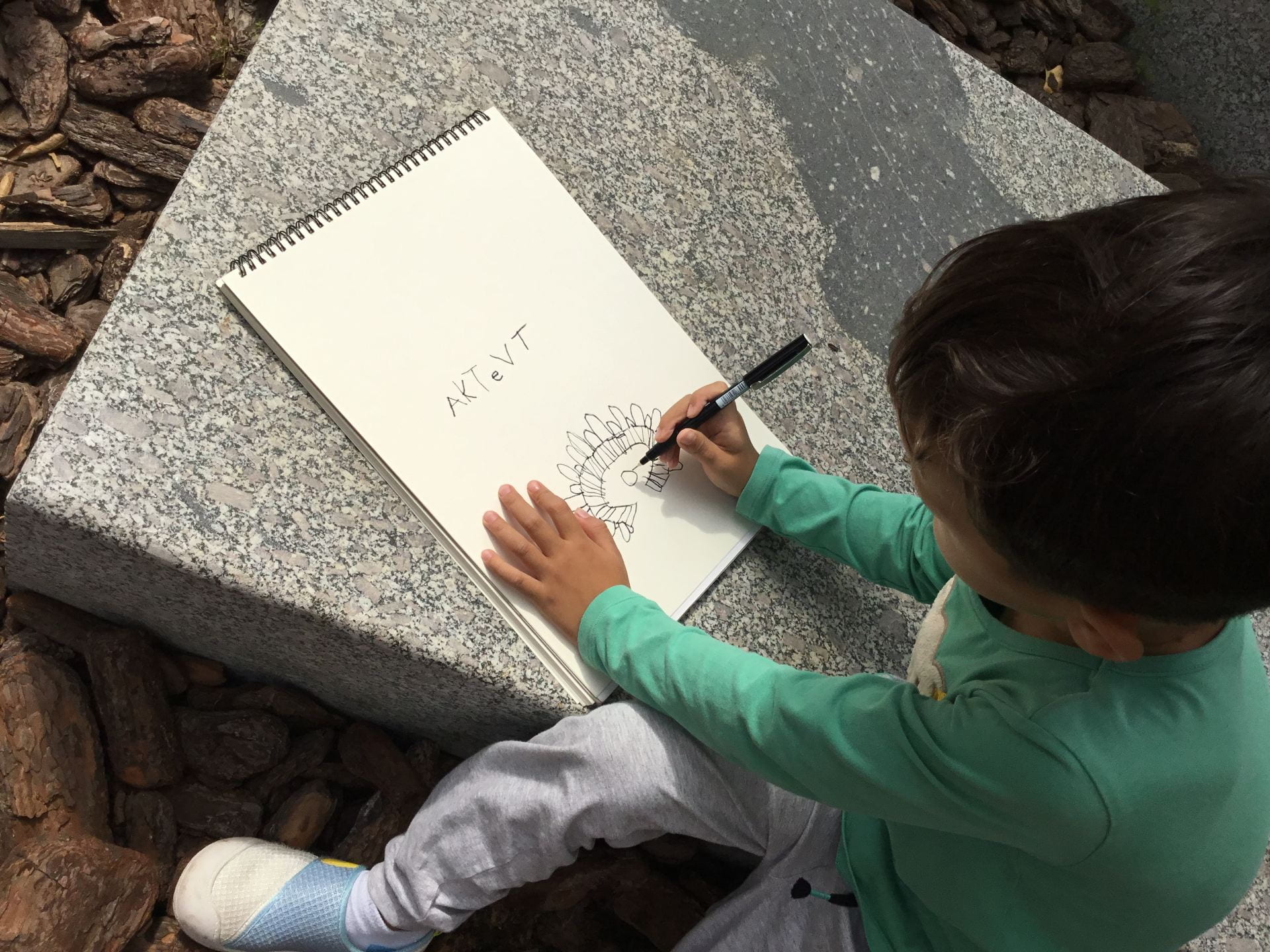
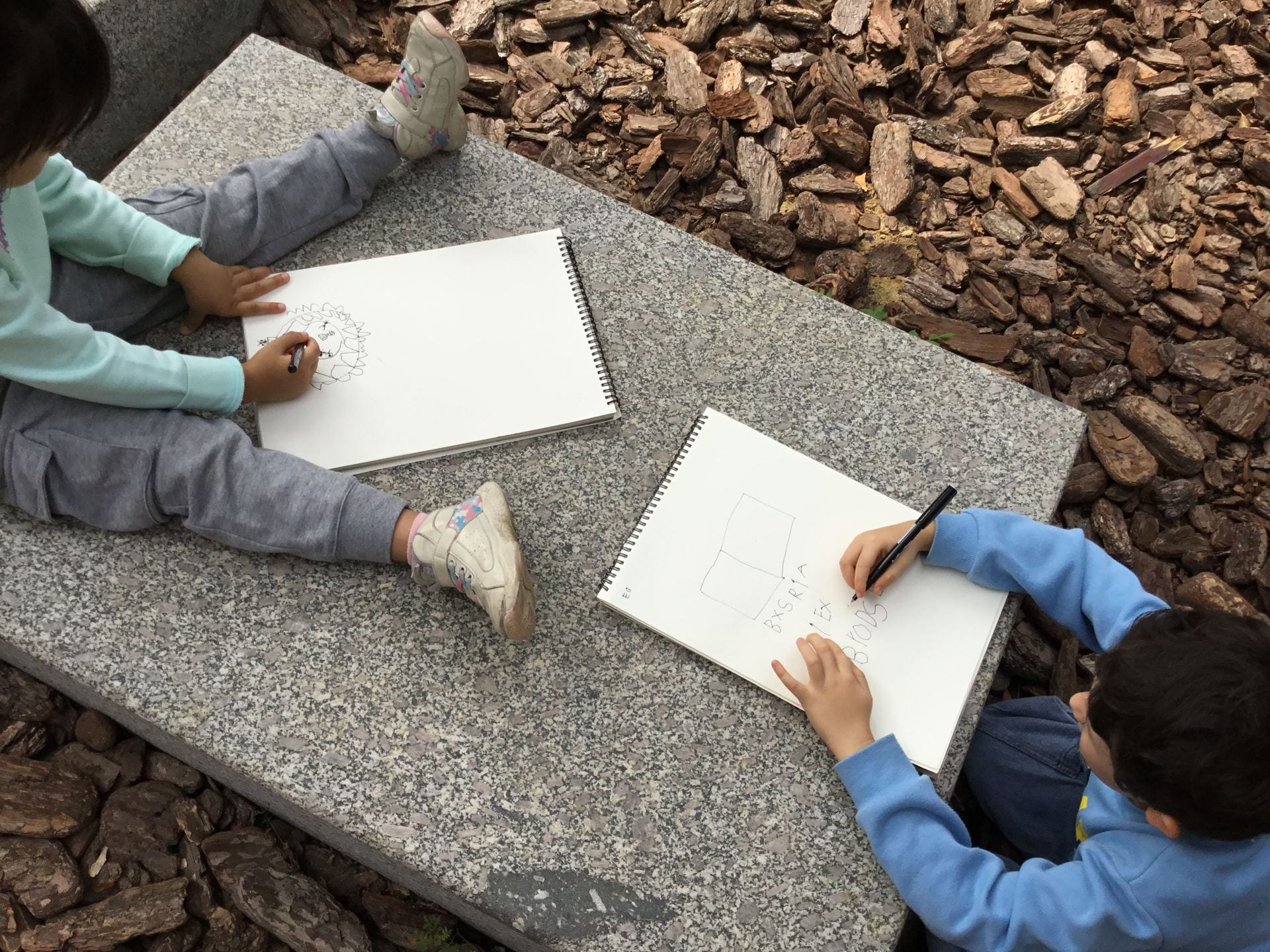
The young entomologists were invited to document their observations through detailed drawings. They carefully sketched the different parts of the tiny creature, starting with the head, moving to the body, and finishing with the legs.

As they drew the fluffy spikes along its body, we discussed the importance of observation over handling. The children watched the insect move slowly across the leaf, wondering if it enjoyed eating its current perch. Noah highlighted the need to be gentle and preserve the insect’s safety, leading to our decision to return the little creature to its natural habitat once our observations concluded.

Through this exploration, the young entomologists demonstrated passion, sensitivity, and care for nature. Their curiosity and sense of wonder were evident as they shared observations and questions with the group.
 These evolving conversations reflect their understanding of the world, showcasing how they connect prior knowledge with real-time discovery.

What are these fluffy creatures?
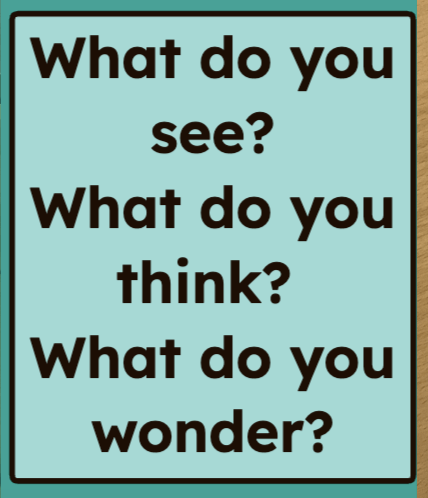
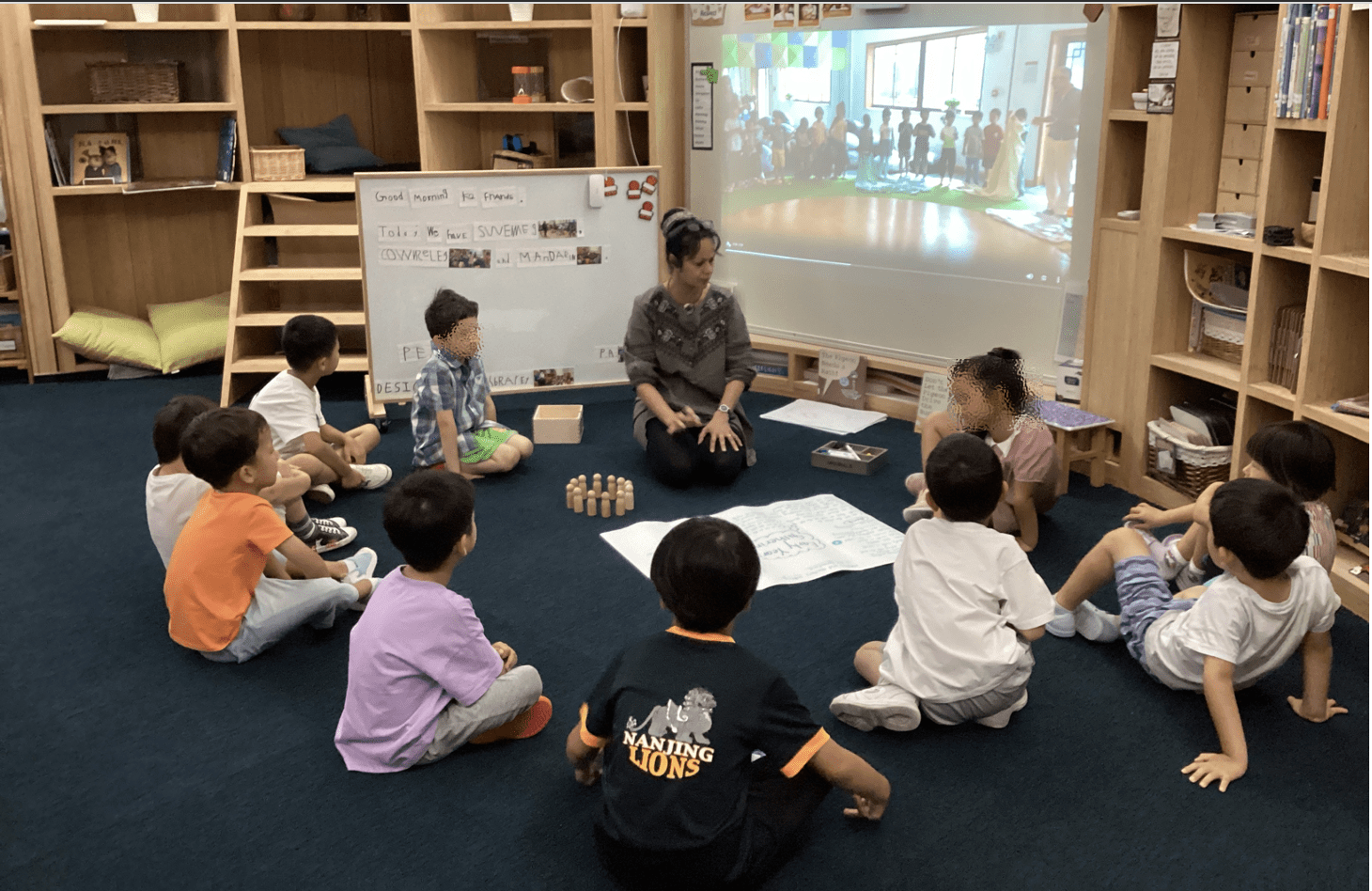
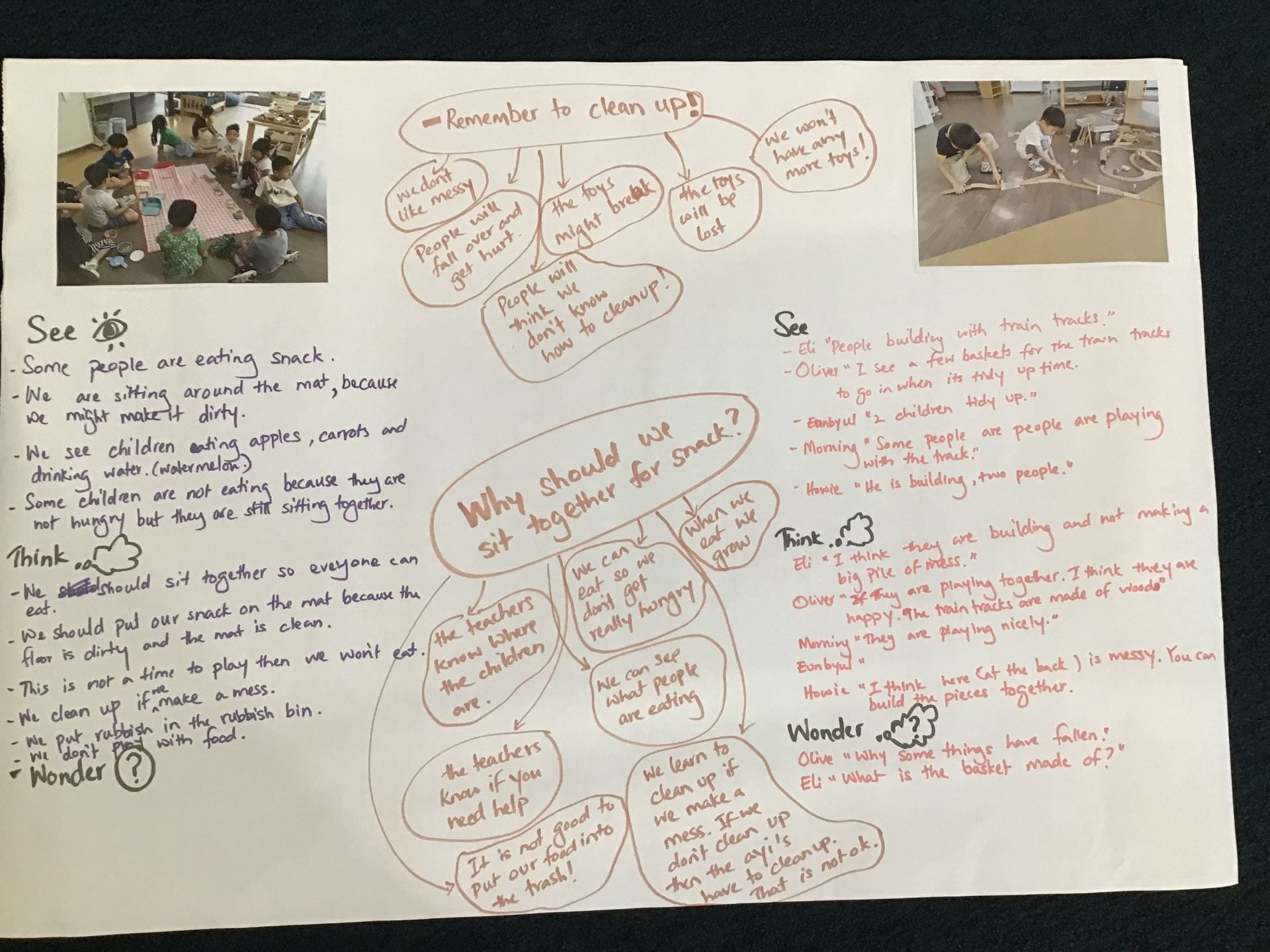
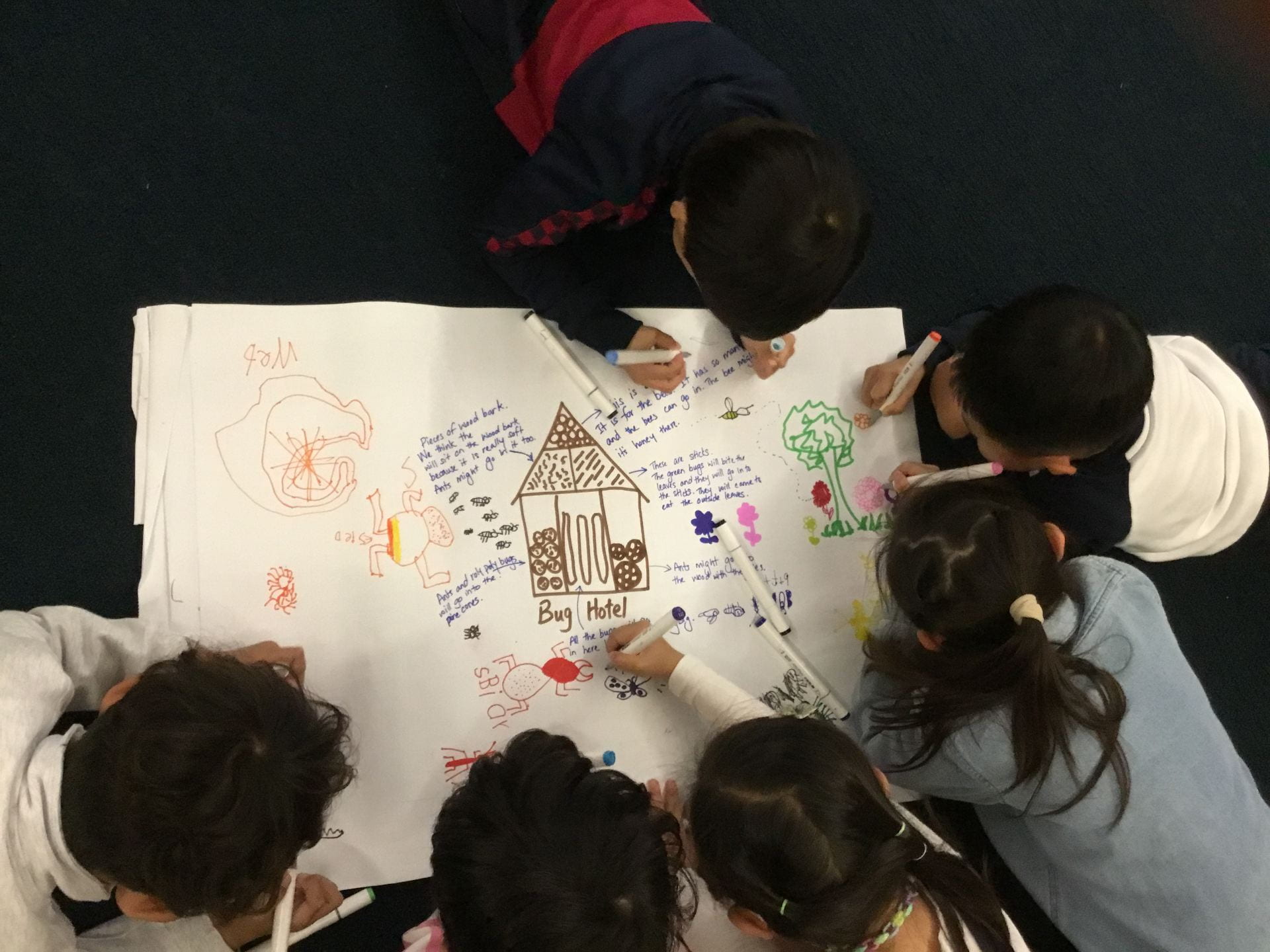
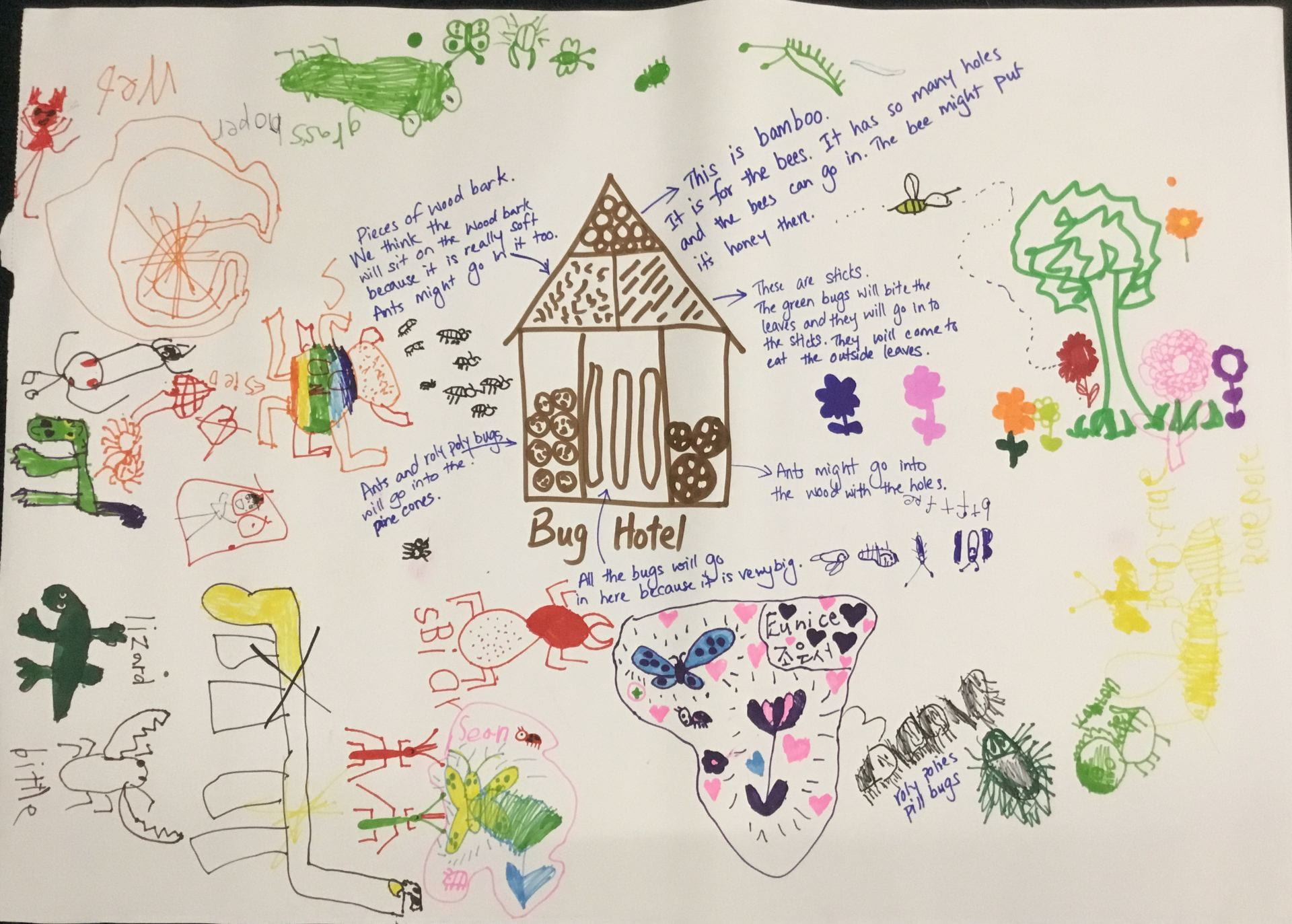
We decided to use a graphic organiser to collect our observations, existing knowledge and wonderings. 
The entomologist noticed that the little creature was ‘fluffy’, had red legs and a red head, and ate leaves and fruit. He knew that these insects lived outdoors on trees. Some of the investigator’s questions were:
- Is it a snake?
- Is it a dragonfly?
- Why does he go round and round?
- Where did it come from?
- Did it have back legs?
 To express their ideas, the writer used inventive spelling, drawings, and text and referenced a sight-word card to spell high-frequency words independently.

To find answers, we read a nonfiction text about caterpillars and butterflies, which led to interesting conversations about ‘growth’ and ‘change’.
 We look forward to seeing how this curiosity guides the entomologists over the coming weeks as they explore the changes in nature and the creatures that live around them.