
The Ocean Project

 We have noticed the children playing and telling stories using the miniature plastic animals. Through their storytelling, the children transport the animals to different places, exploring actions that help them survive in their natural habitats.
What colour is the ocean?
One morning Wyatt said, “My favourite colour is blue because the ocean is blue only one blue.”
Wyatt is intrigued by the ocean. His drawings and storytelling often revolve around the creatures on the beach and at the shoreline. His books hold his memories and explorations with crabs, dolphins and other sea creatures.
The teachers decided to gather a group of children to talk about Wyatt’s theory about the colour of the ocean.
- Wyatt began by repeating his theory about the colour of the ocean. He pointed to the shade of blue in the pack of markers.
- To this Lydia responded, “No 2 blues.”. She chose a second shade of blue to add to Wyatt’s idea. She thought for a while and then added, “The second blue is in K1.”
- Morning “This blue looks a little like green.”
The team went off to K1 to look for the shade of green Lydia was referring to. Although they found different shades of blue, they were not completely convinced that the ocean matched the shades they had found in the classroom.


We invited the team to the Atelier to explore with paints, to create the ocean. They gathered the materials they needed and sat with large pieces of paper to paint their pictures. At first, the team chose 2 shades of blue from the colour tablets and painted the ocean waves. As the children discussed their ideas, they decided to add a green colour tablet. They dipped their paintbrushes into the tablet, experimenting and creating a new colour. The children continued their conversation in Mandarin. They began to tell stories about the creatures that live in the ocean.

Wyatt “Crab is here because I go to the beach I looking at crabs in the beach. I really like crab. This ocean has many legs. Whale lives in the ocean. And it’s many beautiful colours.

Ocean and crab. Not the same blue. I used two blues. Crab is different blue because this crab is eating things. Octopus eat the crab. And whale eating octopus and the whale go away. That crab is so not feeling good because that cram is eating things and a long time water is put to the water. When the sea crashes on the shore, everybody can see the water is blue. I like to see in Hainan the best. The sea there is part of the Pacific Ocean. All the seas are the same blue.”
Lydia “This blue I see is in the ocean have something in the ocean. I am drawing the whale. He has the water here and he is jumping up and go to the water. This whale is quiet she is not feeling good. His mummy is not give she to play, she jump in the water and crying.”

After completing her painting,
Lydia reflected on what she had done. “We make the sea have so many animals in the sea. And the water have fish and whale. We use yellow, blue, red and green. Ocean is more than one blue.”
Morning “I have two blues. I have five blues. The dolphin is one red and one blue. I used five blues for the ocean” states Morning, pointing to different areas of her drawing.

“One is dark one is a little bit black. This one has other colours in there. Maybe green is in there. Dolphins live in the not dark blue because if they live in the dark blue, he can’t see to eat what.”
We noticed that the group were sharing their observations about the different shades of colour in the ocean. They also discussed their theories about the creatures in the ocean and how they find their food. We wondered what they knew about food chains and the different zones of the ocean.
The teachers discussed possibilities for research and the next steps. We wondered how we could help the children explore the different shades, and colours of the ocean. We decided to share two photographs of the ocean that the teachers had taken on their trip, to stretch the children’s thinking.
We revisited the children’s initial theories about the different ‘blues’ in the ocean. Wyatt insisted that there were two blues. The crab was one blue and the ocean a second. The children were excited to see the photos and began to share their theories.


Morning pointed to the crashing waves and said, “The water is going up and the sunlight is coming and this will be white.”
Wyatt thought about what Morning was sharing and added, “The ocean is many colours because the water is many blue and white, the ocean has many colours.”
- Morning “But the ocean does not have purple.”
- Wyatt “The shark likes to live far in the ocean.”

We began to number the different colours we noticed in the photograph of the ocean. The children shared their theories on why the colours were different.
- Morning “The shark needs water.”
- Wyatt “The shark needs many water.”
- Morning “If the shark goes out of the water then the shark will die.”
- Wyatt “Because water has foods in the ocean. And the shark going up in the water then he won’t have foods in the beach. The crabs live on the beach because they go inside the sand. Crabs don’t go in the big water.”
- Morning “The water near the beach is very small so they (sharks) need to live far.”
New theories about the ‘needs’ of living things in the ocean began to emerge. To help the children unpack the concept ‘causation’, we decided to explore this further by asking “What living things live in the ocean? Why do they choose to live there?”
We watched a video showing the different zones in the ocean, to help the children unpack their thinking. The children were moved by the creatures and the visual experience of being underwater. “It is black” they exclaimed with excitement.

- Lydia “I want to see the see have what things. I see yucky things and I look and think what he eats? Does he eat people?”
- Wyatt “I want to know what the ocean animals eat. What do crabs eat?”
- Morning “I like the dolphins because they can jump up. Why do the little fish like the light?”
- Lydia “The small fish eat the crab.”
- Wyatt “No small fish eat small blue crab.”
- Oliver “I know sea pickles when you put them in the ocean then they light. I don’t know how they can light.”
Having heard the children discuss their wonderings about what the different creatures in the ocean need to survive, we decided to give them a large paper to document their initial thoughts.

What did they already know about the living things in the ocean? What would they like to learn more about? And how would they find the information they needed?

The children’s discussions revealed their initial ideas about survival and food chains.

There was tension and disagreement about which creatures were at the top of the food chain. We decided to gather resources to help the children explore this further.
The next day, the children gathered around the drawings to share their theories and explanations. A clearly defined line of blue separated the beach from the deeper waters. On the beach, they drew people playing games and having fun on the sand.
The teachers decided to ask the children about the sea creatures in the drawing, to learn more about what they already knew about ‘food chains’. As the children pointed and made connections between the fish, crabs and other creatures, the teachers suggested using arrows to show the connections.

- “The fish swim away when they see the shark” explains Wyatt.
- “This fish needs water”, said Morning.
As the children talked about their drawings, questions began to emerge.
- Wyatt “What does a small fish eat?”
- Morning “Where do fish live in the ocean?”
- Wyatt “The whale lives in the cold ocean inside is many food like small fish.”
- Teacher “Why do whales like to live in the cold ocean? What do whales like to eat?
Wyatt thought for a moment and then ran over to get the plastic ocean creatures and brought back a shark.


- Wyatt “The whales like to eat the sharks.”
- Lydia disagreed with his theory. “Sharks like to eat whales!”
- Morning pointed to her drawings and said, “These are ocean rabbits” explained Morning.


The teachers knew that Morning loved drawing and telling stories about rabbits. However, they had never heard about ‘ocean rabbits’. What creatures was Morning referring to?
What do they eat?
Conversations about living things in the ocean revealed wonderings about the food living things need to survive in the ocean. The teachers discussed Morning’s statement about ocean rabbits. Considering the words Morning used to describe the sea creature, we wondered if she was making a direct translation from Mandarin to English. Perhaps she was referring to a particular sea slug. We wondered if Morning would find a picture of the ocean rabbits she referred to in the picture books.

We invited the team to explore the picture books about the ocean, to see what they could learn about what ocean creatures need to survive.
Wyatt was puzzled about some of the sea creatures, “I don’t know what turtles like to eat”, he exclaimed. As he turned the pages and read the information in the pictures, he began to make connections by sharing what he noticed. “Seals like to eat this one!”, he said, pointing to kelp.
As the researchers documented their learning and observations on paper, we noticed that their drawings showed their growing understanding of ‘survival’ and the ‘interdependence’ of living things. However, it was hard to interpret the information in their drawings as they were their first notes and quick sketches that illustrated their process of meaning-making.
While the researchers flipped through the pages of the picture book, they paused and discussed the sea otter.

We decided to take this opportunity to help them tune into their research through the inquiry of one specific animal.

As they watched a short video on the sea otter, they learned that it loves to eat fish, octopus and crabs, and documented this new information in their research paper.
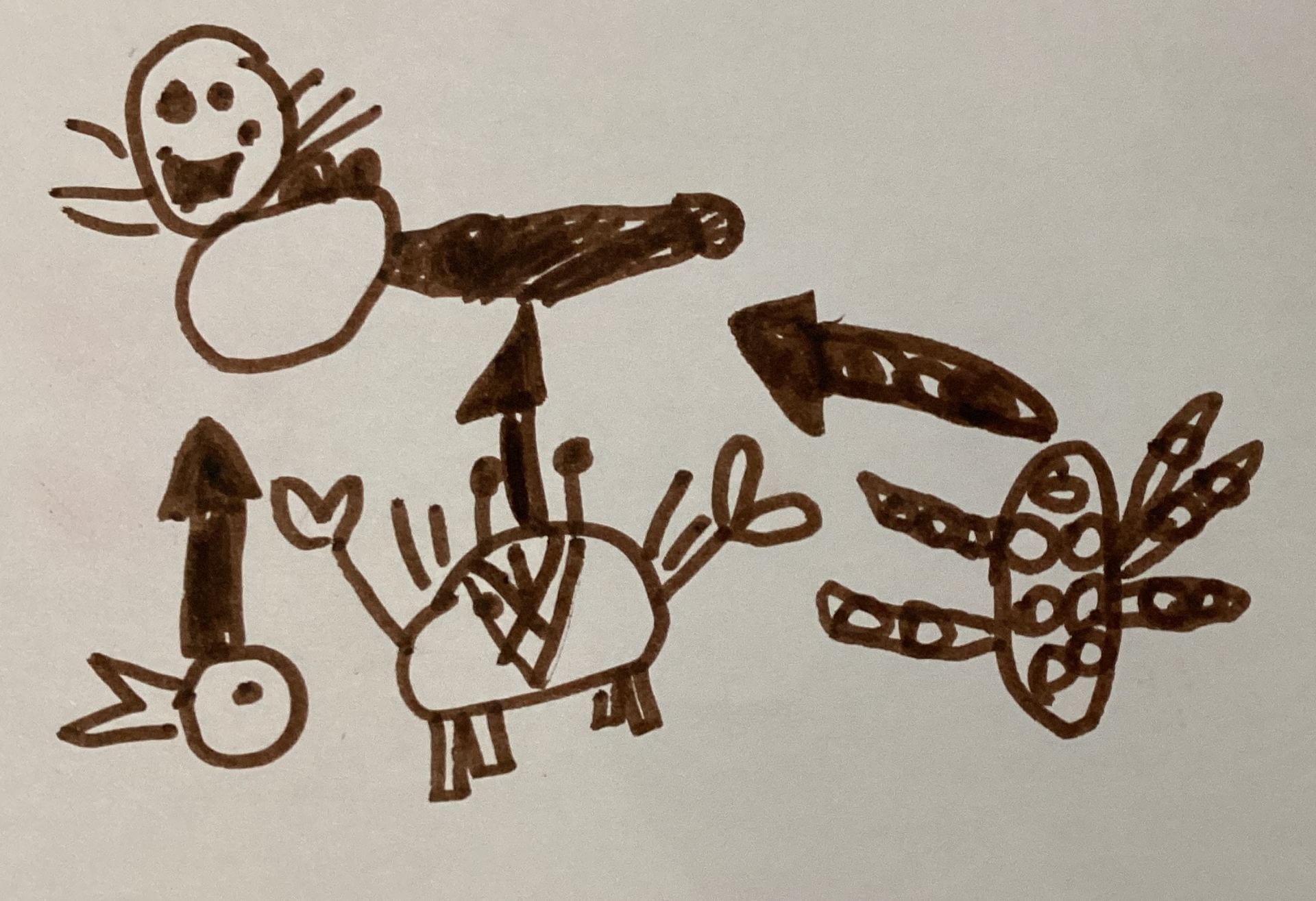


As the researchers dig deeper into the concepts of ‘survival’ and ‘interdependence’, we wonder how they might share what they learn through different medium.
Zones of the Ocean


Wyatt and Morning revisited their learning about the different zones in the ocean. They watched a video and discussed their observations, talking about the shades of blue they could see and the different living things that survived in the different zones.

Next, the team had to decide how they were going to present the different food webs they had created. After looking at different options such as creating trioramas dioramas and posters, the team decided that they wanted to create a poster to include their food webs. They visited the atelier to look for the creative art material they needed to create the posters. At first, Wyatt and Morning were unsure of how they were going to create the background to include the different shades of water they had seen in the video.
Through trial and error and feedback from their friends, the team worked together to create their posters.

When the paint had dried up, the team were ready to add the different elements to their posters. This required thinking about the different zones and deciding where those living things survived in the ocean.
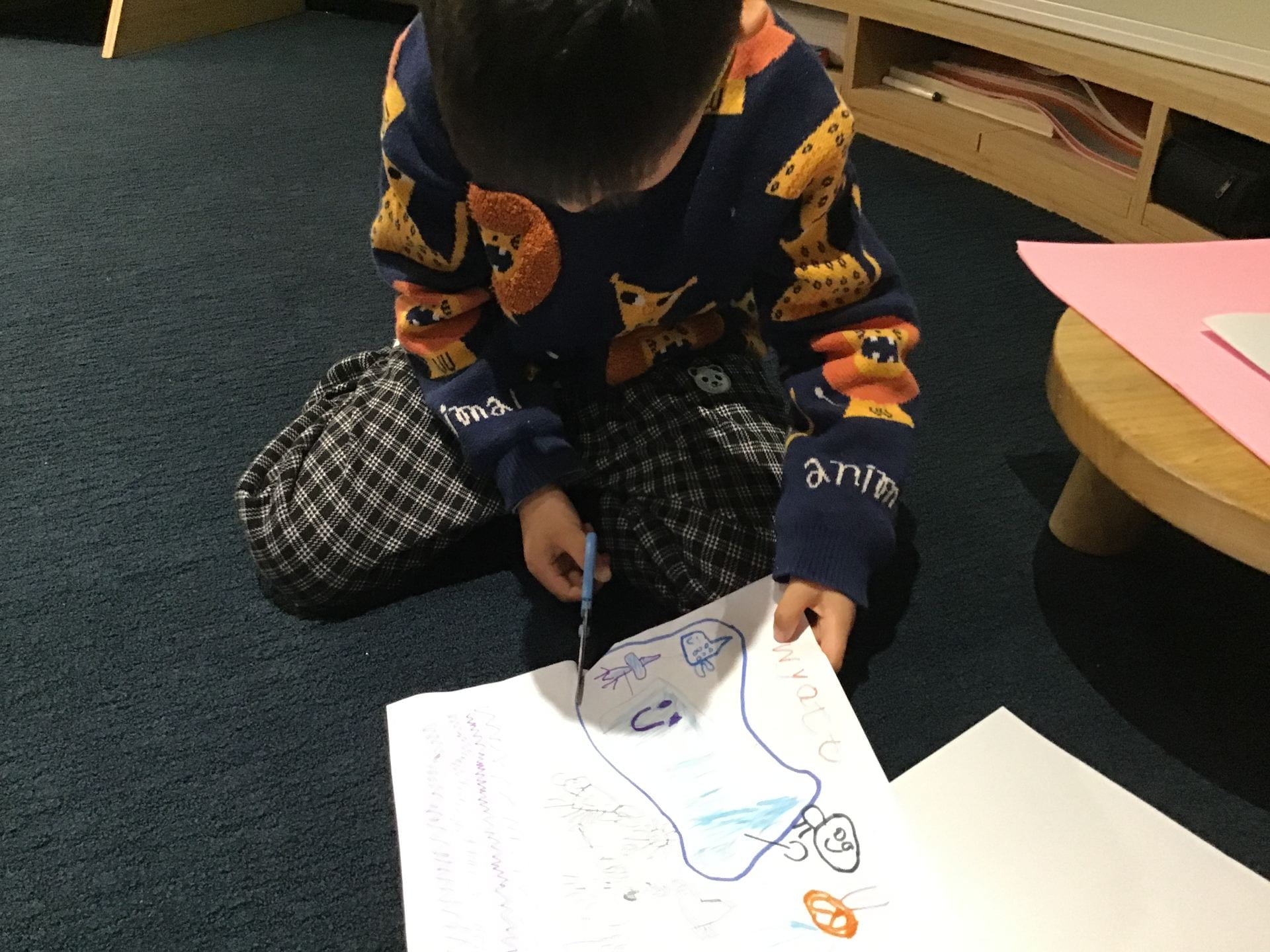
The team went back to the books they had read to revisit the information and make their decisions.

The team referred to the book to write labels for the different living things. The drawings, arrows and labels provide clarity about the information they want to share about ‘food webs’ and zones in the ocean.
Talking about the colourful images presented in the nonfiction books helped the children talk about the creatures they had drawn. We noticed that their vocabulary, understanding and interest had developed through their research. They elaborated on their observations of the different habitats, sharing important characteristics and adaptations the creatures needed to help them survive in the different zones of the ocean.
Wyatt and Morning shared their posters to present what they had learned about the different blues in the ocean. During their presentation, they talked about the creatures that live in the different zones and what they like to eat.


The team have created a journal cover for their process booklet.


Project Journal Cover Page

They look forward to sharing their posters and learning journey with the community!
The Exhibits


