Exploring Growing Patterns

We asked the children, “What do we know about growing?”

  • Riccardo “It will let you be higher.”
  • Suzy “Growing like plants growing higher and higher and then it has fruits for me to eat.”
  • Junsu “Flowers growing.”
  • Archie “If flowers grow they have to get water.”
  • Adalyn “Just like some trees growing up and it has some flowers.”

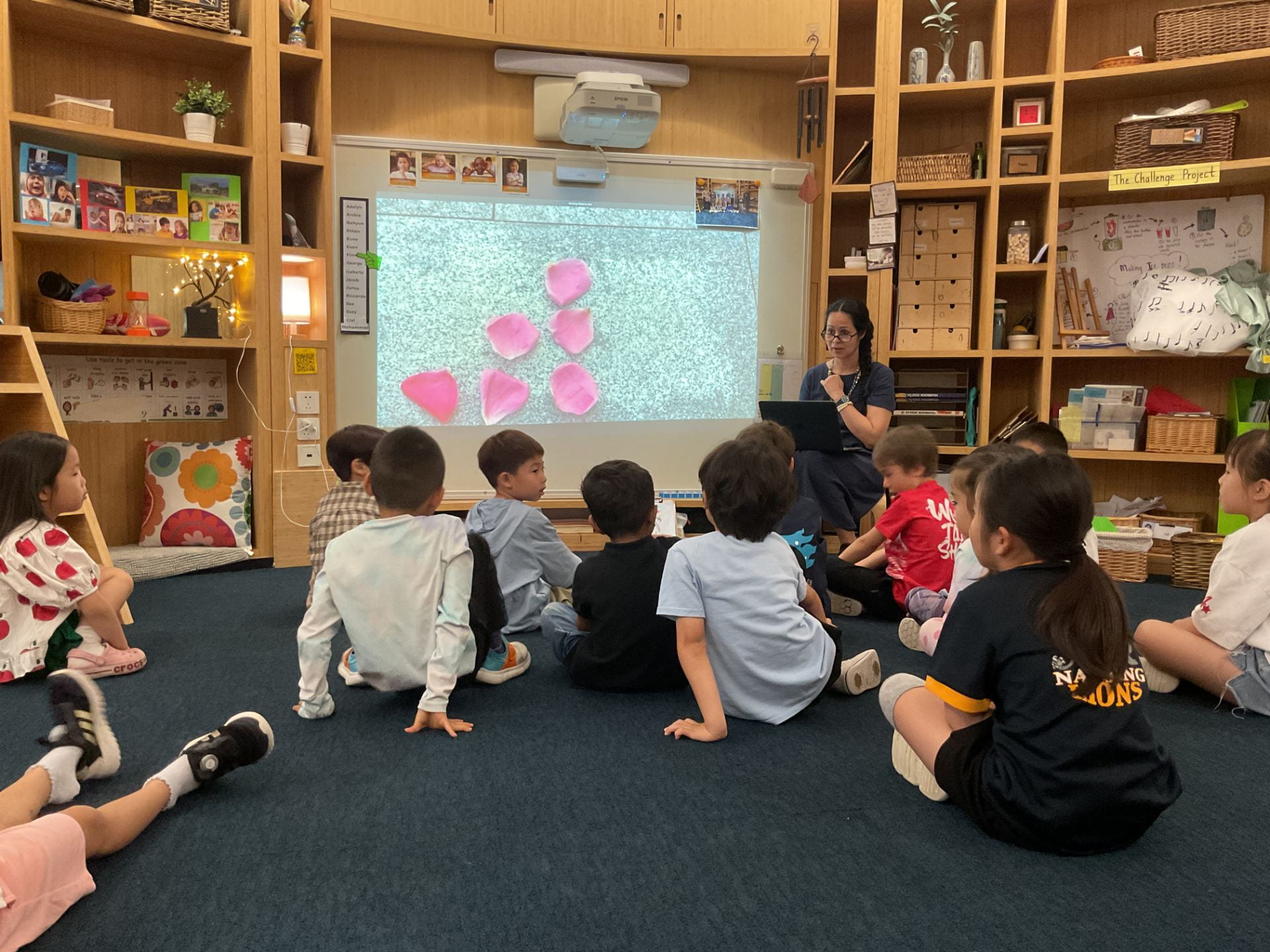
We shared a short video that introduced the children to the idea of ‘growing patterns’.

They noticed and talked about the way the petals were arranged. The pattern went up “by one” (Junsu), “like steps” (Jacob).  

Then, we used loose parts to create other growing patterns. With the nuts and bolts, the mathematicians noticed that the metal washes grew by 2’s, counting 2,4,6,8…

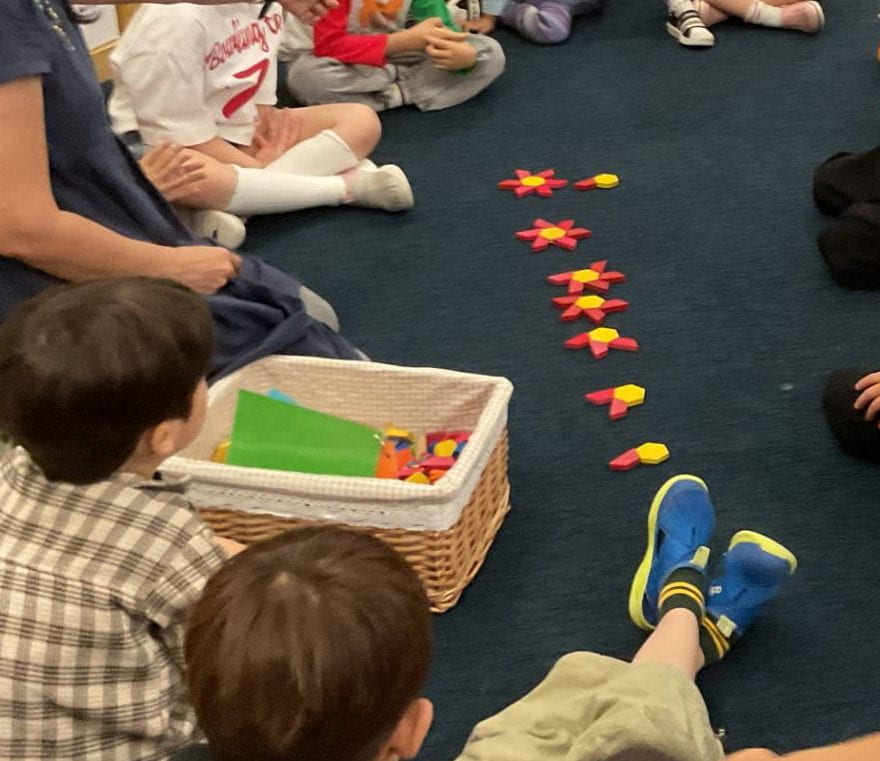
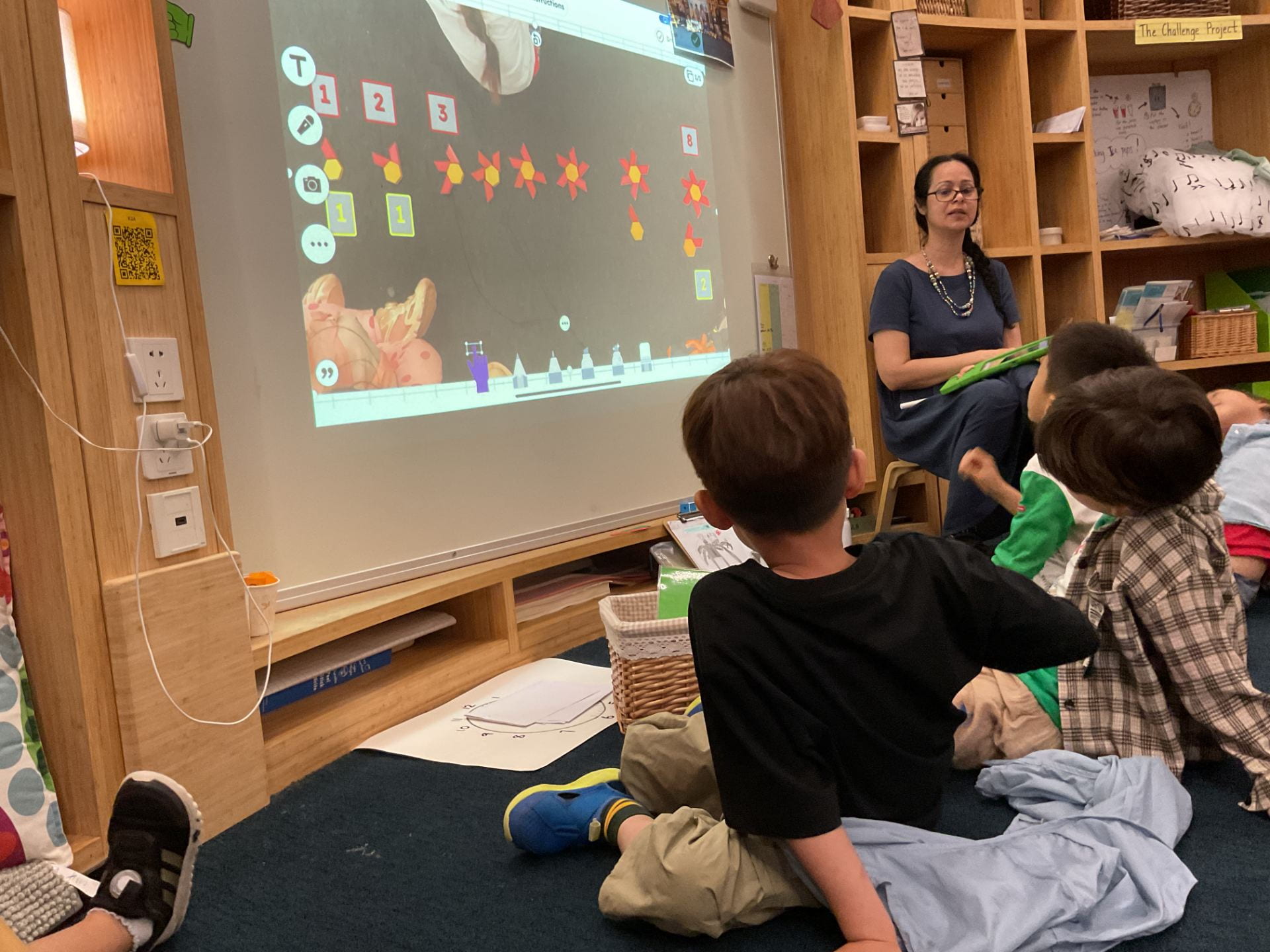
Next, we used geometric shapes to create a new pattern. This time, we added a new petal to the centre of the flower. Once the flower had all six petals, one flower transformed into two to accommodate the additional petals. We posted it on the Seesaw activity. Riccardo suggested that we include numbers to show the different ways the pattern was growing.

The Mathematicians will continue to work on using their creative ideas to make and share growing patterns.

Responses

Patterns and Tessellations

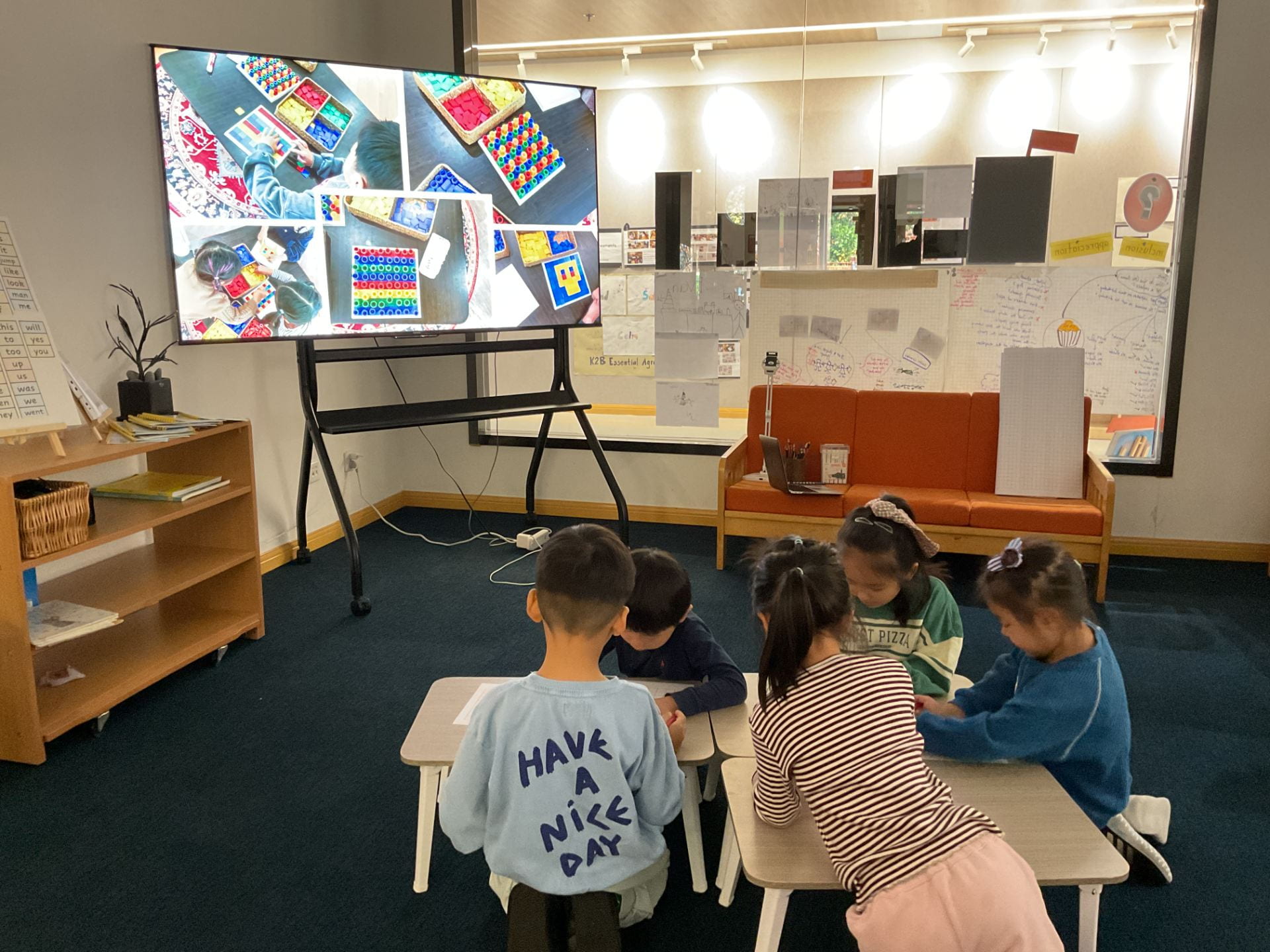
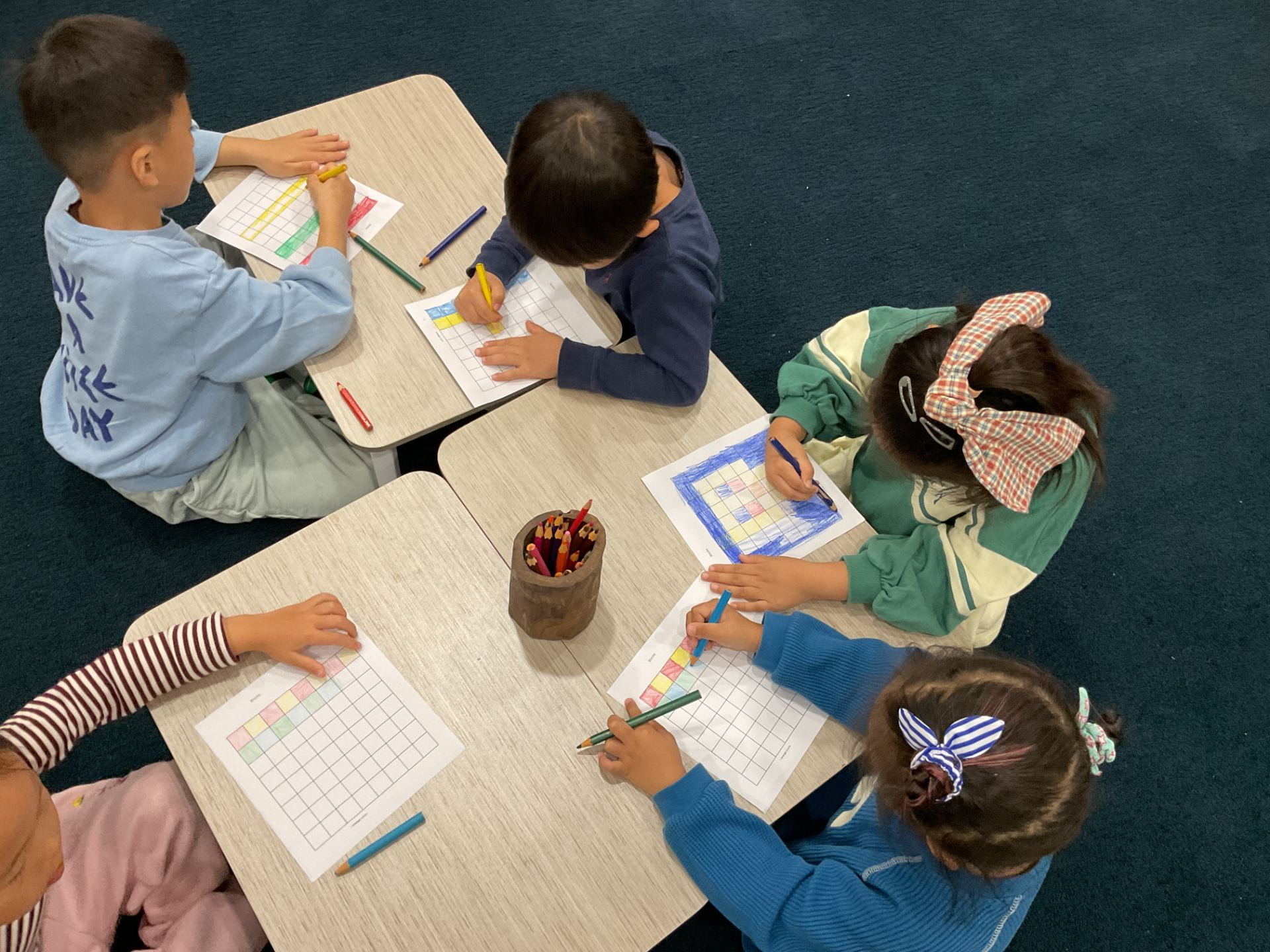
The children have been exploring, creating and playing with a range of coloured manipulatives in different spaces around the campfire.

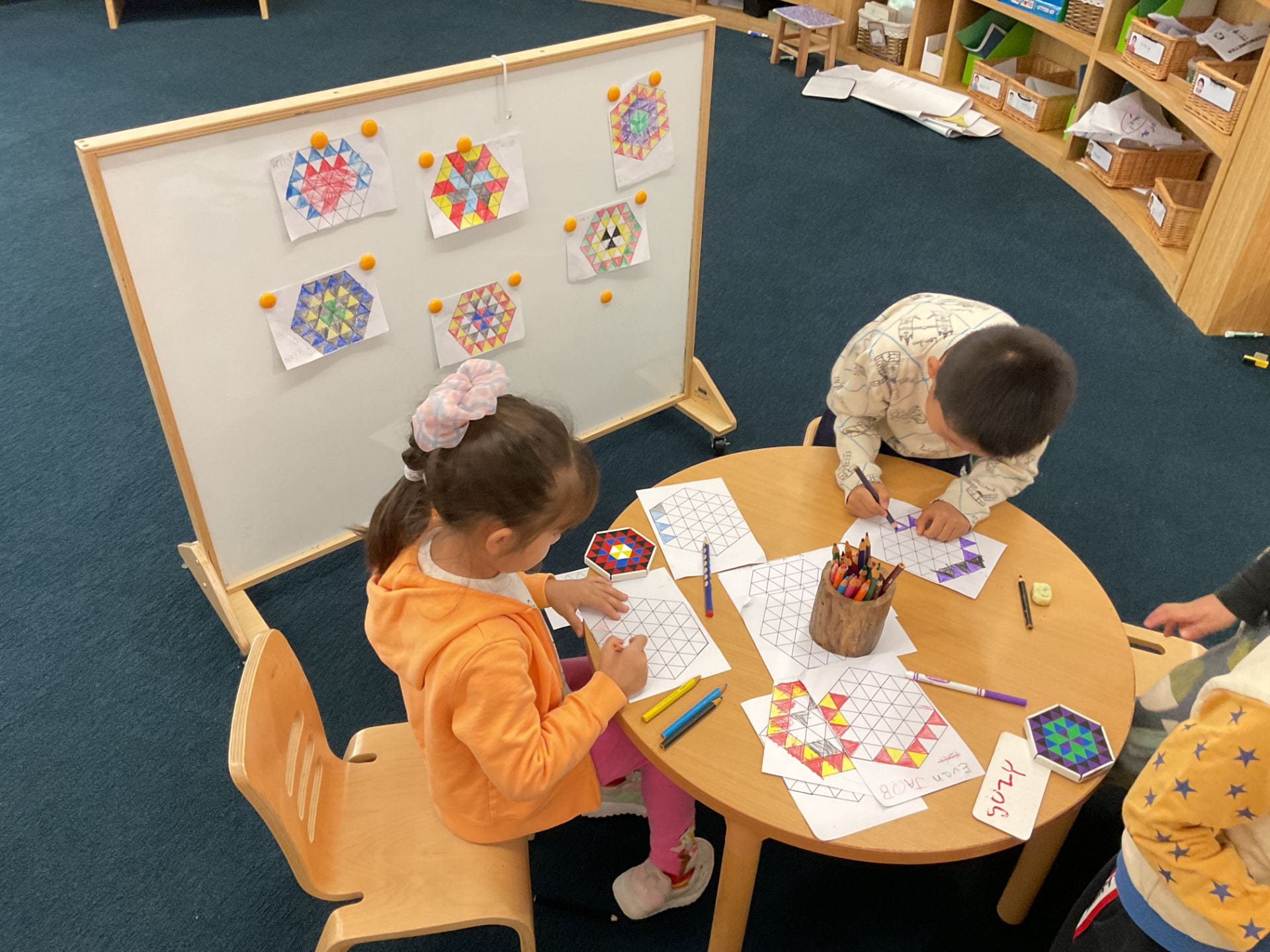
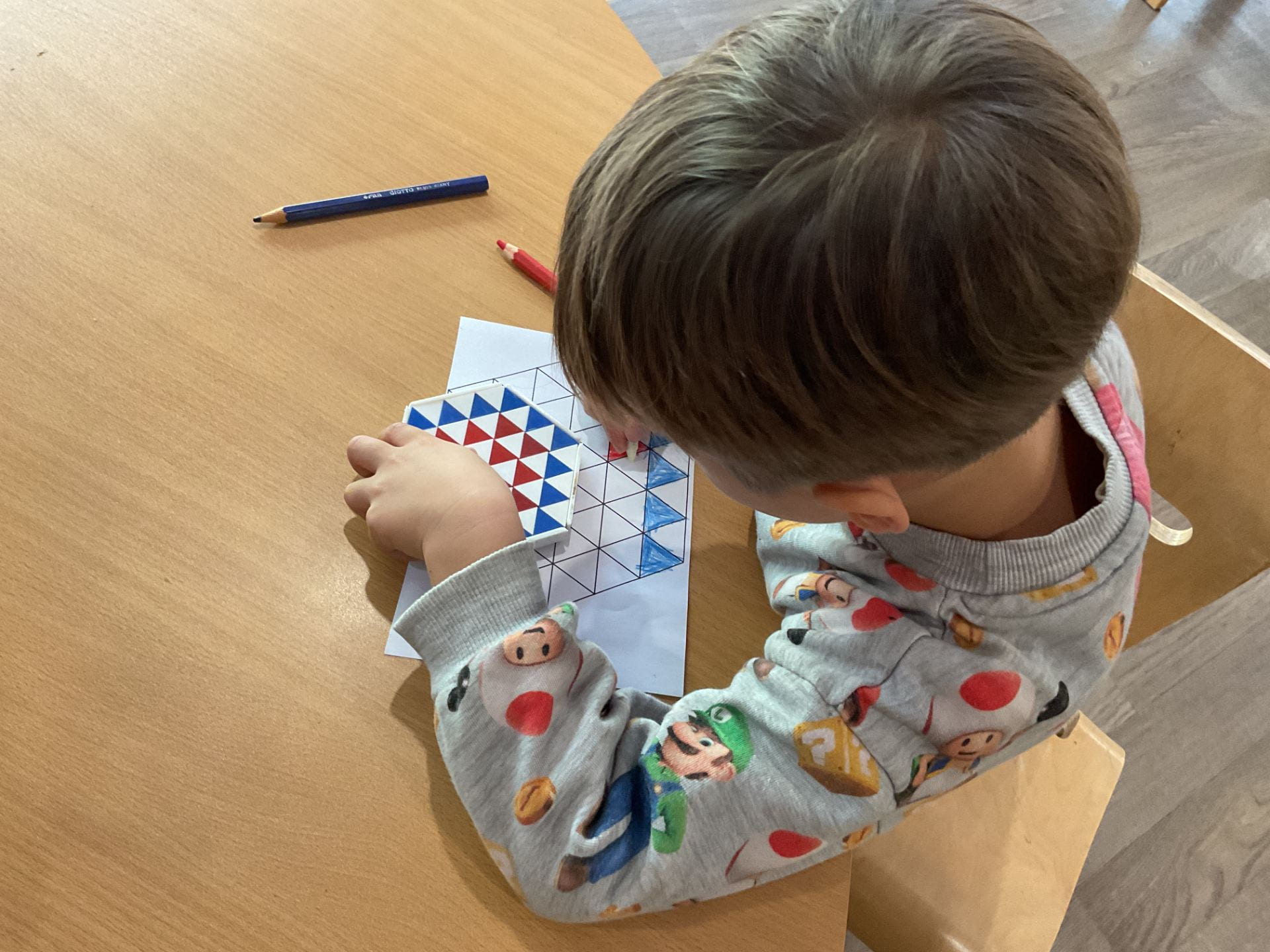
We have noticed them using the colour tiles to create patterns and pictures. They have also been using triangular shapes to create growing patterns and tessellations. A tessellation is a pattern of geometric shapes that fit together perfectly on a plane without any gaps or overlaps and can repeat in all directions infinitely.

These incredible designs and patterns reflect the children’s ability to notice and follow sequences to create complex designs. We have noticed how they work together, discussing their ideas and making choices to create. We have noticed the children’s focus and attention as they spend extended periods around the invitation, creating and then documenting their final work using technology. Their choices are intentional and thought out.

The children explained that they had decided to take out the suggested templates as they wanted to create their own designs using the triangular shapes which showed their interest to make and extend using their creativity.  

We wondered how the children would represent and transfer these designs and creations in different ways. We decided to offer the children an opportunity to think about and transfer these patterns and designs into a new medium.

Base 10 Blocks

A team of mathematicians worked together to solve a math problem.

We used Base 10 Blocks and place value mats to help us calculate. 

  • Ethan “Put 2 cubes for red.”

  • Suzy “10 blocks in the squares because there are 10 spaces.”
  • Archie “Counting the blocks to see how many blocks Sea has.”
  • Ethan “Ms. Shemo got the blocks every time there is 10.”
  • Isabella “Then, she gave one long one.”
  • Evan “10 in the long one.”

We played an addition game with regrouping 1’s for 10’s using one dice, Base 10 Blocks and a place mat. The children were excited to add the blocks each time and practiced grouping.

Big Ideas: the base 10 values system is used to represent numbers and number relationships.


The Game!

Isabella and Adalyn decided to create their own game using bricks, glass stones and sticks. The goal of the game was to earn lots of glass stones. You had to pass the ball to each other using a stick. Each time you shoot the ball into the goal, you get a brick. When you have 7 bricks you can trade it for a glass stone.

We noticed that the game designers revisited the rules of the game many times to make changes that made the game more exciting. They listened to each other and made changes through negotiation. The person with the most stones is the winner!

The World of Shapes

Story #1

Riccardo was exploring the kinetic sand in the Early Years to create shapes. He said, “I can show you something. I made a ball and I can turn this ball into an oval.”

Riccardo’s explanation shows his developing understanding of the characteristics of shapes.

Story #2

Throughout the day, we often gather on the carpet in a circle to share ideas, discuss wonderings, or explore new concepts. One morning, the children discussed their seating spots, triggering a discussion about the purpose of gatherings and the importance of a shape.

Jacob noticed that the class community didn’t make a ‘circle’ explaining, “This is not a circle, this is like a oval.” We drew a circle on a whiteboard and asked Jacob to explain the difference. He drew on the whiteboard to share his explanation, “A oval are the circle but you pull out the sides a little bit.”

We also used a beaded chain to demonstrate Jacob’s idea. This led to a discussion about the importance of the circular shape when we sit together, as everyone can be seen and everyone feels included.

Story #3

Euno, Dahyun and Sea were creating structures using different coloured cubes.

Euno counted the shapes on one side as she wanted to know how many shapes she had used in her design. How do we use shapes to make shapes?

Sea used her shapes differently, focusing on creating a rainbow pattern. We wonder how many more shapes she used each time her colour grew.   

Story #4

Evan, George and Jacob had created a house for Little Panda using different shapes. They were trying to figure out how many shapes they had used and estimated to solve the problem. Jacob pointed out that he saw ‘a square on each side of the structure!’ We wondered how many shapes they used in total to create the final structure and if we could identify some of these shapes.

We look forward to diving deeper into the ‘world of shapes‘ to learn more about them, to explore how shapes could impact the choices we make.


The Rainbow

Noticing the questions and wonderings the children had about Sea’s rainbow, we decided to print the photograph and present it back to the children.

What did they notice?

  • Isabella I see coloured blocks”
  • Adalyn “It’s like a rainbow.”
  • Suzy “It looks like a rectangle.”
  • Evan “I see so many colours in the picture, six colours.”

We wondered how the children may represent what they see. They worked independently using lines, shapes and colours to represent their observations on paper.

Next, we gathered to look at each other’s pictures and share what we noticed.

  • Isabella “I see some small square blocks.” The children agreed with Isabella’s observations.
  • “It has colours like a rainbow.” Explained Ethan making connections with what he already knows about colours.
  • Adalyn “It has a rectangle!”

How would we draw a rectangle? What would we need to remember?

  • Evan began to explain his thinking, using gestures to show straight lines that are connected. We illustrated his ideas on the chart paper, “two sides are long and two sides are shorter.”

How many square blocks did Sea use to create her rainbow?

  • Isabella thought hard and decided to share an estimate (a good guess) “Maybe 100 blocks because it’s too many blocks we can’t count.”
  • Suzy began to count the colours with the rest of the class joining in to help.

2 red, 1 purple, 5 blue, 9 green, 13 yellow and 17 orange cubes were used.

We wonder how we might work out how many cubes were used in all.  


As the young mathematicians went out to explore the classroom spaces, we witnessed more rainbows scattered across the classroom.

Sea seems to have inspired her friends with her rainbow structure!

Growing Patterns

Exploring Patterns with @M

One morning during quiet exploration time, @M chose a piece of paper from the recycled basket to make a new creation. He began by (carefully) using a ruler to make straight lines to create a border. Then, he used markers to create pattern towers. This reminded the teachers of the pattern exploration the children had engaged in the day before, where they used Unifix cubes to create colour patterns.

We noticed how @M drew and labelled his ‘pattern unit’ for each new pattern. He had his own rules which were communicated using blocks with numbers and colours. @M tried to think of a unique pattern each time he drew a tower of cubes.

@M sat with his task till he filled his paper with different patterns. When he revisited the patterns and checked them for accuracy, he noticed some errors. He paused to think about the different ways he might correct the mistakes.       

@M first strategy was to cross out the mistake. The next was to add additional cubes to continue the pattern correctly.

As he progressed with his pattern work, he began by creating the pattern unit before making the patterns. His two final patterns were red, orange, yellow, and red, pink and yellow.

Finally, @M drew a column of colours and a second column with question marks. This was to ask others if they could name the colours.

He explained that it did not relate to the patterns that were on the paper.

As we explore patterns in the world around us, we wonder which ones will capture @M‘s interest.

We wonder how he might document patterns in nature…

Our exploration continues…

Exploring Patterns

We began exploring patterns by reading the book ‘Violet Makes a Pattern’ by Holly Hartman.

  • Teacher “What is a pattern?”
  • Eli “A pattern is when you make like yellow, blue, red and then yellow, blue, red.

We read the book to see the different patterns Violet made with her cereal.  

Next, we used linking cubes to create our own patterns. 

Then, they were ready to create and continue patterns. The children documented their patterns on paper.

We are learning how to create, describe and extend simple patterns in everyday situations using objects and drawings.

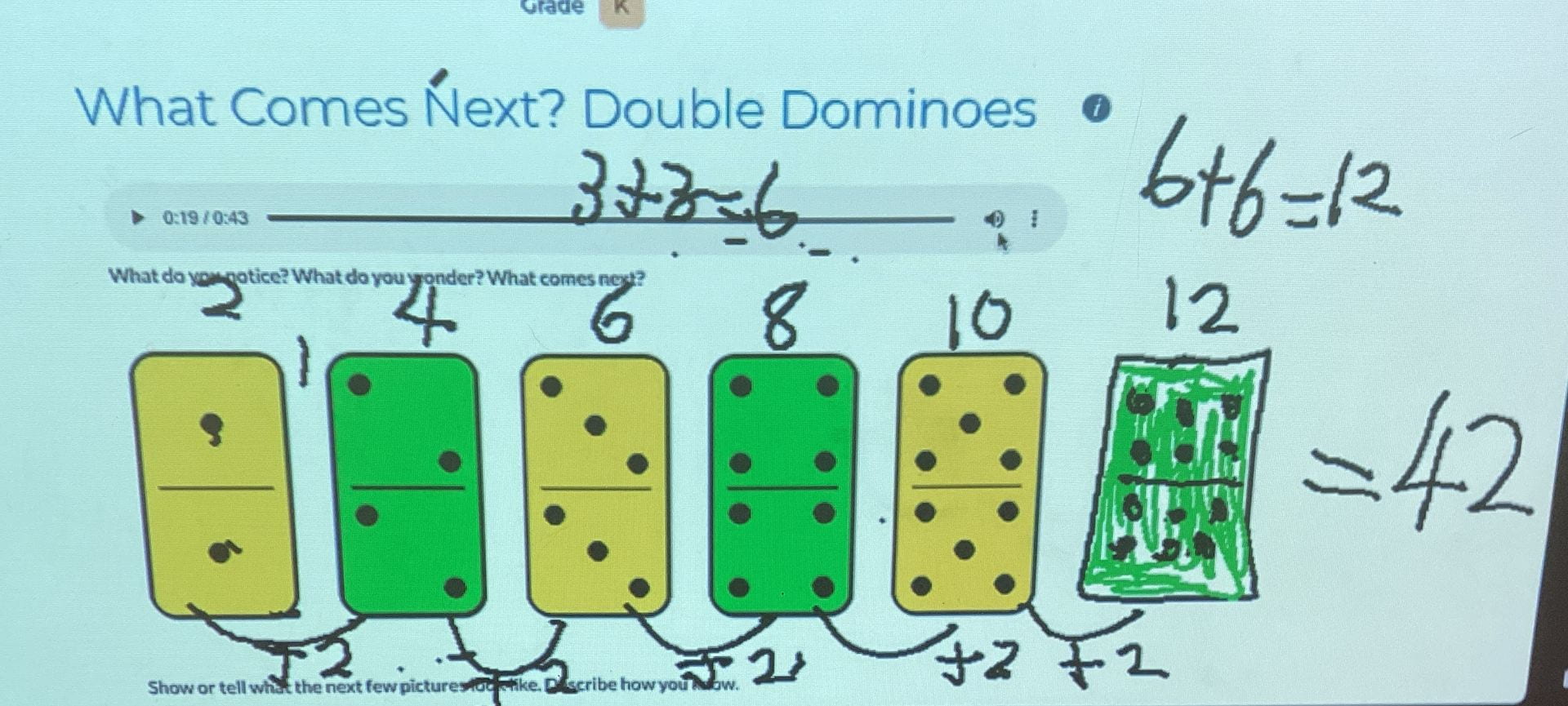
Math Talks – Dominoes

  • What do you notice?
  • What do you wonder?
  • What comes next? 

Show or tell what the next few pictures look like. Describe how you know.


Mosaics

Noticing the children’s interest in symmetry, patterns and designs, we invited the children to use their creative minds to design and create with pattern blocks. The mosaic artists began to gather around the table, exploring the materials and carefully choosing the shapes and colours to create beautiful designs.

We noticed that many of the designs were symmetrical. The mosaic artists also created images of familiar objects and animals. When creating art, the artists were making choices to construct meaning about the world around them. Their experiences and imagination inspired them to create. When their designs were complete, the artists placed their names next to their designs and documented their creative art.

Some pieces were independent projects and others were created in collaboration with others. We noticed that the children found joy in creating, learning and expressing themselves while working on their designs. They are learning that the creative process involves joining in, exploring and taking risks. The mosaic artists worked diligently, taking responsibility for the care of tools and materials.

Our observations of the children’s work show us how interested they are in colours, shapes, patterns and designs as an art form. We know that their artwork has meaning. We know their creations are inspired by their curiosity in the world around them. We look forward to offering the children experiences that allow them to explore their creativity further.  

Research into Patterns: Patterns in Nature

We have been creating patterns with shapes, colours, sounds, actions and movement. As the children have shown a keen interest in nature, we decided to go outdoors to look for patterns in nature.

First, we looked for patterns on leaves and in flowers. The children noticed squiggly lines on leaves, and circles and dots on the flowers.

We thought about the different ways we can document what we noticed. We used pictures and labels to document our observations.Then, we went outdoors to look for other patterns. The children took their clipboards with paper, thin tip markers for writing and iPads to take photos. They used shapes, lines and patterns to record their observations.

The children began to notice relationships and patterns, and shared their ideas with others.

The video shares our learning journey, including the photographs the children took and the notes they made of their observations.

We wonder how we might use what we know about groups and categories to help us sort and organise our information. We wonder how we might share what we learned with others.

Our learning continues….   

Research Skills

  • Gather information from a variety of sources.
  • Use all senses to observe and notice details.
  • Record observations—drawing, using emergent writing skills.
  • Notice relationships and patterns.

Loose Parts Invitation-Mandalas with Nature Loose Parts

Distance Learning Provocations

Focus: Creativity, Nature and Mathematics

We have used loose parts to play games, tell stories and create artwork.

What are Mandalas?

Mandalas have colourful, detailed geometric patterns. They are often in a circular shape or they have points. They have shapes such as circles, diamonds, triangles, ovals, half circles and much more. You can use leaves, flowers, grass, sticks, twigs, feathers, small pebbles, rocks, shells or anything you like.

Today we invite you to make Mandalas using natural materials.

Watch the video to see an example

Go on a hunt to find your loose parts. Then, create a Mandala or picture with everything you’ve collected.

Counting Squares

The students were presented with a picture that had a heap of red and yellow Unit Tiles.

What do you wonder?

  • Tracey “Why does red and yellow? Why are they not rectangles?”
  • Patrick “Who takes yellow and red to mix it.”
  • Kenan “Why yellow and red is putting in?”
  • Mason “What does it mean?”
  • Olivia “Why don’t they have blue and green?”

 Estimate how many squares are in the pile?  

Next, the children estimated how many Unit Tiles there were in the pile. They noted this down.

How many red?

How many yellow?

How many Unit tiles we used to make the pattern?

Then, we watched a video that gave the children more clues. The video stops midway, showing an incomplete pattern. The children used pictures to draw and share the complete pattern, and to find out how many tiles were used in all.

Finally, they were able to record how many red and yellow tiles were used to make the pattern.

Through this task the children were able to:

-estimate

-share their thinking

-document ideas using drawings and numbers

-problem-solve

-work in collaborative groups


Square Colour Tiles

Exploring Shape, colour, patterns and designs.

We have noticed the children showing a special interest in colourful loose parts that can be used to create patterns and pictures.

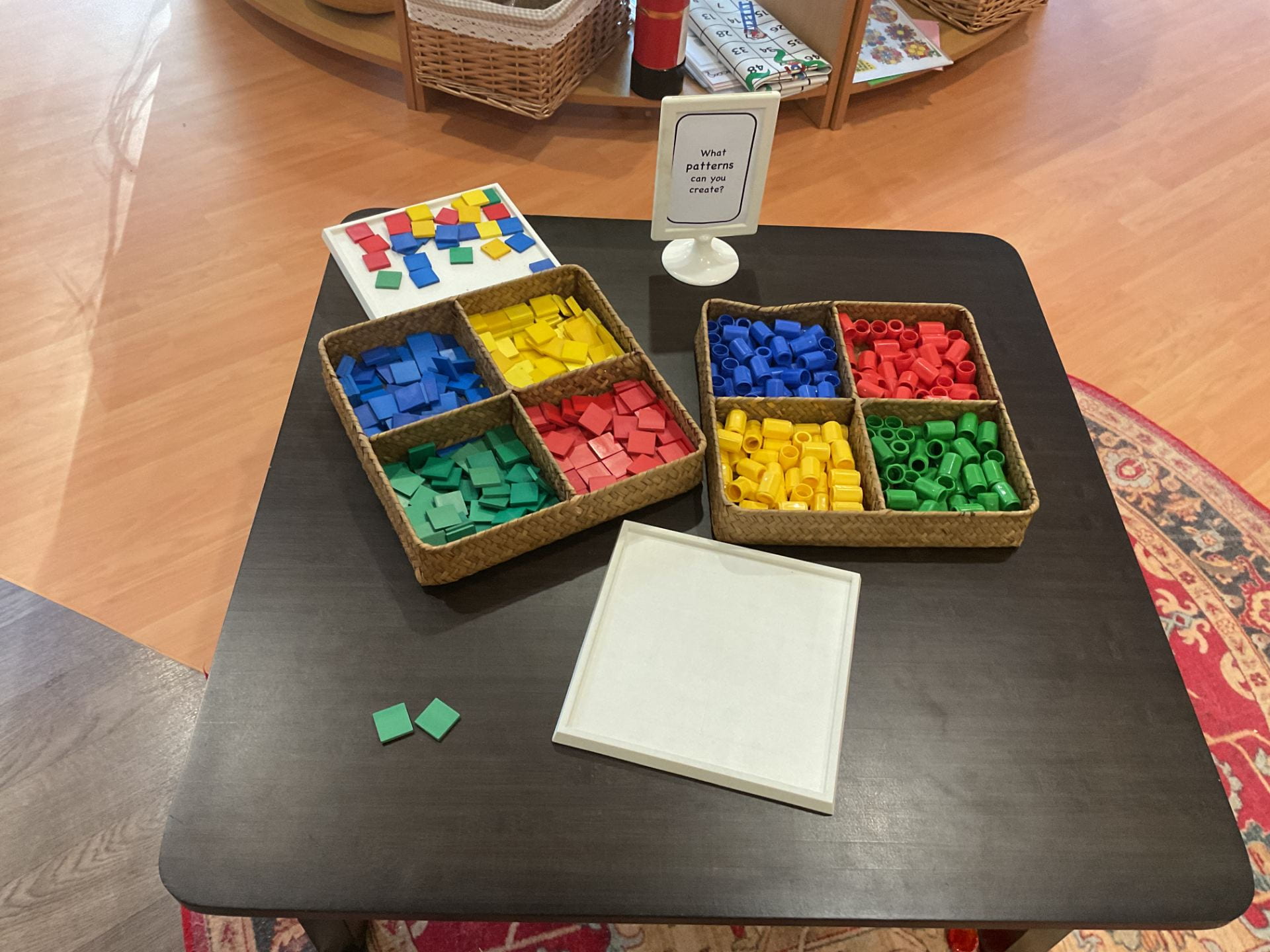
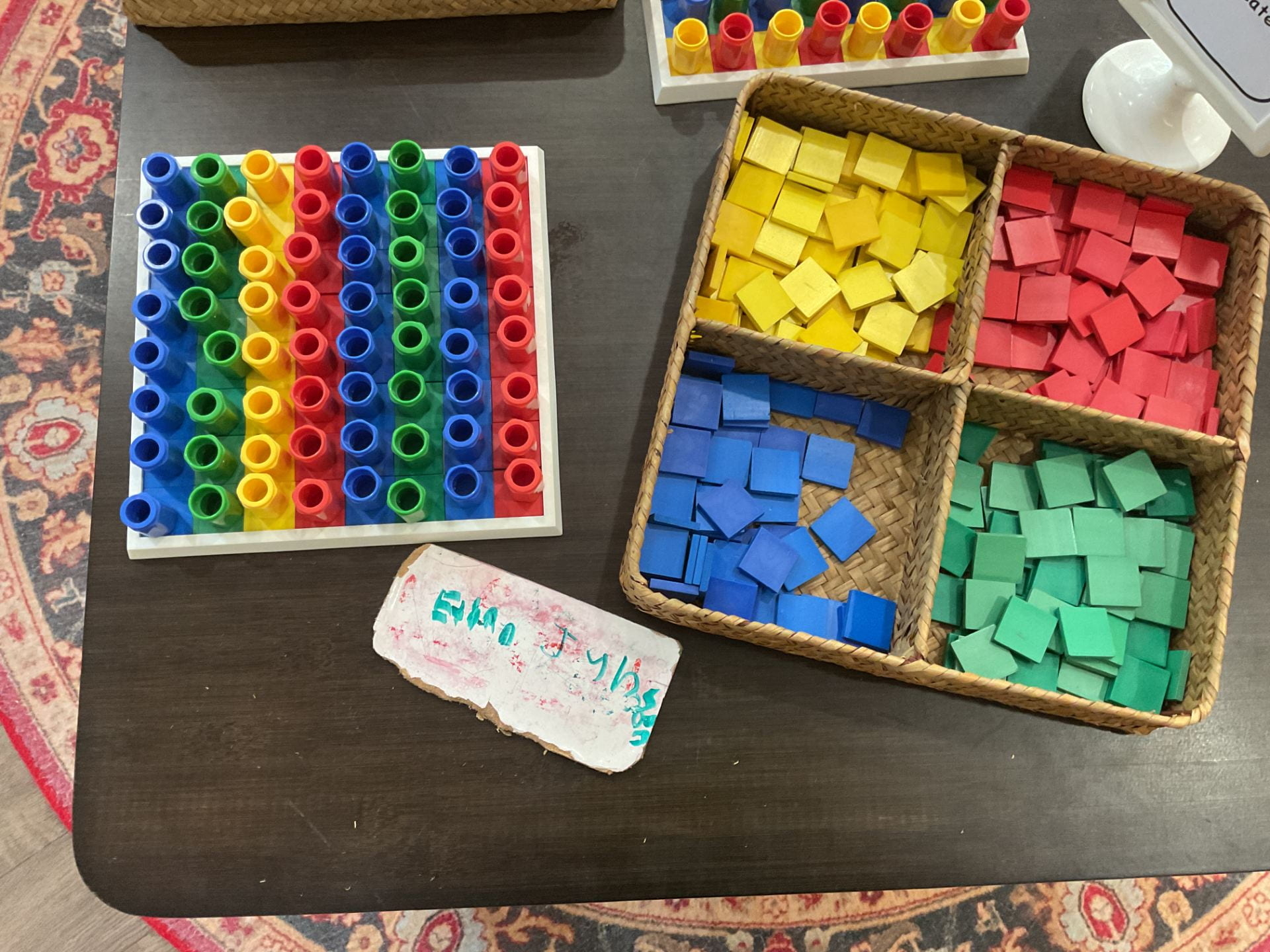
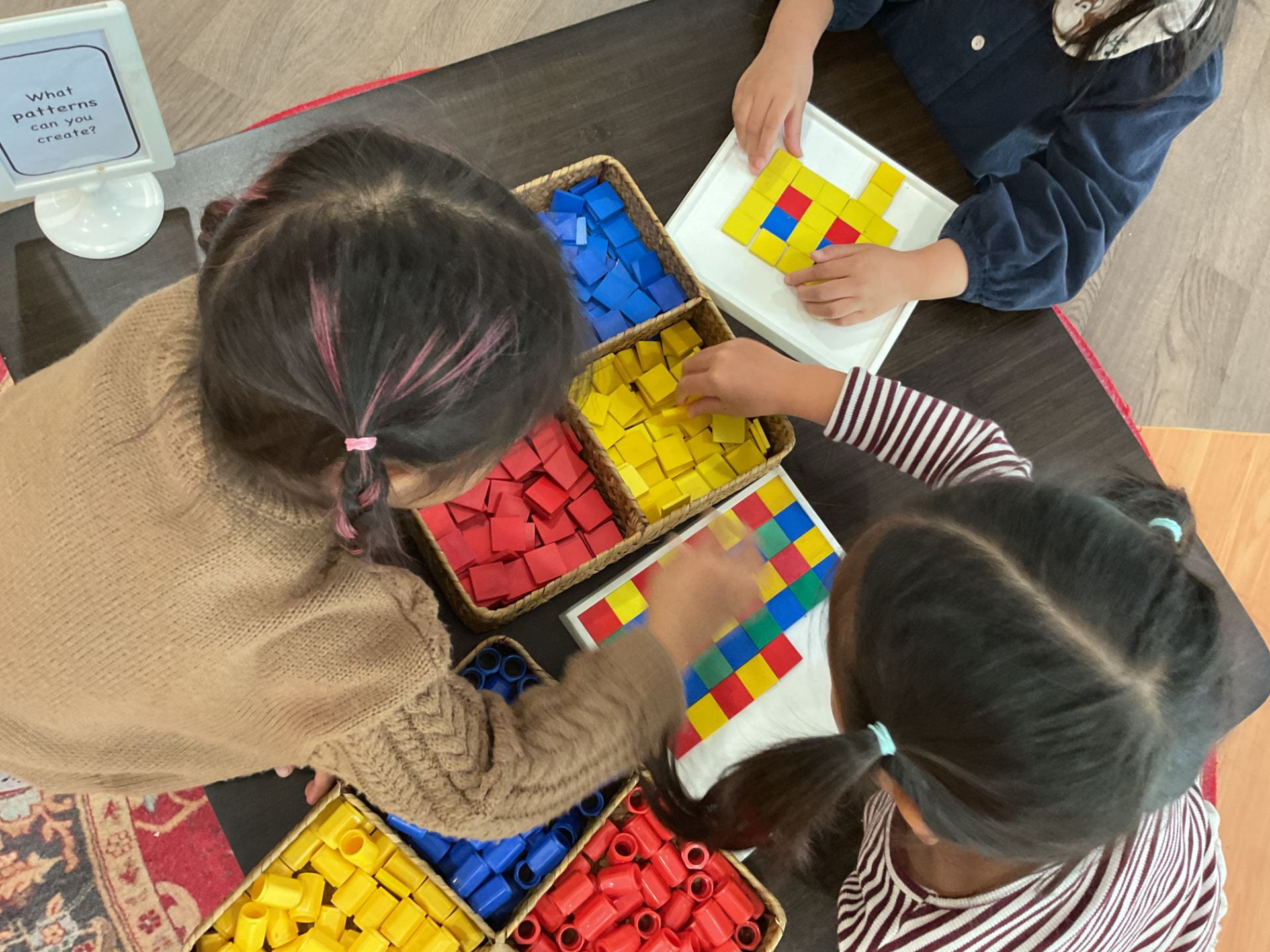
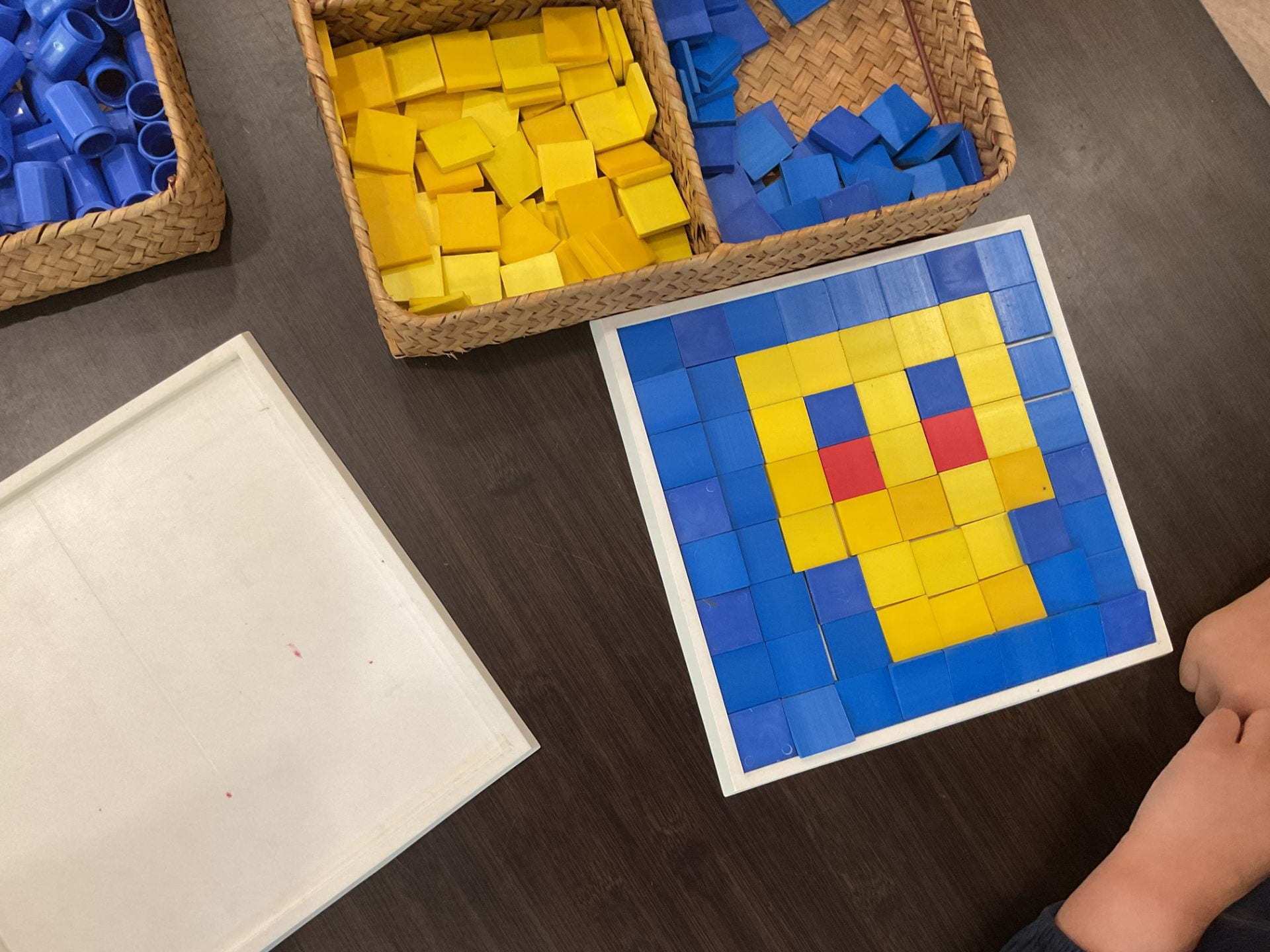
To help them explore this further, we decided to give the children frames, trays and square colour tiles in four colours: red, blue, green and yellow. These tiles are a great resource that can be used creatively to explore a range of mathematical concepts.

One student decided to sort the heap of tiles into the 4 different colours to make it easy to find the ones his friends needed.

The children began by placing squares around the edge of the tray and then working their way towards the center, each square shape was a different colour.

Then, they began to create other patterns. Straight line colour patterns, repeating patterns and other creative designs using the 4 colour tiles.  

The children were encouraged to share and talk about the different designs they created. This allowed the children to extend their mathematical vocabulary and knowledge of concepts about pattern, number, symmetry, shape, size and design. We noticed the children working collaboratively, sharing the resources, taking turns and caring for the material they used. 

Exploring Patterns

How might we make patters with shapes, sounds, colours and actions?

We gathered together with a heap of ‘Pattern Blocks’. Patterns Blocks are a collection of shapes in 6 colours. We invited the children to give each coloured block a sound.

The yellow hexagon was going to make the sound ‘cluck, cluck’. The children decided that the red trapezoid could make the sound ‘woof, woof’ and the blue parallelogram would make the sound ‘brrr’.

The children quickly began to extend the pattern, adding blocks and sounds. They could see and hear the patterns. We decided to change the sounds to actions. The children laughed and wiggled and created patterns with enthusiasm.

Next, the children created their own sound patterns using the Pattern Blocks.

When they were happy with their pattern and sounds, they transferred this on to a strip of paper, cutting and gluing the shapes in a pattern.

  • We wonder what creative patterns we can make.
  • We wonder how we might describe and extend patterns using objects and drawings.

Patterns in Nature, Patterns in Sounds

What might patterns look, sound and feel like? 

We have been creating patterns with pattern blocks, sounds and actions. As the children were showing an interest in nature, we decided to go outdoors to see if we can create patterns in nature. The children used leaves, sticks and stones to make their patterns.

How else can we represent our patterns?

The children have been using musical instruments to explore concepts such as sound, rhythm, melody, tempo and composition during their time with Ms. Heidi. We decided to provide the children with opportunities to explore the connection between patterns, composition and music.

We wonder where else we see patterns…

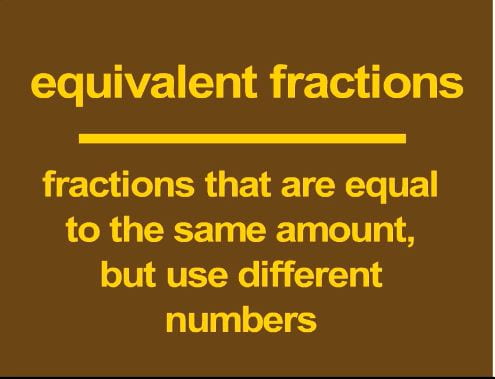
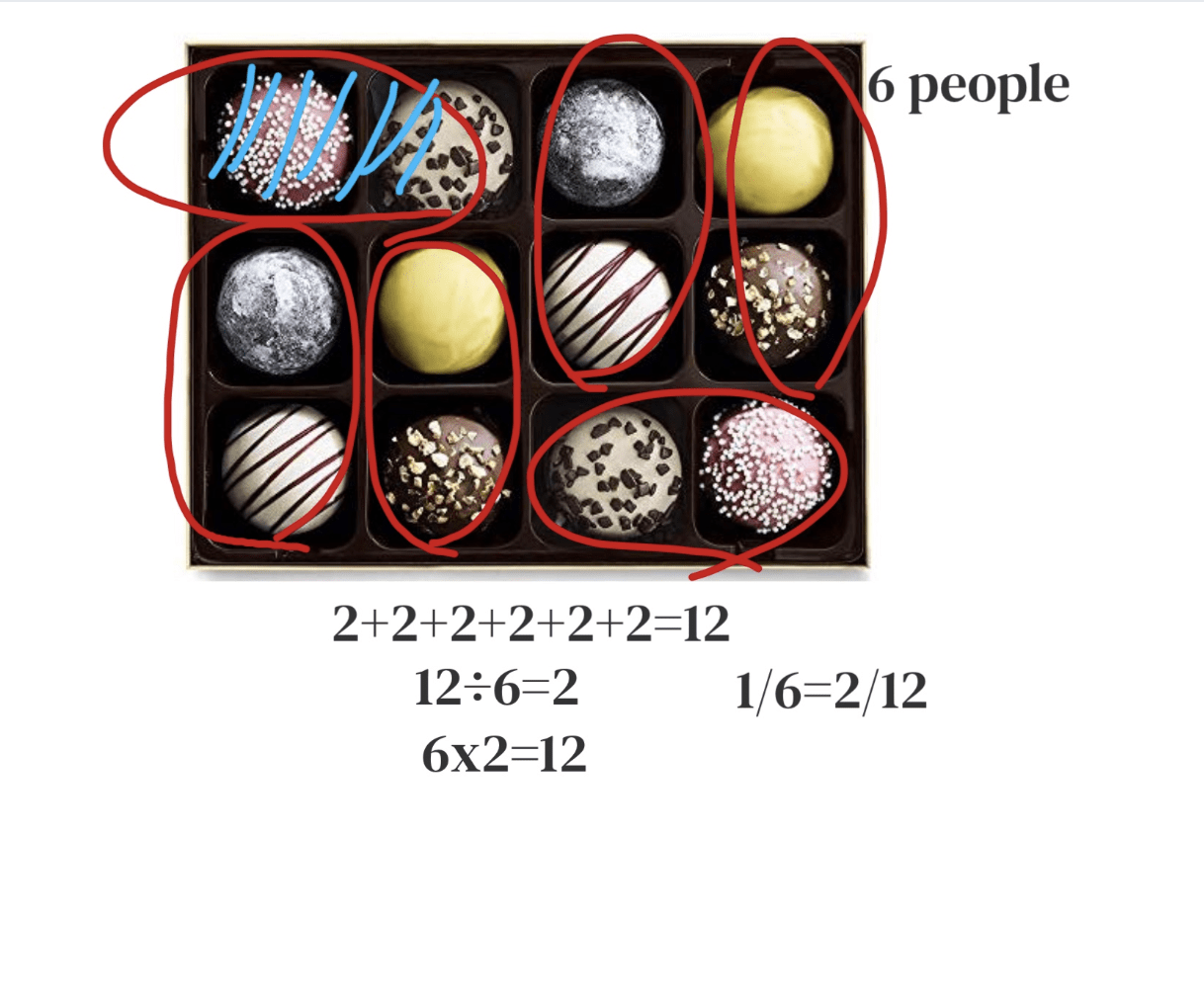
Equivalent Fractions

We continue to use a range of material to make sense of fractions. We wonder how we might: 

  • compare and order 1/2, 1/4, 1/3 and 1/10  of shapes and sets using concrete materials
  • model equivalent proper fractions 1/2, 1/4, 1/3 and 1/10

We watched the BrainPop video on Equivalent Fractions.

Then, we used manipulatives to model fractions, looking for was to create 1/2, 1/4, 1/3 and 1/10  of shapes. 


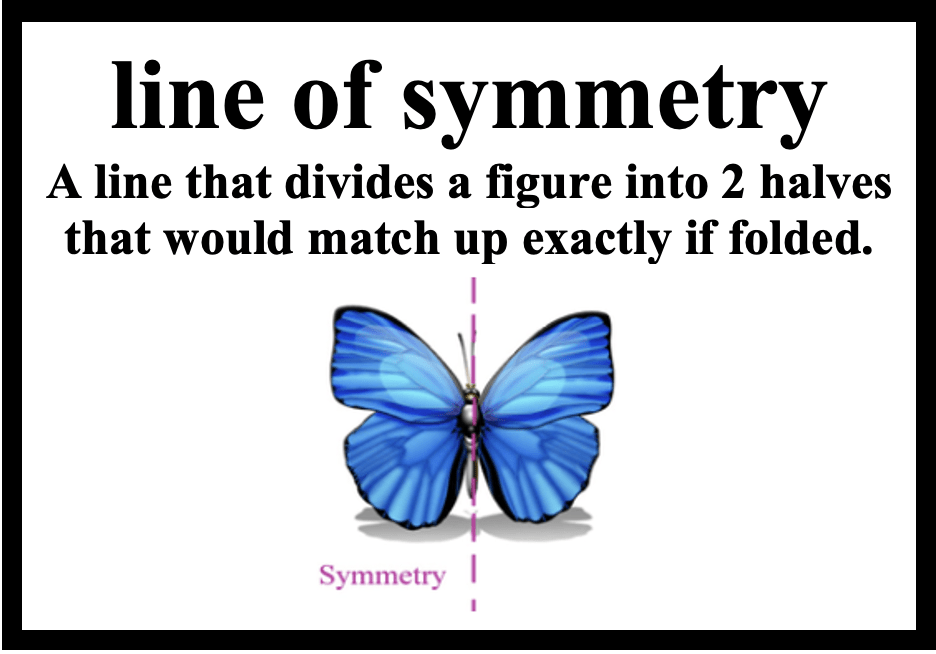
Lines of Symmetry

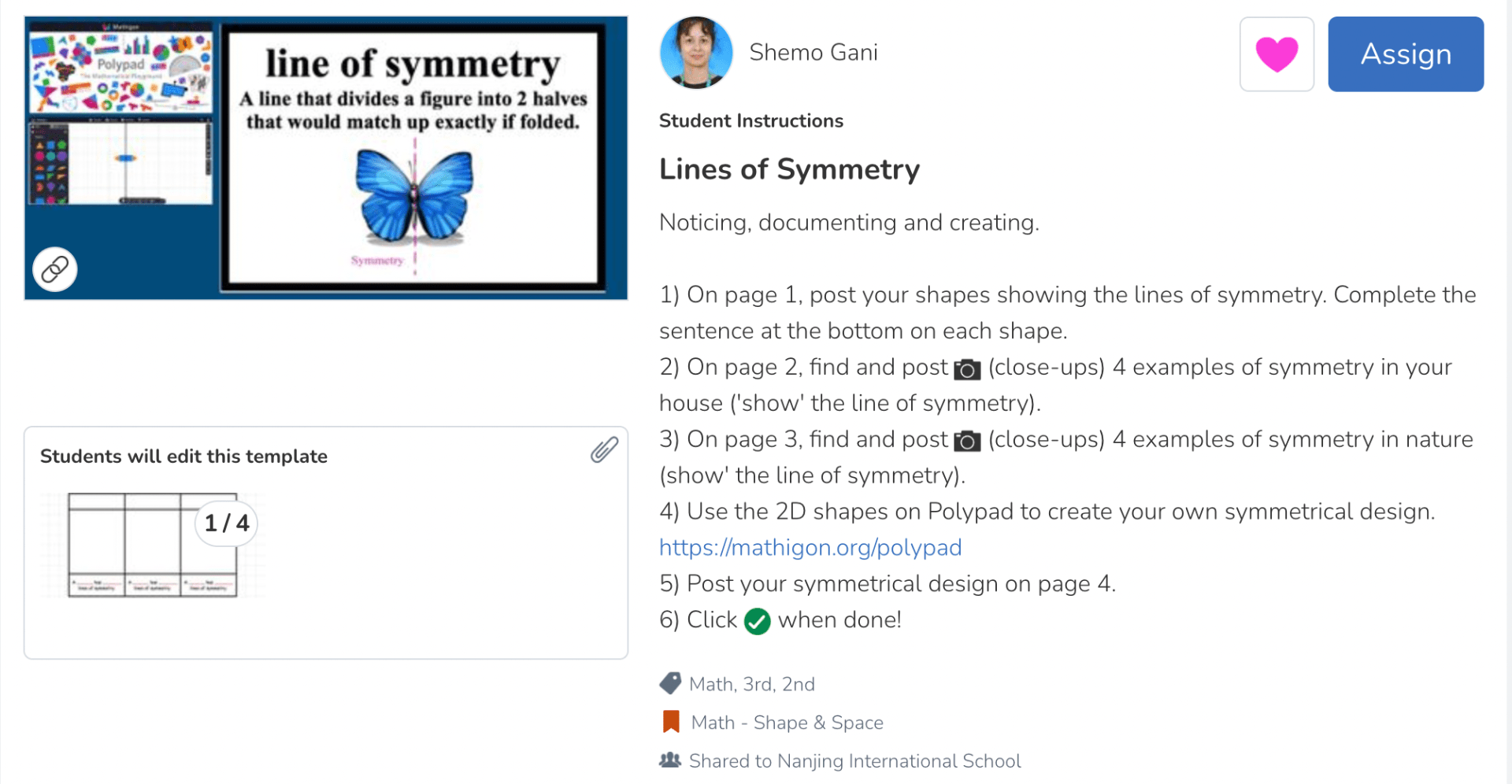
We were exploring shapes and lines of symmetry.

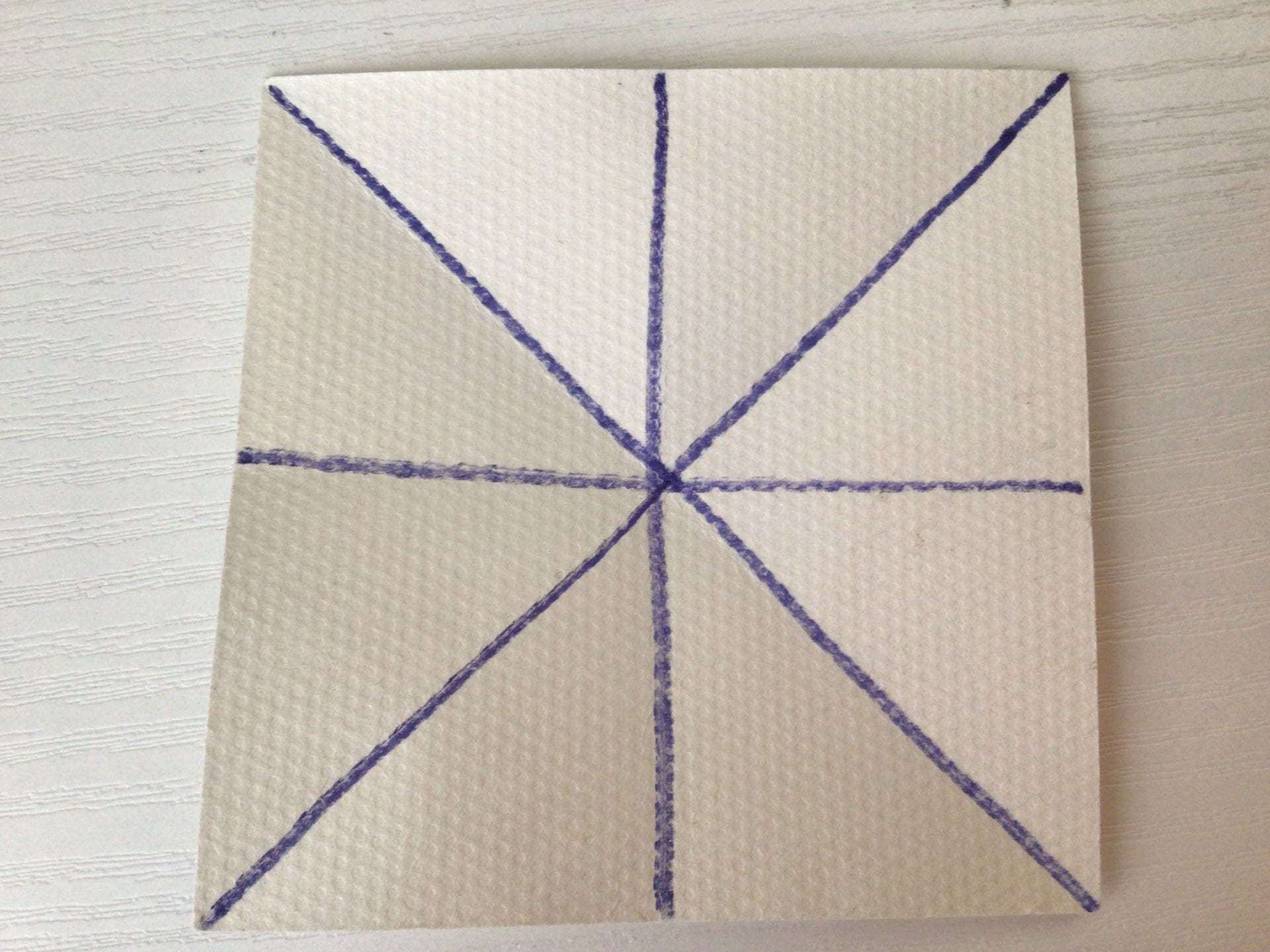
First, we looked at a square. How many lines of symmetry can we find?


Next, we looked closely at an equilateral triangle. What do we notice about this shape?

The students explained that the angles are the same size and the sides of this shape are the same length. Finally, we looked at the circle. The students commented that the circle have ‘many’, ‘countless’ or ‘infinite’ lines of symmetry. 


We recorded this information, counting and labelling the different lines of symmetry. 

Next, we looked for lines of symmetry in our homes.

Then, we looked for lines of symmetry in nature.

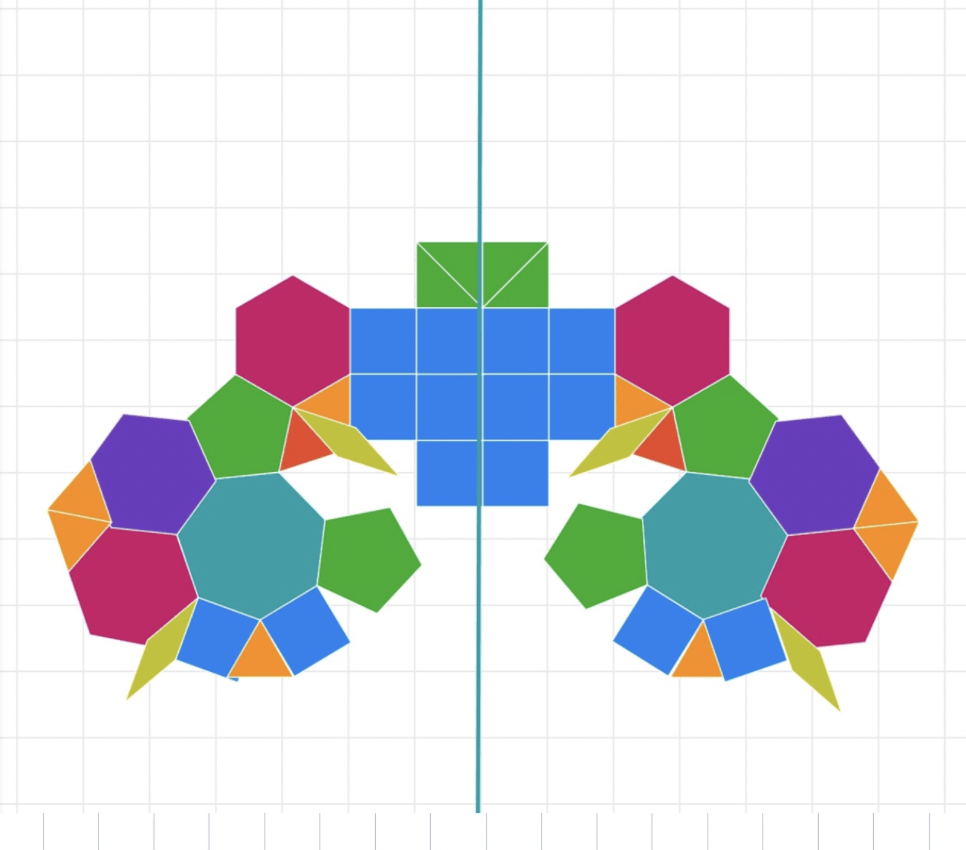
Finally, we created symmetrical pictures with shapes on Polypad.

Patterns

We began by discussing and sharing what we already know about patterns. The students noted their ideas on large chart paper.

  • Ethan “You can repeat something or add more.”
  • Seoyeon and Ella “pattens can be shapes. Patterns have to repeat all the time.”
  • “Patterns can be numbers.”
  • Agata “Patterns can be long or short.”
  • Seoyeon “Patterns can be colours.”

Questions: 

  • Agata “Can patterns be built with people?”

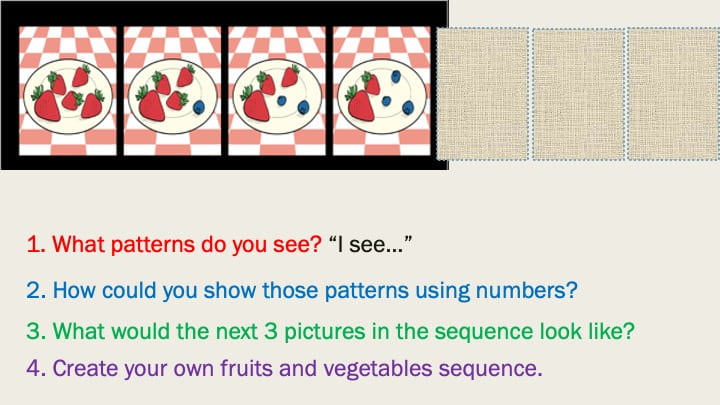
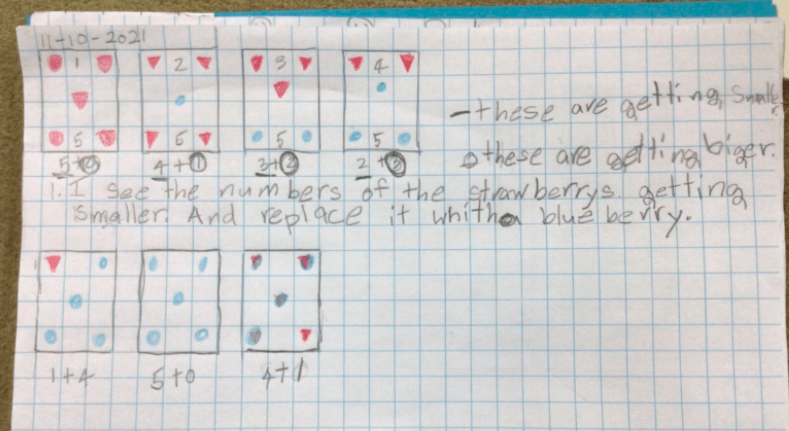
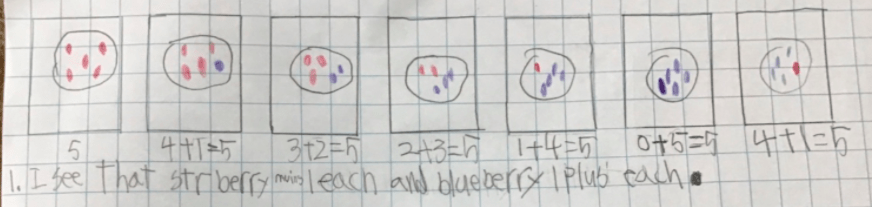
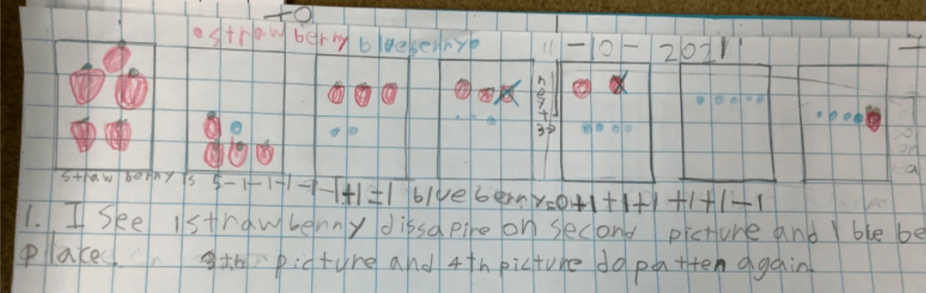
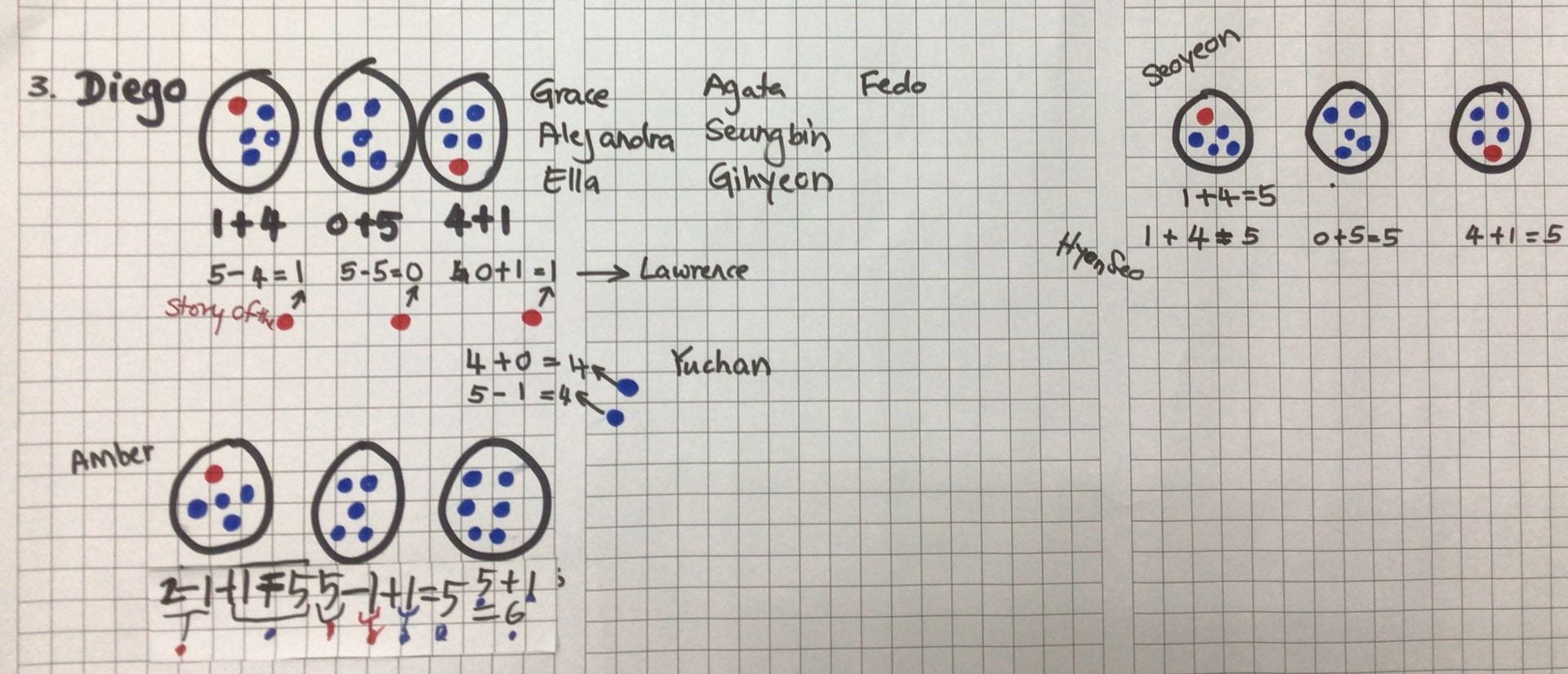
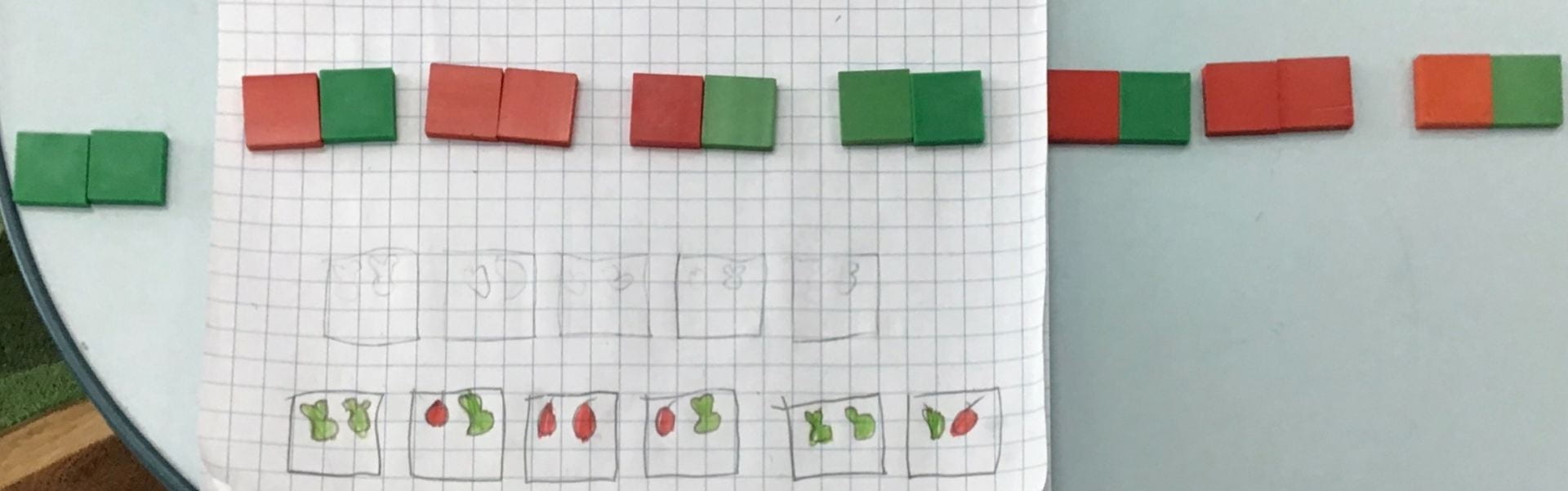
Next, the students were presented with a series of images. They documented the image and their ideas using pictures, numbers and words.

I can see…

  • “…strawberries and blueberries.” – Grace
  • “…one strawberry changed to a blueberry.” – Ethan
  • “…strawberry -1 each and blueberry +1 each.” – Seungbin
  • “…the number of the strawberry is getting smaller and replacing it with a blueberry.” – Ella
  • “…I see the picture going down is the blueberry is more more.” – Lawrence

How can you show these patterns using numbers?

What would the next 3 pictures in the sequence look like?

Then, they decided on how they would continue the pattern. They justified their ideas to the group.

Finally, the students created their own pattern using manipulatives, symbols and numbers, demonstrating how patterns can be represented in a variety of ways.

Our exploration on patterns continues…

Creating Sets and Groups

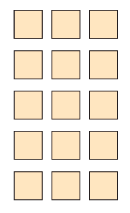
We have been exploring multiplication and division in Second Grade. The students began with a warm up activity to discuss what they noticed and wondered about this image.

The students used whiteboards to document and share their thinking.

We watched a short video on Multiplication as groups of objects to help us create sets and groups using materials in the classroom.

The students worked together in teams to create different sets of 2’s, 3’s, 4’s 5’s and 10’s.

They included multiplication equations to explain their groupings. 

Our research with number helped us complete a multiplication chart.

Multiplication

What do you notice?

What do you wonder?


The students shared their ideas about the images. 

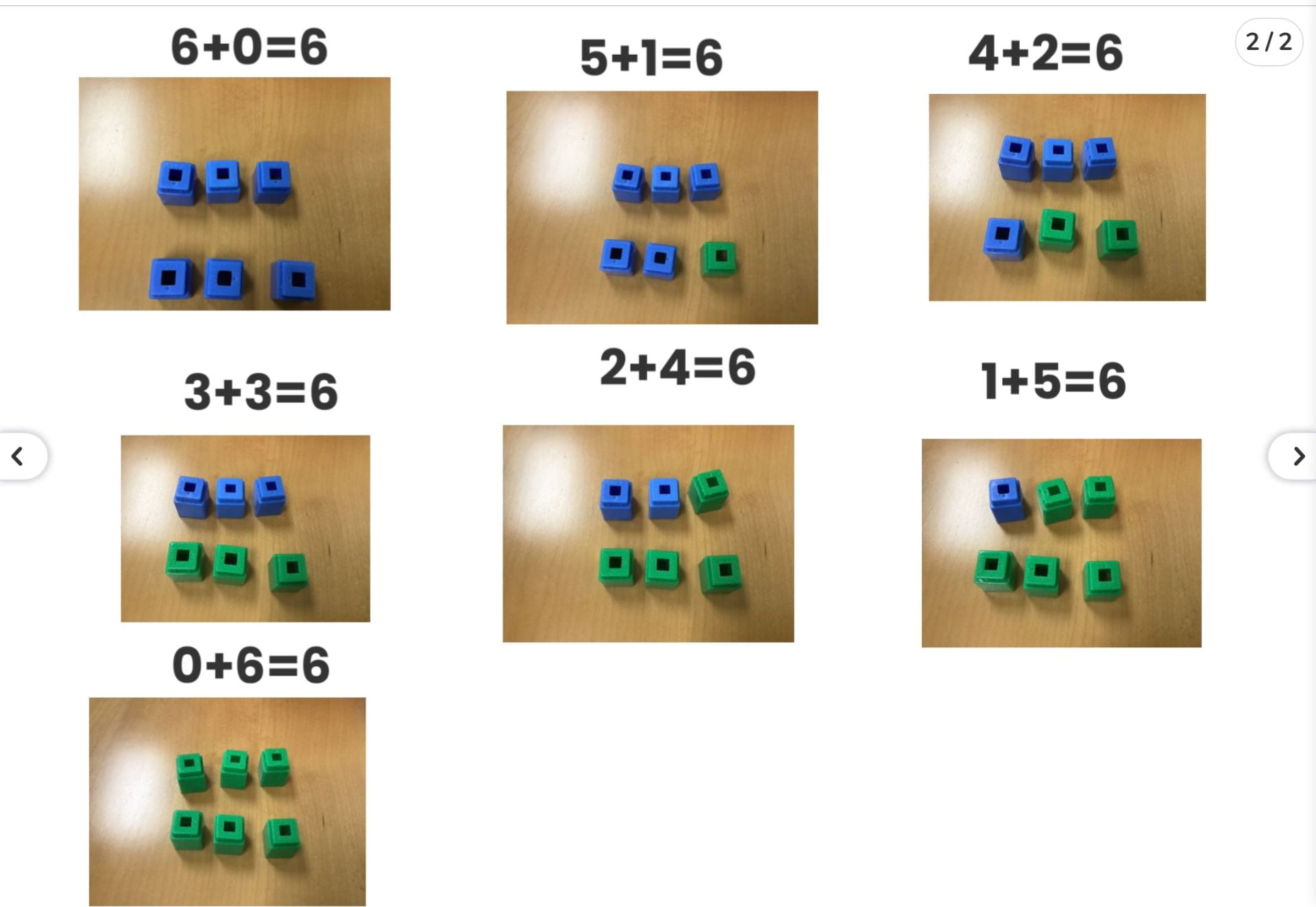
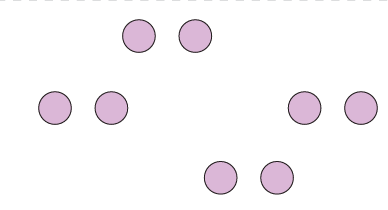
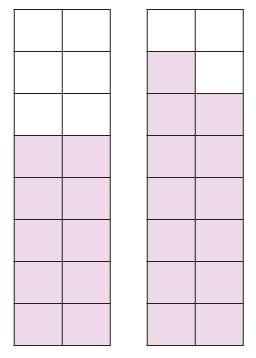
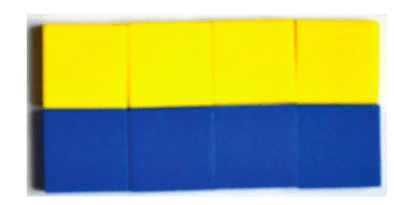
We concluded that 8 is an even number, because 8 counters can be placed in sets of 2 with no leftover counters.

Next, we discussed the following images. What can we count? How might we count?

We documented our thinking.


Key ideas:

  • exploring the concept of odd and even numbers
  • examining equal groups related to repeated-addition equations (e.g., 5 + 5 + 5 = 15)
  • visualizing equal groups with arrays and area models

Unit Vocabulary

Then, we used manipulatives to create our own arrays. 

Making Arrays

  • Make arrays with square tiles and record the repeated-addition and multiplication equations.

12


16


18

21

24

30


Same & Different: Rainbow Arrays

How are pictures A and B mathematically the same, and how are they different?

The students shared their thinking and reasoning. 

Finally, we shared our ideas about the following picture. 

Spring Garden

  • Show what is happening using pictures, models, or numbers.
  • What do you notice? What do you wonder?
  • What math questions can you ask about this situation?

Click on image to play an Online Game


Patterns with Cubes

What do we know about patterns?

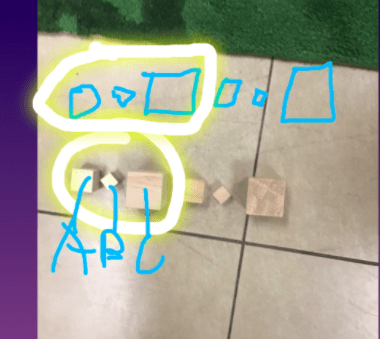
We are exploring patterns by discussing, extending and thinking about growing patterns.

What do you notice? What do you wonder?

The students help extend the pattern to show what the next few pictures might look like. 

They justify their answers by using manipulatives, drawings and oral language to express their thinking.

We documented our thinking on chart paper.

This led to a conversation about odd and even numbers. We wonder where this learning might take us next…

Counting Collections

We began by looking for patterns in numbers. We skip counted in 2’s, 5s, 10s, 3’s and 4’s starting from 0.

  • What do we notice?
  • How might we use what we know about skip counting, in other situations?

TASK!

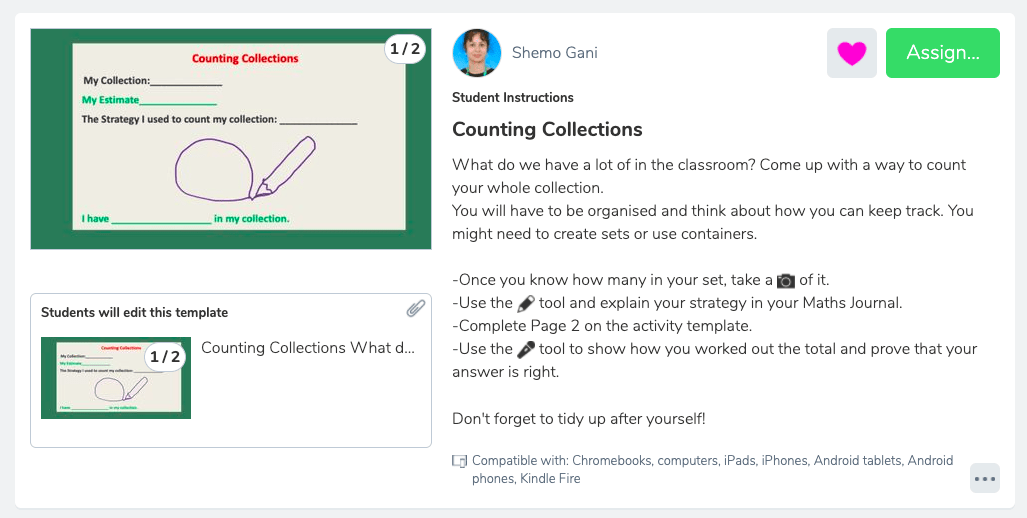
What do we have a lot of in the classroom? Come up with a way to count your whole collection. You will have to be organised and think about how you can keep track. You might need to create sets or use containers.

  • Once you know how many in your set, take a of it.
  • Use the tool and explain your strategy in your Maths Journal.
  • Complete Page 2 on the activity template.
  • Use the tool to show how you worked out the total and prove that your answer is right.


Sorting, documenting and explaining our strategies! 

The Card House

What did you notice?  What do you wonder?

  • Carlotta “I wonder how the cards come out of the bag in triangles.”
  • Dohoon “How many cards did they use? How many are odd numbers? How many shape cards?”
  • Eunseong “How tall is it?”
  • Sam “How many cards? How many triangles?”
  • Chanwoong “How did they stick the cards together? Which one is the joker card? Can this be a village?”
  • Hannah “What is it? What are they making?”
  • Seungje “Where did he buy the cards?”
  • Ryder “How many triangle cards? If there are more cards, how many more buildings could he make? Is there a triangle cards that are 4,4,4 and 2,2,2? Is there so much cards, can they make a whole country?”
  • Kavel “How did they make the video so fast?”
  • Sky “How do they stick one card and one card to a triangle? If they have more cards, can they build a tower?”
  • Jiwan “How many cards all together?”

How many cards? How many card triangles?

We watched the video to help us solve the problem. 

We documented our thinking and strategies in our Maths Journals.

Together, we worked out how many cards were used to create the ‘Card House’.

Then, we counted the number of triangles used to create the ‘Card House’.

We realised that counting in 3’s was a great strategy to use!!

Creating Patterns

We invited the students to share their initial understandings/ ideas about ‘PATTERNS‘. Their documentation included examples of repeating patterns. 

Then, we posed the following pattern talk by @MLCmath

The students began to share what they observed and what they thought. 

Next, the students created their own patterns. Here are a few examples…

Next, we watched a video on BrainPOP Jr. on Patterns

We wondered what patterns we can see around us. Perhaps we can create our own patterns! 

THE TASK

Here are some of the patterns we observed in our environment and others we created with materials we have around us. 

What patterns do YOU see around you? 

Growing Patterns

Online Learning

Focus: Thinking Skills, Communication Skills

Can patterns repeat and grow? 

Here is an invitation to use loose parts to create patterns.

🌺What do you notice?

🌺What patterns do you see?

🌺What patterns can YOU create? 

This invitation encourages children to use everyday objects to describe, create and extend patterns. 

Measurement – Size, Height & Length

Online Learning

Focus: Thinking Skills, Research Skills, Communication Skills

We have been exploring objects around us, and finding ways in which we can identify, compare and describe their attributes. Here are a few different collections that have been organised by different attributes.

What do you notice? What do you wonder?

You might want to explore your own environment to find objects that you can compare, sort and organise in different ways. 

🌻 Through this invitation, the children have opportunities to identify, compare and describe attributes of real objects.

Rosie’s Walk

Online Learning

Focus: Communication Skills, Thinking Skills

Rosie lives in a farmyard. Each morning, Rosie sets off on a walk across the farm. She is unaware that a sly fox is following her.  

Let’s Read ‘Rosie’s Walk’ by Pat Hutchins

https://www.youtube.com/watch?v=R3kNUTwJhf8

Notice how the pictures are illustrated. There are lines, patterns and shapes on the different characters and the environment.

Inquiry Invitation #1

  • You might want to act out the story using your own animals or props. You can even use boxes, cushions and blankets and any other suitable props to create a farmyard to go on your own walk. You can go across, around, over, past, through, and under. Your own story can be in a different place such as a forest, an island or even a city. You might want to act out your story in the park or on the playground!  

Inquiry Invitation #2

Rosie loves to go for a walk across the farmyard. Here is a map to help her on her way.

If you were to create your own maps, what would you include?

We would love to hear about your adventures, see your maps and creations!

Approaches to Learning (ATL’s)

  • record observations and ideas through drawings and maps
  • use mark-marking to convey meaning
  • use words and sentences to express ideas
  • take on pretend roles and situations
  • use imagination and original ideas to explore familiar roles, themes and stories musically and dramatically
  • engage with, and enjoy a variety of visual arts experiences
  • use their imagination and experiences to inform their art making
  • use everyday language to describe position, direction and movement of self and objects in relation to others

Doodles

Mo Willems and Peter Brown are two of our favourite authors at NIS. They use lines, shapes and patterns to create the illustrations (or pictures) for their picture books.

Last year, we interviewed Ms. Grace. She was a Grade 2 teacher at NIS. Just like Mo Willems and Peter Brown, Ms. Grace loves to draw and create her own pictures.

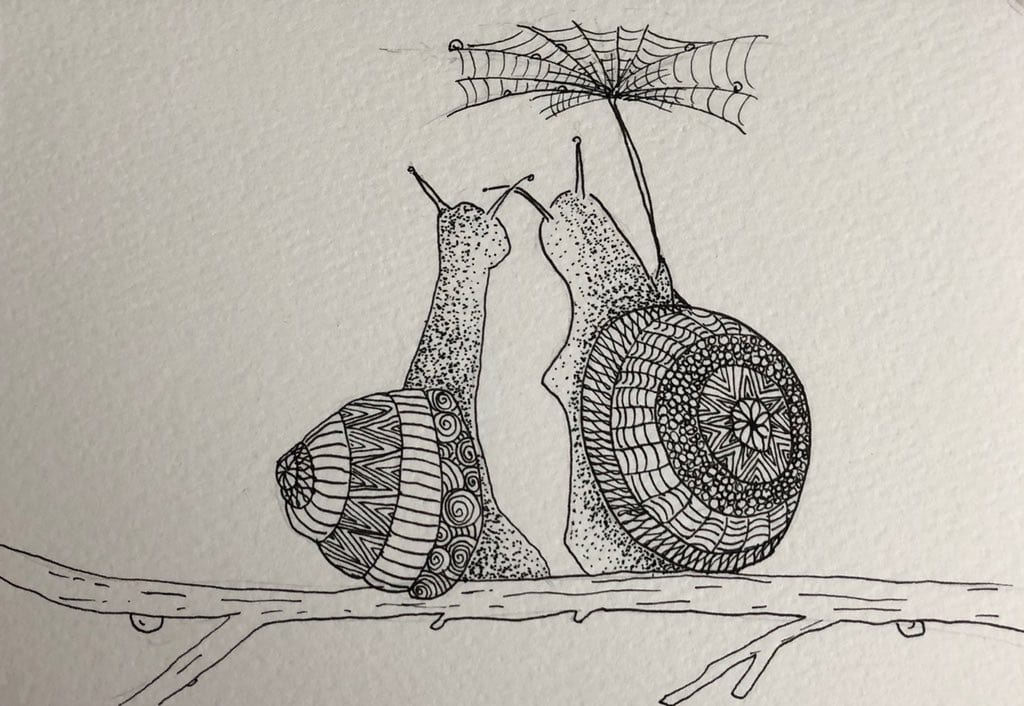
Ms. Grace taught us how to create our own Zentangle pictures or doodles using lines, shapes and patterns. Let’s use our imagination and what we know about lines, shapes and patterns to create our own doodles.

Felix wanted to create his own doodle. He used lines, shapes and patterns to create a doodle of a ‘huge ice-cream”!


This invitation encourages children to:

  • express themselves creatively
  • enjoy a variety of visual arts experiences
  • select tools, materials and processes for specific purposes
  • use imagination and experiences to inform their art making
  • create artwork in response to a range of stimuli

Lines in Picture Books

Online Learning

Focus: Communication Skills 

Mo Willems is one of our favourite authors. We have read his books over and over again. Some of our favourite stories are: 

‘Don’t Let the Pigeon Drive the BUS!’

and 

‘Should I Share My Ice-cream?” 

How do authors and illustrators use lines, shapes and patterns in their picture books? Notice how Mo Willems  uses lines and shapes to create his drawing.

You might want to try drawing Piggie with Mo Willems.

You might want to try drawing Pigeon.

You might want to try drawing Elephant Gerald.

We can explore drawing, creating and designing through our exploration of lines, patterns and shapes. Invite the children to make their own drawings or create stories using familiar characters or their own imaginative characters. The children may want to add their own details, speech bubbles and thinking clouds to add dialogue and thought.

Lines and Shapes

Online Learning

Focus: Communication Skills, Research Skills

Leming drew a picture of a ‘snail shell‘ on his salt tray. Can you see the swirls in the salt? Do you notice how they get bigger as they they move outwards? Leming knows that he can draw his own pictures using lines and shapes.

Notice the swirls as on Leming’s picture!

The teachers went off on a shell hunt. Ms. Shemo only found 1 shell. Can you see the lines and patterns on the shell?

Ms. Karen’s first shell. Can you see the swirls?

Ms. Karen found shells in her classroom! I wonder if you can make that pattern on your salt tray!

Ms. Karen found snails in the fish tank!

Where do you see lines, shapes and patterns? Let’s go to the park to see if we can find any lines, shapes and patterns.

  • I wonder how YOU might use lines, patterns and shapes to draw your pictures…
  • I wonder where YOU might find lines, patterns and shapes in YOUR environment…

Felix and Simone have also been drawing pictures with chalk on their back wall! Can you see the beautiful colours they are using in their pictures? Can you see the different lines and shapes they have used. Do you see the snail? 

Bruce used his magnetic board to draw a one-eyed monster that has many legs, a space ship that helps you see the stars and a banana tree. 

Approaches to Learning (ATL’s)

Communication Skills

Interpreting

  • Interpret visual, audio and oral communication: recognizing and creating signs, interpreting and using symbols and sounds.
  • Understand the ways in which images and language interact to convey ideas.

Reading, writing and mathematics

  • Understand symbols.
  • Understand that mark-making carries meaning.
  • Use mark-marking to convey meaning.
  • Document information and observations in a variety of ways.

Salt Writing Tray

Online Learning

Focus: Communication Skills (Writing)

Salt Tray Writing
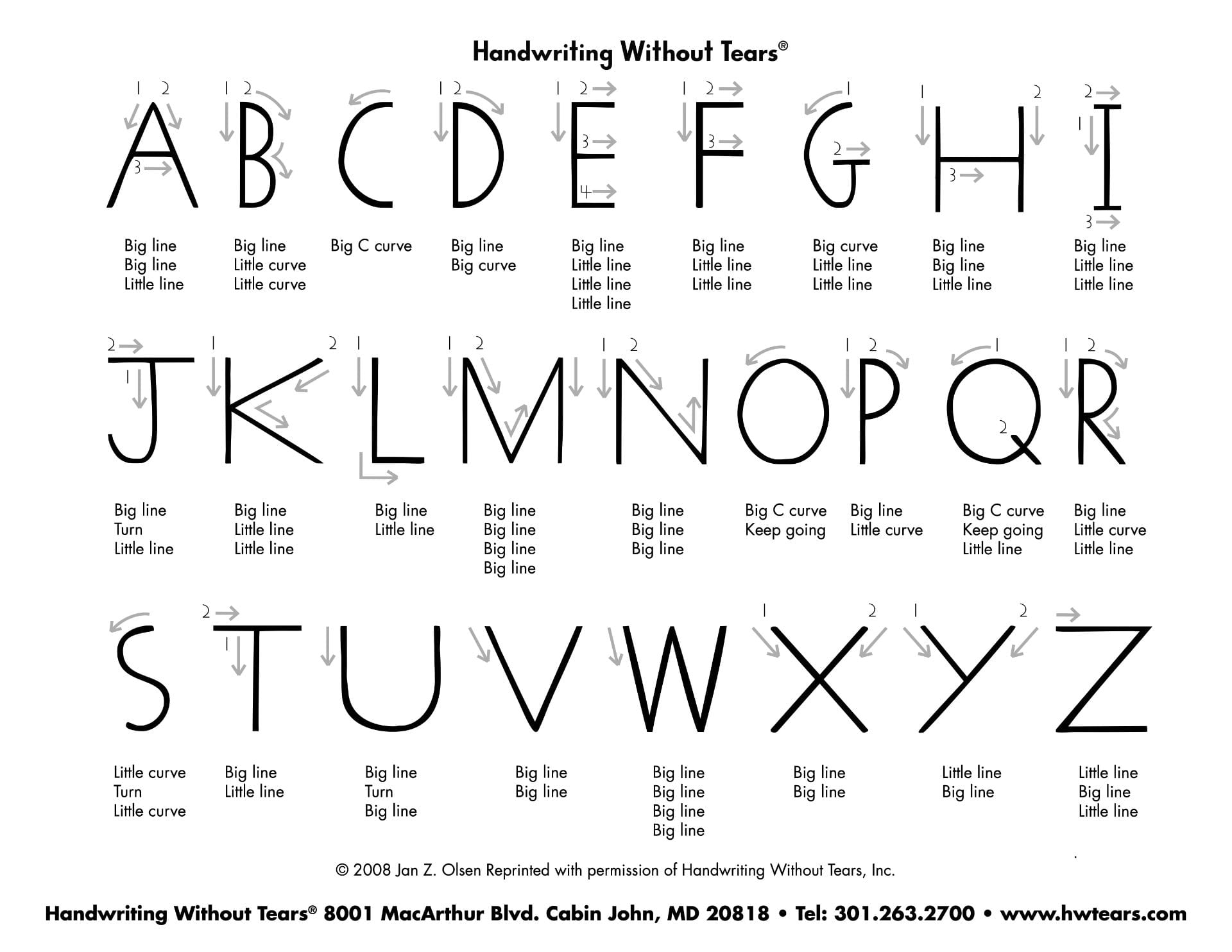
Sensory writing is a fun way for children to experience writing. The tips of your fingers are extremely sensitive. Therefore, writing in salt, sand, and rice can help children remember the shapes of letters, numbers, words and the strokes in different characters.

It is important to encourage children to be conscious of food waste. You can use regular kitchen salt or expired rice. The salt can be reused. Only a small amount is needed, and these sensory materials that can be saved for long periods of time if kept clean and dry. Please remember to wash your hands before and after using the salt writing tray.

Here are some resources you can use to explore writing.

Patterns

Through these sensory writing experiences the children develop with following skills:

  • draw simple shapes
  • use correct top-to-bottom left-to-right directionality for letters, numbers and other symbols
  • establish handedness for writing

  • develop mature grip for crayon/pencil

  • experiment with various ways to move and produce marks

  • sit with good posture (furniture must fit child)

  • start letters at the top

  • trace capitals correctly, step by step

  • enjoy writing in play and activities

Leaves

Online Learning

Focus: Thinking Skills, Communication Skills

Mathematical Concepts: Similarities and Differences, Pattern, Symmetry, Shape and Measurement  

  • What do you see in the world around you?
  • How might we use these materials and natural resources to express our creativity and thinking?

Let’s go on a nature walk to see what we can learn… 

The story ‘Leaf Man‘ by Lois Ehlert will be shared in this video story. 

  • What do you notice about the leaves? 
  • How are they the same? How are they different

You can choose to do any (or all) of the following with your leaves:

  • Create your own leaf man. Tell us about your creation. 
  • Draw a leaf (or leaves). Remember to observe and document like a scientist, details are important.
  • Measure a leaf. Use different materials such as bottle caps, Lego or stones to measure the length or size of your leaf.
  • Sort the leaves into groups. How will you organise your groups? By shape? colour? size? 


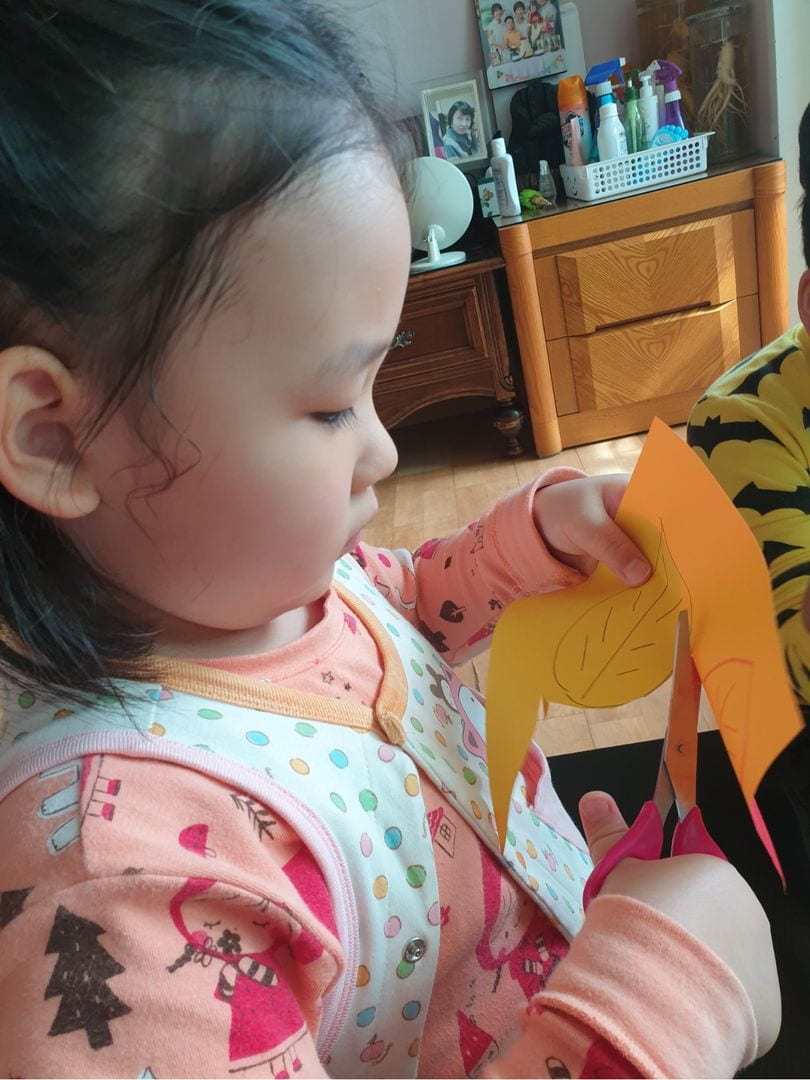
Jiwon had a great idea. She decided to create her own pictures using leaves. She chose different coloured paper to draw the leaves. The leaves had different shapes. She was mindful of how she held the pair of scissors as she cut out her shapes carefully.

Leming went on a leaf hunt. He found many different leaves. They were different in colour AND in shape!

Approaches to Learning (ATL’s)

  • Observe carefully.
  • Sort and Organize information.
  • Record observations—drawing, charting, tallying
  • Notice relationships and patterns.
  • Present information in a variety of modalities.
  • Express oneself using words and sentences.
  • Use mark-marking to convey meaning.
  • Demonstrate persistence in tasks.

Paper Art

Online Learning

Focus: Self-management Skills, Thinking Skills (Mathematics – Shape and Space)  

Jiwon and Michelle used scissors and paper to explore their creativity. They folded paper carefully and then used scissors to cut out different shapes. Jiwon created flowers and Michelle created monster masks.

Jiwon – Flowers

Here is one way to create art with paper:

You can create your own paper art!

You might want to cut out different shapes on your paper, or even different patterns! 

Pay close attention to the way you hold a pair of scissors. 

  • While cutting with scissors, the open and close motion allows children to build up the little muscles in their hands. These muscles are important because they aid in writing, drawing and painting.
  • Cutting develops eye-hand coordination as it requires children to use their eyes and hands in unison to accomplish the task of cutting. Eye-hand coordination is important for catching/throwing balls, eating with a spoon, and zipping a coat.
  • Cutting encourages your child to use both sides of the body at the same time while each hand is performing its own task (bilateral coordination). When cutting a shape, a child must hold the paper with one hand while the other hand is opening and closing the scissors and moving forward to cut.
  • Cutting improves focus and attention. These skills build a child’s capacity to pay attention to detail, not only in the classroom but in everyday life. These skills are essential to being able to read books, listen to instruction and complete tasks.

Sound Patterns

Online Learning

Skills: Research Skills, Thinking Skills

You have been using musical instruments to create sounds with Ms. Heidi.
Ms. Shemo has been using objects around her house to create different sounds.

Each object has its own colour. 

Listen and watch to see if you can hear the sounds

repeating in a pattern‘.

  • What objects can you use in your environment to create different sounds?
  • How might you create your own sound patterns?

Here are a few pattern cards to help you as you create your own sound patterns!!! 

Through these experience, children will have opportunities to:

  • use their senses to explore everyday objects
  • to use everyday objects to create sound
  • describe, model and extend simple patterns with shape, colour and real objects


Showing our creativity in different ways through Performing Arts

Focus: We can express our thoughts, ideas and feelings through music.

Task: Find an item, or items, in your environment that you can make different sounds with.

  • 1st – Items that you ‘shake‘ to make a sound
  • 2nd – Items that you ‘scrape‘ to make a sound 
  • 3rd – Items that you ‘tap‘ to make a sound 

Here are the sound materials and pattern documented. Can you see and hear the pattern?

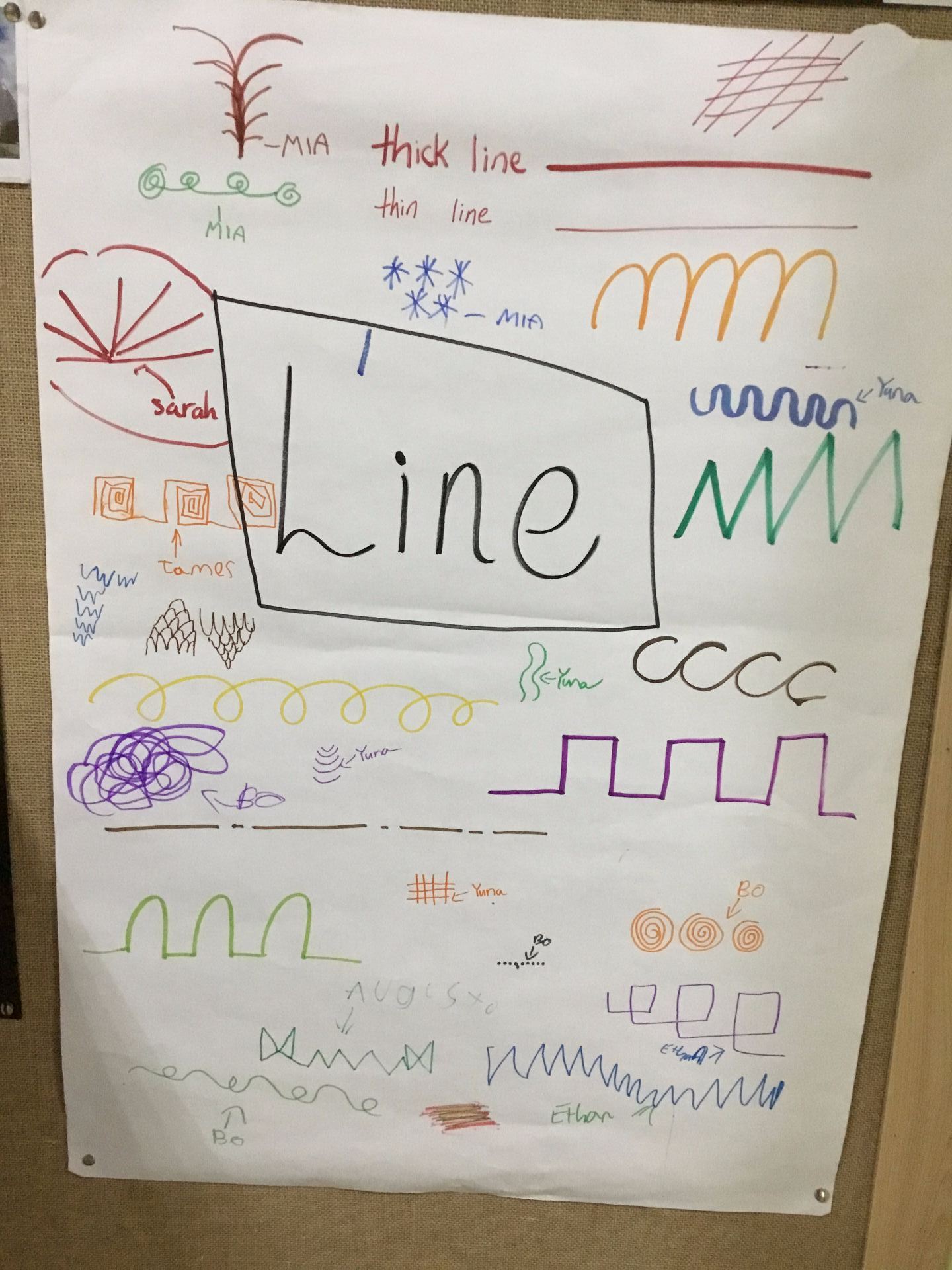
Lines

The children have been using many different types of lines in their drawings, messages and paintings. Some of the lines develop into different pictures of objects, and others become letters and numbers.

Lines in maps…

Lines in messages…

Lines in letters…

We read the story ‘The Line’ by Paula Bossio. Upon seeing the cover page, Felix shouted “Ms. Tina!” He was referring to the litter ‘T’ in the title of the story.

The children began to call out and identify the different letters in the title, ‘THE LINE’ that were also in their names.

H is in Charlotte

E is in Michelle and Charlotte

L is in Leming

I is in Michelle

They circled the different letters they recognised.

Next, we read the story and made a note of all the different lines that were in the book. In this simple wordless picture book, a little girl finds a long black line. She wiggles the line, slides and spins inside circles that the line has created.

Later in the story, the line transforms into bubbles, a jungle vine to swing from, a tightrope to balance on and a big, hungry monster! We notice how the author and illustrator expressed the different emotions of the little girl in the story.

We observed the lines Felix and Yoochan have created using the ramps. They have made a road that goes to the beach.

We can draw many pictures using different lines. Here are a few different types of lines.

The children created pop-stick puppets using different lines.

@F uses lightening lines and other shapes to create pop-stick puppets. He then decides to create a puppet show using the different pop-stick characters and objects.

Approaches to Learning (ATL’s)

Communication Skills

Speaking

  • Express oneself using words and sentences.

Interpreting

  • Interpret visual, audio and oral communication: recognizing and creating signs, interpreting and using symbols and sounds.
  • Understand the ways in which images and language interact to convey ideas.

Reading, writing and mathematics

  • Understand symbols.
  • Understand that mark-making carries meaning.
  • Use mark-marking to convey meaning.
  • Document information and observations in a variety of ways.

Zentangle Pictures

A group of students shared that they express themselves through their drawings. We wondered if anyone else expressed themselves through their drawings.

We decided to speak to Ms. Grace Kang. She taught Grade 2 @nischina last year and now lives and works in Korea.

She enjoys expressing herself through her drawings and creates her own postcards and greeting cards! 

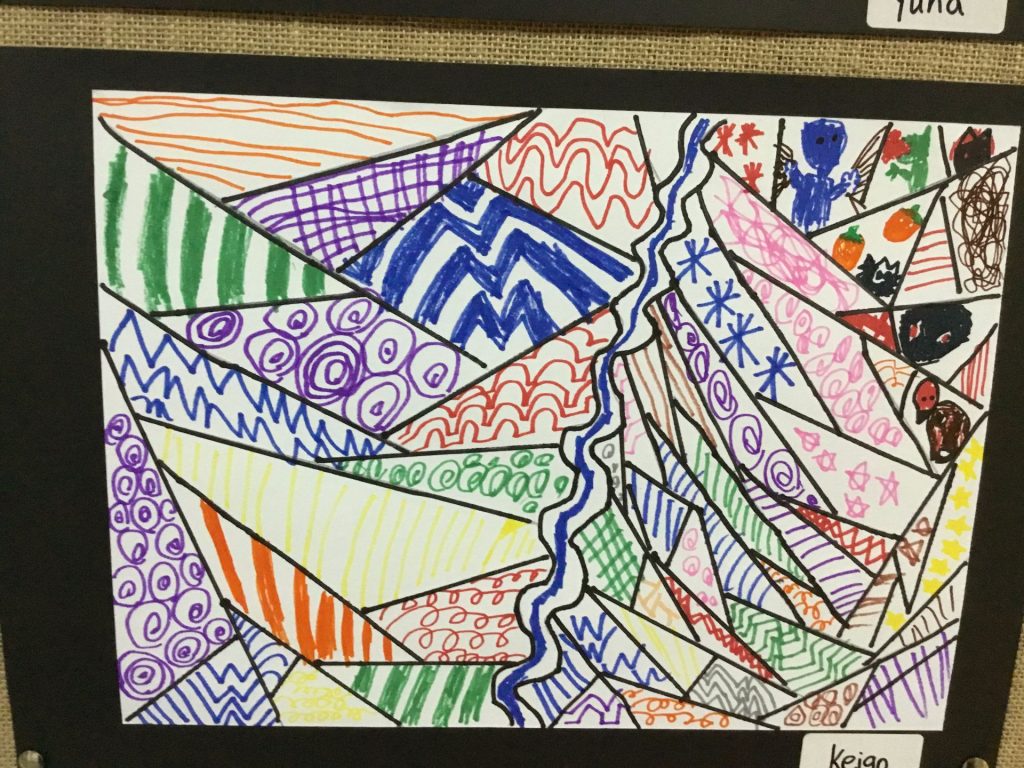
Ms. Grace explained that she likes drawing and ‘doodling’. She used different repeated patterns to create art. She uses squiggles, shapes, symbols and patterns to fill in shapes. Her feelings can inspire her creations. 

We began with some waves, zigzags, swirls and heart shapes. The students drew their own pictures and filled in the spaces using repeated patterns.

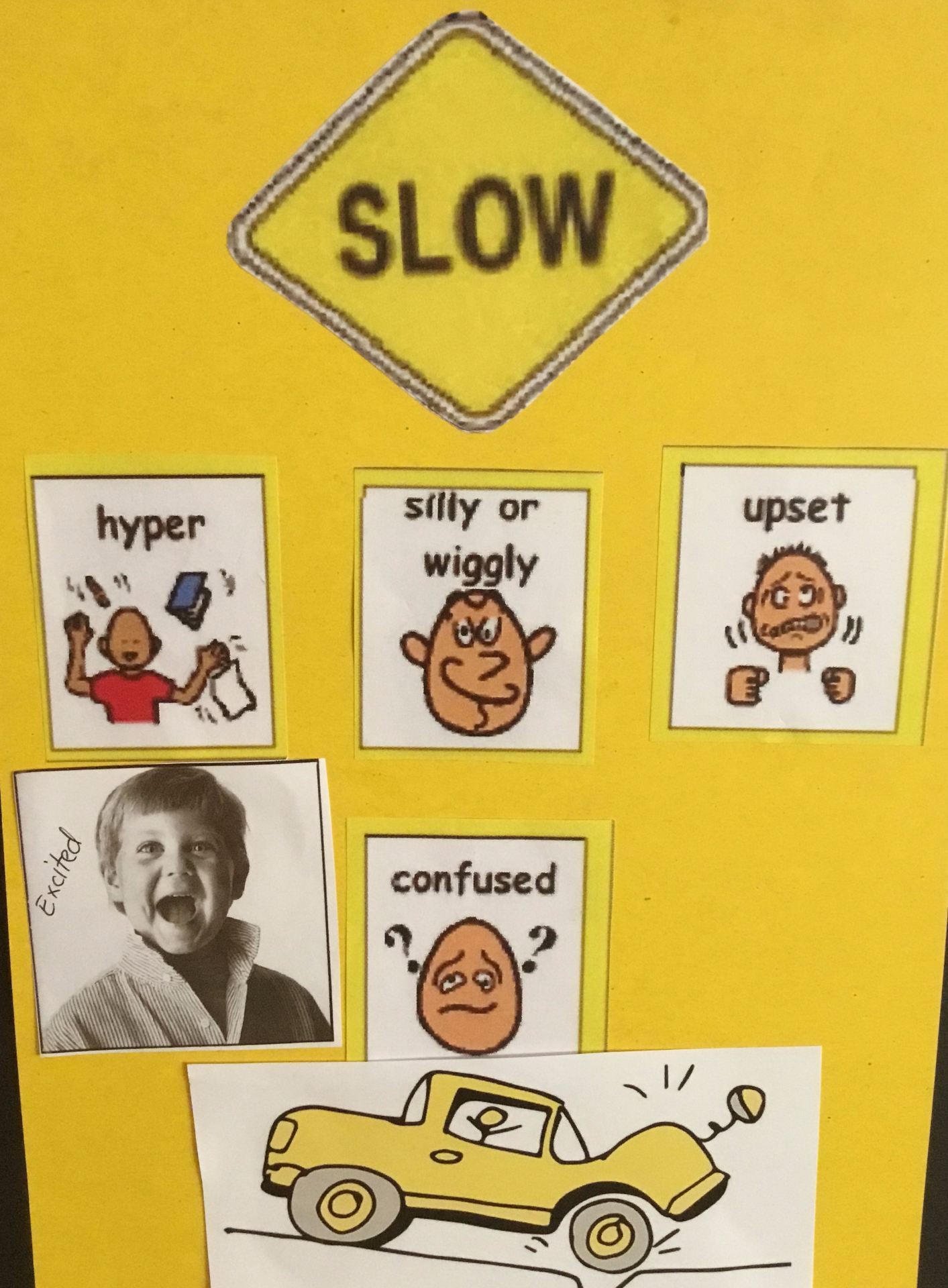
One student pointed to the ‘Zones of Regulation’ posters displayed in the classroom and suggested that we look for ideas about feelings here.

https://twitter.com/NISPreKK1/status/1105739413294702592

Here are a few of our creations…

How do YOU express yourself?

SLO’s

  • draw simple drawings to express what they see/study
  • engage with, and enjoy a variety of visual arts experiences
  • select tools, materials and processes for specific purposes
  • use their imagination and experiences to inform their art making
  • create artwork in response to a range of stimuli

The Napping House

We listened to the story ‘The Napping House by Audrey Wood, illustrated by Dan Wood. In this story, there is a granny, a child, a dog, a cat and a mouse, sleeping on top of each other on a cozy bed. They were all sleeping peacefully until a flea decides to bite the sleeping mouse. The students listened to the story in both English and Mandarin.

https://www.youtube.com/watch?v=IxPYhscW16o

The next day, the students revisited the story. This time we did a ‘picture walk’, recalling the story in sequence.

Next, we used picture cards to help us retell the story.

The students began to notice a pattern. Jasmine stated that the pattern looked like ‘Steps’.

As the display was posted on the whiteboard, Lawrence said Its 21”. He explained that there were 21 cards altogether.

Ruby noticed that, “The numbers are getting bigger as you go up the stairs!”

Next, a group of students used cubes to create a 3-Dimensional representation of the information we recorded on the poster. We discussed the rule for the pattern to help us identify how the pattern changes. We used the rule 1 more to help us create a growing pattern.

Ruby “You have to make a straight line.”

Nicolas “I have 6!”

The students began to count out the cubes they needed to create their structures.

Here are some examples:

https://twitter.com/NISPreKK1/status/1083568789873029120

https://twitter.com/NISPreKK1/status/1083570547114467328

SLO’s

  • observe, discuss and comment on the information being conveyed in illustrations
  • retell a story using the pictures
  • listen and respond in small or large groups for increasing periods of time
  • join in with poems, rhymes, songs and repeated phrases in shared books
  • listen and respond to picture books, showing pleasure, and demonstrating their understanding through gestures, expression and/or words
  • focus on a speaker and maintain eye contact
  • respond actively to read aloud situations; make predictions, anticipate possible outcomes

Patterns

  • Teacher “What do you know about patterns?”
  • Kai “They have two different colours.”
  • Cornelis “They have more colours of the rainbow the patterns go red, yellow, blue.”
  • Reggie “Patterns can be any colour. Some patterns are patterns, can be anything. Like square, circle, square, circle or blue, red, blue, red.”
  • Franz “I know that patterns are like rainbow, red, orange, green, blue, purple, and some patterns are like red, yellow, green, blue, or rectangle pattern and square patterns.”
  • Tomie “You can use toys to make patterns to make them like, dump truck, excavator, dump truck, excavator, dump truck, excavator.”

Ms. Shemo created a row of shapes. “I want to make a pattern. What might the next shape be?”

We tried to guess.

  • Reggie “Square.”
  • Tomie “Square.”
  • Hannah “Diamond.”
  • Kai “Rectangle.”
  • Max “Square.”
  • Cornelis “Square.”
  • Franz “Triangle.”
  • Yusei “Triangle.”

Next, we created and talked about our own patterns.

SLO: Describe, model and extend simple patterns with shape, colour and real objects.

The Nature Corner

A group of students went on a nature walk to collect materials for the classroom. The students chatted about the colours, plants and environment as they gathered leaves, sticks, branches and other interesting items.

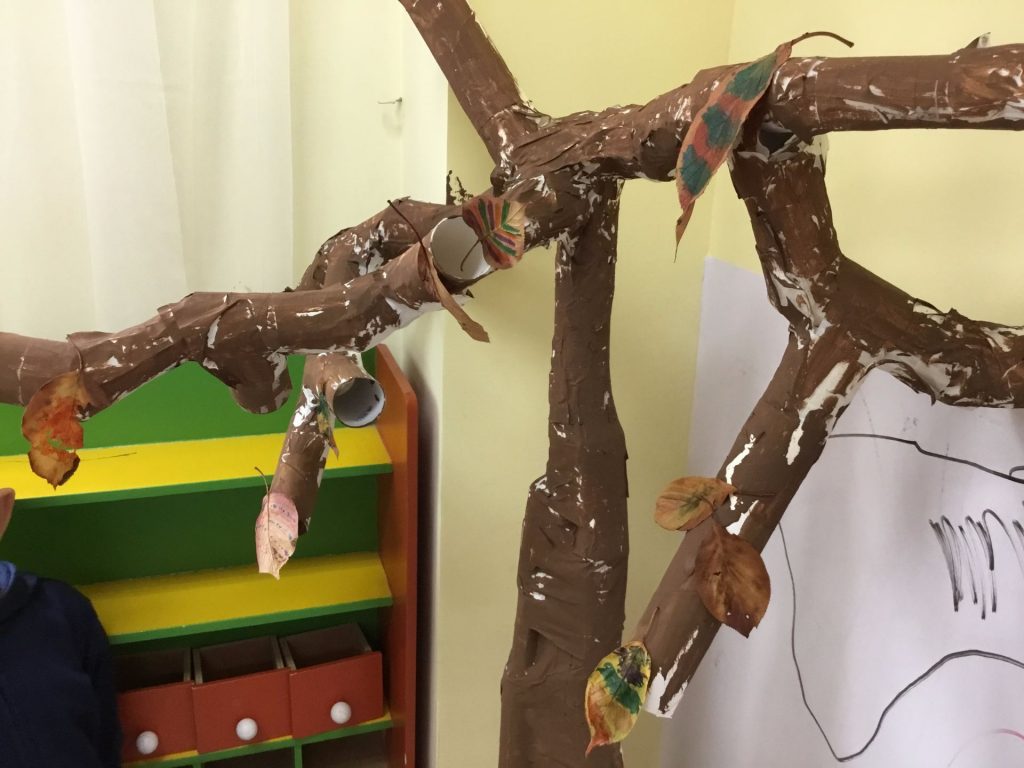
We hung up the large branch we found near the garden plots.


Another group of students created and painted a tree made out of recycled materials.

The students were then invited to create their own pots, leaves and decorations. They were encouraged to think about what we learned about patterns. We were inspired by pattern artwork done by the Grade 2 class. It helped the students think about creative patterns they can use with their projects.  
Students will begin to use the space to create their own art projects. We hope that they will be inspired by the different materials on offer. We look forward to observing how they can express themselves through art.

SLO’s

  • explore patterns in the environment
  • describe what they notice about an artwork
  • engage with, and enjoy a variety of visual arts experiences
  • select tools, materials and processes for specific purposes
  • use their imagination and experiences to inform their art making
  • create artwork in response to a range of stimuli

Patterns Around Us

The students have been creating patterns, and exploring patterns in our environment. Ms. Cherry read the story ‘I’m a Happy Fish‘ to the students. In the story, the fish were many colours and had varied patterns on their body.We recorded all the patterns we noticed on the fish.

Next one student went around the classroom to look for patterns on children’s clothing. We printed out the pictures and included them in the pattern poster.

What patterns do you see around you? We continue to explore…

SLO’s

  • explore patterns in the environment
  • recognise patterns and solve problems
  • describe patterns and identify rules
  • check and continue the pattern

Patterns

One student explained that he had patterns on his clothes. It was a repeating pattern of black and blue stripes.


Another student noticed that she had a pattern on her tights. They were black and green stripes.

The students began to look for other repeating patterns on items of clothing. A few of them had pink and white striped socks.

The students began to create their own patterns using manipulatives.

One student explained that we could make a big, medium and small pattern. The students helped to create this pattern using rings.

Then we began to create a pattern with linking chains. The students chose the first few links. This was a different pattern. We continued to create the chain together.

Blue, blue, green and red pattern.

What patterns do you see around you? 

SLO’s

  • recognise patterns and solve problems
  • describe patterns and identify rules
  • check and continue the pattern

Number and the Base 10

The students have been using the 100 chart to explore numbers and patterns. They discussed skip counting in 2’s, 5’s and 10’s. One student discussed how a number can be divided into half.

https://twitter.com/NISKinder2/status/871963784902041600

The students used the Base 10 blocks to create numbers with manipulatives.

They discussed the different ways to make a number and then completed an activity.


Pairs

“How many pairs of eyes do we have in the classroom?”

This was our Morning Meeting question for the day. Students drew their eyes and we counted the pairs. We had 20 pairs of eyes.

img_3945

SLO: Skip count in 2’s.

We used this task to count in 2’s. The students glued the picture of their eyes on a long card. We counted the eyes and labeled them, 1,2,3,4,5…

We turned over every other card and counted in 2’s starting from 2.

img_3968 img_3970


Repeating Patterns and Geo Shapes

The students have been exploring 3 dimensional shapes in their environment. They have also been copying and repeating patterns using Geo shapes. They used stamps to record the patterns on paper.

IMG_9572 IMG_9583 IMG_9586 IMG_9620

Centres around the classroom encouraged students to explore 3 dimensional shapes using other concepts such as measurement (weight) and space.

IMG_9618

How heavy is the egg?

IMG_9622

Can you fill in the pattern?

IMG_9619

Can you make the picture?

Students exploring a variety of centres in the classroom.

https://twitter.com/NISKinder2/status/689683862276800513

https://twitter.com/NISKinder2/status/689683546760306688

A story about ODD and EVEN!

The students have been working on building numbers to 12. They began by matching number frames with the appropriate number cards. They then built number frames to match their picture. Some groups chose to use the same colour that was used in the frames. Others chose to do it differently. They had to talk to one another and find the best way to make their creations. The task encouraged students to negotiate roles and make agreements about how they wanted to complete the task. 

IMG_7278IMG_7283IMG_7287 IMG_7286IMG_7281

How do we know what the number is? 

How are they similar and different?

We talked about the blocks and how they were different. We discussed ‘sharing’ and counted in 2’s. They noticed that some numbers were odd and others were even. Students recorded their information on their journals.
IMG_7426

IMG_7555IMG_7557

What about bigger numbers? How can we tell if they are odd or even? Is there a pattern? Some students wanted to continue their explorations.

Students then sorted dominoes into groups based on their total.

IMG_7866 IMG_7879 IMG_7868 IMG_7881

IMG_7995 2

Do you notice the pattern?

Patterns and Number!

A group of students have also been building on their number sense. They have been making patterns and writing number sentences to solve number problems.

IMG_7223IMG_7241IMG_7219

IMG_7222IMG_7253

They collaborated to make a skip counting in 2’s and 5’s poster.

IMG_7625

The students brainstormed what they know about patterns and created their own patterns using string and beads. They recorded their patterns on card.

IMG_7538IMG_7539

Students made patterns using beads and straws.

IMG_7564 IMG_7566