Similar and Different

The students have been creating portraits of themselves using a variety of mediums. While drawing pictures of themselves, they noticed and commented on how some of the students looked the same or different, referring particularly to their hair and eyes.

  • Freida “My hair is black.”
  • Alejandra “My hair is black too.”
  • Nicolas “I have a little bit yellow. Everybody in German is yellow.”
  • Ruby “I have brown hair.”

First, they decided to sort and group the pictures by the colour of their hair.

  • Alejandra “I don’t have a pony tail. I have just like Amber.”
  • Ruby “They have short hair. What about Ms. Jiao?”

Next, they decided to sort and group the pictures by their different hair styles.

Ruby, Alejandra and Nicolas decided that Ms. Tina and Ms. Shemo can go to the pony tail group.

SLO’s

  • sort objects
  • present information on teacher-generated pictographs where one picture equals 1
  • begin to explain data using simple language such as same and different / more or less

Agreements in Communities (continued)

How do we treat each other?

What are our responsibilities?

The students share their thinking:

  • Amber “No hitting.”
  • Ethan “No running” [in Mandarin]
  • Ruby “No shouting. Everyone needs some quiet time and some peace. We be nice and some friends be nice.”

Jasmine explained that it is not nice to grab friends by their clothes.

Alejandra explained that if we play nicely then friends then they will play with us.

  • Ethan “We keep our clothes on or people will laugh at us.”
  • Amber “No hitting anybody.”
  • Charlotte “No crying.”
  • Ruby “We have to help each other. We have to be in the green zone.”
  • Ethan “When we walk on the stairs, if someone pushes, we will fall down and get really hurt.” [in Mandarin]

Charlotte agreed saying, ‘No running.”

  • Alejandra “If everyone is running in the class then we will be in the red zone.”
  • Ethan “Don’t play in the dangerous places like the drain or near the electric wires.”
  • Freida “If someone pushes someone, then we will fall down.”

What makes a community?

We read the story ‘Swimmy’ by Leo Lionni. This is a story about a little fish who lives deep in the sea.

The students share their ideas and feelings while listening to the story:

  • Alejandra “One fish is black.”
  • Michelle “He is lost, he needs the map.” [In Mandarin]
  • Nicolas “I think his family wasn’t there.”
  • Charlotte “The red fish and the black fish are different.” [In Mandarin]
  • Amber “He likes eating grass.” [In Mandarin]
  • Ruby “He is so tiny.”
  • Nicolas “The big fish wants to eat all the fish which are red, not black. The small black one is his baby.”


  • Felix “I saw fish in China.”
  • Alejandra “He found his family.”
  • Ruby “The black fish is in the blue zone. [Ruby is referring to the Zones of Regulation here]
  • Ethan “The zombie will eat the plants.” [In Mandarin]
  • Alejandra “The black fish is lonely. He wants to find his sister and his mummy and daddy.” [In Mandarin]
  • Ruby “Maybe he is the red zone now.”
  • Michelle “His daddy and mummy must be here. He will find his mummy first and then find his daddy.” [In Mandarin]
  • Charlotte “He doesn’t have a brother. The brother will eat him. It will hurt people.” [In Mandarin]
  • Jasmine “I don’t like that fish [ referring to the black fish]

Swimmy shows his friends how they can overcome any danger with team work.

How can we work together as a community?

Essential Agreements

The students shared their ideas about feelings and emotions after listening to the story ‘The Feelings Book’ by Todd Parr. We discussed how these emotions may affect how we feel, and how we react to these different feelings.

This led into a conversation about behaviour and agreements. To be safe and feel happy, we all need to work together and support each other in our learning spaces. These spaces may be within a classroom, the playground, the toilet or even at the lunch room.

We noticed the Essential Agreements created by the class of 2017-18, displayed in our new classroom. We reflected on what the words ‘Share’, ‘Play Safe’ and ‘Be Kind’ mean. The photographs displayed along with the words, were good examples which helped our discussions.

How might our ‘Essential Agreements’ help us when we are at home, on the school bus, at the supermarket or swimming pool?  We wonder…

Student Learning Outcomes (SLO’s):

Mental and Emotional Development: 

  • explain possible causes for their different feelings and emotions
  • Identify positive thoughts and attitudes in themselves
  • Identify and explore strategies that help them to cope with change

Social Development

  • recognise that everyone has feelings, emotions and perspectives that may differ from their own
  • identify themselves in relation to others
  • discuss similarities and differences between themselves and others

Group Dynamics

  • interact, play and engage with others
  • take turns
  • listen respectfully to others
  • share their own ideas and feelings in an appropriate manner
  • celebrate the accomplishments of others

Growth and Development

  • communicate with others in order to experience relationships and make friends
  • reach out for help when it is needed for themselves or others
  • identify when their actions have impacted on others

How do you feel?

We read the story ‘The Feelings Book‘ by Todd Parr. We discussed the emotions angry, sad, frustrated, nervous, happy, or embarrassed.

We then gathered in small groups to talk about what makes us feel angry, sad or happy. The students were encouraged to share their ideas in their preferred language. It was important to respect and acknowledge the feelings and views the students shared. Therefore, teachers listened, documented and helped the students talk about these big emotions.

HAPPY

  • Sarah “I feel happy when I have many dresses at home.” [in Mandarin]
  • Lawrence “I felt happy when I got chocolates.” [in Mandarin]
  • Amber “I felt happy when I shared my chocolate.” [in Mandarin]
  • Sarah “When I feel happy, I will cut my tomato into two pieces and share it with my friends.”
  • Sarah “When I feel happy I will dance and sing.” [in Mandarin]
  • Jasmine “When mum took me to the amusement park and bought me toys. I felt happy.” [in Mandarin]
  • Ethan “When I recovered from my cold I felt happy.” [in Mandarin]
  • Amber “If I get a pair of beautiful shoes, I will be happy. If I have a delicious chocolate. I’m happy.”
  • Alejandra “When dad took me to the park and did the rope skipping with me. I felt happy.” [in Mandarin]
  • Charlotte “When I go to the supermarket and sit in the trolley, I felt happy.” [in Mandarin]
  • Nicolas “When I am not hurt I am happy. When I play with my friends.”
  • Audrey “When I go to school and make friends. It makes me happy. When I am colouring with my favourite colour pink. I paint flowers.”
  • Ruby “Building with blocks in my room makes me happy.”
  • Felix “When I play with my Lego and Playmobile. Play Duplo with my mama.” [in German]
  • Paul “I will be very happy when my container arrives, because then I will have my toys and my drums. I like to play the drum. Lego makes me happy, especially if I play with my papa. [in German]
  • Poli “Before I fell asleep with my dad, mom, and brother. (In fact, Poli’s father often say that “I am so happy when lying down before I go to bed🤣🤣”). I want to be with my family when I am happy.” [In Korean]
  • Jooeon “I Really like to travel and I feel happy when I go to new place, meet new people, eat delicious food and have new experiences. I like to play with blocks and sing a song. When I feel happy I smile, talk a lot and jump.” [In Korean]

SAD

  • Ruby “When something big falls on me and it’s big and oval and it cracks on my head, that makes me feel sad. When my bones break, the superhero sticked a needle in me and it hurts me. It makes me cry. When someone pulls my hair.”
  • Nicolas “When I bump my head I feel sad. Then I cry. When I fall down, when I spring (like jumping), it makes me sad.”
  • Amber “When I couldn’t find a dress, then I will cry.” [in Mandarin]
  • Sarah “When I couldn’t find my shoes, then I will cry.” [in Mandarin]
  • Amber “When the doctor pulled out my teeth, then I will cry.” [in Mandarin]
  • Sarah “When I lost my bag, I felt sad. And also when I lost my water bottle, I felt sad.” [in Mandarin]
  • Audrey “I cry when somebody hurts me.”
  • Ethan “When somebody hits my brother, then I felt sad.”
  • Jasmine “I don’t feel sad because I always feel happy.”
  • Charlotte “When people yell at me I feel sad.”
  • Alejandra “When people yell at me I feel angry.”

Audrey explained how she felt sad when her cat died. He fell from the 16th floor when he slipped from the balcony. She explained how emotional it was and that it made her family sad.

  • Paul “I get upset when somebody gets angry with me. I got sad when someone had to go to the hospital after an accident on the football field.” [in German]
  • Felix “I get a bit sad and scared when I see animals running around (wildly).” [in German]
  • Jooeon “I feel sad when I read a sad story book and I am not allowed to do what I want to do. When I feel sad I start to weep.” [In Korean]
  • Poli “When adults scold me. I want to play with my mother when I am sad.” [In Korean]

ANGRY

  • Amber “When I want to play alone but other people want to play with me, I feel angry.” [in Mandarin]
  • Sarah ” I feel angry when other people hit me.” [in Mandarin]
  • Lawrence “When I want to play with Amber and other people squeezed in, I felt angry.” [in Mandarin]
  • Amber “When other people refuse to give me toys I get angry. I will stamp my feet when I get angry. I will hit other people when I feel angry.” [in Mandarin]
  • Alejandra “When I play with my friends and they run faster then me then I feel angry.” [in Mandarin]
  • Charlotte “When other people don’t play with me then I feel angry.” [in Mandarin]
  • Ethan “I will ask grandma to take me to the supermarket when I feel angry.” [in Mandarin]
  • Alejandra “When I feel from the motorcycle without a helmet, I felt angry.” [in Mandarin]
  • Freida “Cornelis  gets angry when he falls down. Then he say ‘I’m OK!'”
  • Ruby ” I don’t get angry at home. When someone hurts me then I cry, and the teacher puts a plaster on me. I don’t cry, I be brave.”
  • Paul “I don’t really get angry.” [in German]
  • Nicolas ” I don’t get angry. When someone hurts my friends, then I get angry because I don’t like it. When I get angry then I just go away and play with my other friends. I don’t hurt friends.”
  • Poli “When my friend take my toys or hit me. I want to play with mother when I am angry.” [In Korean]
  • Jooeon “I feel angry when someone interferes with my play and ignore my opinion or thought. When I am angry I say “I’m angry”, and sometimes I start to cry or shout.” [In Korean]

What makes you happy, sad or angry?

In the coming weeks, the students will inquire into communities; how to be part of a community and the agreements communities have.

Maths Talk – SPLAT!

A group of students were working on a ‘ SPLAT‘ Maths Talk!

The first splat was number 5. They discussed the problem.

  • How may counters are under the splat?
  • How do you know? 

They used whiteboards to record their thinking. They used counters to help them count.

The students expressed their ideas verbally and pictorially. Two students explored both addition and subtraction to solve the Maths problem. Here are some examples of their thinking.

Next we explored the number 7.

What strategies could we use to solve this problem?

Here is how we worked it out!

Another group of students used dice and counters to solve addition problems.

They recorded their thinking using number sentences.

SLO’s

  • estimate quantities to 10
  • explore the conservation of number with the aid of manipulatives
  • understand the terms more or less, same as 
  • read, write, say, count, model and order numbers to 10
  • solve problems involving addition using manipulatives, models and informal written strategies

Weaving

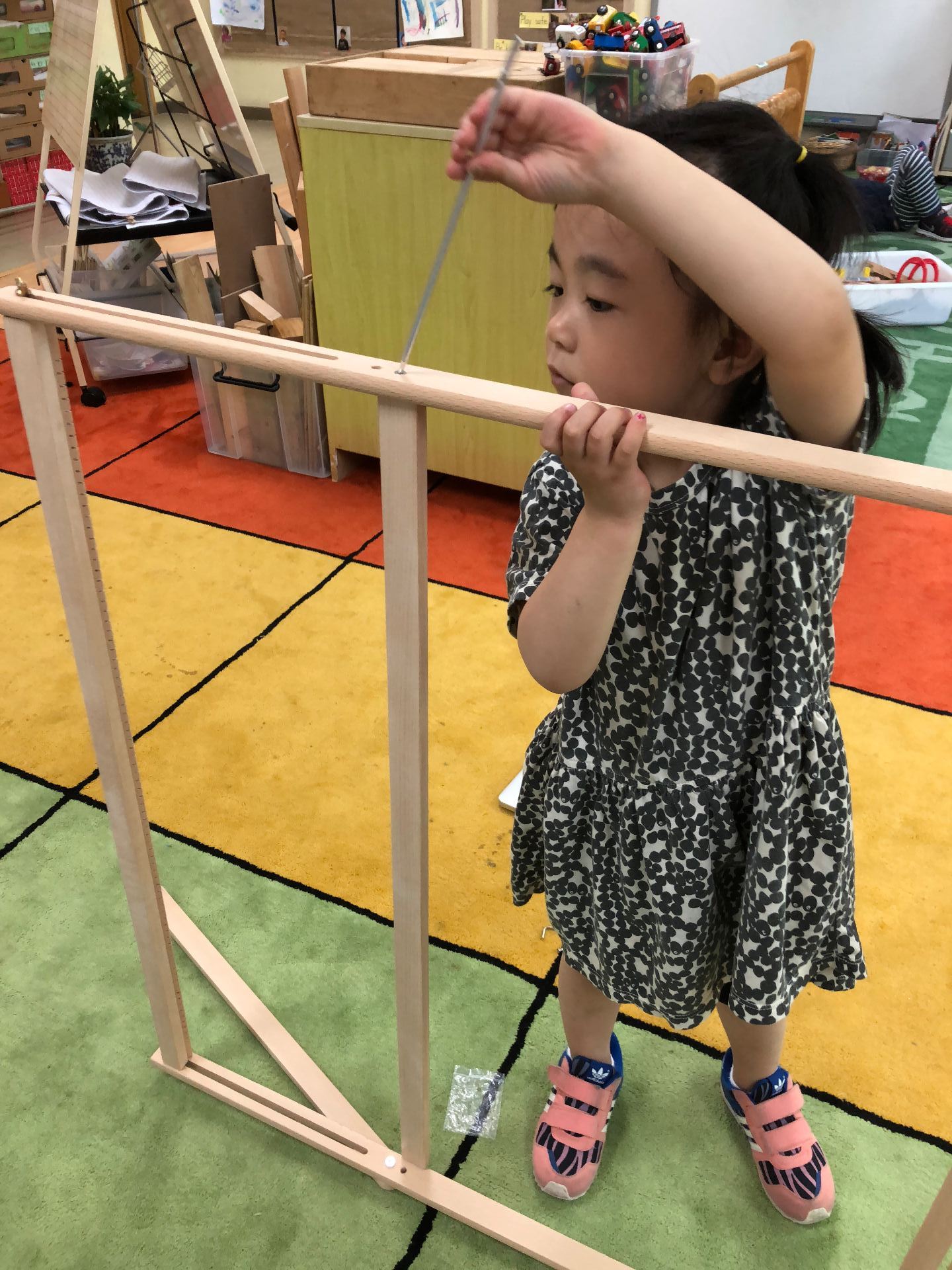
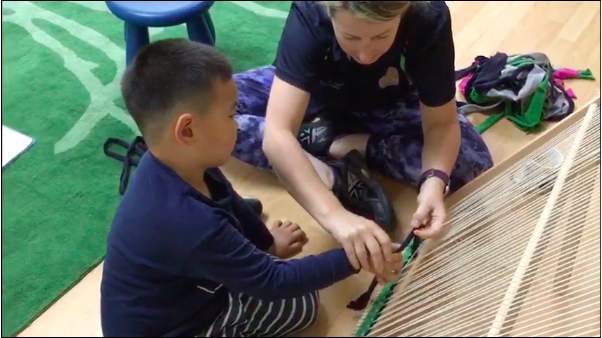
Ms. Angie had some new equipment brought in. Over a few days the students played with the unopened box, using it as a computer in their ‘play’. They were not sure what was in the box. It was time to unpack it.

  • Cornelis “What is it? It looks like a guitar.”
  • Reggie “It’s a xylophone.”
  • Cornelis “Maybe it’s a net, a giant net.”
  • Cornelis “If I go here it looks like a house. What is it really?”
  • Teacher “What do you think it is?”
  • Cornelis “Definitely a giant net.”
  • Amber {In Chinese} “It goes up, like the front of a wall.”

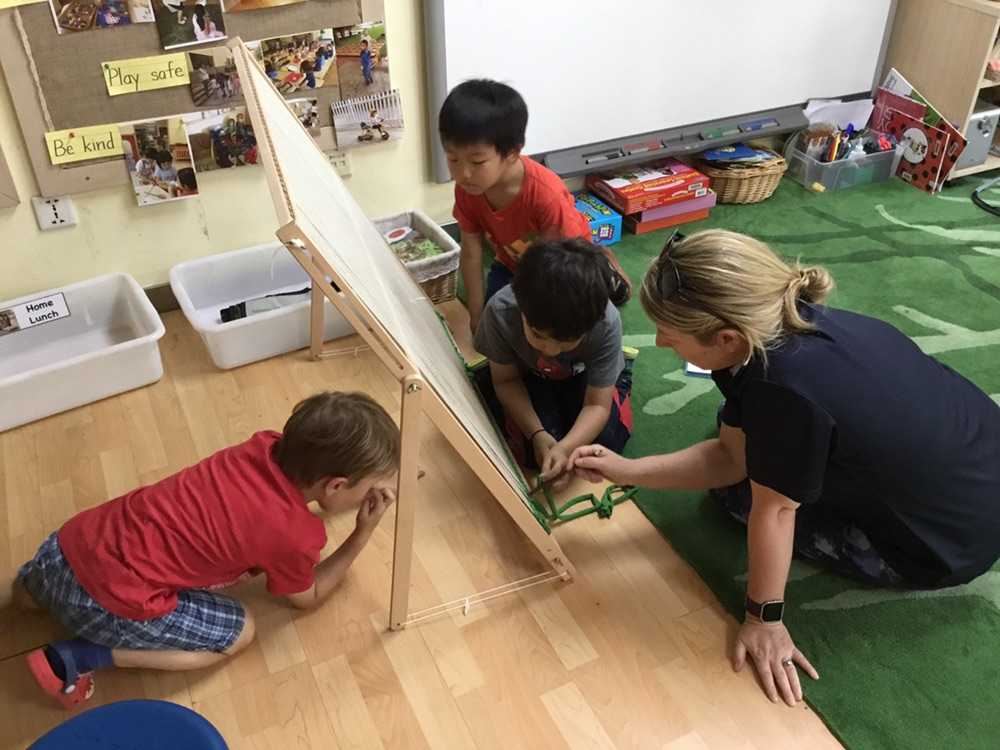
The students helped Ms. Angie unpack the item. They helped her assemble it.

It was a weaving loom!

“It’s Beautiful!”

Next the students worked on creating their own individual weaving projects using smaller looms.

https://twitter.com/NISPreKK1/status/1000164907285819392


While weaving students:

  • develop better strength between the thumb and forefinger (stronger pincer grip for writing)
  • develop hand-eye coordination because it encourages them to use the visual information to coordinate the movement of the hands
  • develop concentration and perseverance
  • learn how to help and support others

Taking Action

A group of students noticed that the water bottle tub was full of water. They worked together to clean it out. They organised the bottles, cleaned the tub and put the bottles back in a clean tub.

Learner Agency:

Students taking responsibility and making decisions through authentic tasks.

The Map of the City

Cornelis drew a map. He was eager to follow the map to create a structure. A group of friends gathered to help him. 

https://twitter.com/NISPreKK1/status/975663506140876800

Cornelis “People are on a lookout because the people are looking for the bad guys. They keep them safe from bad guys.”

Franz “We need a swimming pool because if the city don’t have a swimming pool, then they will not be able to swim.”

Cornelis “When the rocket is here, it goes blast off and stops at Mars. And then the people jump out of the rocket. When it is out of space, they jump out. They get in trouble and they fly into a black hole. There are aliens here. They are stuck in the ground!”

Reggie “In the city, when I come back from the rocket I go swimming. When I come back from Mars it is mostly cold, so I go swimming. We like the city. It is really busy. I mostly have to bring heavy loads to Mars like wood, trees, bricks, heavy things, so we can trap the aliens.”

Kai “Because they are bad guys.”

Reggie “They put masks on our mouth.”

SLO’s

  • tell own stories using words, gestures, and objects
  • listen to others

  • learn to take turns

  • participate in communal classroom activities

Bugs (Sorting)

The students were given a tub of plastic bugs.

  • Teacher “What do these bugs look like?” [characteristics of bugs]
  • Franz, Amber, Lawrence and Abby sorted the counters out. They discussed how they wanted to group them.
  • Franz “This is a grasshopper, and it has wings.”
  • Teacher “What about the other bugs?”
  • Amber “It is a caterpillar.”
  • Teacher “Does the caterpillar have wings?”
  • Franz and Amber “No!”

After sorting the bugs, the students counted the bugs and wrote the number on chart paper. They identified the differences in colour.

SLO’s

  • sort objects
  • present information on teacher-generated pictographs where one picture equals 1
  • begin to explain data using simple language such as same and different / more or less

Money (The Cash Register)

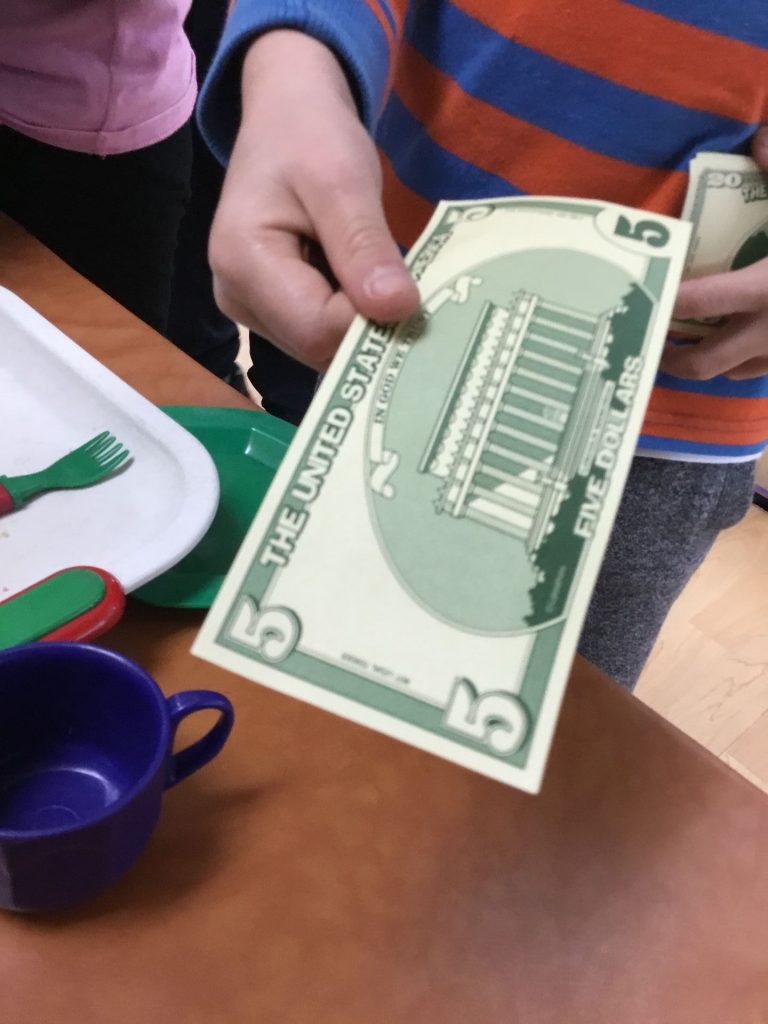
The students were wondering if they could have a cash register in the ‘house’. They wanted to use money to buy and sell goods. Previously, the students went on a trip to the local supermarket. They watched as the cashier scanned the groceries and the shoppers paid for their items.

The Kindergarten class were happy to share their cash register with us. The students arranged the house to make room for the machine. Play began…

They took turns, decided what to purchase, helped each other count the money and discussed trading money.

  • Teacher: “What is trading?”
  • Reggie: “It is when you give 5 coins for a 5 dollar note. It’s the same thing.”

  • R “I have 40!”
  • Teacher “40!”
  • R “Yes, because 20+5+5+5+5 equals 40!”

He counted out the money, one note at a time.


https://twitter.com/NISPreKK1/status/957174131669090304

SOL’s

  • explore how numbers can be used in many ways for different purposes in the real world
  • understand that money is used to buy and sell things
  • understand that different things have different monetary values
  • know that Yuan is the currency of China

Loose Parts – 2

What do we learn? How do we learn?

Over the last few weeks, the students have been exploring with ‘loose parts‘. They were invited to play with these materials during choice time. The term ‘loose‘ allows us to use the materials to explore a variety of concepts. They provide students with opportunities to be creative, persistent, courageous, committed, confident, curious and independent.

https://twitter.com/NISPreKK1/status/939335290719576065

The Plan

One student brought in a picture she had created with her mum. She provided explanations about the details included in the picture. She proudly pointed to all the details she had included or coloured herself. She was an artist.

The students were inspired and wanted to create their own picture. We made a PLAN.

StudentsPaint.” We need paint to make the paintings! The students began to shout out the colours they would like to have. Red, green, yellow, gold, purple, white, blue, grey, orange, black and brown.

Kai “We can have indigo!”

Teacher “How can we make indigo?”

Kai “Blue and purple make indigo.”

Reggie “Paint brushes.”

Teacher “How many?”

Reggie “3”

Teacher “Why 3?”

Reggie “3 people at a time can paint.”

Franz “Maybe 4 people at a time can paint. Then it is quicker, we spend less time.”

Reggie “We can paint our portfolio boxes.”

Franz “Paper. We need very BIG paper.”

Abby “Maybe we can get it from the library.”

Reggie “We need to paint outside, because if we paint inside, it will take ages to clean.”

Teacher “Paint outside? Where?”

Reggie “The tables?”

Cornelis “The seesaw.”

The students began to think of the pictures they would like to create.

  • Reggie “Rainbow.”
  • Abby “A butterfly.”
  • Franz and Mia “A shark.
  • Kai “A enormous, no, no… humongous cup.”
  • Amber “Fish.”

We wonder how we can express ourselves through art…watch this space…

High Speed Train – Ongoing Inquiry

11 September

Ryan, Franz and Tyler showed an interest in playing with Lego cars and train tracks. They frequently build their own types of trains with wooden blocks and Lego.

Teacher “What do you know about transportation?”

Ryan “I know airplanes, cars, buses, I have been on the airplane.”

Franz “I know them too, I have been to many places. I took the high speed train before.”

Teacher “What more do you want to know about transportation?”

Franz “I want to know more about the high speed trains. It goes so fast.

The students, along with the teacher, created a chart with the titles “I see, I think, I wonder”. The teacher recorded their prior knowledge and helped them dig deeper into the inquiry about ‘the high speed trains‘ through questioning.
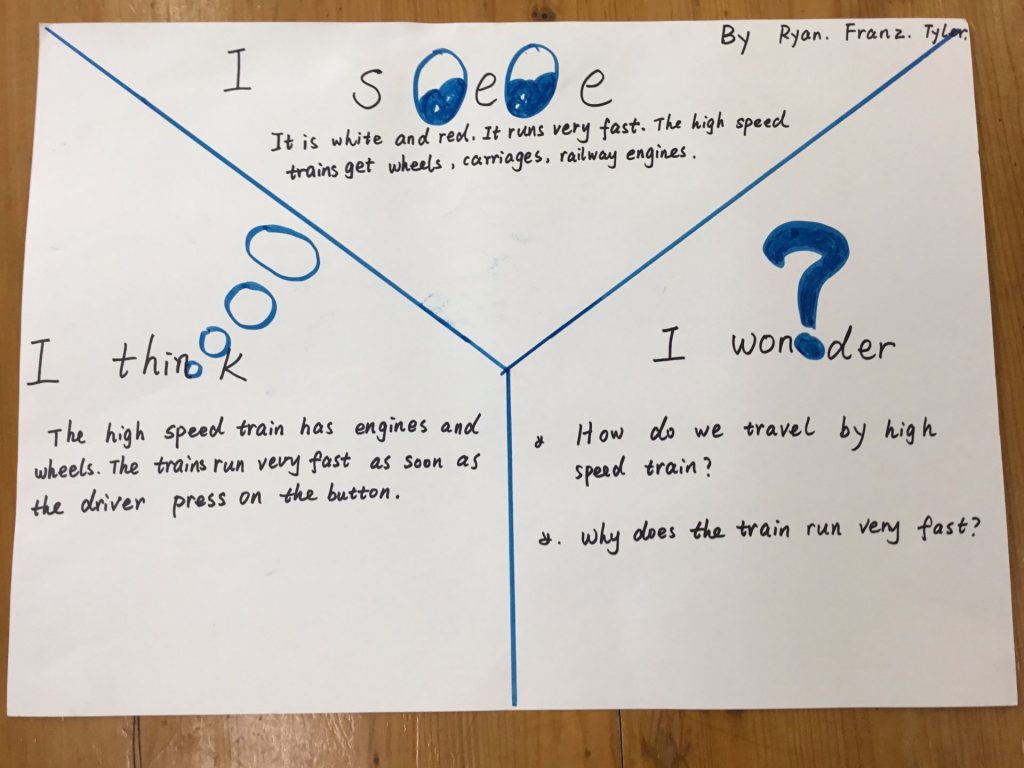
The teacher showed the students a picture of a high speed train. Conversations continued around the questions:

  • “What do you see in the picture?”
  • ”What do you know about the high speed train?”
  • ”How does the train work?”
  • “What questions do you have about the high speed train?”

How do we travel by high speed train?

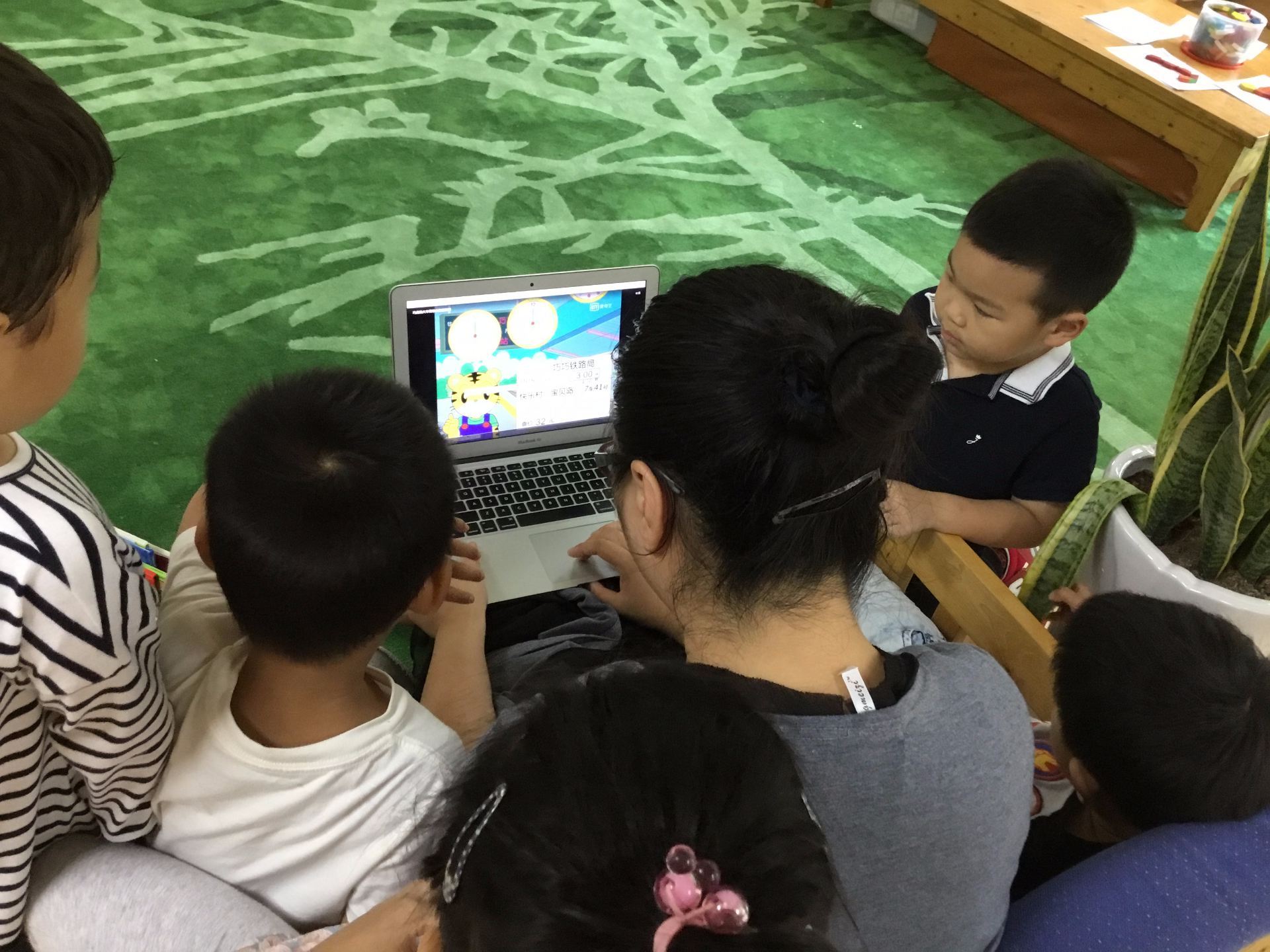
The students watched a Chinese cartoon movie (Qiao Hu) to help them understand the different steps that need to be taken in order to travel by train.

Buy the ticket – pay the right amount of money — find the seat — sit down and watch the scenery from the window — get off the train.

The students discussed what they noticed.

The teacher showed the students a real train ticket. They looked at the ticket to find out what information the ticket provides; the train number, destination, time (starting) of journey to the destination and the location of the seat.

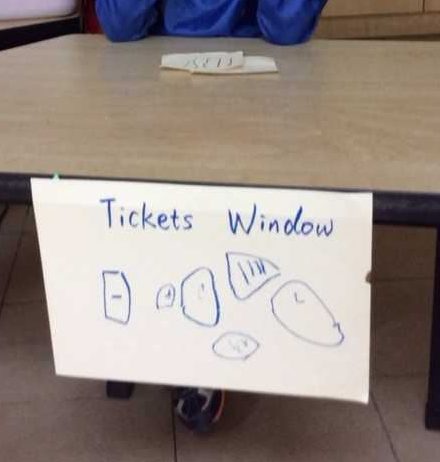
Some of the students wanted to design their own train tickets. They included all the main information above. They reflected on what they had seen and learned about the tickets.

22 September

The students collected items that will drive their play. They helped the teacher set up the station by putting the train together, making the tickets, creating posters and looking for costumes.

The students worked together to play their game. They quickly realised that there were problems with the train trip. Too many people wanted to drive the train, there were too many passengers, some passengers had the same number on their tickets, some train drivers were not sharing the job and it was just too noisy.

Ms. Lucia had a discussion with the students. They had to come up with solutions to the problems. The students thought deeply about the issues. They came up with the following solutions.

  • too many people wanted to drive the train – only two people driving the train, the driver and co-driver.
  • too many passengers – there are 5 seats on the train. If you don’t have a ticket for the seat you have to wait in the waiting area. There can only be 3 people in the waiting area.
  • some passengers had the same number on their tickets – you have to wait till the seat is vacant or you can share with the person travelling in that seat.
  • some train drivers were not sharing the job – we will use a liquid timer so that we can have turns.
  • too noisy – we will use our inside voices.

SLO’s

  • listen to others
  • co-operate and share in mixed groups
  • learn to take turns
  • participate in communal classroom activities
  • develop age appropriate skills for different social occasions
  • find solutions to problems

25 September

Why and how does the high speed train go so fast?

The students watched a video about high speed trains. The teacher explained the information shared in the video. The documentary explained why the design of the train was important and the impact it had on the speed the train could travel. They inspected a model train and noticed the design of the vehicle.

https://twitter.com/NISPreKK1/status/912289358836727808

The students were invited to draw pictures or create models of trains. A group of students went over to the design room to gather boxes and other interesting materials they could use to create their train.

SLO’s

  • listen and respond in small or large groups for increasing periods of time
  • ask questions to gain information and respond to inquiries directed to themselves or the class
  • share ideas and experiences through role play, art and discussion

26 September

The students began to decide what more they could include in their train. The glued on wheels and steering wheels.

https://twitter.com/NISPreKK1/status/912990122747895809

27 September

The students used recycled materials to create their own model trains. They discussed safety while using the tools and materials. They had to think of their design explain their thinking.

https://twitter.com/NISPreKK1/status/912985089155334144

未完-待续  To be continued…

Balancing Act

We read the story ‘Balancing Act‘ written by Ellen Stoll Walsh. In this story, two mice make a teeter-totter. They are having fun and balancing just fine until a salamander and frog join in their game. We used a scale and cubes while reading the story, and the students discussed the concepts number, balance, weight and measurement.

“3 on one side and only 2 on the other. We need one more on this side. 3+3 will make 6!”

They decided that the bird weighed 6 cubes. We used cubes to explain our thinking.

The students were then invited to play with the scales and manipulatives.

12 on both sides.

Making sets of 2.

“It has to be the same on both sides!”

Through these playful experiences, students developed an understanding of how measurement involves comparing objects, and that objects have attributes that can be measured using non-standard units. They used their developing knowledge to solve problems involving weight.

https://twitter.com/NISPreKK1/status/910051064442843137

Colour, light and Shadow Play

One student noticed a rainbow on the floor at her home. She shared her experience with the class.

https://twitter.com/NISPreKK1/status/908196747033247744

The students had a discussion about what they noticed.

  • Teacher “What is it?”
  • Ruby “It’s a rainbow!”
  • Teacher “What is a rainbow?”
  • Ruby “It was on the floor.”
  • Reggie “A rainbow is with a lot of colours.”
  • Ruby “I can see purple and red and orange and yellow.”
  • Reggie “There is red green and yellow.”
  • Teacher “Who has seen a rainbow before? What do you know about rainbows?”
  • Franz “I saw it in Sanya.”
  • Reggie “They come in the morning.”
  • Ruby “When I go to school I see a rainbow.”
  • Franz “The rainbow is coming from the sky. From the sun”
  • Reggie “We need water and sunshine.”
  • Ruby “And we need rainbow play dough.”
  • Teacher “Why did the rainbow go away?”
  • Ruby “Because it’s dark.”
  • Reggie “When something goes over a rainbow, when something goes in front of the rainbow it will go away. It was too dark”
  • Ryan “Because it has been shadowed by Ruby’s body.”
  • Teacher “What is a shadow?”
  • Ryan “The shadow is black.”
  • Tyler “The sun is shining on the shadow.”
  • Lawrence “The sun shines on the people.”
  • Franz “No. The rainbow is coming from the sun. I saw the rainbow when the sun went down.”
  • Amber “The sun shines. It’s very long (destination).”
  • Cornelis “The rainbow only shines out of the sun. When it’s too dark you can’t see the sun and then when it be morning with the sun out with the rainbow there it will be longer.”
  • Teacher “Can we make rainbows?”
  • Cornelis “You need to make it with the play dough. You need to make it with the play dough and roll the clay.”
  • Reggie “We can make a rainbow out of clay.”

We wonder if we can make shadows and rainbows.

The students worked with a teacher to explore colour and light.

  • Teacher “What to you notice about rainbows?”
  • Reggie “They have lots of colours.
  • Cornelis “I can make rainbows.”
  • Franz “I can make.”
  • Teacher “Who knows how real rainbows are made?”
  • Reggie “From rain and sun.”
  • Cornelis “And then when the sun goes on the rainbow it bounces, goes boing, boing, boing.
  • Franz “I can make the sun.”
  • Teacher “We are going to find different ways to make rainbows.”

The students look at the rainbow colours on CD’s. They hold it up to the sun, observe how light plays on its surface and name the different colours.

  • Amber (singing) “It can be rainbow.”

The teacher pours some milk into a tray. The students put droplets of different colours of food dye into the tray of milk. They name the different colours they used. The teacher then includes a few drops of washing liquid. The colours begin to swirl in the milk.

  • Teacher “What is happening to the colours?”
  • Amber and Jasmine “Rainbow!”
  • Reggie “Its turning into a rainbow!”

The group continue to discuss what they have observed.

The teacher invites the students to search for rainbows in other places. They use water guns to create the effect of rain.

We continue to look for rainbows…

https://twitter.com/NISPreKK1/status/908672574107697155

SLO’s

  • a sense of wonder and curiosity
  • make observations about locations and patterns in their immediate environment as part of their primary geographical explorations
  • use inquiry to acquire information
  • make statements that reflect their understandings

Zones of Regulation

The students sorted pictures of different feelings and emotions. This activity introduced students to the four zones used to categorize the different emotions and states of alertness people experience. 

Students listened to an online story ‘The Feelings Book‘ by Todd Parr. This is a surprising and silly book about moods and feelings.

Students listened to the story ‘On Monday When It Rained‘ written by Cherryl Kachenmeister. In this story the author and photographer have captured the thoughts and feelings of one small boy, whether he is proud or scared, lonely or excited.


SLO’s

  • explain possible causes for their different feelings and emotions
  • identify positive thoughts and attitudes in themselves
  • identify and explore strategies that help them to cope with change
  • recognise that everyone has feelings, emotions and perspectives that may differ from their own
  • share their own ideas and feelings in an appropriate manner

The Knobless Cylinders

The students have been exploring four sets of wooden cylinders. The different sets vary in colour and encourage the exploration of height and diameter. Students can grade by size, develop their co-ordination of movement, observe differences in dimensions and recognize difference and similarities (when using more than one set).

https://twitter.com/NISPreKK1/status/907526652766203904

SLO’s

  • Identify, compare and describe attributes of real objects

Block Play – Cleaning Up

The students found large cardboard blocks in some of the cupboards. They took them out and began to construct small individual houses using just a few blocks each. After a while they wondered how they can create one large tower together. They worked together to build the tallest tower, negotiating roles, the placement of blocks and problem-solving when the tower collapsed.The excitement did not end there.

  • Teacher “Why do we need to clean up?”
  • Cornelis “Because it is so much mess, because it is too much mess. We are cleaning it on the shelf.”
  • Ruby (singing) “Clean up, clean up.” 
  • Ruby “Shall we make a party?”
  • Cornelis “Let’s make a tower, because this is the really cool castle.”
  • Ruby “Wow!”
  • Cornelis “Thats where everyone lives in the castle.”
  • Ruby “Make it high up!”
  • Cornelis “So we can climb up. So we can climb up to the castle with these stairs.”
  • Ruby “It is a really cool building.”
  • Cornelis “This is going to be the coolest building ever!”
  • Faye “Look!”
  • Cornelis “YAY!”
  • Ruby “Let’s dance.”
  • Cornelis “We want to leave it because it is so cool.”

At the end of their play they had to clean up the blocks, partly because the tower they created was blocking access to some of the student lockers.

These collaborative experiences provide students with an opportunity to practice appropriate social langue while solving problems through play. They persevere through challenges and are not afraid to explore possibilities. This experience helped them explore mathematical concepts such as measure, space and number through real life experiences.

https://twitter.com/NISPreKK1/status/906126015331680256

SLO’s

  • listen to others
  • co-operate and share in mixed groups
  • learn to take turns
  • participate in communal classroom activities
  • develop age appropriate skills for different social occasions
  • understand that shapes can be described and organised according to their properties
  • explore how objects can be sorted by their attributes

Essential Agreements

Conversations about safety and care have been at the forefront during the last few weeks of school. These conversations are driven by the concepts acceptance, relationships, attitudes, responsibilities and behaviours.

Literature and daily situations often provide opportunities for discussions about our care for others and the environment. In order to ensure that everyone works collaboratively, the students together with their teachers created ‘Essential Agreements‘.

Photographs of students creating this culture and climate for learning and play were shared with students to help them better understand these agreements.

Care and Empathy 

As the weeks progress many examples of how students grow as a community become more visible. Helping each other navigate through tasks, showing concern and empathy for those who are hurt and supporting each other emotionally helps create a safe, caring and thoughtful learning environment.

One student holds an ice pack for another who is hurt, while another helps to tie up an apron.

Students help rebuild a broken wooden tower.

https://twitter.com/NISPreKK1/status/900297029338906625

SLO’s

  • communicate with others in order to experience relationships and make friends
  • reach out for help when it is needed for themselves or others
  • identify when their actions have impacted on others

We Are…

During the last few weeks the students have been settling in, getting to know their peers and exploring their new learning environment. How do they demonstrate the attributes of the  Learner Profile? 

They are…

Inquirers

“What will happen to the water bead when I put it into the water?”

  • We ask questions.
  • We like to learn and discover new things about the world.
  • We are curious, we will carry this love of learning throughout life.

Risk Takers

“I can help you get the money out.”

  • We have the courage to try new things.
  • We are not afraid to give it a go even if we feel shy.
  • We try to solve problems in a lot of different ways.

Thinkers

“We are trying to make the marbles travel through the pipes.”

  • We are thoughtful.
  • We try to solve problems and make good decisions.
  • We do this by thinking about things and by learning from our mistakes.

Open-Minded

“We like listening to stories read in different languages.”

  • We know that people are different and may do different things.
  • We know that not everyone will think like us and that’s fine.
  • We listen and try to understand others.

Knowledgeable

“I can create a picture using these shapes.”

  • We have learned many things.
  • We can tell you about these things and we can show you.
  • We can use this information to solve problems in life.

Reflective

“How does this story make you feel?”

  • We think about what we have learned, what we are good at and what we can improve the next time.
  • We take the time to think about our actions and their effects.

Caring

“Can we water the garden?”

  • We care for other people and try to help others.
  • We care about everything around us.
  • We want people around us to be happy and we are sensitive to their needs.

Communicators

“I can draw a picture of ME!”

  • We talk about our ideas.
  • We are able to express ourselves in more than one language.
  • We can also communicate using mathematical language, symbols and drawings.

Principled

“I can share the money with you.”

  • We always try to do what is right.
  • We are fair and follow rules.
  • We are honest with ourselves and with others.

Balanced

“I like to create tall towers.”

  • We eat healthy food and we exercise.
  • We like to learn about different things.
  • We understand it is important to have a balance of work and play.

Water Beads

The students were exploring with water beads. They enjoyed moving their fingers through them, exploring the texture of the soft sticky pebbles.

One student found some new beads. She wanted to know why they were different. It was hard. It had not been put in the water. She worked alongside a teacher to place the bead in the water.

She observed it over the day. She noticed that the bead was bigger. She explained “The bead got bigger because the water went into it, just like when water goes into your tummy.”

She drew a picture of her experiment.

SLO’s

  • develop an inquiring mind
  • ask simple questions
  • make observations 
  • make simple plans 
  • collect objects related to their study
  • draw simple drawings to express what they see/study
  • sort and classify objects into categories by attributes (Similarities & Differences)
  • communicate views and knowledge 

Friendship and Agreements

The students listed to the story ‘A Cat and a Dog‘ by author Claire Masurel. In this story, a cat and a dog live in the same house, but they are not friends. They fight all the time, about everything. Then disaster strikes. Dog’s beloved ball bounces up into a tree and is stuck. Cat’s precious stuffed mouse falls into the pond. The story illustrates how a simple act of kindness can foster friendship.

Cornelis “They are angry, they are fighting, they are causing trouble.”

Reggie “Maybe they don’t like each other.”

Teacher “How can they solve the problem?”

Cornelis “They can put the carpet down.”

Reggie “One can sleep on it one night and the other the other night.”

We discussed problems we may have in school. The students began to brainstorm ideas for how we can work and play in school. We discussed Good Choices. SLO’s

  • identify the consequences of their actions
  • accept responsibility for own actions
  • listen to others
  • respect differences
  • co-operate and share in mixed groups
  • learn to take turns
  • accept that others might have different opinions and preferences about things
  • resolve arguments peacefully
  • participate in communal classroom activities
  • develop age appropriate skills for different social occasions

What is your number?

The students have been exploring number using cuisenaire rods. They ordered the rods by their number or size.

Next they created an animal using the rods. 

The students then calculated the value of their picture using the corresponding value of each block.

They used numbers and words to share their thinking and problem solving strategies. 

https://twitter.com/NISKinder2/status/862502840828256256

SLO’s

  • Record addition and subtraction sentences using the appropriate signs
  • Solve problems involving addition using manipulatives, models and informal written strategies
  • Recall addition doubles up 5+5 

How many bones?

The students are curious about bones and skeletons. What does a human skeleton look like? Ms. Jo brought in Mr. Bones. The students used an app on the iPad to learn more about the different bones and muscles in our bodies. She asked the students how many bones we have in our bodies.

https://twitter.com/NISKinder2/status/860796044610740224

One student went home and used google to search for her answer. The next day she explained her answer to the students.

Carolyn “Babies have 270 bones and grown-ups have 206 bones.” 

Teacher “Why do babes have more bones than grown-ups?”

Carolyn “Because babies have more bones when they are small. They are small pieces. When they grow up and their bones stretch out, some bones get together and so there are lesser when they are grown up.” 

Teacher “How can you show that number?”

The students brainstormed ideas. They decided that they could use Base 10 blocks. Two students began to count them out. They labeled their bundles of blocks.

Teacher “How do you know which one has more?”

The students decided to used the words ‘more‘ and ‘less‘.

Teacher “It is very hard to see which group has more and which has less. What can we do?”

The students decided that they could place them next to each other and start from the same place.

Teacher “How many more bones do babies have than grown-ups?”

Our journey continues…

Stay Safe!

The students noticed that some children were opening the safety gates during playtime. They took action by creating a video about playground safety. They shared their video with their peers.

https://twitter.com/NISPreKK1/status/853163861142196227

Agency: When students have an active voice and stake in the classroom/community. When students reflect on their actions and self-regulate.

Addition

The students have been revisiting and practicing a variety of strategies to solve addition and subtraction sums. Students used dice to create their own sums, and then used their fingers, counters, the number line or a 100 chart to solve the problems.

SLO’s

  • Record addition and subtraction sentences using the appropriate signs
  • Solve problems involving addition and subtraction of single digit numbers using manipulatives, models and informal written strategies
  • Recall addition doubles up 5+5 

Weight

The students were exploring measurement using weighing scales. There were a number of items such as milk, flour and vegetables to weigh. They used the weights to see how heavy and light the items were.

Daniel “What is it for?”

Gabby “For weighing.”

Vivian “Its very light.”

Salva “If you want to see the things which is heavier. You put things in the box. If you take some things out, that side will go up. Make it balance.”

They recalled and shared where they have seen weighing scales.

They observed and shared what they noticed about how the scale was balanced. They used their bodies to show what balanced may look like.

Daniel “He took all the blocks off, he put 2 bags on each side.”

Ricky “You have to put blocks on the lighter side.”

Daniel “He put the same blocks on the other side.”

Each student was given a block that was either 5, 10 or 20 grams.

How can we make 20 grams?

Students gathered together to make 20 grams. They worked together to solve a problem. 

Vera “I have a log (10 grams). I need another log (10 grams).”

They made 20: 10+10, 5+10+5 and 20+0.

SLO’s

  • Identify, compare and describe attributes of real objects and situations
  • Represent the results of measurement with drawings and concrete materials
  • Solve problems involving addition and subtraction of single digit numbers using manipulatives, models and informal written strategies
  • Recall addition doubles up 5+5

Old Crayons (Documentation)

The students were given a heap of old crayons which were not used in the classroom. The students began to discuss possible solutions.

  • Vivian “I saw broken crayons.”
  • Isabella “I saw some are dirty.”
  • Harris “Some have no covers.”
  • Carolyn “Some people were taking out cover and not putting it back.”
  • Vera “We can clean them up and put the same color crayons together. Sort them out.”
  • Harris “We can wash them.”
  • Vivian “We can wipe them.”
  • Salve “It might get wet.”
  • Carolyn “We can recycle them. We have a recycle bin outside. Recycle means reuse it again.”
  • Vera “We can ask big kids to help out.”
  • Daniel “They are made with paint.”
  • Vera “It’s like play dough. I am going to ask my brother because he knows a man who knows how to recycle.”
  • Emily “We can use some tape to stick the broken crayons together. We can use wet wipes to clean it up.”
  • Isabella “We can use blue tack to stick.”
  • Amy “We can tear the old paper, and use paper from our recycle paper box to wrap it up.”

Three students went over to the staff board to look for the teacher who knows about recycling. They found a picture of him. He works in the Design Center.

They talked to him about their problem. He gave them two solutions.

1. Donate the crayons to a school that does not have them.

2. Make new crayons by melting the old ones.

https://twitter.com/NISKinder2/status/841188601215909888

The students chose to melt the crayons. They looked for a book in the library that could help them but could not find one. They went online and looked for a video. They found the steps they needed to take, to create new crayons. 

Step 1: take the wrappers off the crayons.

Step 2: sort the crayons out by colour.

Step 3: break the crayons into smaller pieces.

Step 4: put hot water in the a baking tray and place the crayons in a water bath.

Step 5: put the tray in a hot oven.

Step 6: wait for the crayons to melt.

Step 7: Take the crayons out of the tray.

One student created her own crayons at home. She used many colours to create the different layers.

https://twitter.com/NISKinder2/status/842679412566892544

SLO’s

  • sequence events
  • a sense of wonder and curiosity
  • develop an inquiring mind
  • ask simple questions
  • sort and classify objects into categories by attributes (Similarities & Differences)
  • use inquiry to acquire information
  • make statements that reflect their understandings
  • listen to others’ perspective
  • co-operate and share in mixed groups
  • learn to take turns
  • participate in communal classroom activities

Pirates of the Zombie

A group of students decided to create their own ‘Pirate Story’. They wrote the script together, created the props, decided on the characters and actors, and performed for their peers. They had to work together, negotiate and solve problems as they practiced.

https://twitter.com/NISPreKK1/status/742927958432743426

https://twitter.com/NISPreKK1/status/743343841948798976

Agency: When students are actively engaged in various stages of learning, including: thinking about, planning, modifying and creating. When students apply their understanding of concepts through the construction of their projects/play.

1 3 4 5