What Shapes Do You See?

Tyson created a picture of his grandfather using ‘shapes’ (loose parts).

Teacher “What shapes do you see?”

The children began to name the shapes they saw. Circles, squares, half circles, which looked like the moon.

Felix pointed to the lines, there were red, orange and blue. Some are teeny, and some are super long said the children.

We decided to sort and count the shapes. We created a graph to help us document the information collected.

https://twitter.com/shemogani/status/1196335073642999811

Approaches to Learning (ATL’s)

Thinking Skills

Analysing

• Observe carefully.

• Find unique characteristics.

Evaluating

• Organize information.

Research Skills

Data gathering and documenting

• Gather information

• Record observations—drawing, charting, tallying—using emergent writing skills

Synthesizing and interpreting

• Sort and categorize information and materials; arrange into forms or order, for example, with graphs, marks or symbols using emergent writing skills.

• Analyse and interpret information.

How Many?

Each morning the children gather to greet each other. Next, they check the lunch order by asking their friends if they have brought in lunch from ‘home’ or need a ‘school lunch’. This information is gathered and recorded as a graph. The children count out the numbers to make sure we have the right total.

The class leader uses numbers to make sense of the information collected before placing the lunch order.

This experience provides the children with opportunities to use number in real life situations.

https://twitter.com/shemogani/status/1189390883407314944

Approaches to Learning (ATL’s) 

Research Skills

  • Gather information
  • Record observations—drawing, charting, tallying—using emergent writing skills, when possible, to write comments, annotate images, and so on.

Synthesizing and interpreting

  • Sort and categorize information; arrange into forms or order, for example, with graphs, marks or symbols using emergent writing skills.
  • Analyse and interpret information.


Communication Skills

Listening

  • Listen actively and respectfully to others’ ideas.

Interpreting

  • Interpret visual, audio and oral communication: recognizing and creating signs, interpreting and using symbols and sounds.

Speaking

  • Express oneself using words and sentences.
  • Participate in conversations.

Reading, writing and mathematics

  • Understand symbols.
  • Understand that mark-making carries meaning.
  • Use mark-marking to convey meaning.
  • Document information and observations in a variety of ways.

Routines That Build Independence

Each morning we gather in a circle to greet each other using our words and gestures. It is a time to be part of a community, sharing our feelings, cultures and stories. It is a time to celebrate our diversity while being respectful and inclusive.

Each morning one student checks in with each member of the class to place the lunch order. Student ID’s are assembled in a graph to help sort the information collected.

The cards are then taken to the cafeteria by the student helper. The lunch order is placed, and snacks are brought back to the Early Years kitchen.

After we wash our hands, we line up to get our snack boxes.

We are now ready to have our healthy snacks!

Approaches to Learning (ATL’s)

  • Seek information.
  • Gather information from a variety of sources (people, places, materials, literature).
  • Sort and categorise information and materials; arrange into forms or order, for example, with graphs, marks or symbols using emergent writing skills.
  • Analyse and interpret information.
  • Listen actively and respectfully to others’ ideas and listen to information.
  • Express oneself using words and sentences.
  • Follow the directions of others.
  • Follow classroom routines.

The School Bus

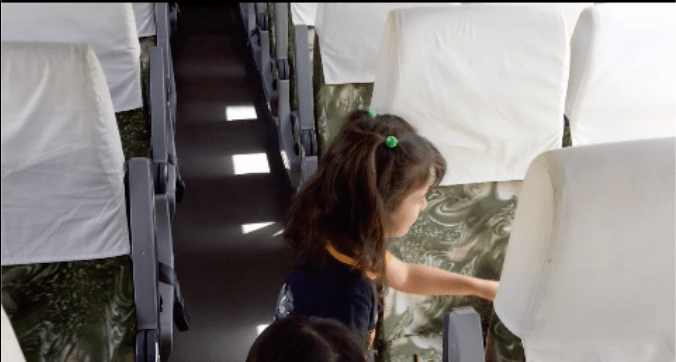
We were planning the trip to Golden Eagle.  Some students suggested that we can take the school bus.

Sarah, Amber and Ruby went to check how many seats the school bus has.

We discussed how can we find out the number of the seats on the bus.

  • Amber “20个座椅。用你的铅笔来数。1,2,3……20,21。再把数字写下来,来看对不对。” [20 seats. You can use the pencil to count. 1,2,3……20,21. Then write down the numbers and check if it’s right.]
  • Sarah “有好多位置,我觉得10个,我们进去数就是了。” [There are many seats. I think there are 10 seats. Let’s go in and count.]
  • Ruby “40. Maybe we can go inside and find out. We could take a picture and we can look at the picture at the iPad.”

We took a picture of the seats on the bus but we found it hard to count the seats using the picture on the iPad.

  • Ruby “Because it’s far away. I can’t count the back.”

Then we decided that it was better to count the actual seats.

Amber started to use tally marks to record the number of the seats.

When we went back to the classroom, we used different materials to recreate the seats. The students wanted their recreations to look like the actual seats, therefore they used 2 bricks to create one seat.

Amber decided that she wanted to use a softer material because the seats in the school bus were not hard like the bricks.

We put down our name cards to see if we have enough seats.

  • Amber “后面有空的,很多,我都不知道有这么少人。留给老师,别的小朋, K1A, K1B。有多出来,太多了。” [There are many empty seats. I don’t realise we only have such few people. We can leave these seats to teachers, friends from K1A, K1B. We have more seats. So many.]
  • Ruby “We make seats for the school bus. Because we have to know how many people can go on the bus. There are so many seats on the school bus. They are available for K1B, K1A, K1C, they are going on the bus.”

https://twitter.com/NISPreKK1/status/1130380105673453568

The PLAN

SLO’s

  • sort objects
  • present information on teacher-generated pictographs where one picture equals 1
  • begin to explain data using simple language such as same and different/more or less
  • understand that number names relate to a specific quantity
  • estimate quantities to 10

Hair Styles

It was the first time Charlotte came to school with braids. Everyone was very excited to see her new hairstyle. The students began to notice and comment on their different styles.

When we sat down for our Morning Meeting, we looked at a sorting activity we had done a while ago.

  • Felix “We do the picture on this one and look the colour of hair.”

We were discussing how different our hair looked, our sorting was based on colour.

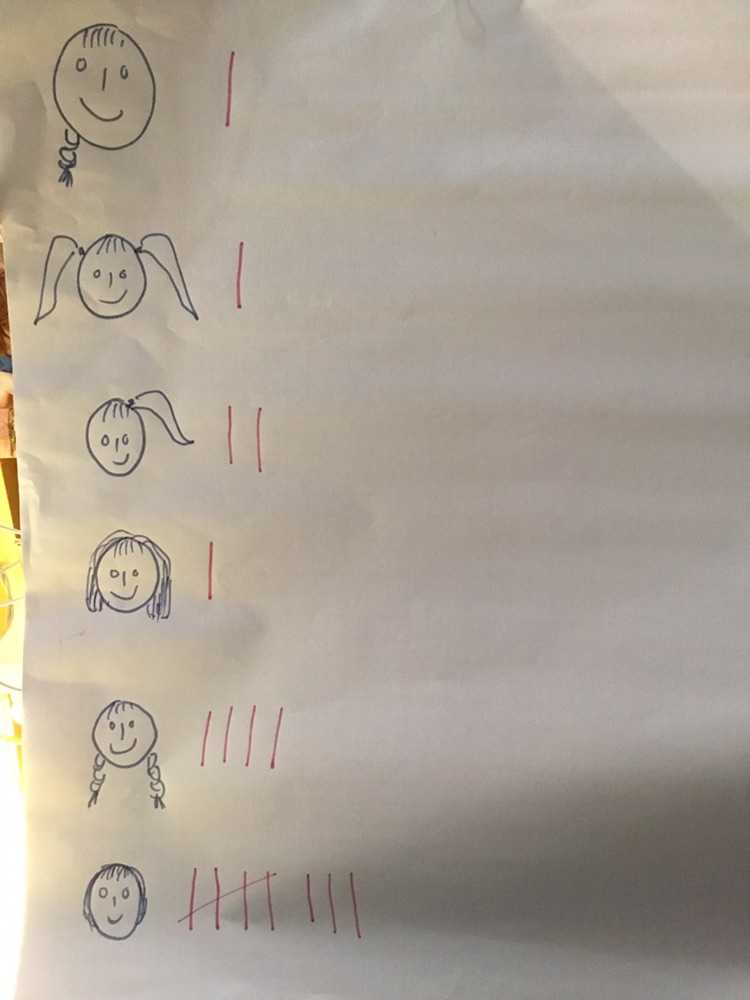
We decided to use Tally marks to record the different totals.

But what about the different hairstyles? Can we record this information using tally counts?

We decided to give it a try. One by one each group stood together as we counted the number of students who had the same hairstyle.

Pony Tails

Short Bob Cuts

2 Braids

Shot Hair Cuts

We recorded our information on chart paper.

SLO’s

  • sort objects
  • present information on teacher-generated pictographs where one picture equals 1
  • Begin to explain data using simple language such as same and different / more or less
  • understand that number names relate to a specific quantity
  • estimate quantities to 10

How Many? Continued…

Mr. P came in to talk to us about a picture he had.

What’s in the picture?

  • Ruby “This is our new space.”
  • Si Hyun “Clean up.”
  • Nicolas “The blue one is water.”
  • Ruby “That’s the stage.”
  • Jasmine “That’s we school.”
  • Ethan “Clean up.”
  • Nicolas “These are our classroom. That one is K1C.” [pointing to the last structure on the far right corner]

What’s missing?

  • Amber “Water?” (referring to the blue floor)
  • Ruby “The toys.”
  • Nicolas “The soft place.”
  • Lawrence “I see the shadows.”
  • Ruby “The Lego boxes.”
  • Amber “The children and me.”

We went on a walk around the stage. Then, we had a discussion about what we noticed.

  • Nicolas “I think it’s magic. The sofa.”
  • Amber “The green one.” (referring to the carpets)
  • Jasmine “Books.”
  • Ruby “The pillows.”
  • Si Hyun “Blocks. Legos.”
  • Ethan “Blocks.”
  • Lawrence “The door.”
  • Jasmine “The trees. The trains.”
  • Jiwoo “The tables.”
  • Nicolas “There was a bench, people play the Legos.”
  • Jasmine “Washing hands.”
  • Ethan “Tables.”

Mr. P showed us how we might want to record our information on clipboards, using pictures and tally marks to help us count the number of items we saw.

We worked in groups of 3. We went off to gather our data.

After recording our information, we sat down together to share our data.

  • Nicolas “The table, people, mats, buildings. The roads for the Legos. The bag. The rainbow over there. Also, the markets and the books. The toys.”
  • Lawrence “The table, house, stage, blocks.”
  • Ruby “Legos, people, 4 people. 3 bean bags. The hopscotch.”
  • Amber “12 people.” Amber went on to explain that the teachers in all the classrooms were also missing in the picture.

We wonder where our learning will take us next…

SLO’s

  • sort objects
  • present information on teacher-generated pictographs where one picture equals 1
  • Begin to explain data using simple language such as same and different / more or less
  • understand that number names relate to a specific quantity
  • estimate quantities to 10

How Many?

The students were given a draw string bag with some objects in it. They used their sense of touch to guess what was in the bag.

  • Blocks?
  • Lego?
  • Worms?

We took the objects out and arranged them in a pile on the floor.

There were different types of rubber ‘bugs’ in the bag.

  • Freida “I see here spiders.”
  • Michelle “Spider.”
  • Felix “Worm. 1.”
  • Lawrence “Worms don’t have legs. 1, caterpillar.”
  • Nicolas “2, one red, one purple.”
  • Ethan “Spider.”

Lawrence explained that they were NOT worms but caterpillars, as worms don’t have legs.

The bag also included dragon flies, beetles and spiders. Ruby explained that spiders were NOT ‘bugs’. She insisted that they were ‘creatures’. Perhaps we should inquire into this a little more…

How many bugs were there in the bag?

The students attempted to guess but it was difficult to count as some of them were hidden.

Michelle had a plan. She lay the bugs out in two rows, making it easier to count.

  • Nicolas “She is making a line and counting.”

We counted the bugs, there were 16 altogether.

  • Ruby was thinking about the spiders, “They are not bugs because they have legs. They can make webs on their own. Also, they like eating…”
  • Freida “They can make webs.”

How can we sort these bugs out? What should we do?

  • Felix “We can do like that, yellow, yellow, yellow. And then another colour. Orange.” We decided to follow Felix’s idea and sort them by colour.

Then we counted them to see how many were in each colour group.

  • Lawrence “Counting the yellow, red.”

Is there another way to sort the bugs?

Amber explained that we can put them into groups… “Spiders, caterpillars, butterflies, beetles.”

How can we record our information on paper?

Ms. Shemo drew the different bugs and the students helped keep a tally count where 1 line represented 1 object.

Next, we decided to use the information we had to create a graph.

Then, the students wrote the numbers 1 to 6 on the side of the graph. It helped us count the rows.

  • Nicolas “Green is tallest.”
  • Si Hyun “Green top.”
  • Ruby “Biggest.”
  • Michelle “Smallest.”
  • Jasmine “Very big.
  • Charlotte “So big.”
  • Michelle pointed to the blue square that represented 1 beetle. “This is lower.”
  • Felix explained that the green column (6) had “One more than this one [red column (5)].”

  • Ruby “This is the lowest.”
  • Charlotte “Super low.”
  • Nicolas “Teeny weeny”

Amber explained that the graph looked like “A building.”

SLO’s

  • sort objects
  • present information on teacher-generated pictographs where one picture equals 1
  • begin to explain data using simple language such as same and different / more or less
  • understand that number names relate to a specific quantity
  • estimate quantities to 10

Shoes

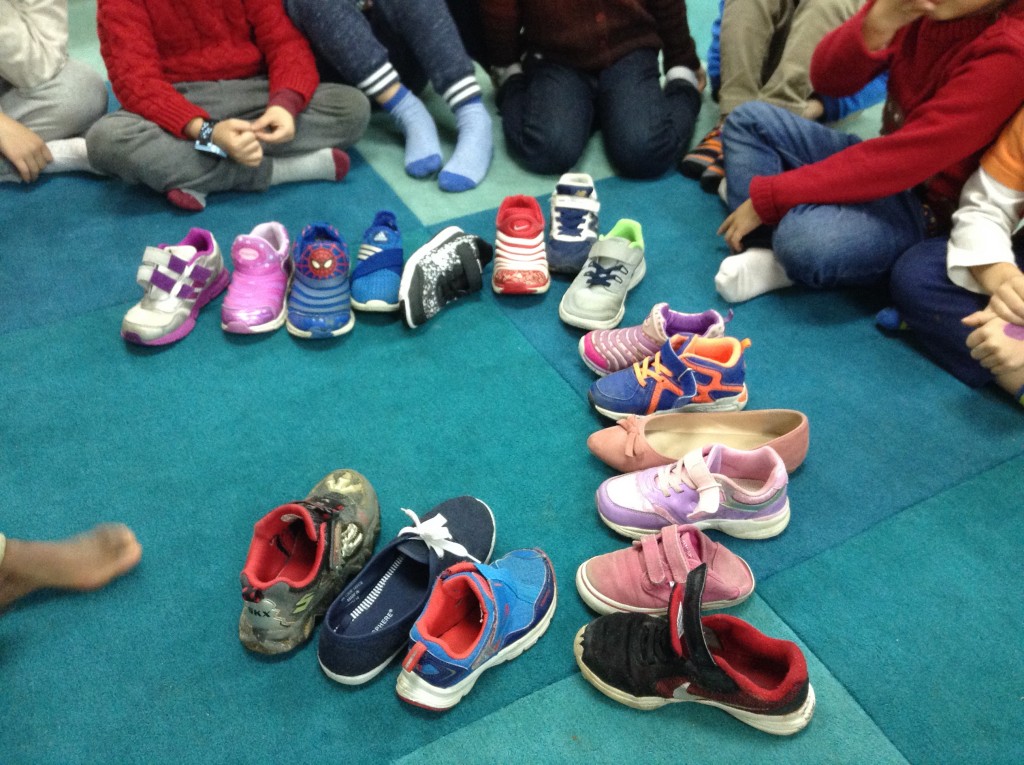
Ms. Angie read a story about shoes to the students. The students took a picture walk to recall the story. They had to guess the different shoes belonged to.

The students put one foot out in front of them. They looked carefully at their shoes.

  • Michelle “I have shiny shoes its bright pink and blue and I have stars on my shoe.” [in Mandarin]
  • Felix “I have red and grey, white and black.”

We wondered why we wore shoes.

  • Charlotte “I have sports shoes and I have red, white and brown on my shoes.” [in Mandarin]
  • Ethan “My daddy and mummy and me all wear different kinds of shoes. Shoes help him run fast, some make him run slowly.” [in Mandarin]
  • Amber “I have a cotton shoes and I can wear these shoes in the snow.” [in Mandarin]
  • Alejandra “My shoes are fluffy. I have another pair of shoes that can help me run very fast. With these shoes I can’t. I have another pair of shoes to do sports. I have some shiny shoes. I have ski shoes.” [in Mandarin]
  • Nicolas “I have a shoe at home and it is shiny at the back and I have one shoes and it has this part (the front) is red and here (the back) a little bit of grey and brown and this whole part (the front) when I step it shines with lights. I have another shoe, a ski shoe. I have boots but with another colour, it is red and it has pointy spikes on here. And when I scratch the floor it comes a line.”

We first counted how many shoes we have. We have 15 shoes!

  • Teacher “How can we sort the shoes out?”
  • Ruby “We could put them all in a circle. Or make a shoe line.”
  • Nicolas looked at the book. He wanted to make a circle with the shoes. He said, “We can sort out the shoes by colours.”
  • Si Hyun said that we should sort the ones that have straps and the ones that don’t.

7 shoes had straps. 7 shoes did not have straps.

  • Alejandra said we can sort out the shoes that have zips and the ones that don’t. Only 1 shoe had a zip.
  • Ruby had an idea. “We can sort them out the boots in 1 line and the shoes in another.” We had 4 boots and 11 shoes.

Felix wrote a label 11 with help from his friends.

How would you sort your own shoes? How are they similar or different? 

We wonder…

SLO’s

  • sort objects
  • begin to explain data using simple language such as same and different / more or less

The Napping House

We listened to the story ‘The Napping House by Audrey Wood, illustrated by Dan Wood. In this story, there is a granny, a child, a dog, a cat and a mouse, sleeping on top of each other on a cozy bed. They were all sleeping peacefully until a flea decides to bite the sleeping mouse. The students listened to the story in both English and Mandarin.

https://www.youtube.com/watch?v=IxPYhscW16o

The next day, the students revisited the story. This time we did a ‘picture walk’, recalling the story in sequence.

Next, we used picture cards to help us retell the story.

The students began to notice a pattern. Jasmine stated that the pattern looked like ‘Steps’.

As the display was posted on the whiteboard, Lawrence said Its 21”. He explained that there were 21 cards altogether.

Ruby noticed that, “The numbers are getting bigger as you go up the stairs!”

Next, a group of students used cubes to create a 3-Dimensional representation of the information we recorded on the poster. We discussed the rule for the pattern to help us identify how the pattern changes. We used the rule 1 more to help us create a growing pattern.

Ruby “You have to make a straight line.”

Nicolas “I have 6!”

The students began to count out the cubes they needed to create their structures.

Here are some examples:

https://twitter.com/NISPreKK1/status/1083568789873029120

https://twitter.com/NISPreKK1/status/1083570547114467328

SLO’s

  • observe, discuss and comment on the information being conveyed in illustrations
  • retell a story using the pictures
  • listen and respond in small or large groups for increasing periods of time
  • join in with poems, rhymes, songs and repeated phrases in shared books
  • listen and respond to picture books, showing pleasure, and demonstrating their understanding through gestures, expression and/or words
  • focus on a speaker and maintain eye contact
  • respond actively to read aloud situations; make predictions, anticipate possible outcomes

Bikes and Trikes

During a discussion on shapes, the students explained that wheels on cars and bikes were ‘circles’. They watched a BrainPoP video on ‘Plane Shapes’, and began to talk about the wheels on their bicycles. Following on from this discussion, the students posted pictures of their bikes and trikes. 

We gathered to talk about their pictures. How are the bicycles similar or different?  

Freida ”My bicycle is small. It got small tires.”

Alejandra explained that some bikes were ‘Big‘ and others were ‘Small’. She said “Because me and Jasmine is more bigger than mine.” This was our first sort.

Jasmine “My bike has pedals.”

Poli said, “Because has here.” while pointing to the pedals. They explained that it helps the bicycles go faster.

We decided to sort out the pictures by ‘Has Pedals’, ‘Does Not Have Pedals‘.

Poli “1, Alejandra NO. 1,2,3,4,5,6,7,8,9, YES!”

Lawrence “Alejandra and Jasmine is different. Chair!”

Alejandra “Another people can sit.”

Lawrence “ This have this, this no.” (referring to the rack at the back of the bicycle) Lawrence was referring to the bike rack. Our next sort was ‘Has a Bike Rack‘, ‘No Bike Rack‘.

Amber “The wheel is small.” This sort was based on the bikes with ‘Guide Wheels‘ and ones with ‘NO Guide Wheels‘.

Jiwoo “This is no, this yes.”

Alejandra “4 and 6.”

Jiwoo “This is one yes, this one no.” Referring to how some bicycles ‘Had Lights‘ and some ‘Did NOT Have Lights‘.

Alejandra “Amber has a back, for the baby, for the sun.” Referring to the hood at the back of the tricycle.

Nicolas “Because it has something at back and it’s big.”

This sort is based on if the bikes ‘Had a Hood‘, or ‘Did NOT Have a Hood‘.

Next, Poli noticed that some had baskets and some did not when he said, “Basket here in the back”.  The sort was based on if the bicycle ‘Has a Basket‘, or ‘Has NO Basket.

Jiwoo pointed to a flag on one of the bikes. Then we sorted out the bikes with the headings ‘Has a Flag‘, ‘NO Flag‘.

The students kept going. There was yet another way to sort the bikes and trikes. Some ‘Had a Bell‘ and some ‘Had Did Not Have a Bell‘.

SLO’s

  • Sort real objects into 2 sets by one common attribute using own and others’ criteria
  • Explain criteria for sorting
  • Be able to explain data using simple language such as same and different/more or less/most or least

Take a Vote!

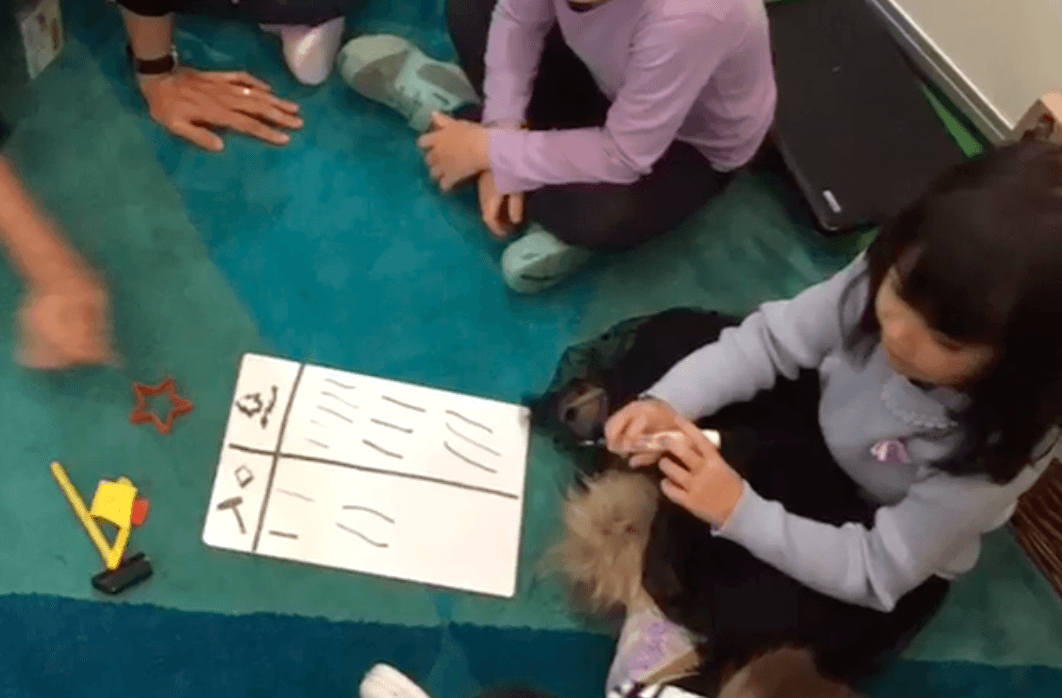
A student wanted to play with the coloured sand while there were hammers at the table, so she asked her friends if they want to play with sand or hammers. All students and teachers took a vote and there were 11 people that chose sand, 5 chose the hammers. Therefore, we got to change the table activity to sand play! 

Agency: Through these experiences students are learning that they have an active voice and stake in the classroom and community. 

SLO’s

Data Handling

  • Record observations using simple tally marks (1 line/1 object)
  • Be able to explain data using simple language such as same and different/more or less/most or least

Grouping and Sorting

What do we notice about the items around us?

As we play and manipulate the materials around us, we explore important Maths concepts such as value, patterns, length, group, categorization and properties. Here are some examples of categorization.

Ruby sorted out the buttons. She explained that she has a rainbow group, a pink, orange, green, blue, yellow and white group.

Why is there a rainbow group? What makes it a rainbow group? Can you guess?

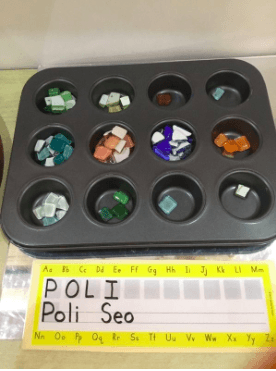
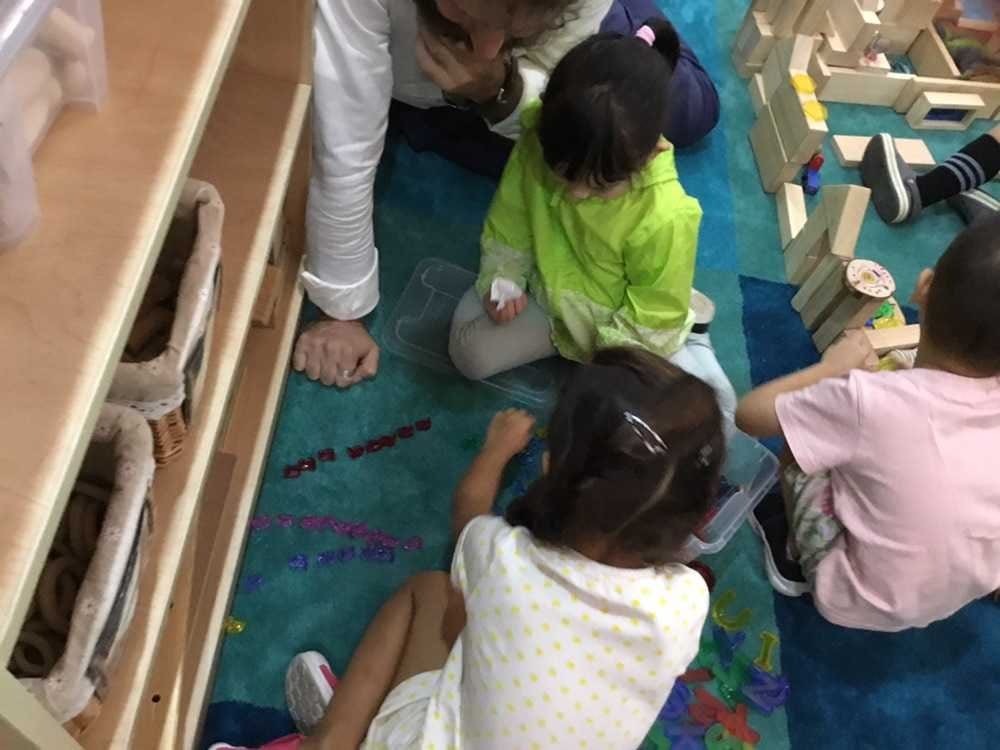
Poli and Alejandra have been sorting the mosaic tiles by colour.

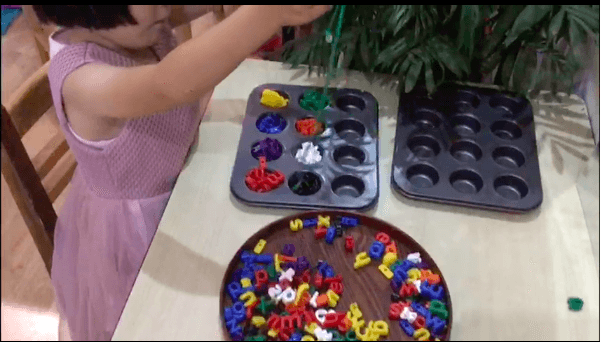
Amber and Poli have been sorting the letters out by colour.

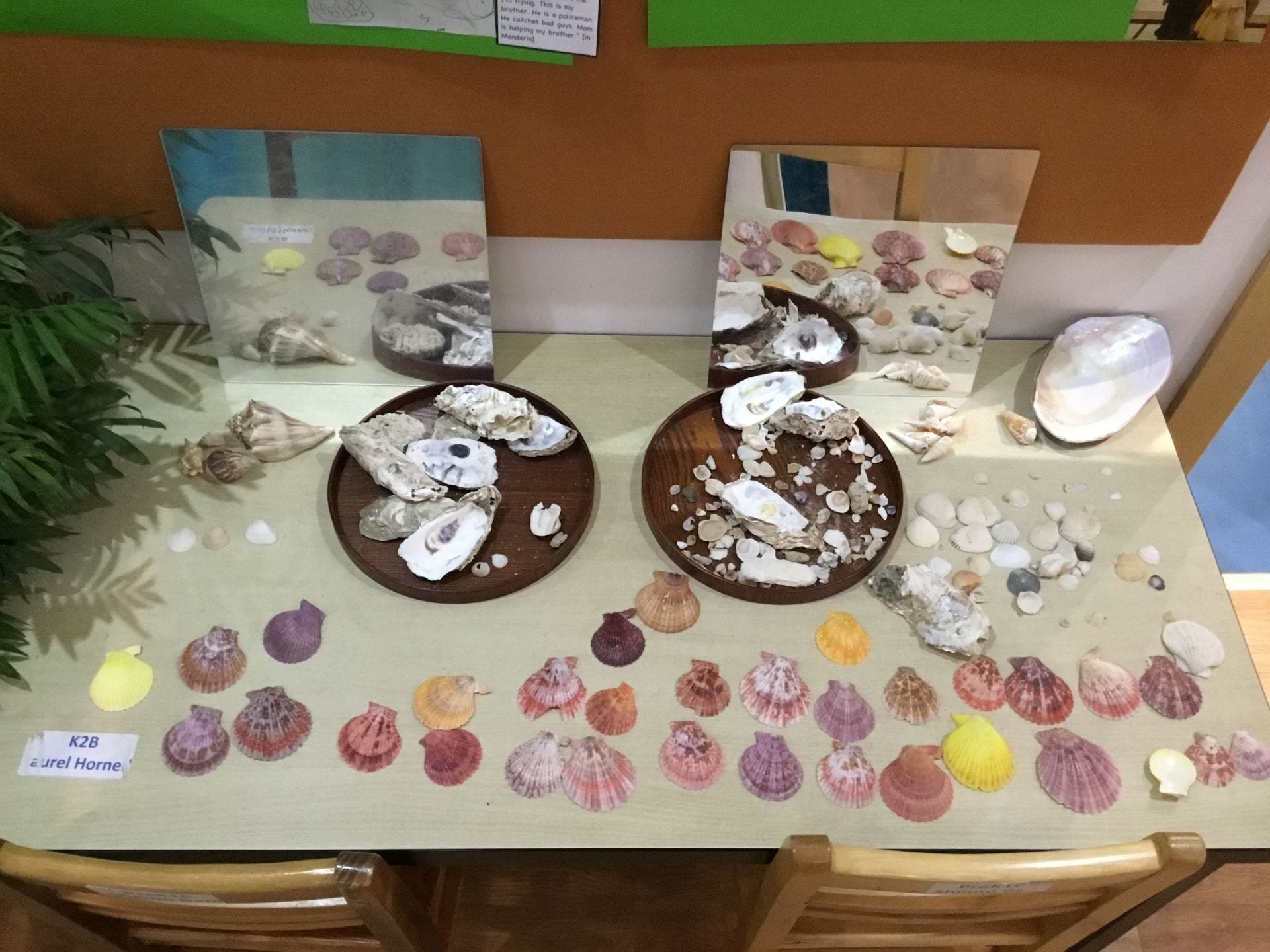
Freida and Felix have been sorting the shells by shape.

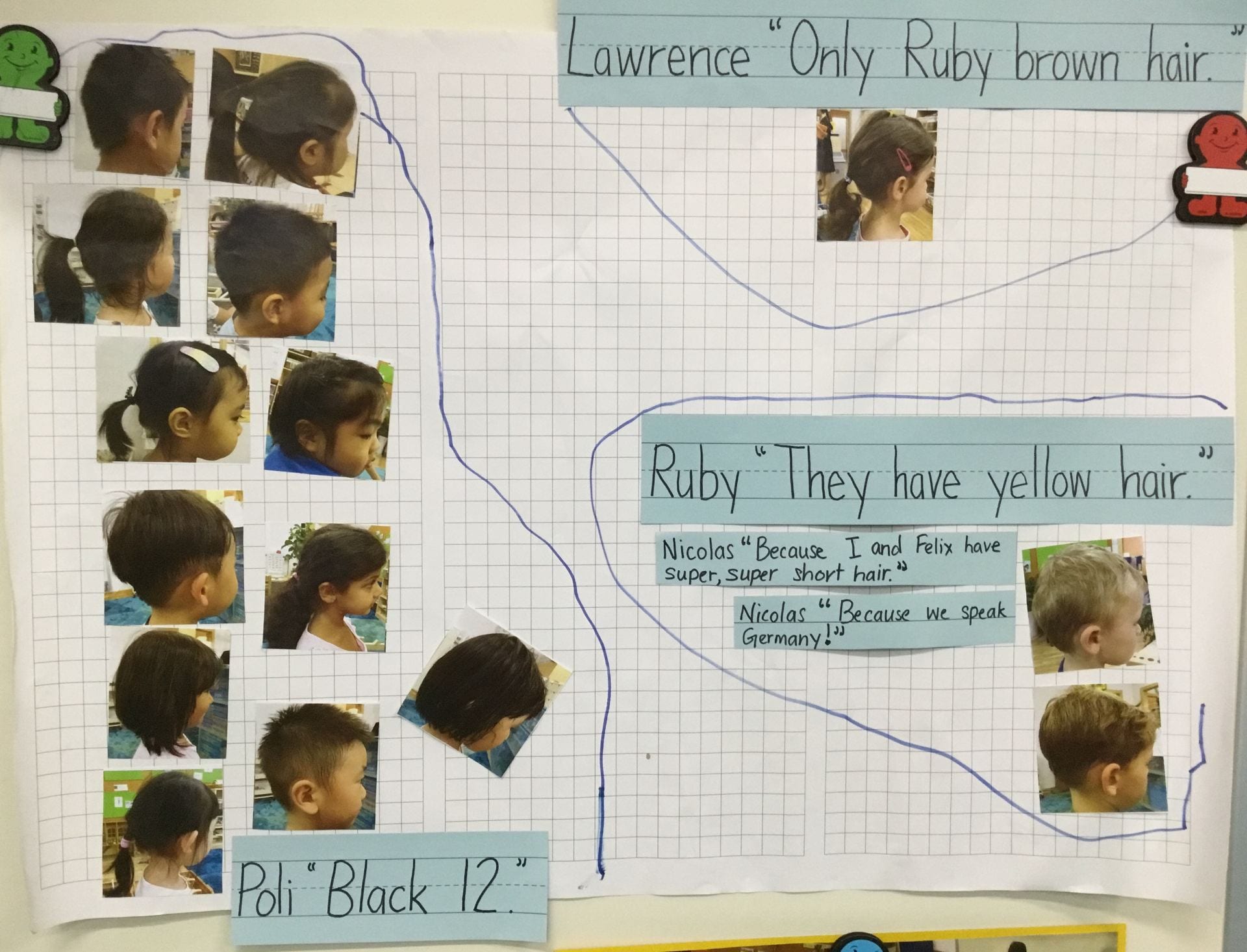
We sorted out pictures of our hair in two different ways, by colour and style.

Sarah and Freida were souring out beads by colour.

Why do we sort and group?

What are some other ways we sort and group items?

We continue to explore…

SLO’s

  • sort objects
  • begin to explain data using simple language such as same and different / more or less

Similar and Different

The students have been creating portraits of themselves using a variety of mediums. While drawing pictures of themselves, they noticed and commented on how some of the students looked the same or different, referring particularly to their hair and eyes.

  • Freida “My hair is black.”
  • Alejandra “My hair is black too.”
  • Nicolas “I have a little bit yellow. Everybody in German is yellow.”
  • Ruby “I have brown hair.”

First, they decided to sort and group the pictures by the colour of their hair.

  • Alejandra “I don’t have a pony tail. I have just like Amber.”
  • Ruby “They have short hair. What about Ms. Jiao?”

Next, they decided to sort and group the pictures by their different hair styles.

Ruby, Alejandra and Nicolas decided that Ms. Tina and Ms. Shemo can go to the pony tail group.

SLO’s

  • sort objects
  • present information on teacher-generated pictographs where one picture equals 1
  • begin to explain data using simple language such as same and different / more or less

Pete the Cat and His Four Groovy Buttons

We read to story ‘Pete the Cat and His Four Groovy Buttons‘ written by Eric Litwin, illustrated by James Dean. In this story, Pete the Cat is wearing his favourite shirt. However, one by one the four totally groovy buttons on his shirt pop out. The students enjoyed the count down with Pete in this story that makes counting fun.

While reading the story, the students noticed that Pete the Cat was eating an ice-cream. They began to talk about their favourite flavours. We decided to find out and record the information to see which flavours the students liked most. 

We drew pictures of our favourite flavoured ice-cream. Next, we sorted and pasted the pictures to create a graph. Some of us liked strawberry, chocolate, grape and mango flavoured ice-cream. We even liked rainbow flavoured ice-cream!

One student recorded the numbers on one side of the graph to help us read the graph.

Which is your favourite flavoured ice-cream?

SLO’s

  • sort objects
  • present information on teacher-generated pictographs where one picture equals 1
  • begin to explain data using simple language such as same and different / more or less

Graphing

Ms. Lucia introduced the students to graphing. They were invited to work in groups to sort out the materials using graphs.

The Vehicle Graph

Lawrence, Tyler and Ruby sorted the vehicles.

  • Ruby: [pointing to each row] Trains, cars and planes.
  • Tyler: Planes 2. Cars 1,2,3,4,5. 5.
  • Lawrence: Trains 1,2,3.
  • Teacher: Which one has the most?
  • Ruby: The cars have the most. 5 cars.
  • Teacher: Which one has fewer?
  • Ruby: 1,2. Planes.

M&M Graph

  • Teacher: How do you know where each one goes?
  • Amber: [pointed to the picture at the bottom of each row].
  • Reggie: There is orange but no orange here. We will have to leave it out.

The students discussed which one had the most and fewest. They counted the M&M’s.

  • Teacher: Is there an easier way for us to know how many there are in each row?

The students pointed to the top of the blue M&M’s and explained that they could look across to see what number is at the end of the graph [horizontally].

Letter Graph

Money Graph:

  • Reggie: There is a sign at the bottom so it tells you where the money goes.
  • Teacher: Which one has the most?
  • Hannah: 1’s and 5’s. They have 6, no 7.
  • Teacher: How many more 5 dollar bills than 10 dollar bills?
  • Reggie: 1 more.
  • Teacher: How do you know that?
  • Reggie: Because the notes are higher than the 10’s.

SLO’s

  • sort objects

  • present information on teacher-generated pictographs where one picture equals 1

  • Begin to explain data using simple language such as same and different / more or less

One Duck Stuck

The students listened to the story ‘One Duck Stuck‘ by Phyllis Root illustrated by Jane Chapman. In this story one unlucky duck gets stuck in the muck and asks its animal friends for help.

This story is fairly repetitive and this encouraged the children to predict what will happen next.

The students helped place the animals and numbers in sequence while listening to the story.

The students went outdoors to collect materials that they can use to create their own number graph. They worked as a group to collect, sort, count and create their number chart.

SLO’s

  • present information on teacher-generated pictographs where one picture equals 1
  • be able to explain data using simple language such as same and different/more or less/most or least
  • read, write, say, count, model and order numbers to 10
  • listen and respond in small or large groups for increasing periods of time
  • join in with poems, rhymes, songs and repeated phrases in shared books
  • listen and respond to picture books, showing pleasure, and demonstrating their understanding through gestures, expression and/or words

Measurement

The students brainstormed what they know about ‘measurement‘.

“You can use the long stick with numbers of it!” said one student. “You can see things in the supermarket that help you to buy things” said another.

Here are some of their initial ideas.

img_3829

Shorter and Longer

The students then looked for 3 items that were shorter than a pop stick and 3 items that were longer than a pop stick. They recorded the information of their journals.

img_3826

SLO: Order objects according to their attributes. Represent the results of measurement with drawings and concrete materials.

How long is your foot?

The students then measured how long their foot was using cubes.

They first worked with a buddy to draw out their foot.

img_3794

Then they cut it out and measured it using cubes. They wrote the sentence “My foot is ___ cubes long.”

img_3796

SLO: Select appropriate non-standard units of measurement to estimate, measure and record length.

The students decided how to order the information and created a graph using their prior knowledge on how to create graphs.

img_4001

SLO: Order objects according to their attributes.

img_3996

SLO: Record data on block graphs. Present information using pictographs where one picture equals 1. Explain data using simple comparative language.


  • Daniel: There are numbers on a side to tell us how many there are.
  • Hally: 13, The most had feet 9 cubes long.

Ms. Shemo’s foot is the longest because it is 13 cubes long.

Minseong’s foot is the shortest, because it’s 8 cubes long.

2 people have feet that are 10 cubes long.

We estimated and used our feet to measure our lunch table, the design centre and others interesting objects around us.

https://twitter.com/NISKinder2/status/806431630109786113

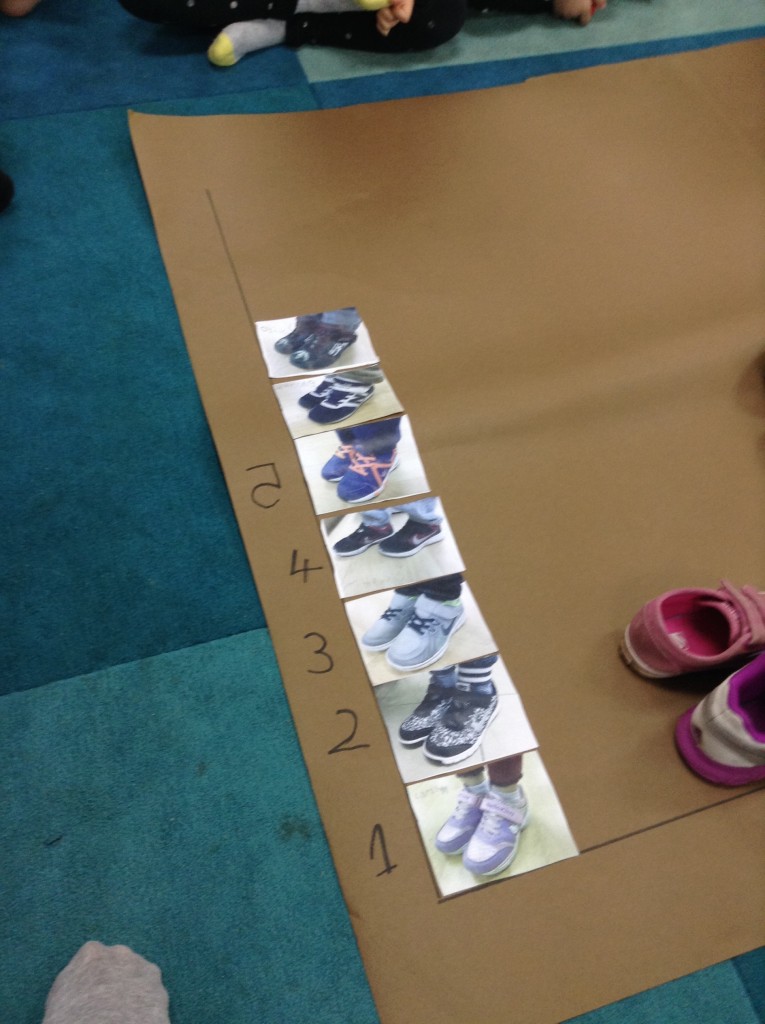
Shoe Sort

If we had to sort out all our shoes, how would we do that?

The students were asked to put one of their shoes in a pile on the floor. They were then asked the question If we had to sort out all our shoes, how would we do that?  

They discussed how they would sort them out.

  • Lele: We need to paste the pictures (recalling how we created our previous graph How did you come to school today?)
  • Carolyn: Put sports shoes together, then other shoes.
  • Gabby: These have laces, like ties.
  • Vera: Those are gym shoes we wear in PE.
  • We can put shoes with sticky things (velcro) and laces together.
  • That one can be here because it only has sticky things (velcro).

img_3364

We then shared ideas about how we could record this information using what we know about graphs.

img_3367

We then recorded this information on large chart paper.

img_3368

  • Vera: We can call it K2A’s Shoes.
  • Hally: I know that there are 17 shoes because there are 15 children and 2 teachers. img_3369

How did you come to school today?

The students answered this question at ‘Morning Meeting’.

fullsizerender-2

We then made a graph with the information we collected. The students labelled the different columns and wrote the numbers.

img_3189-2

To complete this task, we had to:

  • Gather information by asking questions
  • Collect data according to personal experiences
  • Record data on simple graphs
  • Present information using pictographs where one picture equals 1
  • Explain data using simple comparative language

img_3205

They made the following observations:

  • Vera: We learned about how we come to school.
  • Oliver: We had to think about which way we come to school.
  • Isabella: 4 children come by bike.
  • Salva: 3 children come by bus.
  • Gabby: 6 children come by car.
  • Daniel: 1 child comes in the egg car.
  • Harris: The car is the tallest. It is the most.

The Weather Graph

IMG_1165 IMG_1168The students recoded the weather daily on their own calendars throughout the month of March. Then we decided to graph the information we had collected. Here is the process they went though:

  • Alice: First we used the scissors to cut the calendar.
  • William: Then we used the ruler to make the straight lines in an ‘L’ shape.
  • Vincent: Then we used the glue to paste the dates. Next we wrote the numbers on the left. We wrote the different types of weather.
  • William: We wrote the name of the graph ‘The Weather Graph for March’.
  • Vincent: Then we wrote our names. Then we wrote the sentence of how many days we had different weather. We wrote what is more and what is least.

Through this learning activity students:

  • collected and organised information
  • asked questions
  • explained data using simple comparative language

FullSizeRender 8  FullSizeRender 10

Shapeasaurus and Shape Pictures

Shapeasaurus

We have been exploring 2 and 3 dimensional shapes in our environment. A group of students went on a shape hunt, another traced shapes to make a picture and one group made their own ‘Shapeasaurus‘ using shapes. How many shapes did you use? Can you make a graph using this information?

IMG_9501IMG_9519

IMG_9631 IMG_9632

Shape Pictures!

Another group of students created a picture using 2 dimensional shapes. They used their words to talk about their picture.

download (2) IMG_9630 IMG_9629 IMG_9624 IMG_9625 IMG_9626 IMG_9627 IMG_9628 IMG_9623

Gathering Data

FullSizeRender 5

What is your favourite fruit?

During the last few weeks we have been learning how to gather, sort and record information in order to answer questions. First we measured our feet using cubes to see how long they were and created a graph using our information. Then we went on a Measurement Walk and recorded our information. We also created a graph that tells you about our favourite fruits.

https://twitter.com/NISKinder2/status/653810607519432704

IMG_4056

Sorting and recording information.

How long is your foot?

How long is your foot?

IMG_8389

Gathering Information

How do you travel to school? 

Students gathered information from their peers to find out ‘How we travel to school’. This task was linked to our current Central Ideas ‘Transportation Connects People’.  The students recorded their information on a graph.

FullSizeRender 4

How do you travel to school?

IMG_8607

1 2